
To prevent mold on fermented batters, keep everything clean and sanitized, including containers and utensils. Control humidity and store your batter in a cool, stable environment away from direct sunlight. Use breathable covers that allow airflow while blocking spores, and add natural preservatives like vinegar or herbs. Regularly check for signs of mold and discard any suspicious batches. For more tips, discover how maintaining the right environment and monitoring can keep your fermentation mold-free.
Key Takeaways
- Maintain a clean, sanitized fermentation environment and containers to prevent mold spores from contaminating the batter.
- Control ambient humidity and store batters in a cool, stable location away from direct sunlight.
- Use breathable covers or lids that allow airflow while blocking airborne mold spores.
- Incorporate natural preservatives like vinegar or herbs to inhibit mold growth.
- Regularly monitor for early signs of mold and discard any contaminated batches immediately.

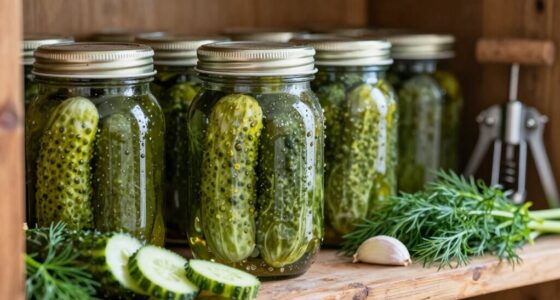
2 Pack 1 Gallon Large Fermentation Jars with 3 Airlocks and 2 SCREW Lids(100% Airtight Heavy Duty Lid w Silicone) – Wide Mouth Glass Jars w Scale Mark – Pickle Jars for Sauerkraut, Sourdough Starter
SUPER Fermentation Lid for Airlock: The improved threaded lids are sturdy, durable and rust free, they are airtight…
As an affiliate, we earn on qualifying purchases.
As an affiliate, we earn on qualifying purchases.
Why Does Mold Grow on Fermented Batters & How to Prevent It
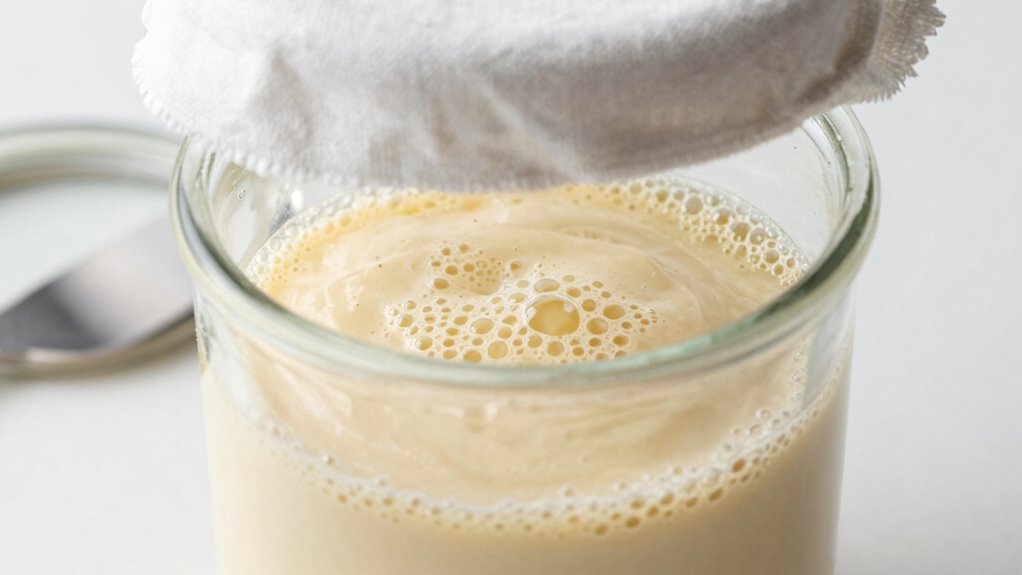
Mold grows on fermented batters when the environment becomes too warm, moist, or exposed to airborne spores. Spoilage bacteria and fungal contamination thrive under these conditions, leading to mold development. Warm temperatures accelerate microbial activity, while excess moisture provides the perfect breeding ground. If your batter isn’t stored properly or stays exposed, airborne spores settle and begin to grow, resulting in mold. Fungal contamination can quickly spread, ruining your batch and making it unsafe to consume. To prevent this, keep your fermentation environment cool, dry, and covered tightly. Avoid leaving batters exposed for extended periods, and ensure your containers are sanitized. Proper storage and a controlled environment are key to stopping mold growth and maintaining the quality of your fermented batters. Additionally, understanding proper fermentation techniques can help create an inhospitable environment for mold development. Maintaining consistent temperature during fermentation is crucial, as fluctuations can encourage mold growth and spoilage. Using airtight containers can further reduce the risk of airborne spores contaminating your batter. Implementing regular cleaning practices of your fermentation area also minimizes the presence of mold spores in the environment. Incorporating environmental controls such as temperature regulation and humidity monitoring can enhance mold prevention efforts.

Encheng 32 oz Wide Mouth Mason Jars with Airtight Hinged Lids, Large Glass Jar with Lid for Pickling, Fermentation, Canning, Food Storage – Set of 4 Glass Storage Containers
Value Glass Food Storage Jar Set-Each set comes 4 pack of rounded glass jars in a safely package,measuring…
As an affiliate, we earn on qualifying purchases.
As an affiliate, we earn on qualifying purchases.
How to Keep Your Fermentation Environment Clean and Safe
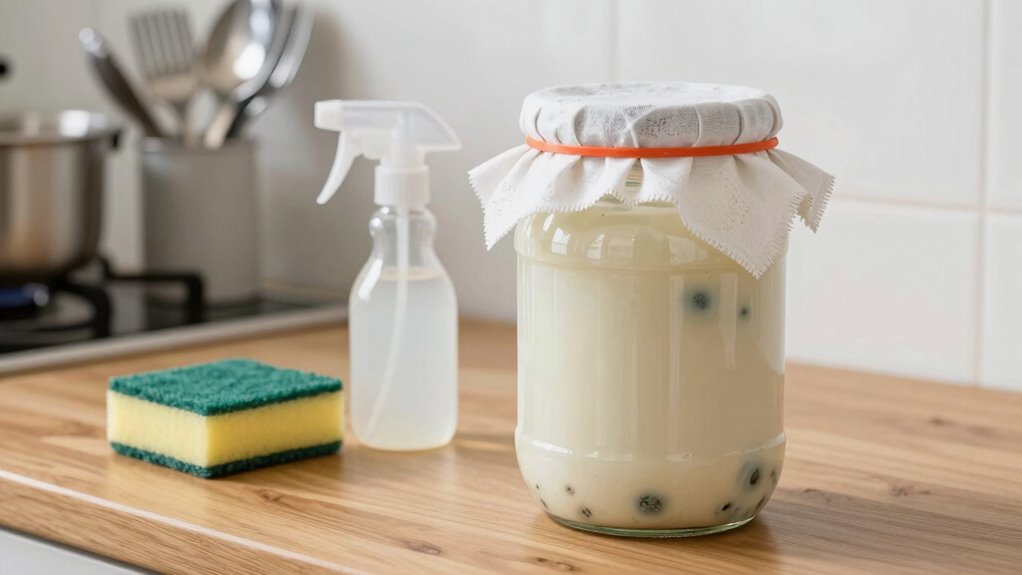
Maintaining a clean and safe fermentation environment is essential to prevent mold and guarantee your batter ferments properly. Start by thoroughly cleaning your fermentation containers before use, removing any residue or lingering bacteria. Keep your workspace sanitized, including utensils and surfaces. Control ambient humidity levels; too high humidity encourages mold growth, so aim for a stable, moderate environment. Ensure your fermentation containers are airtight or properly covered to minimize contamination. Regularly check for mold or unusual odors, and discard any batter showing signs of spoilage. Proper ventilation helps regulate humidity and air circulation, reducing mold risk. Additionally, understanding the horsepower of electric dirt bikes can help you select the right equipment if you’re considering powering devices for your fermentation setup. Proper hygiene practices and environmental control are crucial in creating an ideal environment for safe, mold-free fermentation. Using power tools for cleaning and setup can also enhance your efficiency and safety during preparation. Incorporating environmental monitoring techniques allows for better regulation of humidity and temperature, further preventing mold development. By keeping your fermentation space clean and monitoring environmental conditions, you create an ideal environment for safe, mold-free fermentation. Consistently maintaining these measures helps prevent mold growth and ensures successful fermentation outcomes.

6 Pack Mini Hygrometer Indoor Humidity Meter, Small Digital Thermometer Humidity Gauge Meter, Indoor Thermometer Hygrometer Monitor Fahrenheit (℉) for Thermostat Reptile Tank, Mason Jars
2-in-1 Thermometer & Hygrometer Meter: Equipped with a high-precision sensor, this temperature and humidity meter provides accurate readings,…
As an affiliate, we earn on qualifying purchases.
As an affiliate, we earn on qualifying purchases.
What Conditions Promote Mold-Free Ferments
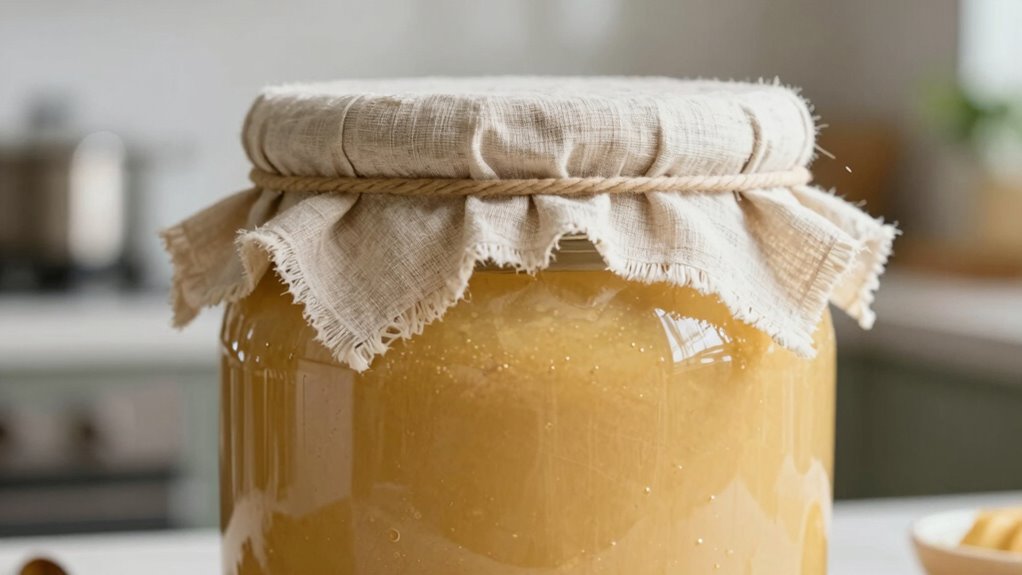
Creating ideal conditions for mold-free fermentation involves controlling several environmental factors. First, maintain proper humidity control; too much moisture encourages mold growth, so keep the environment dry but not overly dry. Second, ensure ingredient freshness; using fresh ingredients reduces the risk of introducing mold spores. Third, keep your ferment covered with breathable material to prevent airborne mold while allowing gases to escape. Fourth, store your ferment in a stable, cool location away from direct sunlight, which can promote mold development. Additionally, monitoring environmental conditions helps maintain optimal fermentation. Regularly checking temperature and humidity levels can further prevent mold growth, ensuring a healthier ferment. Incorporating proper sanitation practices in your fermentation setup further reduces the risk of mold contamination. These practices help create a balanced environment that discourages mold while promoting healthy fermentation. By focusing on humidity control and ingredient freshness, you set the stage for a successful, mold-free ferment. Maintaining adequate airflow is also crucial, as it helps prevent stagnant air where mold can thrive.

Skin Perfection Leucidal SF Complete – DIY Leucidal Liquid SF Natural Alternative Preservative for Lotion Making – Leucidal Liquid Complete with Lactobacillus & Coconut for Complete Protection 1oz
EXCEPTIONAL PROTECTION – Enjoy broad-spectrum additives for defense and natural moisturizing benefits with Leucidal Liquid SF Complete, a…
As an affiliate, we earn on qualifying purchases.
As an affiliate, we earn on qualifying purchases.
Using Natural Inhibitors and Proper Covering to Stop Mold

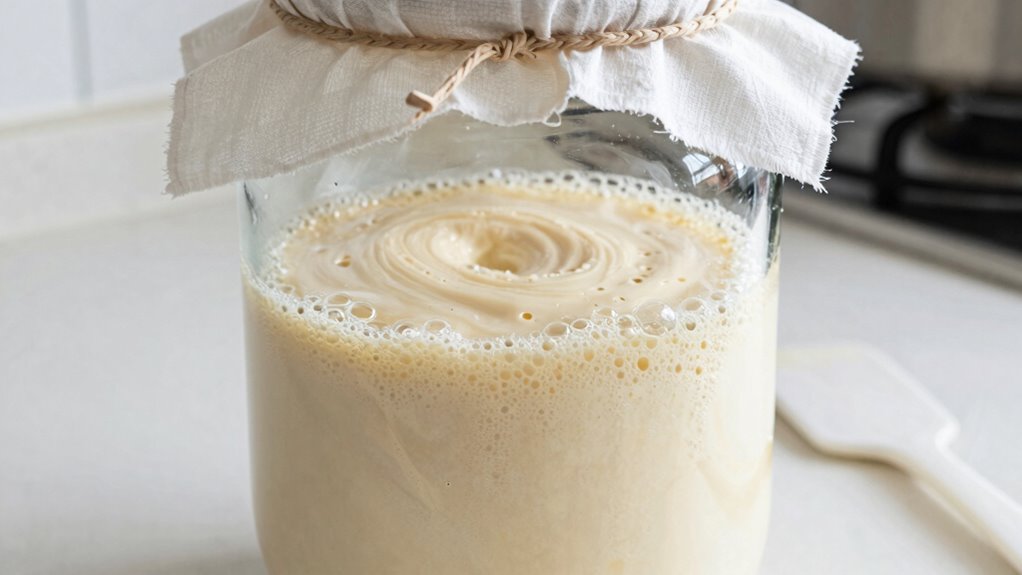
Using natural inhibitors can considerably reduce the risk of mold growth on fermented batters. Natural preservatives like vinegar, garlic, or certain herbs create an environment that discourages mold spores from settling and growing. Applying these before fermentation starts or mixing them into your batter can enhance safety. Proper covering techniques also play a vital role; using breathable cloths or lids that allow airflow while preventing contaminants reduces mold risk. Guarantee the covering is snug but not airtight, so excess moisture escapes, and your batter remains dry on the surface. These combined strategies help maintain the ideal environment for fermentation while keeping mold at bay. Incorporating air purification methods can further improve air quality and reduce airborne mold spores in your kitchen, enhancing the overall safety of your fermentations. Regularly cleaning your utensils and surfaces with natural disinfectants adds an extra layer of protection. Additionally, ensuring proper air circulation in your kitchen can help prevent mold spores from settling on your fermenting batter. Using humidity control techniques can also create less favorable conditions for mold development. Implementing ventilation strategies further reduces humidity and prevents mold growth. By integrating natural preservatives and effective covering methods, you notably improve your chances of a mold-free ferment.
How to Monitor Your Ferment and Catch Mold Early
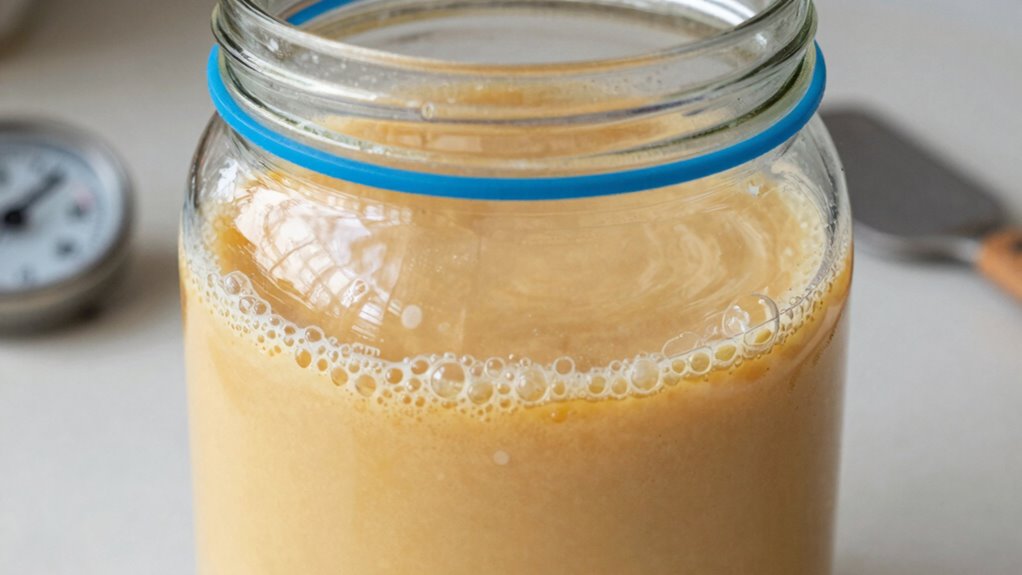
Monitoring your ferment closely is key to catching mold early and preventing it from spreading. Pay attention to fermentation timing, as over-fermentation can encourage mold growth. Regularly check for changes in appearance or smell, which can signal issues. Keep ingredient freshness in mind—older ingredients are more prone to mold development. To stay vigilant: 1. Inspect daily for any surface discoloration or fuzzy spots. 2. Smell the batter for sour or off odors that differ from the usual fermentation scent. 3. Record fermentation timing to notice deviations from expected progress. 4. Ensure ingredients are fresh and properly stored before starting. Maintaining proper hygiene practices is also essential to prevent mold contamination. Additionally, understanding the support breakfast options available in your area can help you select fresh ingredients from trusted sources. Regularly monitoring fermentation conditions ensures early detection and successful prevention of mold growth, especially when paying attention to environmental factors that influence mold development.
Troubleshooting Mold Problems: When to Fix or Discard
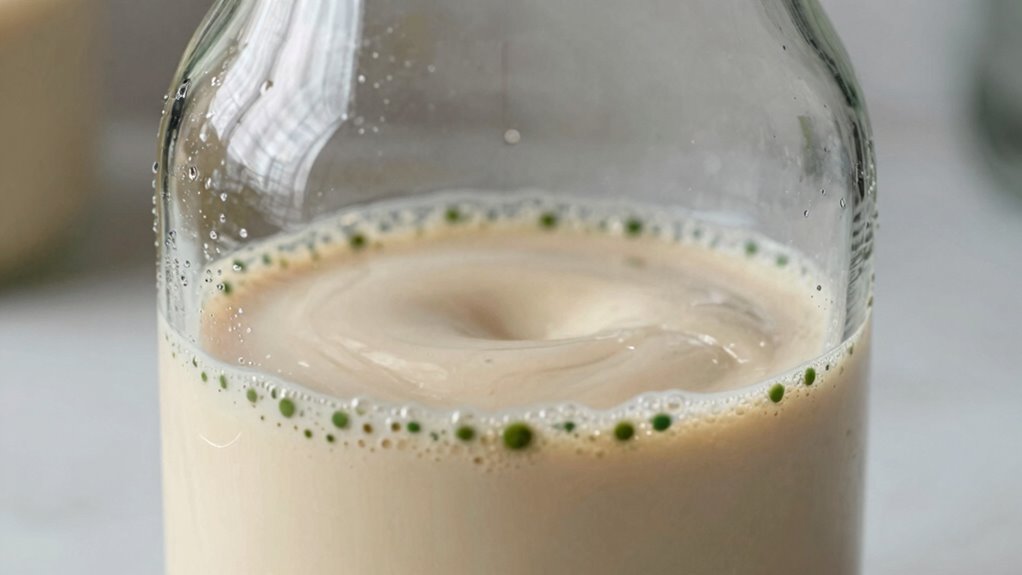
If you spot mold on your fermented batter, you need to determine if it can be saved or should be discarded. Look for clear mold indicators and evaluate the overall fermentation quality to make that call. When in doubt, it’s safer to discard the batch to prevent health risks.
Recognize Mold Indicators
How can you tell if mold is taking hold on your fermented batter? Recognizing mold indicators is key to maintaining fermentation hygiene and preventing mold growth. Look for these signs:
- Unusual fuzzy spots or streaks in colors like green, black, or white.
- A slimy or fuzzy texture that wasn’t there before.
- An off-putting, sour, or strange odor that differs from normal fermentation smells.
- Discoloration that spreads beyond the usual fermentation surface.
If you notice any of these, it’s time to act. Regularly inspecting your batter helps catch mold early, supporting effective mold prevention. Remember, quick identification can save your batch or prevent contamination, keeping your fermentation process safe and successful.
Assess Fermentation Quality
When you notice signs of mold on your fermented batter, it’s important to evaluate the overall fermentation quality before deciding on a course of action. Check where you are in the fermentation timeline; if it’s early, the batter may still develop properly. Consider ingredient variations—if you used different flours or water, these can influence fermentation speed and outcome. Look for consistency in smell, texture, and color; a healthy ferment should have a tangy aroma and smooth texture. If the batter smells off or shows uneven fermentation, it might indicate that the process is compromised. Proper assessment helps determine whether the batter can be salvaged or if it’s best to discard it to prevent mold growth from spreading.
Decide Discard or Repair
Deciding whether to discard or repair your fermented batter hinges on the extent of mold contamination and the overall fermentation quality. If mold covers a small area and the batter smells and looks healthy, you can attempt repair. Consider these steps:
- Remove moldy spots and a small margin around them, following proper storage tips.
- Use ingredient substitutions like vinegar or yogurt to boost acidity and inhibit mold growth.
- Ensure the remaining batter is stored in a clean, airtight container to prevent further contamination.
- Monitor fermentation closely, checking for new mold or off smells.
If mold has penetrated deeply or covers most of the batter, it’s safer to discard. Repairing is only viable when contamination is minor and storage conditions are improved.
Frequently Asked Questions
Can Using Metal Containers Prevent Mold Growth on Fermented Batters?
Using metal containers can help prevent mold growth on fermented batters because they are less porous than other materials like wood or plastic, reducing mold’s ability to thrive. Metal containers are also easy to clean and sanitize, which is vital for mold prevention. Just make sure the container is non-reactive (like stainless steel) to avoid any chemical reactions that could spoil your batter or promote mold growth.
How Does the Type of Flour Affect Mold Development?
The type of flour directly impacts mold development because of its composition and susceptibility. Whole grain flours, rich in nutrients and moisture, tend to be more mold-prone than refined flours, which have fewer nutrients and less moisture. To minimize mold, choose refined flours when fermenting, and store your batter in a cool, dry place. Paying attention to flour quality helps reduce mold growth and keeps your fermentation safe.
Are There Specific Herbs or Spices That Inhibit Mold?
Think of herbal antimicrobials and spicy preservatives as your kitchen’s secret superheroes. You can add herbs like thyme, oregano, or rosemary, known for their mold-inhibiting power, to your batter. Spicy preservatives like cinnamon and cloves also work wonders. I once added cinnamon to my sourdough, and it stayed fresh longer. These herbs and spices help inhibit mold growth, keeping your fermented batter safe and delicious.
Does the Temperature of My Kitchen Influence Mold Formation?
Yes, your kitchen temperature influences mold formation. Keep your kitchen cool and consistent, ideally between 60-75°F, to slow mold growth. Managing kitchen humidity helps; too much moisture encourages mold. Guarantee good ambient airflow by opening windows or using fans, which prevents damp, stagnant air. By controlling these factors, you create an environment less conducive to mold, helping your fermented batters stay healthy and safe.
Can Storage Duration Increase the Risk of Mold in Fermented Batters?
If you leave your fermented batter sitting too long, the storage duration can considerably increase mold risk. Imagine the batter sitting in your fridge, slowly aging like a forgotten treasure. The longer it stays, the more vulnerable it becomes to unwanted mold growth. To keep it safe, consume or refrigerate your batter promptly, and don’t let storage duration stretch beyond recommended limits. This way, you keep mold at bay and your batter fresh.
Conclusion
By keeping your fermentation space clean and watching your batters closely, you’ll create a fortress against mold. Think of your ferment as a garden—you’re the gardener, tending carefully to prevent unwelcome weeds. With natural inhibitors, proper covering, and early detection, you can enjoy your fermented creations safely. Remember, mold is a sneaky intruder, but with these tips, you’ll keep it at bay and let your delicious batters flourish like a well-tended oasis.