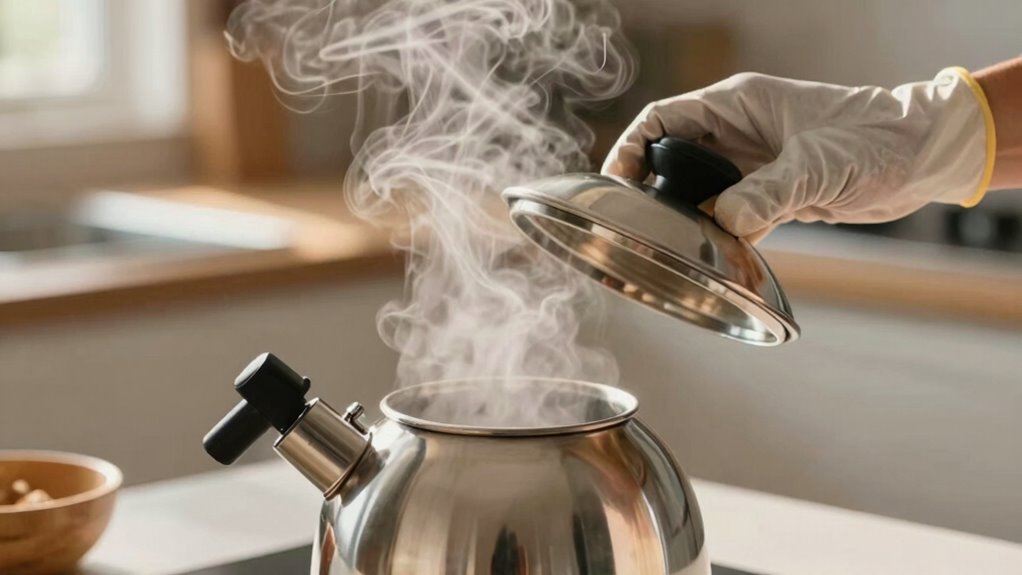

To safely release pressure and avoid steam burns, always vent gradually and follow proper procedures. Wear protective gear like gloves and goggles, and use long tools to keep your hands away from hot steam. Check pressure gauges and safety valves regularly to prevent malfunctions. If you notice warning signs like leaks or hissing sounds, act quickly and carefully. Continuing with these safety measures helps protect you from serious injuries—discover more tips to keep safe.
Key Takeaways
- Always open vents gradually and follow manufacturer instructions to prevent sudden steam releases.
- Wear protective gear like gloves, goggles, and insulated clothing during pressure venting.
- Regularly inspect and maintain safety valves and gauges to ensure proper function and prevent malfunctions.
- Recognize visual and audible cues of high pressure or leaks to take immediate safety actions.
- In case of steam burns, promptly cool the area with cold water and seek medical attention.
Why Releasing Pressure Safely Is Critical to Prevent Steam Burns
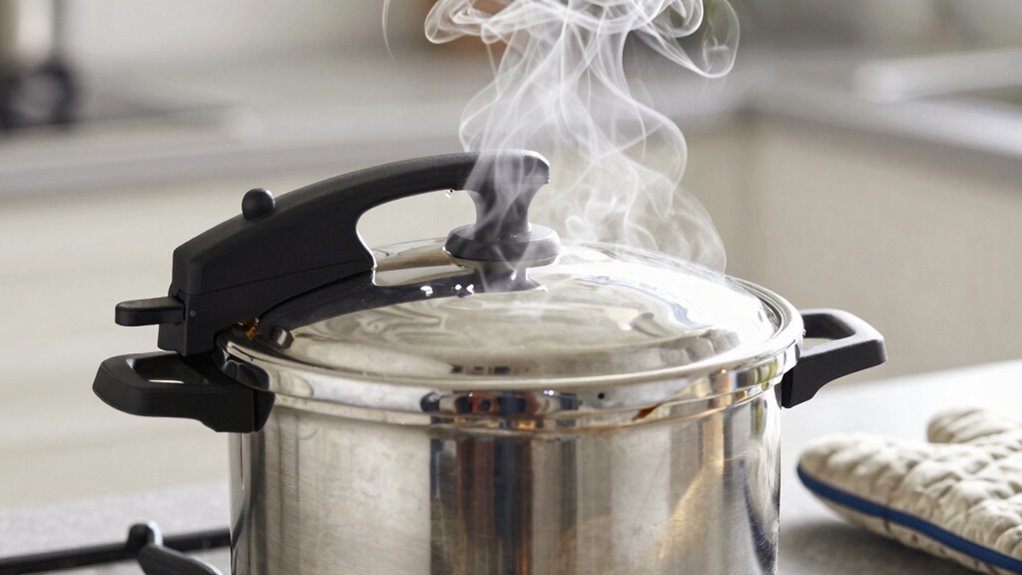
Releasing pressure safely is essential because sudden or improper venting can cause dangerous steam burns. When pressure isn’t released correctly, hot steam and boiling water can escape unpredictably, risking severe injuries. Proper pressure safety procedures help you control the release, minimizing the risk of burns. By understanding the importance of gradual venting and using the right tools, you prevent dangerous pressure buildup that could lead to accidents. Burn prevention relies heavily on following safety measures every time you vent a pressurized vessel. Taking the time to release pressure carefully ensures your safety and protects others around you. Additionally, implementing standard safety protocols can further reduce the risk of accidents during venting processes. Recognizing pressure buildup signs early allows for safer venting practices. Remember, rushing the process or neglecting safety protocols increases the chance of steam burns, making safe pressure release an essential safety practice. Incorporating safety checklists and seasonal prep playbooks can further help you stay prepared for safe venting practices and emergency situations. Being aware of pressure monitoring techniques can also aid in preventing accidents before they happen.
How Steam Burns Happen During Pressure Release
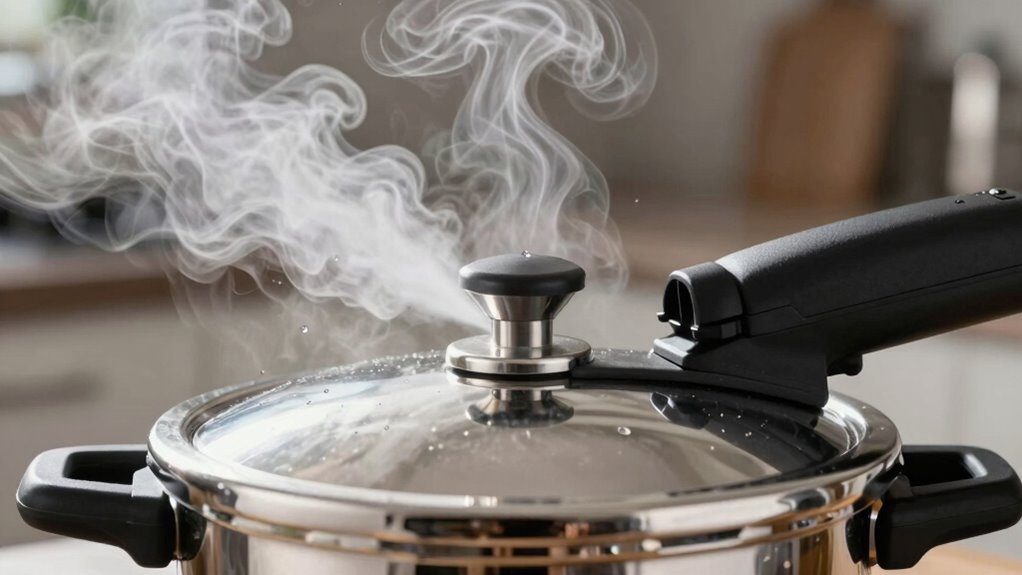
When pressure is released too quickly, hot steam and boiling water can suddenly escape, causing severe burns. This often happens if you open the pressure valve abruptly or skip using the safety release. A sudden drop in pressure causes residual steam inside the vessel to expand rapidly, forcing it out at high velocity. If you don’t follow proper procedures, this steam can come into contact with your skin, resulting in burns. The pressure valve is designed to regulate the release, but if it malfunctions or is operated improperly, the risk increases. Using the safety release method ensures a controlled, gradual pressure reduction, preventing dangerous bursts of steam. Proper pressure management is essential to prevent accidents during the pressure release process. Always follow manufacturer instructions to avoid accidents during the pressure release process. Being aware of the pressure buildup within the vessel can help you anticipate and manage the release more safely. Additionally, understanding the importance of vessel safety features can help you identify potential malfunctions before they cause issues. Familiarizing yourself with emergency procedures can also be crucial if an unexpected release occurs.
How to Recognize Warning Signs of Dangerous Pressure Buildup
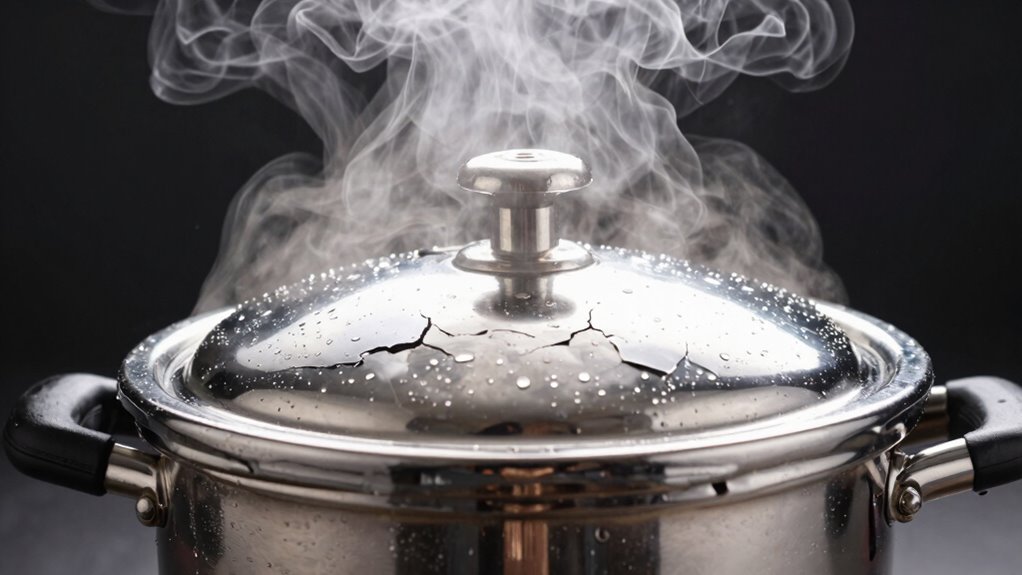
You need to stay alert for signs that pressure is becoming dangerous. Look for visual clues like bulging or leaks, and listen for unusual hissing or popping sounds. Recognizing these cues early helps you take action before a rupture occurs. Being aware of pressure regulation systems can also help you prevent dangerous buildup. It’s important to understand how pressure differences can cause sudden failures if not properly monitored. Additionally, understanding how floating on water techniques can sometimes influence pressure dynamics in aquatic environments may aid in comprehensive safety assessments. Regularly inspecting and maintaining pressure relief valves ensures that excess pressure is safely vented, reducing the risk of accidents. Incorporating AI-driven pressure management systems can further enhance safety by providing real-time monitoring and automated responses to abnormal pressure changes.
Signs of Excess Pressure
Recognizing the warning signs of excess pressure is crucial for preventing dangerous situations. One key indicator is unusual pressure readings on your gauges, called pressure indicators. If these show higher-than-normal levels, it’s a clear sign you need to act. Additionally, safety valves are designed to release excess pressure automatically, but if you notice they are frequently activating or releasing steam, it signals significant pressure buildup. Listen for hissing sounds or sudden bursts of steam near the valves, which also indicate dangerous pressure levels. Ignoring these signs can lead to equipment failure or dangerous steam releases. Always monitor pressure indicators closely, and ensure safety valves function properly. Promptly addressing these signs helps prevent accidents and keeps your operation safe.
Visual and Audible Cues
Monitoring pressure indicators and safety valves provides valuable clues, but visual and audible cues often reveal immediate danger. Look for visual cues like steam leaks, hissing sounds, or sudden bulging of the pressure vessel. Audible alerts such as high-pitched hisses, pops, or alarms signal dangerous buildup. Recognizing these cues early helps prevent accidents. To stay alert, remember this quick reference:
| Visual Cues | Audible Alerts | Immediate Action |
|---|---|---|
| Steam leaks | Hissing sounds | Shut off equipment immediately |
| Bulging or deformation | Alarms or sirens | Evacuate and assess pressure |
| Discolored or damaged parts | Popping noises | Release pressure safely |
Staying informed about nanotechnology advances can also enhance safety protocols in industrial settings. Stay vigilant—your quick response to these cues can prevent serious injuries.
Best Practices for Safely Releasing Pressure From Equipment
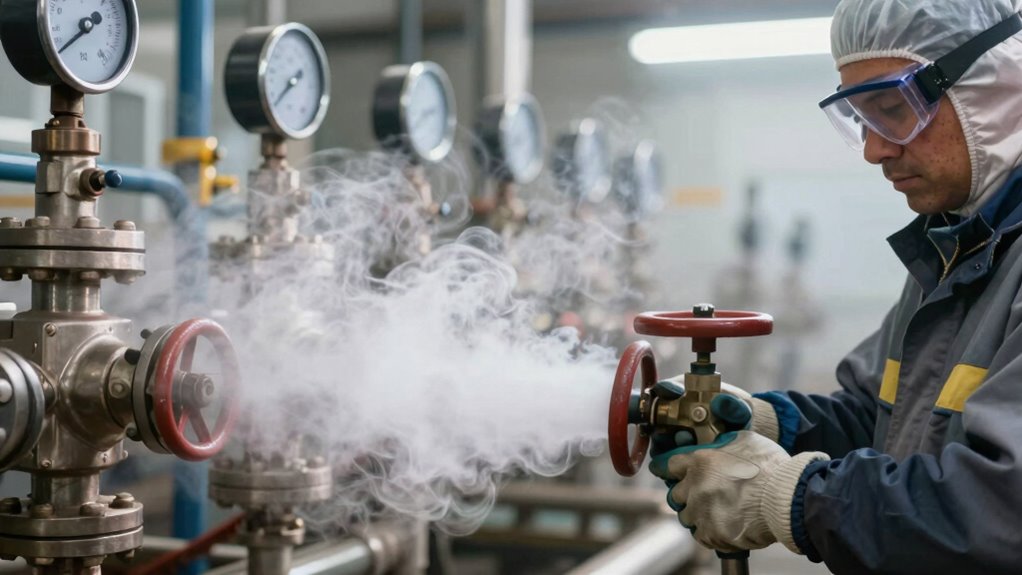
To safely release pressure from equipment, you need to follow proper venting techniques that prevent sudden releases. Always wear protective gear to shield yourself from potential hazards during the process. Additionally, maintaining your equipment regularly guarantees it functions correctly and reduces the risk of dangerous pressure buildup.
Use Proper Venting Techniques
Have you ever wondered what the safest way to release pressure from equipment is? Proper venting techniques are essential for venting safety and effective pressure management. Always guarantee you open vents slowly to prevent sudden releases that can cause burns or equipment damage. Before venting, check that the pressure has decreased to a safe level. Use the correct tools and follow manufacturer instructions. Remember these key points:
- Open vents gradually to control pressure release
- Use protective barriers or shields to deflect steam
- Never vent toward yourself or others
- Be aware of safety procedures that can keep you energized during safety procedures. Additionally, understanding the methodical approach to testing equipment can help prevent accidental releases and ensure safety protocols are followed effectively. Incorporating proper venting techniques ensures pressure is released in a controlled manner, minimizing risks and promoting safe operation. Recognizing the importance of vetted security systems can also enhance overall safety by integrating monitoring solutions where necessary.
Wear Protective Gear
Wearing protective gear is essential for your safety when releasing pressure from equipment. Proper gear shields you from hot surfaces, steam, and sudden releases. Use thermal insulation gloves to prevent burns and safety goggles to protect your eyes from steam or debris. Always check pressure gauges carefully before venting to avoid over-pressurization. Consider the following visual:
| Equipment Components | Protective Gear Needed |
|---|---|
| Pressure vessel | Thermal insulation gloves, goggles |
| Pressure release valve | Heat-resistant apron |
| Surrounding area | Boots with slip-resistant soles |
This gear creates a barrier against potential hazards, ensuring you stay safe as you manage pressure safely. Remember, being prepared with the right protective gear minimizes risks and helps prevent accidents. Additionally, understanding the types of air purifiers can help create a healthier environment during maintenance or safety procedures. Properly maintaining your air purifier filters ensures optimal performance and safety during operation. Regular inspections of pressure release systems further contribute to equipment safety, reducing the likelihood of unexpected failures. Incorporating safety protocols and proper protective equipment into your routine can further enhance overall safety during pressure management.
Maintain Equipment Regularly
Regular maintenance of your equipment is crucial to guarantee safe pressure release. Regularly inspect your pressure gauge to verify it’s accurate, as faulty readings can lead to dangerous over-pressurization. Check the safety valve frequently to confirm it releases pressure properly and isn’t blocked or corroded. Keep all components clean and free of debris to prevent malfunctions during release.
- Test safety valves periodically to ensure they open at designated pressure levels
- Replace worn or damaged pressure gauges promptly
- Lubricate moving parts as recommended by the manufacturer
Step-by-Step: How to Release Pressure Without Injuries

Releasing pressure safely is essential to prevent injuries and avoid causing damage. Start by ensuring the equipment has cooled slightly and follow proper pressure control steps. Wear protective gloves and goggles to guard against sudden steam releases. Open the pressure valve slowly, allowing steam to escape gradually, rather than all at once. Use a long, sturdy tool to turn the valve if possible, keeping your hands away from the steam. Follow safety protocols by never forcing the valve open or rushing the process. Pay attention to any hissing sounds, indicating pressure is releasing. Once the pressure gauge reads zero or normal levels, you can safely open the lid. This careful, step-by-step approach minimizes the risk of burns and injury.
Common Mistakes That Increase the Risk of Steam Burns

One of the most common mistakes that increase the risk of steam burns is rushing the pressure release process. Hurrying can lead to overlooked safety steps, increasing overpressure risks and the chance of valve malfunctions. To stay safe, avoid these errors:
- Ignoring gauge readings before releasing pressure
- Forcing or tampering with malfunctioning valves
- Releasing pressure too quickly without proper venting
These mistakes can cause sudden steam releases, risking serious burns. Always check that gauges indicate safe pressure levels first. If you notice valve issues, address them properly before proceeding. Never rush through the process, especially with malfunctioning equipment. Taking your time minimizes the chance of accidents caused by overpressure or faulty valves, keeping you safe during pressure release.
Essential Safety Gear to Protect Yourself During Pressure Release
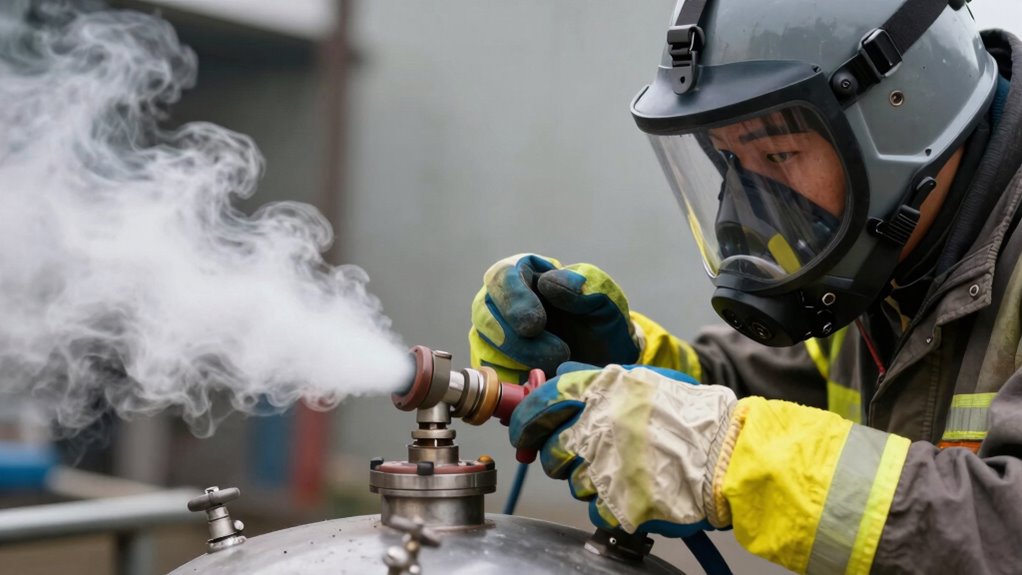
Protecting yourself during pressure release is essential, and wearing the right safety gear can make all the difference. Safety gloves are a must, as they shield your hands from hot steam and accidental contact with hot surfaces. Choose gloves made from heat-resistant materials to ensure maximum protection. Protective goggles are equally important; they defend your eyes from steam blasts and splashes that can cause serious injury. Always wear goggles that fit snugly and provide a clear view. Before starting the release process, double-check that your safety gear is in good condition. Proper gear not only minimizes injury risk but also boosts your confidence, allowing you to focus on the task at hand. Remember, safety gear is your first line of defense during pressure release.
What to Do Immediately If You Get a Steam Burn
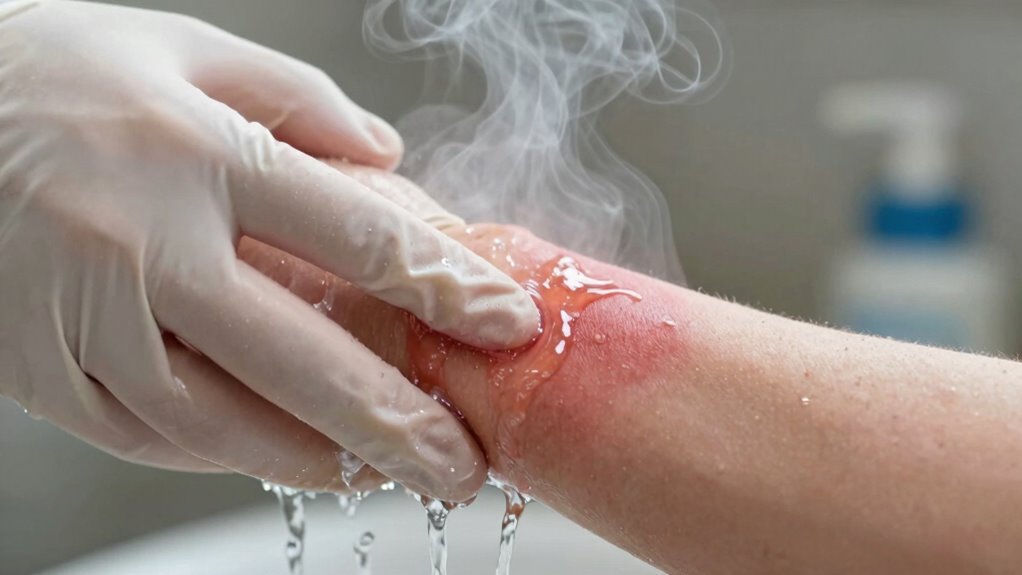
If you happen to get a steam burn during pressure release, acting quickly can prevent serious damage. First, immediately remove yourself from the heat source to minimize further injury. Cool the burn with cold water for at least 10 minutes—this helps reduce pain and limits tissue damage, promoting burn prevention. Do not apply ice or ointments, as they can worsen tissue injury. Keep the affected area elevated to reduce swelling. Remember, prioritizing pressure safety by acting fast can lessen severity.
Key steps include:
- Rinse with cold water immediately
- Avoid applying ice or greasy substances
- Keep the burn elevated to reduce swelling
Prompt response minimizes injury and supports proper burn prevention, ensuring safety during pressure release.
Tips for Maintaining Equipment to Reduce Pressure Hazards
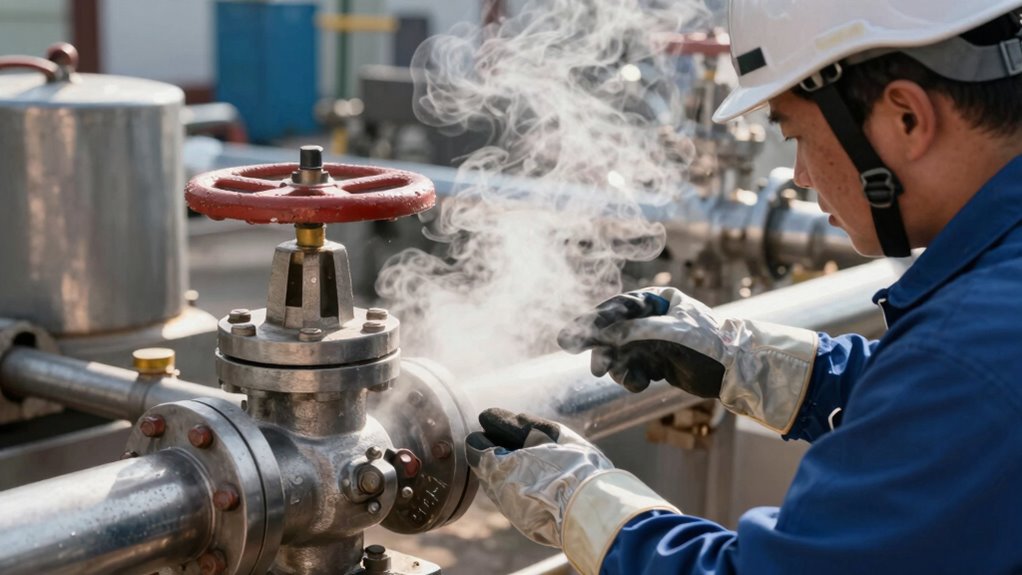
Regularly inspecting and maintaining your equipment is essential for reducing pressure hazards. Start with pressure gauge maintenance; ensure gauges are accurate and replace any that are faulty. This helps you monitor pressure levels effectively, preventing over-pressurization. Additionally, perform routine valve inspections to confirm they open and close smoothly without leaks. Check for corrosion, damage, or wear that could compromise their function. Tighten fittings as needed and replace worn components promptly. Keep detailed maintenance logs to track inspections and repairs. Proper upkeep not only extends equipment lifespan but also minimizes the risk of unexpected pressure buildup. Staying proactive with pressure gauge maintenance and valve inspection safeguards your team from dangerous releases and helps guarantee safe, reliable operation.
Frequently Asked Questions
How Often Should Pressure Release Valves Be Inspected?
You should inspect pressure release valves at least once a year to guarantee proper functioning. Regular inspection frequency is essential for valve maintenance, preventing potential failures that could lead to dangerous steam burns. Always check for any signs of corrosion, leaks, or damage, and clean or replace the valves as needed. Staying proactive with valve maintenance helps you avoid accidents and keeps your system operating safely and efficiently.
Can Steam Burns Occur From Residual Steam After Release?
Yes, steam burns can occur from residual steam after you release pressure. Residual steam can linger around the release valve or container, posing lingering hazards if you don’t wait or handle it carefully. Always stay alert for residual steam, avoid direct contact, and give the steam enough time to dissipate completely. Recognizing residual steam as a hazard helps prevent burns and ensures safer handling during and after pressure release.
What Are the Long-Term Effects of Steam Burns?
Steam burns can cause long-term effects like thermal injury, leading to permanent scarring and skin discoloration. You might experience ongoing pain or sensitivity in the affected area. Proper scar management, including moisturizing, protecting from sunlight, and possibly medical treatments, can help minimize these effects. It is crucial to seek prompt medical attention to reduce the severity of the burn and support healing, preventing long-lasting damage.
Are There Specific Safety Standards for Pressure Release Procedures?
Yes, there are specific safety standards for pressure release procedures. You should follow safety training and emergency protocols to guarantee safe pressure release. These standards often include using proper equipment, such as pressure relief valves, and following step-by-step procedures to prevent accidents like steam burns. By adhering to these guidelines, you reduce risks and protect yourself and others from potential injuries during pressure release.
How Does Ambient Temperature Affect Pressure Release Safety?
Think of ambient temperature as the weather’s mood swing affecting your safety. When ambient heat increases, pressure release becomes more unpredictable because temperature fluctuations can cause sudden changes in pressure levels. You must be extra cautious during hot days or in warm environments, as they elevate the risk of steam burns. Always monitor the surroundings and adjust your procedures accordingly to stay safe during pressure release, no matter the weather.
Conclusion
Remember, safety should always come first when releasing pressure. Nearly 70% of steam burns happen due to improper procedures or rushing, so follow best practices and use protective gear. Staying alert and maintaining your equipment can considerably reduce risks. By taking these precautions, you can prevent injuries and keep yourself safe. Prioritize safety, and you’ll avoid the costly consequences of steam burns—because a quick mistake can lead to serious harm.