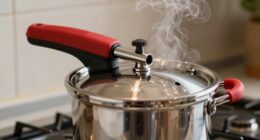

A pressure cooker safety valve is a crucial part that automatically releases steam if pressure gets too high, preventing explosions or malfunctions. It works by sensing internal pressure and opening at a preset level to let out excess steam, then closes again to keep cooking safe. There are different types, and it’s important to recognize signs of a faulty valve. Knowing how to maintain and troubleshoot it ensures your safety and the cooker’s proper function. Keep exploring to learn more details.
Key Takeaways
- A pressure cooker safety valve automatically releases steam when internal pressure gets too high, preventing explosions.
- It functions by sensing pressure and opening at a preset limit to maintain safe cooking conditions.
- Common types include weighted (jiggler) and spring-loaded valves, each indicating pressure status differently.
- Regularly inspecting, cleaning, and testing the valve ensures it works properly and keeps cooking safe.
- Signs of a faulty valve include constant steam release or no steam, requiring prompt maintenance or replacement.
What Is a Pressure Cooker Safety Valve?
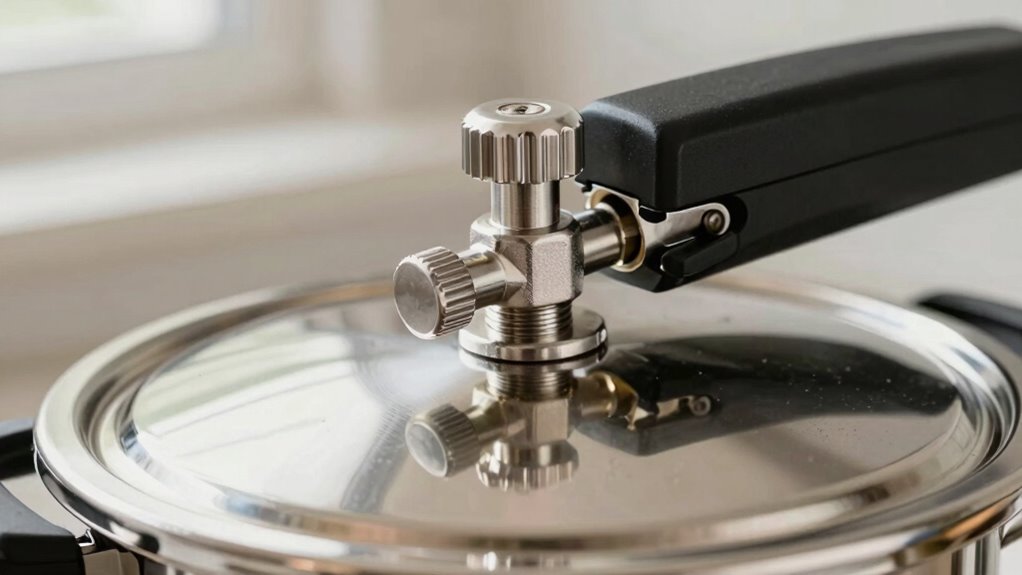
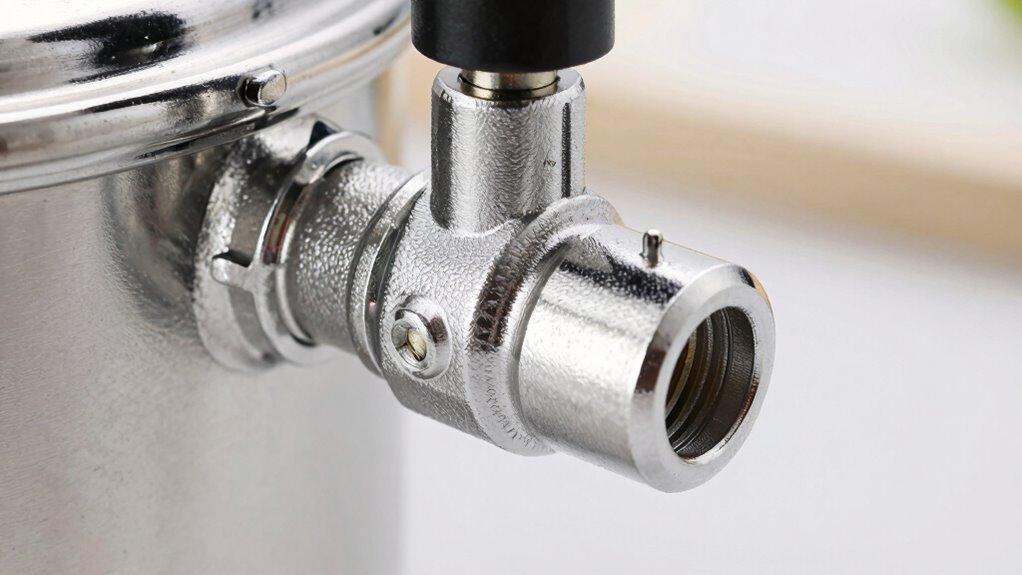
Have you ever wondered what keeps a pressure cooker safe during operation? The answer lies in the pressure cooker safety valve. This critical component ensures cooking safety by managing pressure levels inside the cooker. When the internal pressure rises beyond the safe limit, the safety valve automatically releases steam, preventing dangerous overpressure. This pressure regulation is essential because it maintains consistent, safe cooking conditions. Without this valve, excess pressure could cause the cooker to burst or malfunction. The safety valve is designed to open at a specific pressure, acting as a fail-safe to protect you and your kitchen. Understanding pressure regulation helps you appreciate how this indispensable part works to keep your cooking safe. Additionally, material durability ensures the valve functions correctly over many uses, maintaining safety standards. Recognizing the importance of regular maintenance can help prolong the lifespan of the safety valve and ensure it operates properly. Proper manufacturing quality is also crucial to guarantee the safety valve performs reliably under different cooking conditions. By understanding how this indispensable part works, you can cook confidently, knowing your pressure cooker is equipped for safe operation.
Why Is the Safety Valve So Important for Safe Cooking?
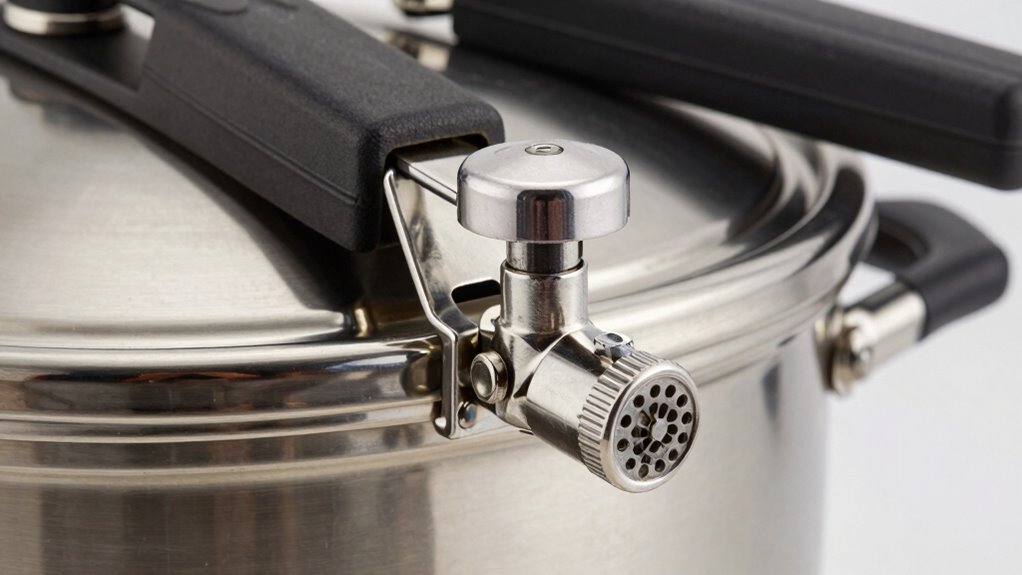
Your safety valve plays a vital role in preventing dangerous overpressure situations. It automatically releases steam when pressure gets too high, keeping your cooker safe. Without it, the risk of accidents or explosions increases considerably. Proper maintenance and understanding of the pressure relief system are essential for ensuring your cooker remains safe during use. Additionally, being aware of safety checklists can help identify potential issues before they become hazardous. Regular inspections of the pressure release mechanism can also prevent malfunctions and ensure reliable operation. Understanding the pressure build-up process can further help in diagnosing issues early and maintaining safety, especially when considering heat distribution within the cooker that influences pressure levels.
Prevents Overpressure Risks
Pressure cookers operate under high pressure, which is indispensable for speeding up cooking times. Without proper safety measures, this pressure can sometimes build beyond safe limits, creating overpressure risks. The safety valve plays a critical role here, preventing dangerous pressure buildup that could cause the cooker to malfunction or even explode. By releasing excess steam when pressure reaches unsafe levels, it guarantees your cooking techniques stay safe and controlled. This is essential for maintaining kitchen safety, especially when using pressure cookers regularly. Without a functioning safety valve, you might not notice dangerous pressure levels until it’s too late. Regularly checking and maintaining the safety valve helps prevent overpressure risks, keeping your cooking environment secure and your meals perfectly prepared. Additionally, proper maintenance of safety valves ensures they function correctly and continue to protect against overpressure hazards. Understanding pressure regulation mechanisms is crucial for safe pressure cooker operation and avoiding potential accidents.
Ensures Safe Release
Why is the safety valve so vital for safe cooking? It allows for a proper pressure release when the cooker gets too hot or builds up excess pressure. Without this release, pressure could reach dangerous levels, risking explosions or food spills. The valve maintains a safe environment by releasing pressure gradually and preventing sudden surges. Regular valve maintenance is essential; a dirty or faulty valve might not release pressure correctly, compromising safety. Always check that the safety valve moves freely and isn’t blocked by food residues or debris. Proper pressure release ensures your pressure cooker functions safely and efficiently. Remember, a well-maintained safety valve is your best defense against accidents, making sure cooking remains safe and controlled every time you use it.
How Does the Safety Valve Release Excess Pressure?
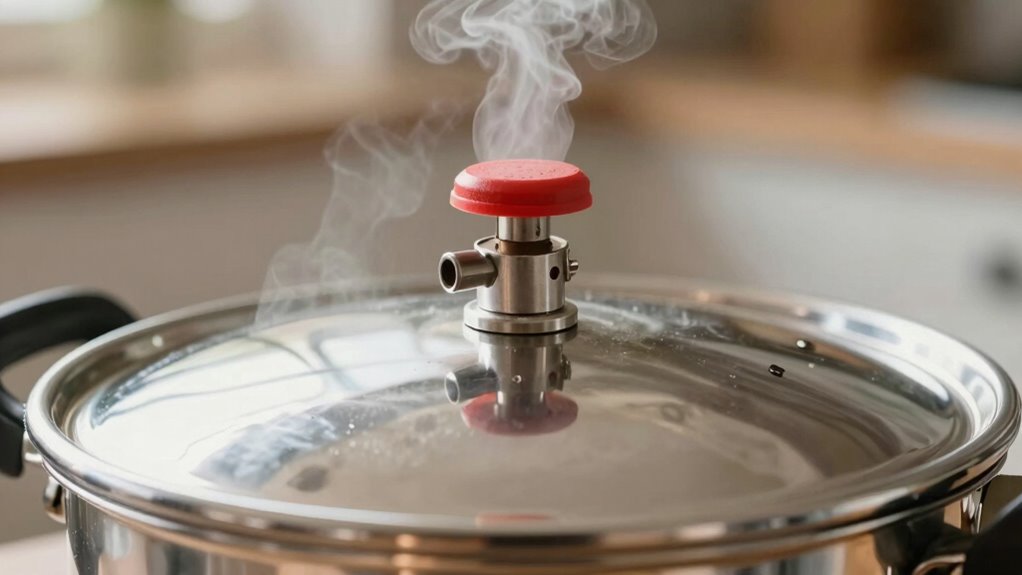
Your safety valve uses a pressure sensing mechanism to monitor the steam inside the cooker. When pressure builds up beyond safe limits, it triggers the valve to release excess steam. This process helps prevent dangerous over-pressurization and keeps your cooking safe. Additionally, understanding the pressure release process can help you better maintain and troubleshoot your pressure cooker. Regularly checking the valve operation ensures it functions properly and maintains safety standards. Using proper maintenance techniques can further prolong the life of your safety valve and ensure it responds correctly when needed. Being aware of the essential oils for safety can also enhance your understanding of how natural remedies support overall well-being and device maintenance. Proper inspection of the flushing mechanisms can help detect potential issues before they become safety hazards.
Pressure Sensing Mechanism
Ever wonder how a pressure cooker knows when to release excess pressure? It all comes down to the pressure sensing mechanism. Inside, a pressure sensor detects when the internal pressure reaches a certain level. Once that pressure threshold is met, the sensor activates the trigger mechanism, which is designed to respond quickly. This trigger mechanism then initiates the release process, allowing steam and excess pressure to escape safely. The pressure sensor is carefully calibrated to guarantee the cooker doesn’t release too early or too late. Its precise response ensures your cooker remains safe during operation, preventing dangerous buildup of pressure. Essential oils for safety By constantly monitoring internal conditions, this mechanism keeps everything within safe limits without you needing to intervene. Additionally, the pressure sensing mechanism often incorporates safety standards to ensure consistent and reliable operation. Proper calibration and adherence to regulatory guidelines are crucial for maintaining safety and performance. Regular maintenance and testing of the pressure sensor help ensure that the safety valve functions correctly over time. Moreover, advancements in sensor technology continue to improve the accuracy and reliability of these safety systems.
Triggering the Valve
When the pressure sensor detects that internal pressure has reached a safe limit, it activates the trigger mechanism, which is designed to respond immediately. This trigger causes the safety valve to open, allowing steam to release and preventing further pressure buildup. As the valve opens, excess steam escapes swiftly, lowering the internal pressure to safe levels. The steam release is controlled and steady, ensuring the cooker doesn’t overpressurize or burst. Once enough pressure has been released, the valve closes again, sealing the cooker. This process happens automatically, providing a reliable safety feature. Understanding pressure regulation helps explain how the safety valve maintains optimal cooking conditions. Additionally, the pressure release process helps prevent dangerous overpressure scenarios. By promptly releasing steam during pressure buildup, the safety valve protects you from potential accidents or explosions, keeping your cooking process safe and secure. Proper safety mechanisms are essential for the safe operation of pressure cookers.
What Are the Different Types of Pressure Cooker Valves?
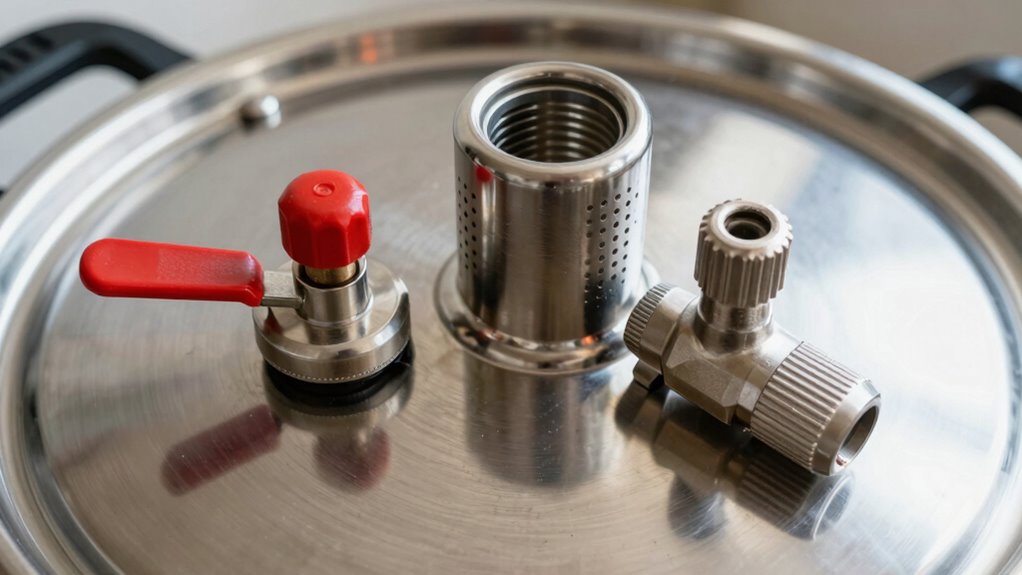
Pressure cooker valves come in several types, each designed to release excess steam and maintain safe pressure levels. The most common are the weighted valve and the spring-loaded valve. The weighted valve, often called a jiggler, releases steam with a rhythmic rocking motion, providing audible feedback during pressure cooking. The spring-loaded valve uses a metal spring to control pressure, releasing steam when it reaches a set level. Some pressure cookers also feature a pop-up or safety valve, which rises to indicate high pressure or a malfunction. Each valve type plays a vital role in pressure release, ensuring your cooker operates safely. Understanding these valve types helps you recognize how your pressure cooker maintains proper pressure and keeps you safe during cooking.
Signs Your Pressure Cooker’s Safety Valve Isn’t Working?
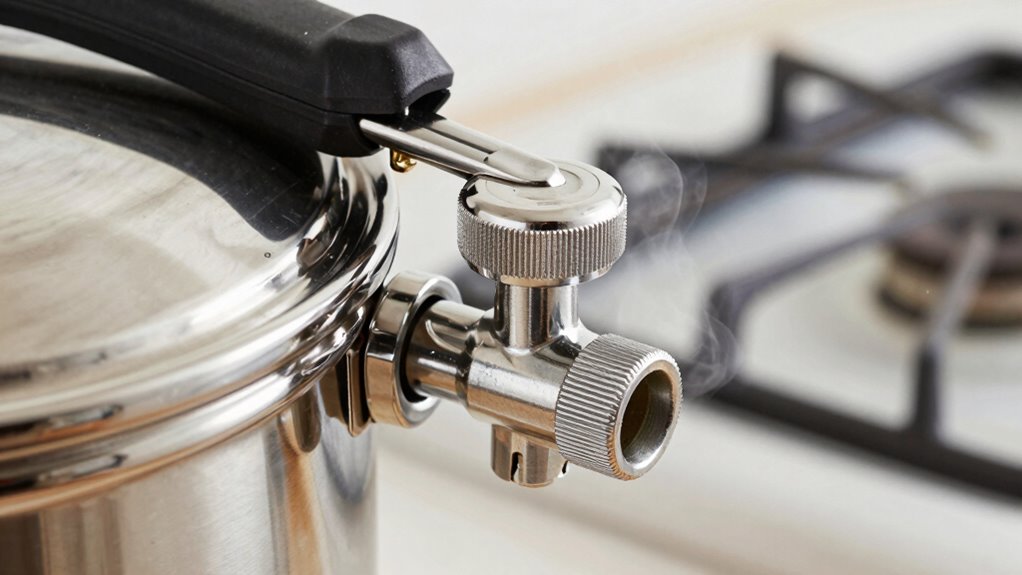
A safety valve that isn’t functioning properly can pose serious risks during pressure cooking. If you notice leaks, hissing sounds, or inconsistent pressure, your safety valve might be faulty. Common signs include the valve constantly releasing steam or not releasing at all, which indicates a problem. To help identify issues, consider this table:
| Symptom | Possible Cause | Action Needed |
|---|---|---|
| Continuous steam release | Valve stuck open or clogged | Clean or replace safety valve |
| No steam release | Valve stuck closed | Inspect and repair or replace |
| Unusual noises | Malfunctioning valve or gasket | Seek professional advice |
Using proper cooking tips and reliable kitchen gadgets can prevent safety hazards and ensure your pressure cooker works correctly.
How to Test and Maintain Your Safety Valve

Testing and maintaining your safety valve regularly is vital to guarantee your pressure cooker operates safely. Proper maintenance tips not only ensure your cooker functions correctly but also promote cooking safety. Start by inspecting the valve for any dirt, debris, or corrosion, and clean it gently with warm, soapy water if needed. To test the valve’s functionality, lift or press the valve’s pin gently to see if it moves freely and returns to its original position. If it sticks or doesn’t move smoothly, replace the valve immediately. Always check for visible damage or wear during inspections. Regular maintenance, including cleaning and testing, helps prevent malfunctions and keeps your pressure cooker safe to use. Remember, a well-maintained safety valve is key to safe and effective cooking.
Mistakes That Can Make Your Pressure Cooker Unsafe
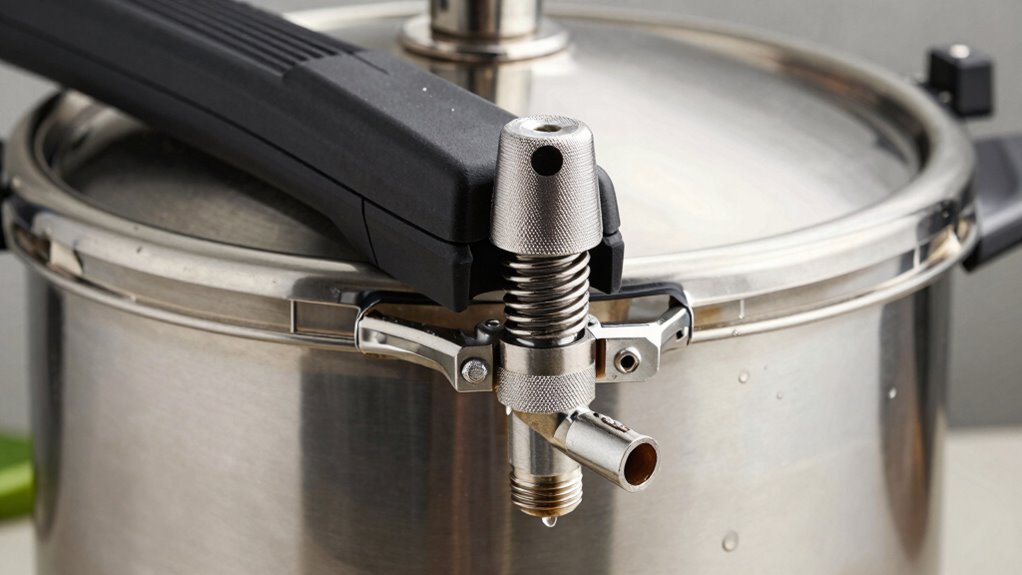
Failing to properly inspect and maintain your safety valve is one of the most common mistakes that can compromise your pressure cooker’s safety. Many pressure cooker myths suggest that safety valves are foolproof or unnecessary if you follow basic steps, but that’s false. Safety valve myths can lead you to overlook critical checks, increasing risk. Ignoring signs of wear, damage, or clogging can cause the valve to malfunction or fail entirely under pressure. Always ensure your safety valve is clean, free of blockages, and functioning correctly. Regular maintenance and understanding how your safety valve works help prevent accidents. Don’t fall for pressure cooker myths that downplay the importance of regular safety checks—your safety depends on it.
What to Do If Your Safety Valve Isn’t Working Properly?
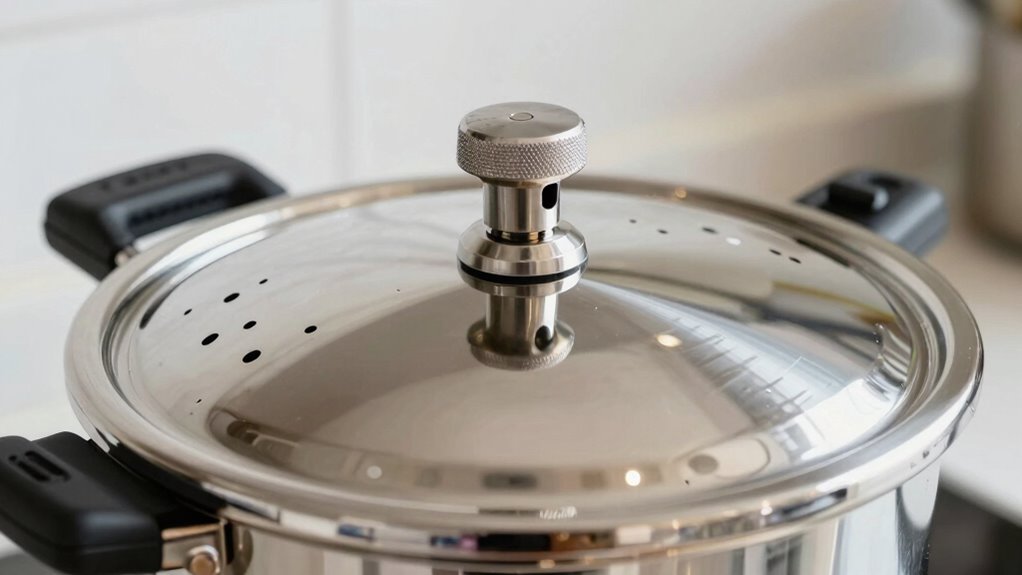
If you notice your safety valve isn’t releasing pressure or seems stuck, it’s essential to act promptly to prevent potential accidents. First, turn off the heat and let the cooker cool down completely. Check if the valve needs a pressure adjustment—sometimes, a simple tweak can restore proper function. If the valve remains stuck or isn’t responding, it’s safest to replace it. Do not attempt to force or repair the valve yourself unless you’re confident in your skills; improper handling can be dangerous. Regular maintenance, including cleaning the valve and ensuring it moves freely, can prevent issues. If replacement is needed, consult your pressure cooker’s manual or a professional to ensure you get the correct valve for your model.
How to Keep Your Pressure Cooker Safe and Stress-Free
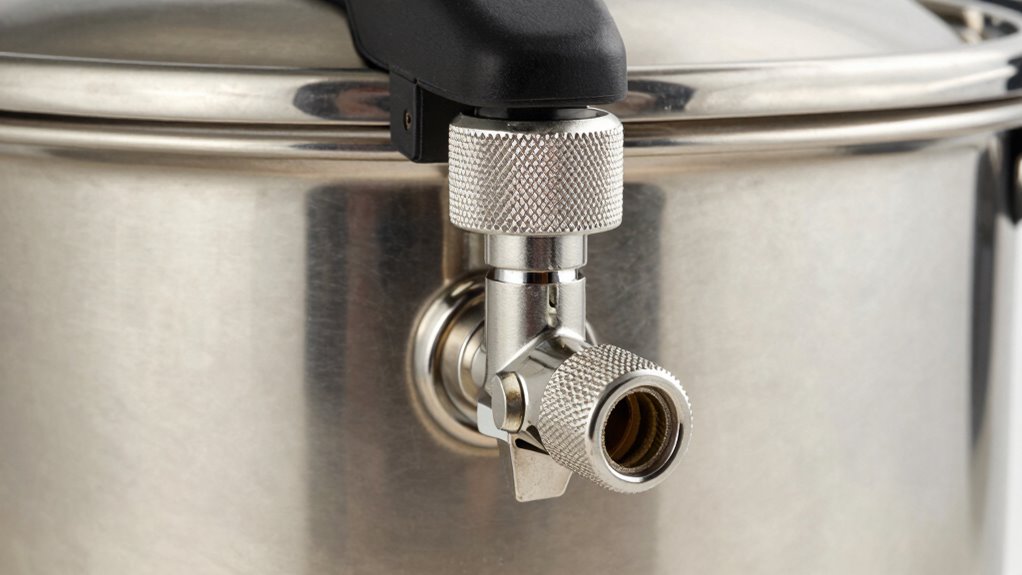
Keeping your pressure cooker safe and stress-free starts with following proper operating procedures and staying attentive to its condition. Always read the user manual before attempting new cooking recipes, and double-check that the safety valve and other parts are functioning correctly. Use kitchen tips like regular cleaning and inspection to prevent issues. Never force the lid open, and release pressure properly after cooking. Keep an eye on the pressure indicator during use to ensure it stays within safe limits. Avoid overfilling the cooker, which can block safety mechanisms. By staying vigilant and practicing these simple safety habits, you’ll enjoy stress-free cooking and minimize risks. Proper care and attention make pressure cooking safer, easier, and more enjoyable every time.
Frequently Asked Questions
Can a Safety Valve Malfunction Without Warning?
Yes, a safety valve can malfunction without warning, leading to a safety failure. You might not get a malfunction warning beforehand, so it’s essential to inspect your pressure cooker regularly. Look for signs like corrosion, damage, or sticking parts. If the safety valve doesn’t release pressure when needed, it could cause dangerous over-pressurization. Always follow manufacturer instructions and replace faulty valves promptly to guarantee safe cooking.
Are Safety Valves Universal for All Pressure Cookers?
Safety valves aren’t universal for all pressure cookers because of pressure valve compatibility and variations in safety valve designs. You need to verify your specific model’s requirements before replacing or upgrading the safety valve. Different pressure cookers may have unique sizes, pressure ratings, or mechanisms, so using the correct safety valve ensures proper function and safety. Always refer to your manufacturer’s instructions to find the right safety valve for your cooker.
How Often Should I Replace My Pressure Cooker’s Safety Valve?
You should replace your pressure cooker’s safety valve if it shows signs of damage, corrosion, or if it’s not functioning properly. Follow a regular replacement schedule, typically every 1-2 years, depending on usage. To keep it safe, perform inspection tips like checking for leaks or sticking valves before each use. Replacing it promptly ensures your cooker stays safe and operates efficiently, giving you peace of mind.
What Materials Are Safety Valves Typically Made Of?
Did you know that most safety valves are made from stainless steel or brass? These materials are chosen because of their durability and high corrosion resistance, which are essential for safety. Stainless steel, in particular, offers excellent material durability, ensuring the valve functions properly over time. Brass is also popular due to its resistance to corrosion and ease of manufacturing. You can trust these materials to keep your pressure cooker safe and reliable.
Is It Safe to Bypass or Disable the Safety Valve?
You should never bypass or disable the safety valve on your pressure cooker. Doing so is unsafe because the safety valve protects you from potential overpressure, which can cause explosions. Instead, perform regular safety valve testing and proper valve maintenance to guarantee it functions correctly. Maintaining the valve helps prevent accidents, so always follow the manufacturer’s instructions, and never compromise safety for convenience.
Conclusion
Ensuring your pressure cooker’s safety valve works properly keeps you safe and stress-free in the kitchen. For example, ignoring signs of a faulty valve could lead to dangerous overpressure or accidents. Regularly check, test, and maintain your valve—think of it as your cooker’s safety guardian. When you prioritize this, you can cook confidently, knowing you’re minimizing risks and enjoying delicious meals without worry. Safety starts with a simple, proactive step.