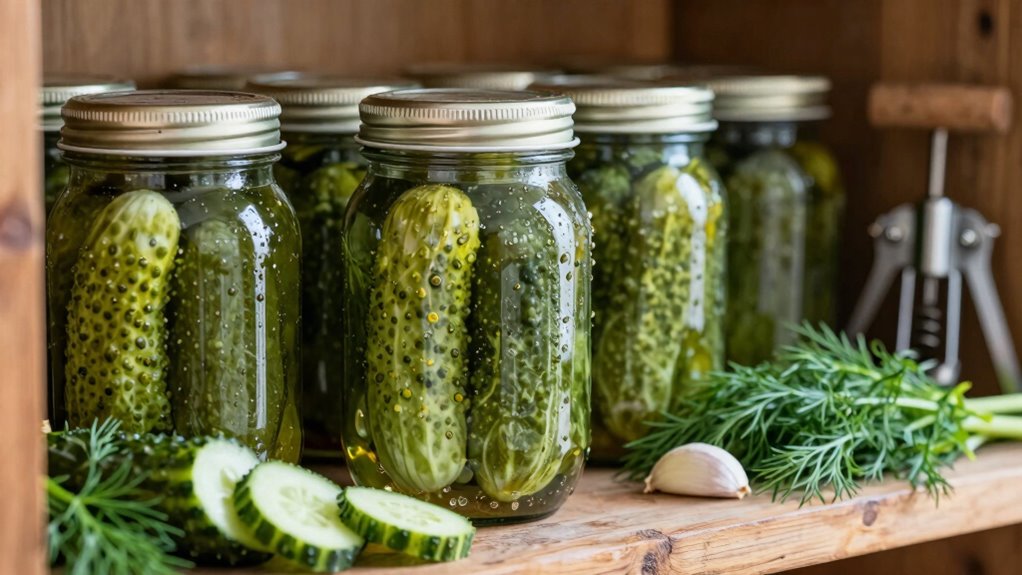

To store homemade pickles without spoiling, use sterilized glass jars with airtight lids, preferably wide-mouthed for easy filling. Keep them in a cool, dark place between 55°F and 70°F, avoiding temperature fluctuations and humidity. make certain the lids are tightly sealed and check regularly for signs of mold or spoilage. Proper storage extends both flavor and crunchiness, and if you follow these tips, you’ll find out more about maintaining safe, delicious pickles for months.
Key Takeaways
- Use airtight glass jars with sterilized lids to prevent air exposure and contamination.
- Store pickles in a cool, dark place at 55°F to 70°F to maintain freshness and prevent spoilage.
- Regularly check for signs of mold, off smells, or cloudy brine, and discard any compromised jars.
- Ensure lids are tightly sealed and avoid temperature fluctuations or heat sources during storage.
- Always use clean utensils and properly sterilized jars to prevent introducing bacteria or mold.
How to Choose the Best Containers for Homemade Pickles
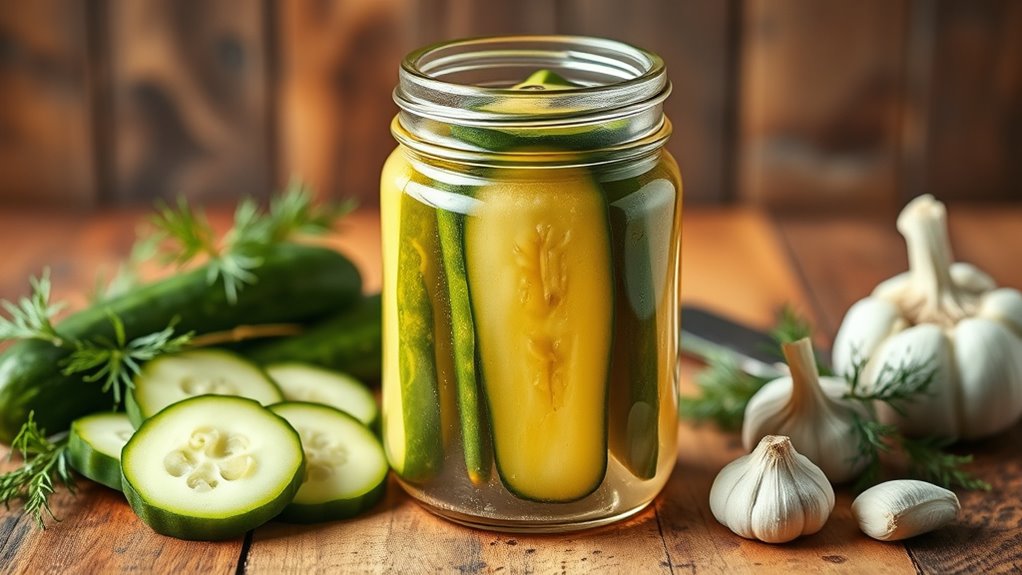
Choosing the right containers is essential for ensuring your homemade pickles stay fresh and safe to eat. When selecting jar types, consider glass jars, as they are non-reactive and won’t alter the flavor or safety of your pickles. Mason jars are a popular option because they come with secure lids and are easy to sterilize. Material considerations are vital; avoid plastic containers, which can stain, retain odors, or leach chemicals over time. Glass is durable and inert, making it ideal for long-term storage. Make sure the jars you choose are airtight to prevent spoilage. Also, opt for jars with wide mouths for easy filling and cleaning. Proper container selection helps preserve the taste, texture, and safety of your homemade pickles. Airtight containers are especially important to prevent spoilage and maintain freshness over time. Selecting containers made from food-safe materials ensures that no harmful substances leach into your pickles during storage. Using containers with proper sealing mechanisms further enhances the safety and longevity of your preserved produce. Additionally, choosing containers that are easy to clean and sterilize helps maintain a hygienic environment for your pickles. Ensuring the containers are free from cracks or damage is also crucial to avoid contamination or spoilage during storage.
Sealing and Preserving Your Pickles to Keep Them Fresh

To keep your homemade pickles fresh and safe to eat, proper sealing and preserving techniques are essential. Using fermentation techniques not only extends shelf life but also enhances flavor development through natural processes. Make sure your jars are sealed tightly to prevent air exposure, which can lead to spoilage. Proper sealing maintains anaerobic conditions that promote safe fermentation and keep out bacteria. Consider using sterilized lids and lids with rubber gaskets to ensure a secure seal. As your pickles ferment, their flavors deepen, making preservation even more rewarding. Once fermentation is complete, store jars in a cool, dark place to preserve the quality and prevent spoilage. Effective sealing and preservation are the keys to enjoying fresh, flavorful homemade pickles for months to come. Additionally, employing smart‑home storage solutions can help monitor temperature and humidity levels, further safeguarding your preserved foods. Proper sealing techniques and temperature control are crucial for preventing microbial growth and spoilage during storage. Using proper sealing techniques ensures that your pickles remain fresh and free from spoilage during storage. Maintaining the correct storage environment is also crucial for optimal preservation and freshness, and incorporating proper storage practices can significantly extend the shelf life of your pickles.
Storing Pickles at the Right Temperature and Environment
Proper temperature and environment are crucial for maintaining your homemade pickles’ quality and safety. Keeping your pickles in a cool, dark place, ideally between 55°F and 70°F, slows fermentation and prevents spoilage. Fermentation tips suggest avoiding temperature fluctuations, which can disrupt the process and compromise flavor preservation. A consistent, moderate temperature helps preserve the crispness and tanginess of your pickles. Avoid storing them near heat sources or direct sunlight, as heat accelerates spoilage and can lead to mold. Humidity should be moderate to prevent mold growth while keeping the environment stable. Maintaining the proper storage environment is essential for controlling fermentation and ensuring safety. Additionally, proper air circulation can help prevent moisture buildup and mold development. Ensuring adequate ventilation can further reduce the risk of spoilage caused by excess moisture. Proper storage conditions also help maintain the microbial balance, which is vital for safe fermentation. Ensuring these conditions will help your pickles ferment safely and retain their best flavor, allowing you to enjoy their crunch and taste for months to come.
How to Check if Your Pickles Are Still Good and Safe
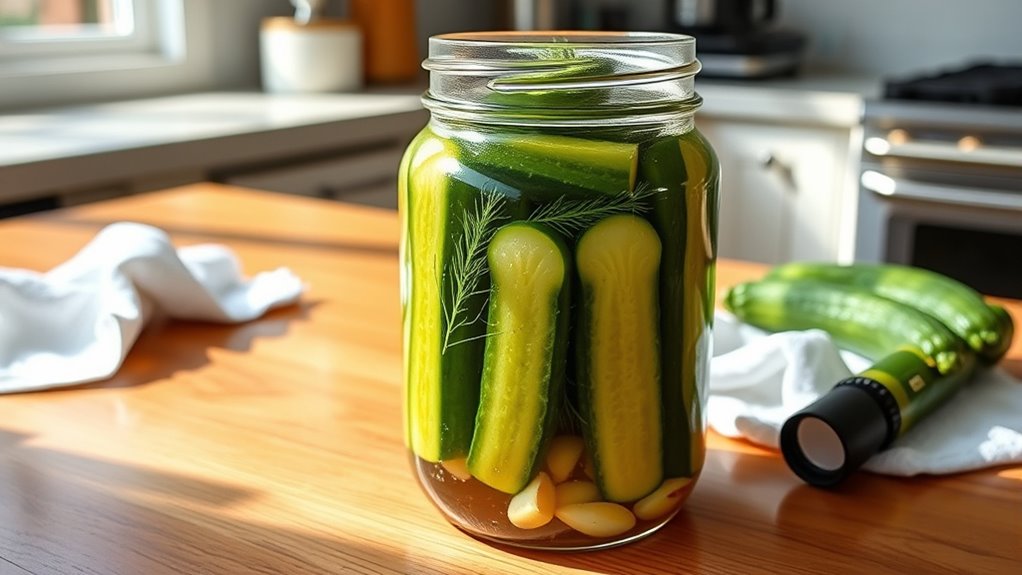
After storing your pickles at the right temperature and environment, it’s important to regularly check their condition before digging in. Look for signs of deterioration, such as an off smell, cloudy brine, or mold on the surface. If you notice a strange or sour odor that differs from the usual vinegar scent, it’s a sign of pickle spoilage. Also, examine the texture—if the pickles are slimy, mushy, or have changed color, discard them. Verify the lid remains sealed tightly; if it’s bulging or leaks, it indicates fermentation issues. Always trust your senses—any unusual appearance, smell, or texture suggests that your pickles are no longer safe to eat. When in doubt, it’s safer to throw them out to avoid health risks.
Troubleshooting Common Storage Problems and Extending Shelf Life
Even with careful storage, you might encounter common issues like spoilage, mold, or spoilage signs that can compromise your homemade pickles. To troubleshoot these problems and extend shelf life, focus on fermentation issues and mold prevention. Here are key tips:
- Regularly check for mold or discoloration on the jar’s surface.
- Ensure your lids are sealed tightly to prevent air exposure.
- Maintain consistent refrigeration temperatures to slow fermentation issues.
- Use clean utensils and jars to avoid introducing mold spores or bacteria.
- Proper filtration of your ingredients can help prevent contaminants that lead to spoilage. Additionally, understanding the storage conditions recommended for fermented foods can make a significant difference in preserving quality. Proper temperature control is essential to prevent unwanted microbial growth that causes spoilage. Implementing proper hygiene practices during preparation and storage can further reduce the risk of contamination and spoilage. Regular monitoring of fermentation progress can also help identify issues early and prevent spoilage.
If you notice mold, discard the jar immediately. Properly sealed and stored pickles last longer, and monitoring helps catch problems early. Taking these steps will help preserve your homemade pickles safely.
Frequently Asked Questions
Can I Store Homemade Pickles Without Refrigeration?
You can store homemade pickles without refrigeration if you’ve completed the fermentation process properly. Make certain the salt concentration is high enough to inhibit bacteria growth, typically around 2-3%. Keep the jars in a cool, dark place like a cellar or pantry. Proper fermentation creates natural acidity, which preserves the pickles. Check regularly for signs of spoilage, and if everything looks good, your pickles should stay fresh for months.
How Long Can Homemade Pickles Last Without Spoilage?
Think of your homemade pickles as a delicate treasure, protected by the fermentation process and airtight sealing. Without refrigeration, they can last about 1 to 3 months if kept in a cool, dark place. Properly sealed jars slow spoilage, but keep an eye out for off smells or mold. Every jar’s lifespan varies, so trust your senses to decide when it’s time to enjoy your preserved bounty.
Do Store-Bought Preservatives Affect Homemade Pickle Storage?
Store-bought preservatives can impact your homemade pickle storage by prolonging their shelf life and maintaining their quality. These preservatives have specific preservative effects that inhibit spoilage-causing bacteria and mold, allowing you to store your pickles longer without worry. Just make certain you follow proper storage guidelines, like keeping jars sealed and refrigerated after opening, to maximize these preservative effects and ensure your homemade pickles stay fresh and safe for as long as possible.
Is It Safe to Reuse Pickle Jars for Storage?
You can reuse pickle jars, but first, you need to guarantee proper jar sterilization to prevent spoilage. Wash jars thoroughly with hot, soapy water and sterilize them by boiling or baking. Check that lids seal tightly and are free from rust or damage. If the lids don’t seal well, replace them to maintain freshness. Reusing jars is safe as long as you follow these steps for proper lid sealing and sterilization.
What Are Natural Alternatives to Commercial Preservatives?
You can harness natural alternatives like herbal preservation methods to keep your pickles fresh without commercial preservatives. Fermentation benefits, such as promoting beneficial bacteria, also naturally preserve and enhance flavor. Herbs like garlic, dill, and mustard seeds act as natural preservatives, inhibiting spoilage. Think of it as turning your kitchen into a tiny, magical factory of natural preservation, where herbs and fermentation work together to keep your homemade pickles vibrant and safe for weeks!
Conclusion
Now that you know the secrets to storing homemade pickles, you’re ready to keep them fresh as a daisy. Think of your jars as treasure chests, guarding your flavorful bounty. With proper containers, sealing, and the right environment, your pickles will stay crisp and delicious for months. Just keep an eye on them, and you’ll enjoy tangy, homemade goodness whenever you crave it—like a garden in a jar, waiting to burst with flavor.