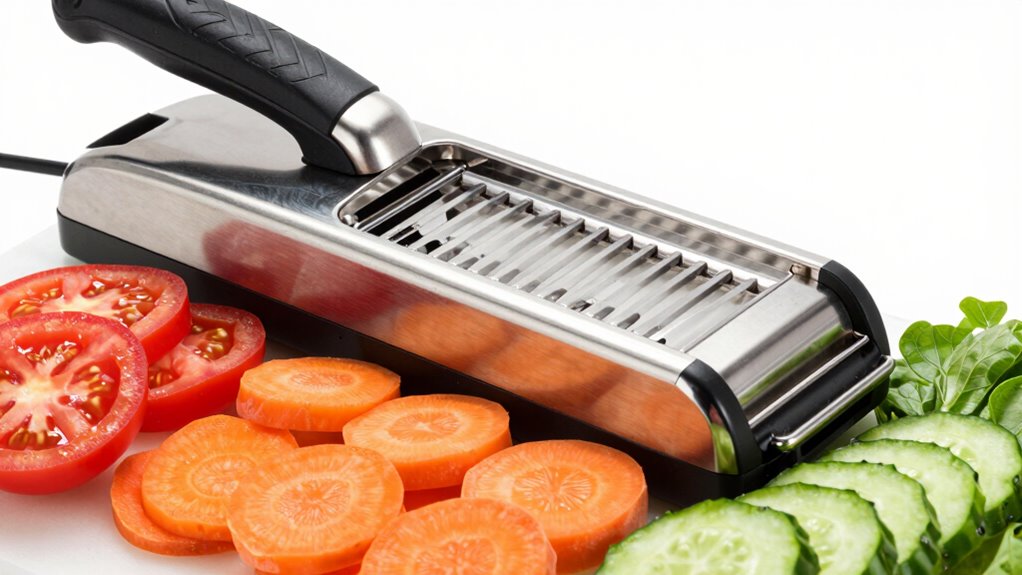

To keep your fingers safe while using a mandoline, make sure it has a reliable finger-saving system like a food guard or hand guard. These safety features help you avoid direct contact with the sharp blade while slicing. Using proper techniques, such as holding the guard securely and maintaining a steady, controlled motion, can prevent cuts. If you’re curious about how to maximize safety, keep going—you’ll discover essential tips for safe and effective mandoline use.
Key Takeaways
- Use finger guards and food holders to keep fingers away from sharp blades during slicing.
- Choose mandolines with safety locks and adjustable thickness settings to prevent accidental injuries.
- Maintain sharp blades to reduce force and improve control, minimizing the risk of slips and cuts.
- Secure the mandoline on a non-slip surface and wear cut-resistant gloves for added safety.
- Regularly inspect and clean blades and moving parts to ensure safe and proper operation.
Why Safety Is Critical When Using a Mandoline Slicer
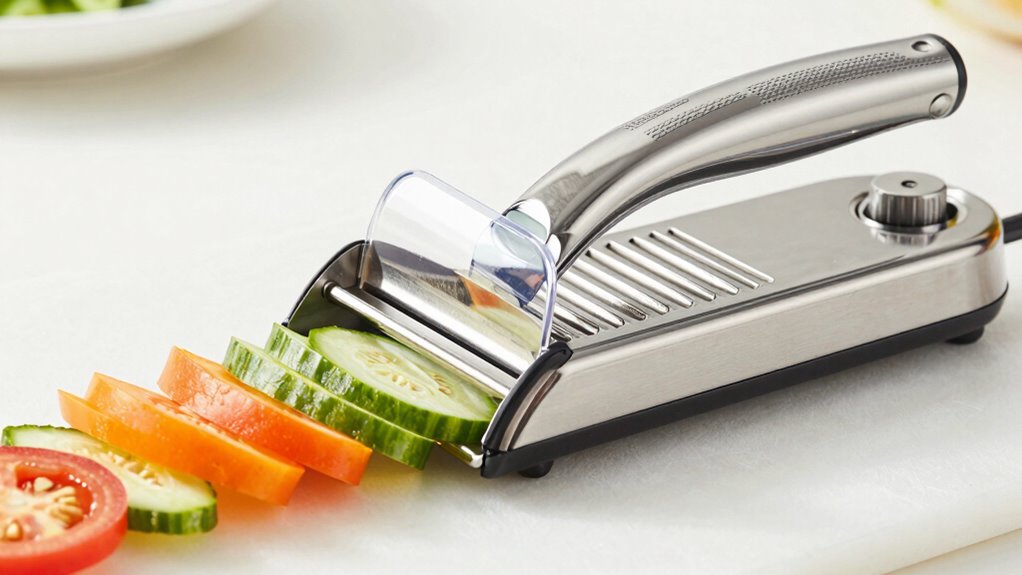
Using a mandoline slicer can make food prep faster and more precise, but it also poses significant safety risks if not handled carefully. Your knife skills and cutting techniques are vital to prevent accidents. When slicing, maintain a steady hand and use proper grip to avoid slips. Rushing or applying uneven pressure increases the risk of cuts. Remember, a sharp blade is safer because it requires less force, reducing chances of mishandling. Focus on controlling your movements and staying attentive throughout the process. Always keep your fingers away from the blade’s path, and use a guard or hand protector when available. Prioritizing safety helps you avoid injuries and guarantees your food prep remains efficient. Mastering proper technique minimizes risks while maximizing the benefits of your mandoline slicer. Additionally, understanding the home cleaning systems behind your tools can help you maintain and store your equipment properly, ensuring safety during use and longevity of the device. Regularly inspecting and cleaning your equipment reduces residue buildup that can cause malfunctions or accidents over time. Being aware of the safety features of your mandoline can further enhance your protection and confidence during use. Incorporating proper storage practices from reliable safety guidelines can also prevent accidental cuts when your equipment is not in use. Paying attention to equipment maintenance can prevent unexpected malfunctions that might lead to injuries.
Key Safety Features of Mandoline Slicers (Including Finger-Saving Systems)
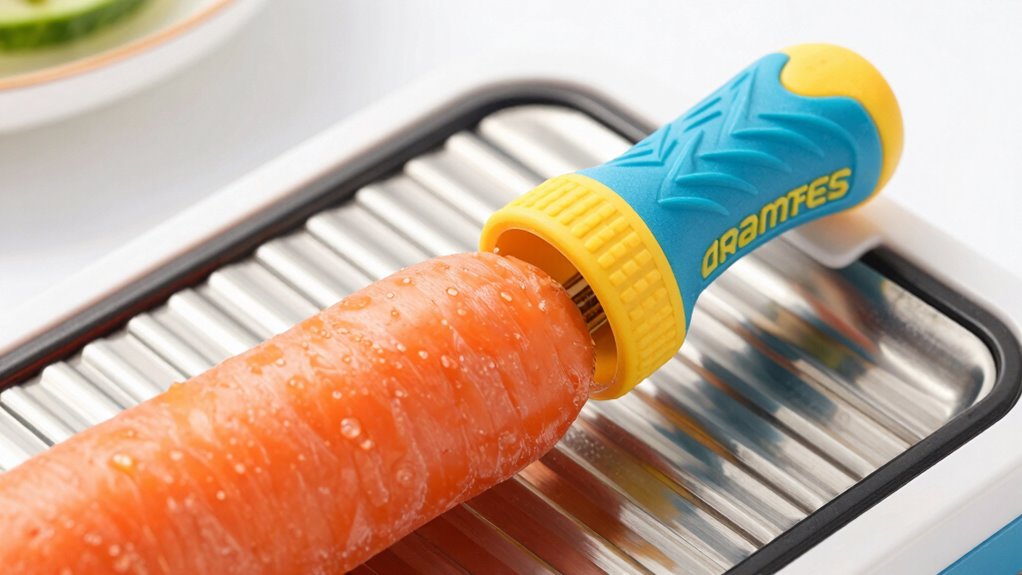
Modern mandoline slicers are equipped with essential safety features designed to protect you during food preparation. One key element is the sharp blades, which cut efficiently but can pose risks if mishandled. To minimize this danger, many models include finger-saving systems like food guards or hand guards that keep your fingers away from the blades. Additionally, an ergonomic handle provides a secure grip, giving you better control and reducing slippage. Some slicers also feature adjustable thickness settings with locking mechanisms, preventing accidental adjustments while slicing. These safety features work together to make your slicing experience safer and more comfortable, allowing you to focus on your task without worry. Prioritizing these key safety elements helps prevent injuries and ensures safer food prep. Incorporating contrast ratio considerations can also improve visibility and precision during slicing tasks, enhancing overall safety. Furthermore, selecting a mandoline with safety certifications ensures it meets industry safety standards, adding an extra layer of security. For added peace of mind, choosing models with anti-slip bases can help keep the slicer steady during use.
How to Use the Hand Guard and Food Holder Safely
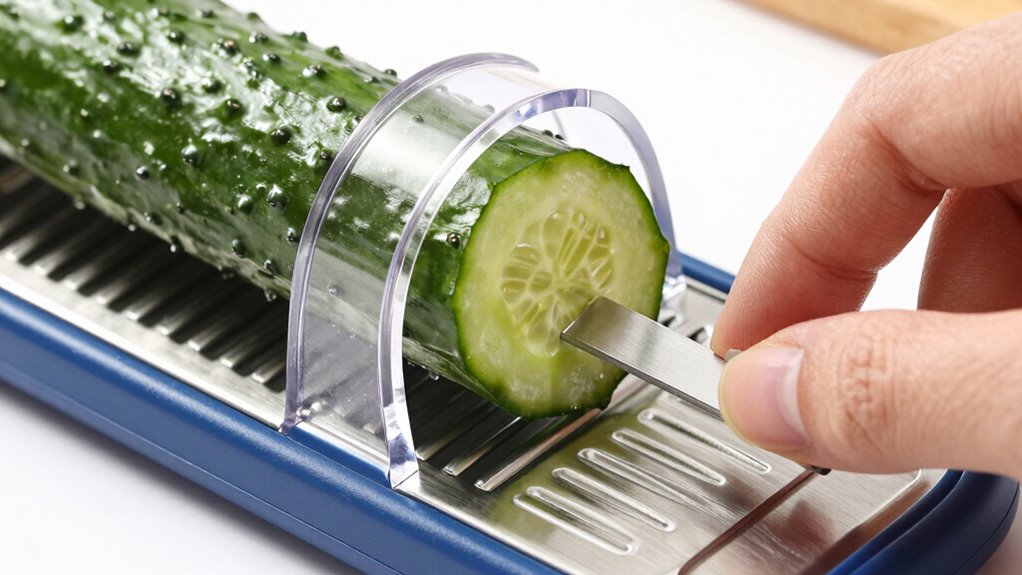
To use the hand guard and food holder safely, you need to focus on proper hand placement techniques. Keep your fingers away from the blades and hold the guard firmly for stability. Make sure your food is securely held in the holder to prevent slips and accidents. Additionally, ensuring proper safe installation practices can help prevent mishaps during use. Practicing these steps consistently can help maintain a calmer, more organized kitchen environment and reduce the risk of injuries. Being aware of sharp blade handling techniques can further enhance your safety when operating the mandoline. Understanding proper usage can also contribute to safer slicing experiences and prevent unnecessary injuries. Incorporating modern safety features like the hand guard can significantly improve your overall safety during food prep.
Proper Hand Placement Techniques
Proper hand placement is essential for safe mandoline use, especially when handling the hand guard and food holder. To maintain control and prevent injuries, focus on your cutting techniques and hand positioning. Here are key tips:
- Keep your fingers curled inward, away from the blade, to avoid accidental cuts.
- Use the hand guard correctly, ensuring your fingers stay behind the protective barrier.
- Maintain a firm grip on the food holder, applying even pressure for consistent slices.
- Always cut with smooth, controlled motions, avoiding forceful or jerky movements.
- Be aware of the cutting technique, as proper technique minimizes the risk of injury and ensures precise slices.
Secure Food With Food Holder
Using the food holder correctly is essential for safe mandoline operation because it keeps your fingers away from the blade. Always secure your food with the hand guard or food holder before slicing. This not only protects your fingers but also helps maintain consistent thickness. Make certain the food holder is firmly attached and steady to prevent slips. Proper blade maintenance is crucial; a sharp blade slices efficiently and reduces the risk of accidents. After use, clean the mandoline and store it safely, preferably with the blade covered or in a protective case, to prevent accidental cuts. When storing, keep the blade in a designated safety area to avoid damage and guarantee safe storage safety. Using the food holder correctly minimizes risks and keeps your fingers intact. Additionally, understanding and practicing outdoor safety principles can help you stay prepared for unexpected situations while using your kitchen tools. Regularly inspecting your equipment and following safety protocols can further enhance your overall safety during food prep. Ensuring your workspace is dry and free of clutter is another important safety tip that can prevent slips and accidents. Incorporating proper technique when handling the mandoline can also significantly reduce the chance of mishaps. Remember that equipment inspection before use can identify potential hazards and promote safer operation.
Regular Maintenance Tips to Keep Your Mandoline Safe

Regular maintenance is essential to guarantee your mandoline stays safe and functions properly. Proper care prevents accidents and extends your slicer’s lifespan. Here are four tips to keep it in top shape:
Regular maintenance ensures your mandoline stays safe, efficient, and long-lasting.
- Store knives safely in designated knife storage to avoid dull blades and accidental cuts.
- Clean your mandoline after each use using appropriate cleaning methods—avoid abrasive sponges that can damage surfaces.
- Regularly inspect blades for dullness or damage, replacing them when necessary.
- Keep all moving parts dry and lubricate hinges if applicable to prevent rust and ensure smooth operation.
Troubleshooting Common Safety Issues and When to Replace Your Slicer
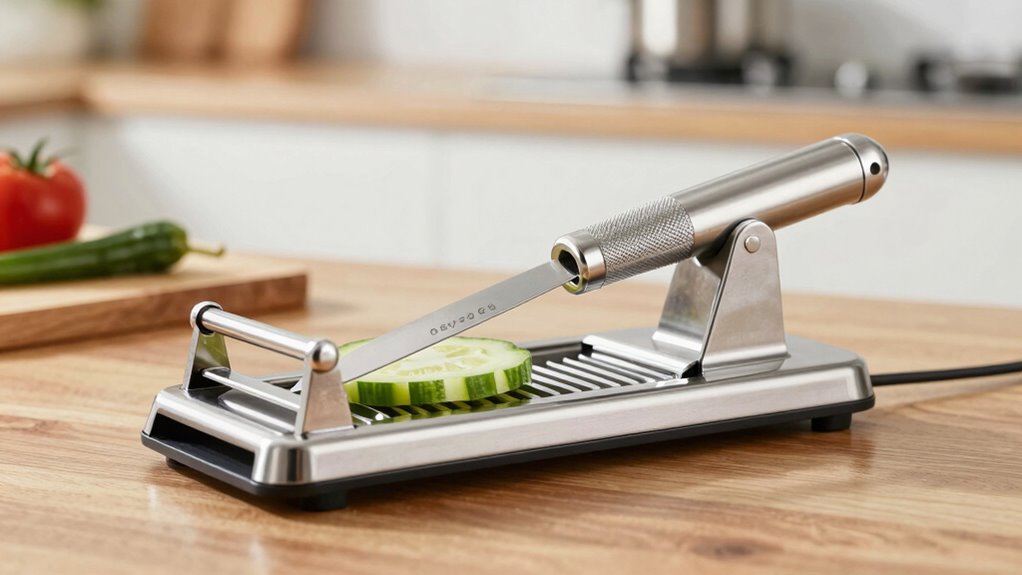
When you notice safety issues with your mandoline, addressing them promptly can prevent accidents and injuries. Sharp blades are essential for effective slicing, but dull or damaged blades can cause slips or uneven cuts, increasing safety risks. If your blades are chipped, bent, or no longer cutting cleanly despite proper cleaning tips, it’s time to substitute your slicer. Regularly inspect the blades for signs of wear and ensure all safety features, like hand guards, function properly. Additionally, understanding wiring basics can help you troubleshoot electrical issues safely if your slicer includes electronic controls. Knowing proper storage techniques can also prevent damage and ensure longevity of your equipment. Maintaining safety features and replacing worn parts promptly is crucial for safe operation. Proper cleaning maintains blade sharpness and safety. Regularly checking for equipment wear can help identify potential hazards early. For comprehensive safety, it’s also important to familiarize yourself with blade maintenance to keep your slicer functioning optimally. When in doubt, prioritize replacing your mandoline to keep your kitchen safe and efficient.
How to Choose a Mandoline With the Best Safety Features
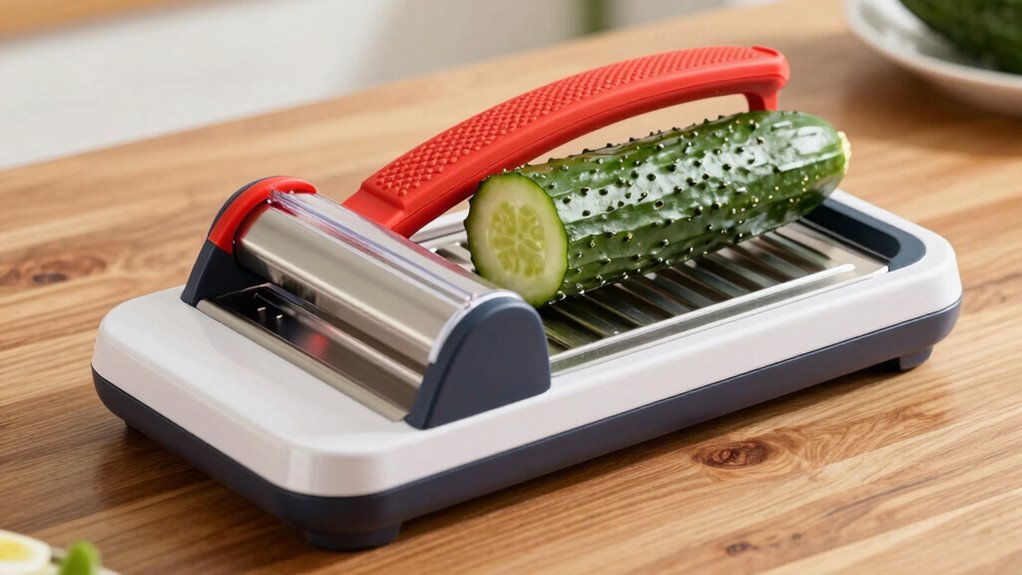
When selecting a mandoline, look for safety lock mechanisms that safeguard blades during storage and use. Adjustable thickness settings let you slice with precision, reducing the risk of slips or uneven cuts. A non-slip base design ensures stability on your countertop, so you can focus on slicing safely.
Safety Lock Mechanisms
Choosing a mandoline with a reliable safety lock mechanism is essential to prevent accidents during use. A good safety lock keeps the blade covered when not in use, reducing the risk of cuts and protecting blade maintenance. When selecting a mandoline, consider these features:
- Easy-to-engage locking system to secure the blade during storage safety.
- Clear indicators showing when the lock is engaged or disengaged.
- A locking mechanism that’s sturdy and won’t accidentally unlock during use.
- Compatibility with safety accessories that enhance grip and control.
These features help prevent injuries, keep blades sharp longer, and make storage safer. Always guarantee the lock mechanism is simple to operate, so you can focus on slicing safely without worry. A well-designed safety lock is your first line of defense.
Adjustable Thickness Settings
Adjustable thickness settings are a crucial safety feature on a mandoline because they allow you to control the blade depth precisely, minimizing the risk of slips or cuts. When choosing a mandoline, look for models with easy-to-use controls that enable quick adjustments. Proper blade maintenance ensures consistent cuts and prolongs the tool’s lifespan, reducing safety hazards. An ergonomic design reduces hand fatigue, giving you better control and decreasing the chance of accidents. Consider this table to compare features:
| Feature | Benefit |
|---|---|
| Adjustable thickness | Precise slicing, reduces slips |
| Easy-to-use controls | Quick adjustments, safer operation |
| Ergonomic design | Comfort, reduces fatigue, enhances safety |
Prioritize these features for safer, more efficient slicing.
Non-Slip Base Design
A mandoline with a non-slip base considerably enhances safety by preventing accidental slips during use. This stability keeps your hands away from the blade, reducing injury risk. When choosing a mandoline, consider these safety features:
- Rubberized or textured grip: Ensures the mandoline stays firmly in place on your countertop.
- Secure locking mechanisms: Prevents shifting during blade adjustments or slicing.
- Stable base design: Look for wide, sturdy bases for maximum grip.
- Storage safety: A non-slip base makes blade maintenance safer, as it stays steady during cleaning or when storing the device, minimizing accidental cuts. Prioritize these features to keep your workspace safe and maintain your mandoline’s blades effectively.
Your Step-By-Step Guide to Slicing Safely With a Mandoline
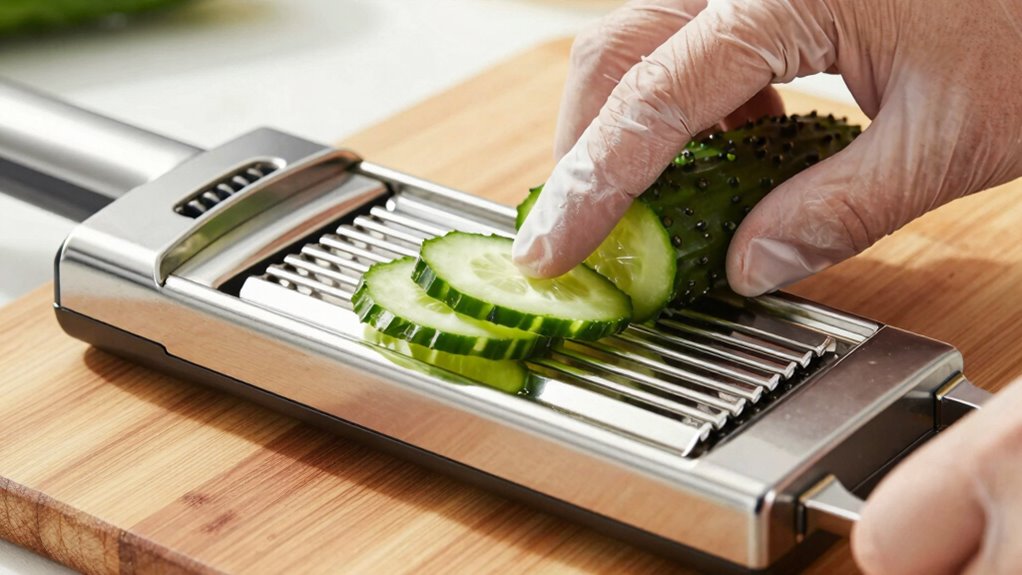
Slicing with a mandoline offers precision and efficiency, but safety should always come first. To do this, develop good knife skills and stay mindful of kitchen safety. Begin by securing the mandoline on a non-slip surface to prevent slipping. Always use the hand guard or food holder to maintain a safe distance between your fingers and the blades. Keep your fingers curled inward and guide your food steadily, applying even pressure. Take your time, especially with tricky or uneven slices. Never rush or get distracted during slicing. Regularly check the sharpness of your blades, as dull blades can lead to slips. By practicing careful knife skills and following safety protocols, you can enjoy efficient, safe slicing every time.
Safety Gear and Best Practices for Slicing

To protect yourself while working with a mandoline, wearing the right safety gear is essential. Proper equipment helps prevent cuts and promotes safe knife skills, especially during repetitive slicing. Focus on these four key items:
Wearing safety gear like cut-resistant gloves and using stable surfaces ensures safer mandoline slicing.
- Cut-resistant gloves – they provide an extra layer of protection for your fingers.
- Stable cutting board – ensures kitchen ergonomics, reducing slips and strain.
- Sharp blades – keep your mandoline blades well-maintained to reduce force and increase control.
- Non-slip mats – stabilize your work surface, preventing accidents during slicing.
Additionally, maintain good knife skills by controlling your hand movements and keeping your fingers away from the blade. Prioritizing safety gear and best practices guarantees a safer, more efficient slicing experience.
Final Tips for Safe and Efficient Mandoline Use
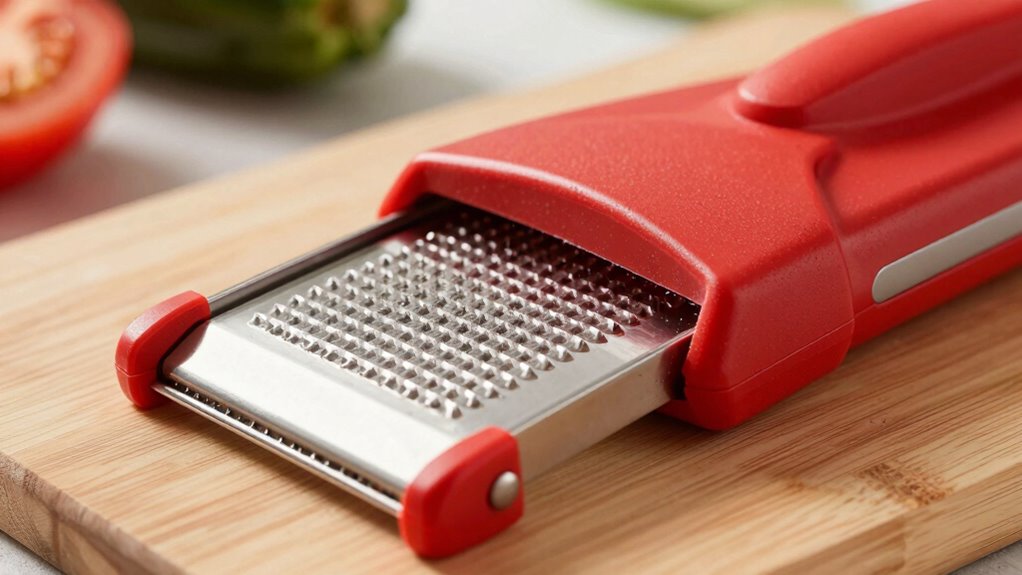
Using the right safety gear and following best practices set the foundation for safe mandoline use, but applying a few final tips can make your experience even more efficient and secure. Sharpen your knife skills to handle vegetables confidently, reducing the risk of slips. Pay attention to kitchen ergonomics by adjusting your stance and positioning your hands for comfort and control. Use both hands—one to hold the food and the other to operate the mandoline—keeping fingers away from the blade. Take your time with each slice, especially when working with large or tough produce. Regularly inspect your equipment for damage, and always use the safety guard. These small adjustments boost safety and ensure faster, more precise results.
Frequently Asked Questions
Can I Use a Mandoline Without Safety Features?
You shouldn’t use a mandoline without safety features. Manual safety tools are essential to prevent injuries and make slicing safer, especially since professional tools often include built-in safety mechanisms. These features protect your fingers from cuts and ensure precise cuts every time. Skipping safety features increases the risk of accidents, so always use the appropriate safety attachments or guards when operating a mandoline for a safer, more controlled slicing experience.
How Often Should I Replace My Mandoline’s Finger Guard?
Replacing your mandoline’s finger guard is like changing out a worn-out glove—it keeps your fingers safe. You should do this whenever the guard shows signs of wear, cracking, or if it no longer fits snugly, which can happen over time. The sharp blades and ergonomic design make slicing easier, but the guard’s integrity is vital for safety. Regular replacement ensures you stay protected during every use.
Are There Specific Foods That Are Unsafe to Slice With a Mandoline?
You should avoid slicing very soft or slippery foods like ripe tomatoes or delicate herbs with a mandoline, as they can slip and cause injuries. Also, tough, fibrous vegetables like squash or carrots may jam or damage your blade, making cutting unsafe. Always practice proper food safety and use correct cutting techniques—firmly secure foods and use the finger guard—to prevent accidents and keep your fingers safe.
What Is the Maximum Slicing Thickness for Safe Use?
You should set your mandoline’s maximum slicing thickness to about 1/4 inch for safe use. When the blade is sharp, thin slices are easier to control, but thicker slices provide better slicing consistency and reduce the risk of slips. Think of slicing as painting with a precise brush; setting the right thickness guarantees smooth, even results without risking your fingers. Always prioritize safety over thinness, especially with a sharp blade.
Is There an Age Restriction for Operating a Mandoline?
There isn’t a strict age restriction for operating a mandoline, but teen safety and senior usage should be contemplated. Teens should always use the safety guard and follow proper techniques to avoid injuries. Seniors might need extra caution and perhaps assistive tools to ensure safe operation. Always supervise younger users and encourage careful handling, regardless of age, to prevent accidents and promote safe, effective slicing.
Conclusion
By following safety tips and using the finger-saving system, you can reduce injury risk considerably. Did you know that mandoline-related accidents account for roughly 10% of kitchen injuries? Staying vigilant and properly maintaining your slicer keeps you safe and efficient. Remember, a well-chosen mandoline with the right safety features makes all the difference. Keep these tips in mind, and you’ll enjoy slicing with confidence—your fingers will thank you!