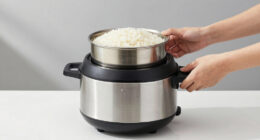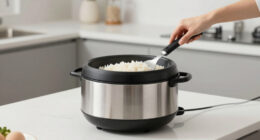
To keep rice safe, make certain it stays above 165°F if warm or below 40°F if cold, and never leave it in the danger zone (40°F–140°F) for over 2 hours. Use a thermometer to check the temperature regularly and cover rice to trap heat. Limit warm holding to 4 hours, and reheat leftovers thoroughly. For more tips on avoiding food safety risks, continue exploring the essential rules.
Key Takeaways
- Keep rice hot at 165°F or above, or refrigerate below 40°F, to prevent bacterial growth.
- Limit warm rice holding to no more than 4 hours to reduce food safety risks.
- Use a thermometer regularly to monitor rice temperature during storage and serving.
- Reheat leftovers to at least 165°F to kill bacteria before consumption.
- Discard rice left at room temperature over 2 hours to avoid foodborne illness.

Alpha Grillers Meat Thermometer Digital – Instant Read Food Thermometer for Cooking & Grilling – Professional Kitchen Gifts for Men, Dad & Mom
Instant Read Food Thermometer | Our instant read thermometer features a temperature probe and advanced, highly accurate technology…
As an affiliate, we earn on qualifying purchases.
As an affiliate, we earn on qualifying purchases.
Why Temperature Control Is Key for Safe Leftover Rice

Since bacteria can grow rapidly between 40°F and 140°F, maintaining the right temperature is essential for keeping leftover rice safe. Proper rice storage involves keeping cooked rice out of this danger zone, which means promptly refrigerating it or keeping it hot. Temperature monitoring is critical; use a thermometer to ensure your rice stays at a safe temperature. If you’re storing rice in the fridge, make sure it’s cooled quickly and kept below 40°F. When reheating, ensure the rice reaches at least 165°F to kill bacteria. Ignoring temperature control can lead to bacterial growth, increasing the risk of food poisoning. Utilizing smart temperature sensors can help you monitor and maintain optimal temperatures effortlessly, especially with the advent of cloud-based monitoring systems that provide real-time alerts. Regular temperature checks are vital for food safety and can prevent potential health hazards. Additionally, choosing the right storage containers can help maintain consistent temperatures and prevent contamination. Implementing connected kitchen appliances that automatically monitor temperature can further enhance food safety. By paying attention to rice storage and monitoring temperature, you minimize health risks and keep your leftover rice safe to enjoy later.
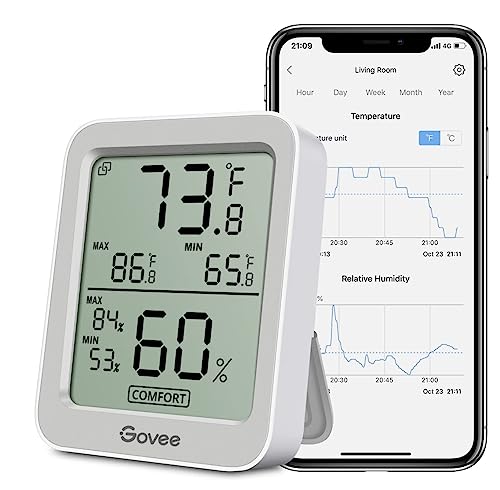
Govee Bluetooth Digital Hygrometer Indoor Thermometer, Room Humidity and Temperature Sensor Gauge with Remote App Monitoring, Large LCD Display, Notification Alerts, 2 Years Data Storage Export, Grey
Easy to Connect: Simply download the Govee Home app, search for and select H5075, and pair it successfully…
As an affiliate, we earn on qualifying purchases.
As an affiliate, we earn on qualifying purchases.
What Is the Best Temperature to Keep Rice Warm and Safe?
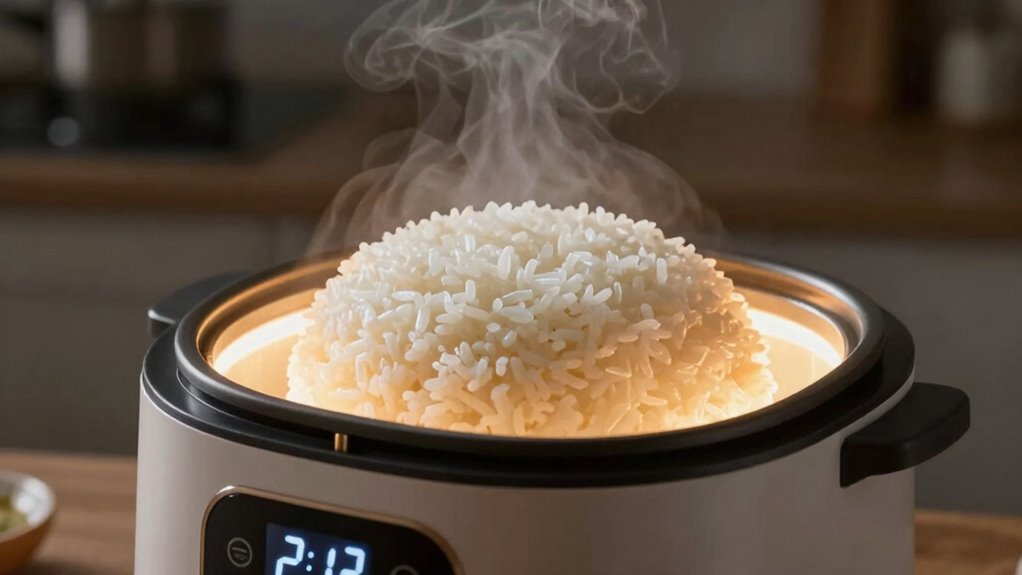
To keep rice safe, maintain a temperature of at least 165°F (74°C). Staying above this temperature prevents bacteria growth and keeps your rice hot enough to eat safely. Be aware that temperatures between 40°F and 140°F (4°C to 60°C) pose a risk, so avoid leaving rice in this danger zone for too long. Additionally, implementing smart temperature management techniques can help ensure your rice remains both safe and delicious, especially when using home temperature monitoring devices to maintain consistent heat. Proper storage containers with insulation properties can also contribute to maintaining the correct temperature for extended periods. Regularly checking your temperature control methods can further enhance food safety and prevent accidental spoilage, particularly in compact kitchen spaces where temperature fluctuations might occur more quickly.
Ideal Warm Temperature
What is the ideal temperature to keep rice warm and safe? The perfect range is between 140°F and 165°F. Maintaining this temperature ensures heat retention and temperature stability, preventing bacteria growth. If you keep rice below 140°F, it risks entering the danger zone. Conversely, staying within the recommended range keeps it hot enough for safety and quality. Use a slow cooker or rice warmer that can sustain this temperature consistently. Regularly check with a food thermometer to ensure proper heat. Avoid fluctuations that could compromise safety. Consistent warmth is key to keeping rice both delicious and safe to eat over time. Proper temperature control is essential for food safety and quality, and utilizing reliable appliances can help maintain these critical temperatures. Ensuring your equipment has precise temperature regulation capabilities can make a significant difference. Additionally, understanding the time-and-temp rules can help prevent foodborne illnesses and keep your rice safe for extended periods.
Danger Zone Risks
Are you aware of the risks when rice falls into the danger zone? Maintaining the right temperature is vital to prevent bacterial growth. The temperature danger zone, typically between 40°F and 140°F, allows bacteria to multiply rapidly. If rice stays within this range for more than two hours, harmful bacteria like Bacillus cereus can develop, leading to food poisoning. To keep rice safe, it’s necessary to keep it at a temperature above 140°F if you’re not serving it immediately. Avoid letting rice cool into the danger zone, and don’t reheat it multiple times. Proper air circulation can help maintain consistent temperatures and prevent unsafe bacterial growth. Using a food thermometer can help you monitor temperature accuracy and ensure safety. Regularly checking cooking equipment helps maintain optimal conditions and prevents unintended temperature fluctuations. Ensuring consistent heat distribution is key to minimizing the risk of bacterial growth and keeping your rice both warm and safe to eat. Monitoring the temperature ensures you’re minimizing the risk of bacterial growth and keeping your rice both warm and safe to eat. Understanding proper food safety protocols is essential for preventing illness.

Lifewit Rice Dispenser 25 Lbs(11.3kg), Rice Storage Container Sealed Moisture Proof with Measuring Cup for Kitchen Pantry Household, BPA-Free, 1 Pack Grey
Large Capacity: This rice storage container can hold 25.4lb (11.3kg) of rice, allowing you to store more rice…
As an affiliate, we earn on qualifying purchases.
As an affiliate, we earn on qualifying purchases.
How Long Can You Keep Rice Warm Without Risking Bacteria?
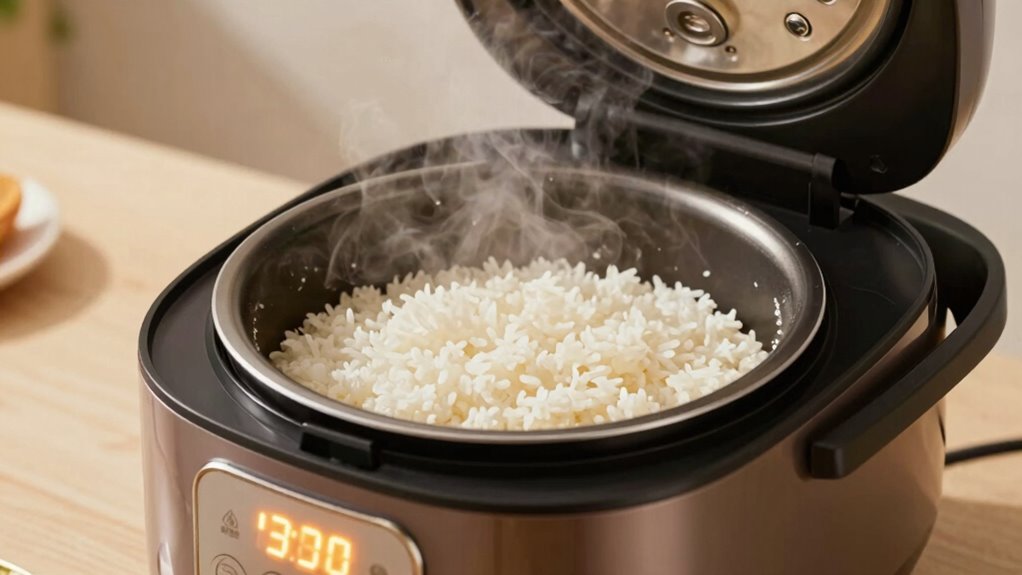
You need to be careful about how long you keep rice warm, as bacteria can grow quickly if it’s left out too long. Generally, you should aim to keep rice warm for no more than four hours to minimize the risk. Maintaining proper holding temperatures, around 140°F (60°C), helps prevent bacteria from multiplying during this time. Using reliable warming equipment ensures consistent temperature control and reduces the chance of bacterial growth. Proper temperature regulation is essential for food safety and keeping your rice safe to eat.
Bacteria Growth Risks
Keeping rice warm for too long can lead to rapid bacterial growth, which poses serious health risks. When rice stays in the danger zone (between 40°F and 140°F), bacteria multiply quickly, especially if moisture retention keeps the rice moist. Over time, this not only risks food poisoning but also compromises flavor preservation. To minimize bacteria growth risks, avoid keeping rice warm for extended periods. Bacteria thrive in moist, warm conditions, increasing contamination risk. Proper temperature control halts bacteria growth and maintains safety. Moisture retention can create an ideal environment for bacteria. Maintaining the correct food safety temperature is essential to prevent bacterial proliferation and ensure the rice remains safe to eat. Additionally, using a food thermometer can help verify that the rice stays within the safe temperature range, further reducing health hazards. To further enhance safety, opting for temperature-controlled storage can help keep the rice in the optimal range and prevent bacteria growth. Keeping rice at the right temperature helps preserve flavor and reduces health hazards.
Recommended Time Limits
To minimize health risks, it’s best to limit how long rice stays warm before refrigerating or serving. The general recommendation is to keep rice hot for no more than 2 hours, following proper temperature guidelines. Bacteria can grow rapidly if rice remains in the danger zone (40°F–140°F) too long. To help you remember, here’s a quick reference:
| Storage Duration | Temperature Guidelines |
|---|---|
| Up to 2 hours | Keep above 140°F (60°C) |
| After 2 hours | Discard or refrigerate |
| Refrigerate within 1 hour | Store at 40°F (4°C) or below |
| Reheat safely | Reheat to at least 165°F (74°C) |
Sticking to these limits reduces bacteria risk and keeps your rice safe to enjoy.
Proper Holding Temperatures
While maintaining rice at the proper holding temperature is vital for safety, it’s important to know how long it can stay warm without risking bacteria growth. To guarantee rice storage remains safe, keep the temperature between 165°F (74°C) and 175°F (79°C). Staying within this range inhibits bacteria growth and maintains food quality. However, rice shouldn’t be kept warm for more than two hours, even at the correct temperature. After this period, bacteria can multiply rapidly, increasing the risk of foodborne illness. Proper temperature safety is essential for keeping rice warm without compromising safety. Remember these key points:
- Keep rice at 165°F or higher
- Limit holding time to 2 hours
- Use a food thermometer to check temperature
- Reheat properly before serving again

AYMDKI 2026 Upgraded Smart Wireless Meat Thermometer 6 Sensors Accuracy Digital Food Thermometer 0.5S Instant Read, IP67 Waterproof for BBQ, Grill, Smoker, Oven, Air Fryer
MASTER PRECISION – Equipped with a 6-point sensor array, our smart digital probe monitors meat in real time…
As an affiliate, we earn on qualifying purchases.
As an affiliate, we earn on qualifying purchases.
Tips and Tools for Keeping Rice Warm Safely
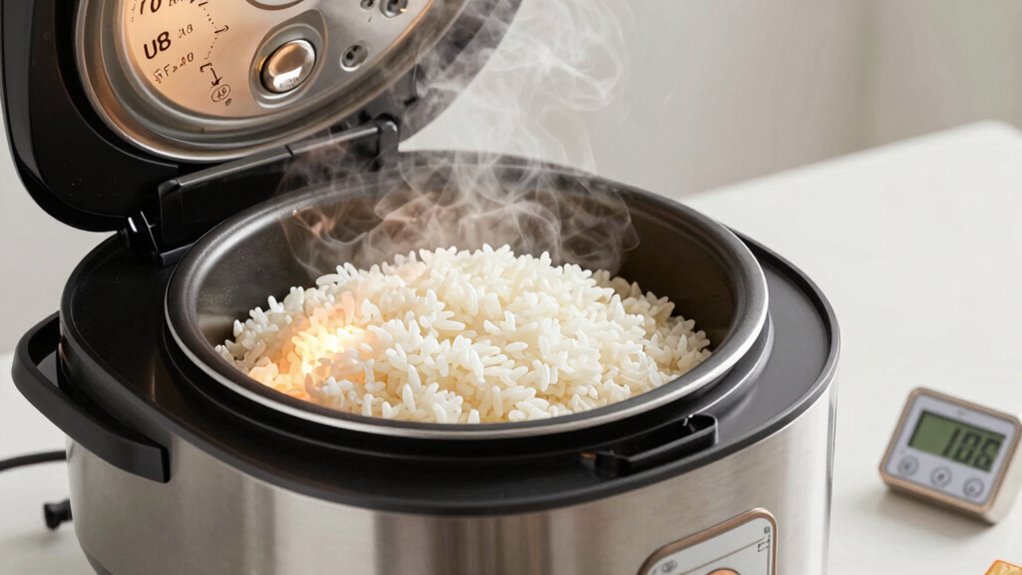
Ensuring rice stays warm and safe to eat requires the right tools and techniques. Start with proper rice storage by keeping cooked rice at the correct temperature, ideally between 140°F and 165°F. Use a rice cooker with a keep-warm setting or an insulated container to maintain consistent heat. If you don’t have specialized equipment, a double boiler or warming tray can work well. When it comes to cooking techniques, avoid overcooking or leaving rice uncovered for too long. Covering rice tightly traps heat and moisture, helping it stay warm without drying out. Regularly checking the temperature guarantees it remains within safe limits. These tips and tools make it easier to keep rice warm safely while preserving flavor and texture.
Common Mistakes When Keeping Rice Warm (And How to Avoid Them)
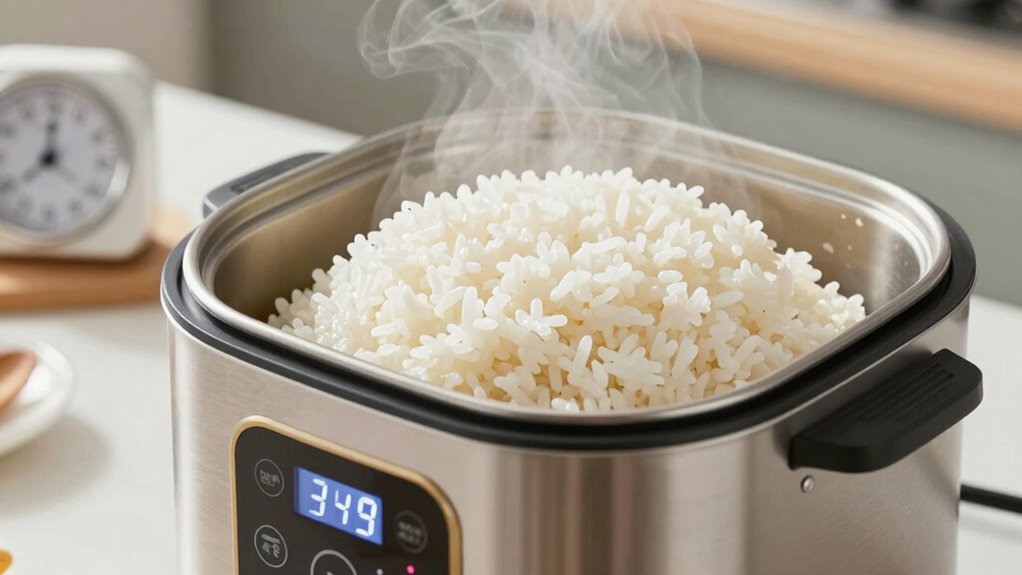
One common mistake when keeping rice warm is leaving it at unsafe temperatures for too long, which can promote bacterial growth. To avoid this, pay attention to your storage containers and reheating methods. Using improper containers can lead to uneven heat distribution or moisture buildup, increasing risk. Reheating rice improperly may not reach a safe temperature, allowing bacteria to thrive.
Be sure to:
- Use airtight, heat-safe storage containers for holding rice.
- Keep rice between 140°F and 165°F to prevent bacteria growth.
- Reheat thoroughly using the right method, such as stovetop or microwave, ensuring even heat.
- Avoid leaving rice at room temperature for extended periods.
Following these tips helps you keep rice safely warm without risking foodborne illness.
When Should You Reheat or Throw Out Leftover Rice?

Knowing when to reheat or discard leftover rice is essential for food safety. If rice has been left out at room temperature for more than two hours, it’s safest to throw it away to prevent bacteria growth. For rice stored properly in the refrigerator within that window, reheating is appropriate, but only if you plan to consume it immediately. Reheating helps preserve flavor and maintains a good texture, preventing rice from becoming dry or mushy. However, if leftover rice develops an off smell, slimy texture, or mold, it’s time to discard it. Don’t risk food poisoning by reusing rice that has been stored too long or shows signs of spoilage. Proper timing ensures your rice remains tasty and safe to enjoy.
How to Reheat Rice Safely and Effectively

To reheat rice safely and effectively, start by choosing the right method based on how much rice you have and your available appliances. Use suitable storage containers to keep leftover rice fresh and prevent contamination. For reheating methods, you can microwave, stovetop, or oven. When microwaving, add a splash of water and cover with a damp cloth or microwave-safe lid to retain moisture. On the stove, reheat rice in a skillet or pot over low heat, stirring occasionally. The oven works well for larger quantities; spread rice evenly in an oven-safe dish, cover, and reheat at 350°F. Always verify rice reaches an internal temperature of 165°F before eating. Proper reheating prevents bacteria growth and keeps your rice safe to enjoy.
Frequently Asked Questions
Can I Keep Rice Warm in a Slow Cooker Long-Term?
Yes, you can keep rice warm in a slow cooker long-term if you control the temperature properly. Set the slow cooker to the “keep warm” setting, which maintains a safe temperature to prevent bacteria growth. To guarantee moisture retention, avoid opening the lid frequently, and add a little water if the rice starts to dry out. This way, your rice stays warm, moist, and safe to eat.
Does Covering Rice With Foil Affect Its Safety?
Covering rice with foil acts like insulation, helping to retain heat and keep the temperature steady. It doesn’t compromise safety if you guarantee the rice stays above 140°F, preventing bacteria growth. Foil’s reflective surface maintains warmth, but you still need to monitor the temperature, as improper sealing or prolonged storage can create a risk. Proper foil use supports consistent temperature control, making your rice both warm and safe to eat.
Is It Safe to Reheat Rice Multiple Times?
It’s not safe to reheat rice multiple times because it increases the risk of food poisoning caused by bacterial growth. When you reheat rice repeatedly, bacteria can thrive if it’s left at unsafe temperatures for too long. To stay safe, only reheat rice once, and always make certain it reaches an internal temperature of 165°F. Discard any leftover rice you’ve reheated more than once to avoid health risks.
How Does Humidity Impact Rice Storage Safety?
Humidity impacts rice storage safety by increasing moisture levels, which can lead to mold growth. When humidity is high, moisture seeps into stored rice, creating an environment where bacteria thrive and mold develops quickly. You need to keep rice in a cool, dry place, away from humidity, to prevent these risks. Proper storage guarantees your rice stays safe to eat and maintains its quality longer.
What Signs Indicate Rice Has Gone Bad During Warming?
You’ll know rice has gone bad during warming if you notice a sour smell, slimy texture, or discoloration, which indicate bacterial growth or mold development. Be alert for a strange or foul odor, as these are signs harmful bacteria are present. If the rice feels sticky or has an unusual appearance, discard it immediately to prevent foodborne illness. Always trust your senses to guarantee safety during warming.
Conclusion
Keeping rice warm and safe doesn’t have to be complicated if you follow the right temperature rules. Remember, bacteria can grow quickly if you leave rice out too long or at unsafe temperatures. Are you willing to risk food poisoning just to keep your rice warm? Stick to proper time and temp guidelines, reheat thoroughly, and don’t hesitate to toss leftovers that’ve been sitting too long. Your health is worth the extra effort—so stay safe and enjoy your rice!