Many people mistakenly store raw meats in the upper shelves of their fridge, which risks cross-contamination and foodborne illnesses. Instead, you should keep raw meat on the bottom shelf in leak-proof containers to prevent drips onto other foods. Proper organization guarantees safety and freshness. If you want to avoid common mistakes and keep your fridge safe, understanding the ideal zones is essential—if you stay tuned, you’ll learn how to do it right.
Key Takeaways
- Many people store raw meats in upper shelves, risking cross-contamination of ready-to-eat foods.
- The door shelves are often misused for perishables, exposing items to temperature fluctuations and spoilage.
- Produce is frequently placed outside the crisper drawer, reducing humidity control and freshness.
- Dairy and leftovers are sometimes stored on the door, where temperatures are less consistent.
- Raw meat is often not kept on the bottom shelf, increasing the risk of drips contaminating other foods.
Why Proper Fridge Organization Is Key to Food Safety
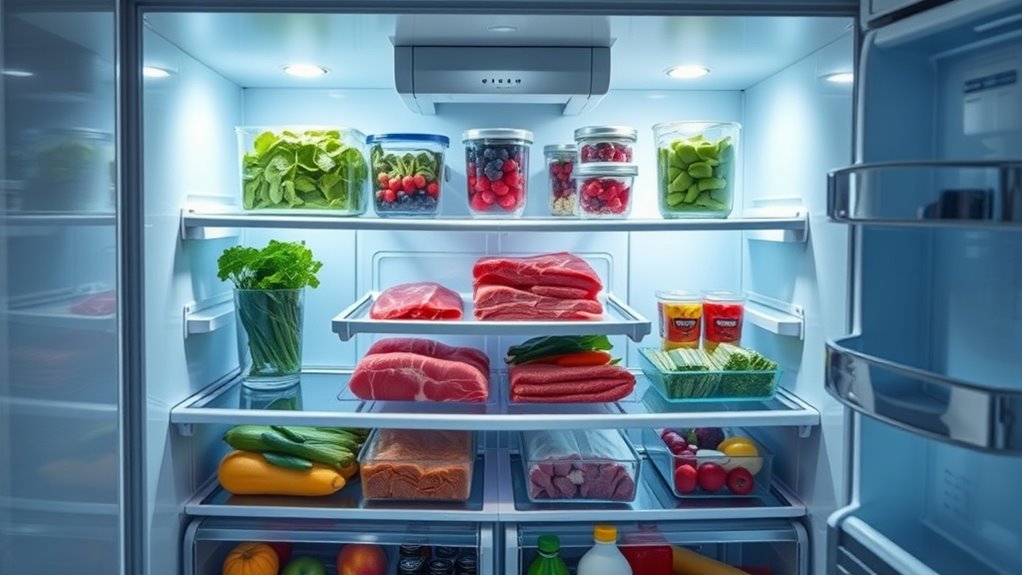
Proper fridge organization is essential because it helps prevent cross-contamination and keeps food at safe temperatures. When you organize your fridge correctly, you reduce the risk of food spoilage caused by bacteria transfer from raw meats to ready-to-eat items. Keeping raw meats on the bottom shelf prevents drips from contaminating other foods. An organized fridge also improves energy efficiency—when items are stored properly, the compressor doesn’t have to work as hard to maintain the right temperature. This saves electricity and prolongs the fridge’s lifespan. Furthermore, clear organization allows you to quickly locate items, reducing the time the door stays open and minimizing temperature fluctuations. Additionally, energy-efficient fridge organization can contribute to a more sustainable environment by reducing overall energy consumption. Proper layout and temperature regulation are vital for maintaining food safety standards. Properly managing food storage helps ensure that perishable items stay fresh longer and reduces unnecessary waste. Maintaining proper air circulation within the fridge is also crucial for consistent temperatures and food safety. Regularly checking your refrigerator’s temperature settings can help prevent spoilage and ensure optimal conditions. Overall, proper fridge setup ensures safer food, reduces waste, and lowers energy costs.
What Are the Ideal Temperature Zones in Your Fridge?

Knowing the right temperature zones in your fridge helps keep food fresh and safe from bacteria growth. Proper temperature control is essential for effective food placement, preventing spoilage and foodborne illnesses. The ideal fridge temperature is between 35°F and 38°F (1.7°C–3.3°C). Here are some key points:
Maintaining the right fridge temperature is key to keeping food fresh and safe from bacteria.
- Keep the main compartment’s temperature steady within this range.
- Store dairy and leftovers in the coldest areas, usually near the back or bottom.
- Use door shelves for condiments and beverages, as they experience more temperature fluctuations.
- Avoid overloading the fridge to maintain consistent temperature control.
- Use a thermometer to monitor and adjust fridge settings regularly.
Correct food placement based on these zones guarantees safety and prolongs freshness.
How Misplacing Foods in the Wrong Zones Can Lead to Foodborne Illness
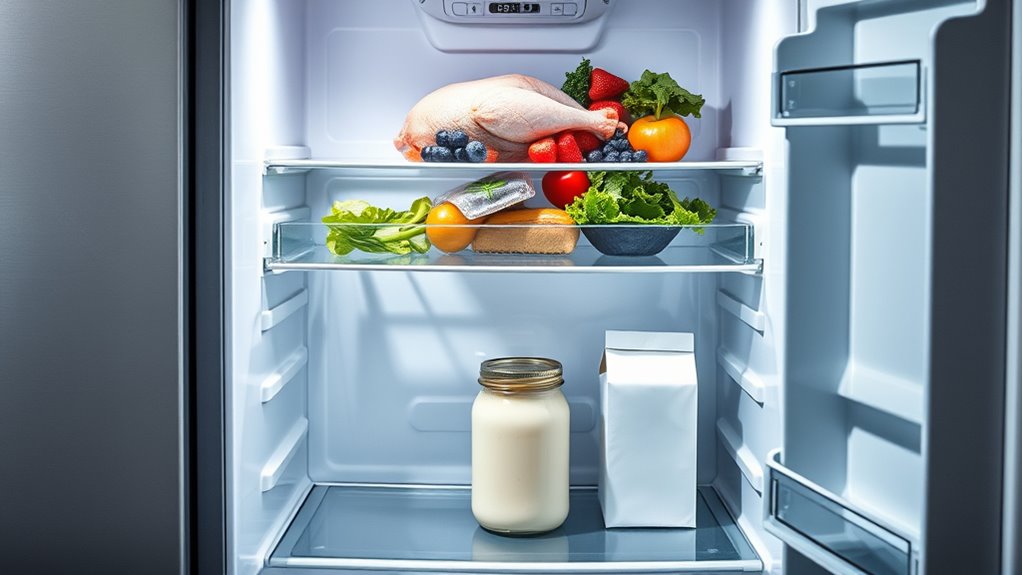
When you place foods in the wrong zones of your fridge, you risk exposing them to temperatures that promote bacteria growth. This can lead to food poisoning if harmful bacteria like Salmonella or Listeria multiply unchecked. For example, storing raw meats in the same area as ready-to-eat foods increases the chance of cross contamination, where bacteria transfer from raw to cooked or prepped items. Misplacing dairy or leftovers in the door shelves, which experience frequent temperature fluctuations, also raises risks. Proper temperature control is essential to prevent bacterial proliferation and ensure food safety. Additionally, understanding the concept of Free Floating and how it affects refrigeration can help you optimize storage. These mistakes compromise food safety and can cause illness. To prevent this, always store raw meats on the bottom shelf, keep ready-to-eat foods higher up, and avoid cross contamination by keeping different food groups separated. Proper placement and temperature zones are key to reducing foodborne illness. Recognizing the importance of food safety practices can further help you maintain a healthy kitchen environment.
Tips for Organizing Your Fridge to Prevent Bacterial Growth
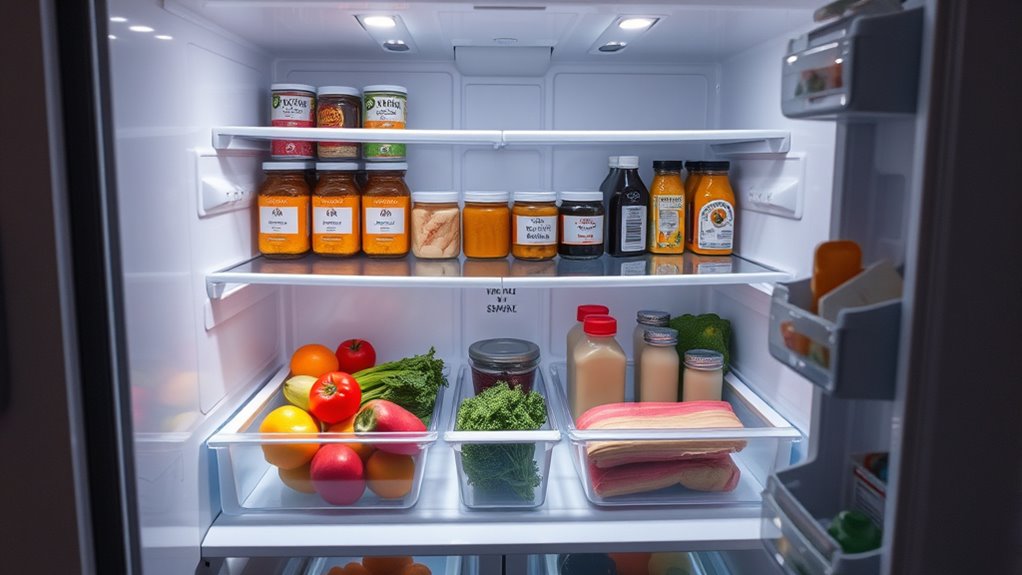
To prevent bacterial growth, you need to organize your fridge effectively. Store raw meat on the bottom shelf, use clear, labeled containers for leftovers, and keep the temperature steady at or below 40°F. These simple steps help maintain a safe environment for your food. Additionally, regularly monitoring your fridge’s temperature control ensures optimal safety and food preservation. Incorporating knowledge about food safety best practices, such as avoiding cross-contamination, further reduces the risk of bacterial proliferation. Proper power backup planning for your refrigeration equipment can prevent unexpected spoilage during power outages. Being aware of air quality considerations in your home can also contribute to overall food safety, especially in preventing mold and other airborne contaminants from affecting stored perishables. Maintaining good ventilation around your fridge can also help regulate internal temperatures more efficiently.
Store Raw Meat Properly
Have you ever wondered how to keep raw meat safe and prevent cross-contamination in your fridge? Proper storage is key. Keep raw meat on the bottom shelf to avoid drips contaminating other foods. Use a separate plate or tray for meat marination, and always cover it tightly. Place raw meat away from cooked or ready-to-eat items to prevent bacteria transfer. Regularly clean and fridge deodorize to eliminate odors from meat juices. Check expiration dates and discard any spoiled meat promptly. Organizing your fridge this way reduces bacterial growth and keeps your entire food environment safer. Proper food safety 101 practices include maintaining appropriate temperature control to inhibit bacterial proliferation. Additionally, understanding the importance of visual and auditory cues can help you develop better habits for preventing spoilage and contamination. Incorporating proper temperature control ensures meat remains in the safe zone and minimizes bacterial proliferation. Being aware of cybersecurity measures related to smart appliances can also help protect your connected devices from hacking attempts. Stay vigilant and keep raw meat properly stored!
Use Clear, Labeled Containers
Using clear, labeled containers is essential for keeping your fridge organized and preventing bacterial growth. Food labeling ensures you can quickly identify contents, reducing the chance of forgotten or spoiled items. Opt for containers with good container durability to withstand frequent washing and stacking without cracking or warping. Clear containers allow you to see what’s inside at a glance, helping you spot expired or spoiled food before it contaminates other items. Proper labeling prevents cross-contamination by keeping raw and cooked foods separated. Durable containers also help maintain a tight seal, keeping moisture in and bacteria out. When you use these containers consistently, your fridge stays tidy, and food safety is markedly improved. This simple step supports a healthier, more efficient food storage system. Food safety practices like these are proven to minimize the risk of foodborne illnesses and promote overall health. Additionally, understanding food storage guidelines can further enhance your food safety efforts.
Keep Cold Temperatures Consistent
Keeping your fridge at a consistent cold temperature is key to preventing bacterial growth. Fluctuating temperatures can compromise shelf stability and increase spoilage risk. To maintain temperature consistency, regularly check your thermometer and avoid overloading the fridge, which can block airflow. Store perishable items on middle shelves where temperature is most stable. Keep the door closed as much as possible to prevent temperature swings. Adjust the thermostat if needed, aiming for 37-40°F (3-4°C). Proper organization helps ensure even cooling and reduces bacteria growth. Proper organization also plays a vital role in maintaining consistent temperatures and preventing spoilage.
Where Should You Store Raw Meat, Dairy, and Produce?
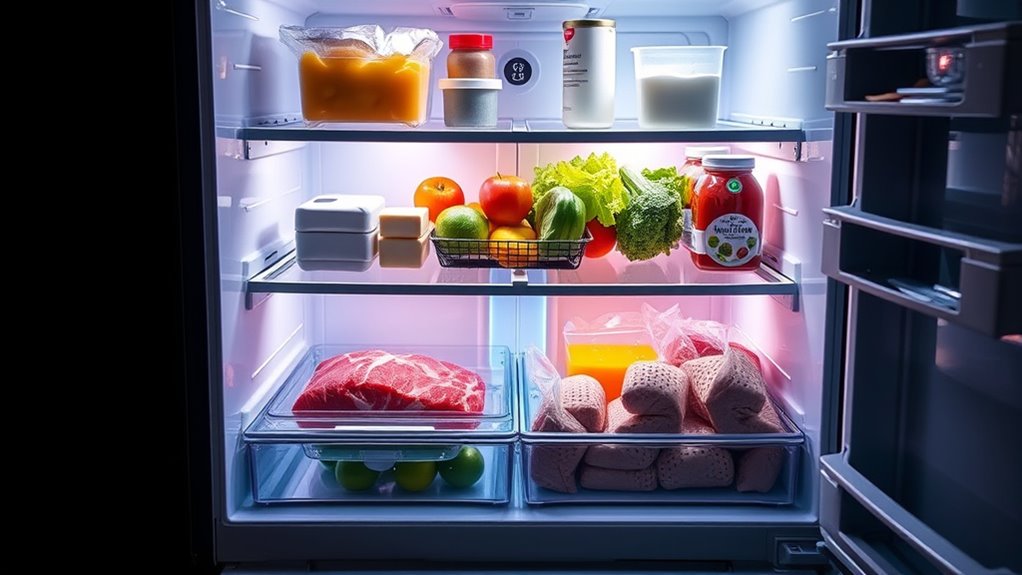
You need to store raw meat, dairy, and produce in specific areas of your fridge to prevent cross-contamination. Proper placement makes certain that juices or bacteria don’t transfer between foods, keeping everything safer to eat. Let’s explore the best zones for each type of food to keep your fridge organized and hygienic. Using food safety 101 principles, you can further reduce risks associated with improper storage. Additionally, understanding hazard prevention can help you implement effective storage strategies to minimize contamination risks, similar to how deep-sky imaging setups are optimized for clarity and safety.
Proper Placement of Raw Meat
To prevent cross-contamination, raw meat should always be stored on the lowest shelf of the refrigerator. This placement minimizes the risk of juices dripping onto other foods. Proper meat storage relies on keeping it in leak-proof packaging to guarantee safety. Always check packaging safety to avoid spills and contamination. Keep raw meat separate from ready-to-eat foods to prevent bacteria transfer. Use a tray or plate underneath raw meat for added protection. Remember to clean your hands and surfaces after handling raw meat. Proper storage not only safeguards your health but also extends the meat’s freshness. Avoid overcrowding the fridge, which can compromise temperature control. Maintaining these practices ensures your fridge remains a safe environment for all foods.
Dairy and Produce Zones
Dairy and produce zones in your fridge are designed to keep perishable items fresh and safe, but their placement is crucial for preventing cross-contamination. Store dairy products, like milk and cheese, on the middle or top shelves where dairy freshness is best preserved. Keep produce in the crisper drawer, which helps regulate humidity and control produce ripening, extending freshness. Avoid placing raw meat or seafood in these zones, as drips can contaminate dairy and produce, risking foodborne illnesses. Always keep dairy sealed tightly to prevent spoilage and absorb odors. For produce, wash items before storing to remove bacteria, but don’t wash pre-cut or delicate produce until right before eating. Proper placement ensures your fridge maintains food safety and keeps your perishables at their best. Additionally, understanding food safety guidelines can help you prevent cross-contamination and keep your food fresh longer.
What Signs Indicate Your Fridge Is Not Properly Configured?
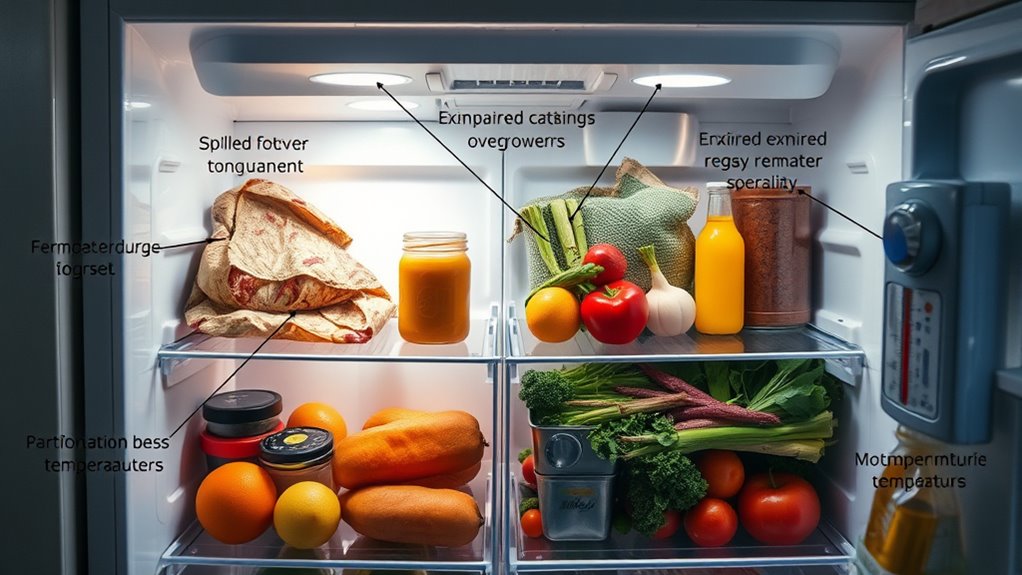
How can you tell if your fridge isn’t set up correctly? One sign is inconsistent fridge temperature, which can cause spoilage or bacteria growth. If your food feels warm or cold spots develop, it’s a red flag. Check if your door storage is overflowing or disorganized; improper door placement can lead to temperature fluctuations, since the door is most vulnerable to external temperature changes. Also, frequent frost buildup or condensation indicates poor airflow. Unusual odors or slimy textures on food might mean your fridge isn’t maintaining proper conditions. Finally, if you notice certain items are consistently spoiling faster than others, it could signal your fridge isn’t properly configured for safe storage. Keeping these signs in mind helps ensure your fridge stays effective and food stays fresh.
Simple Steps to Fix and Maintain a Safe, Well-Organized Fridge
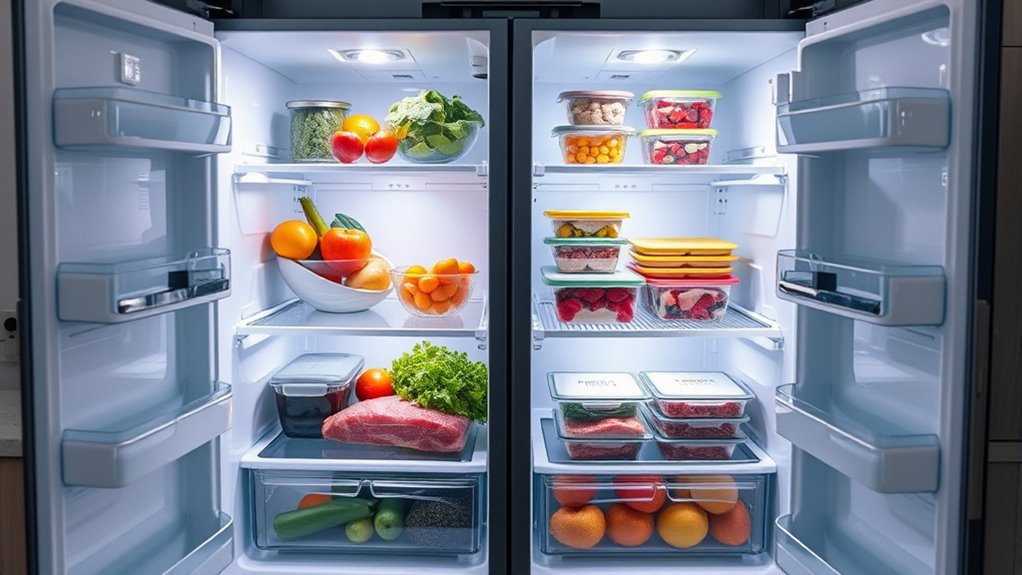
Keeping your fridge safe and organized requires regular maintenance and simple adjustments. Start by implementing clear shelf labeling to designate zones for different food types, which makes it easier to find items and prevents cross-contamination. Check for excess moisture and use moisture control methods, like placing a paper towel in vegetable drawers, to prevent spoilage and mold. Regularly clean spills and expired products to maintain hygiene and freshness. Rearrange items so that raw meats stay on the bottom shelf, reducing drips onto other foods. Use airtight containers to keep foods fresh longer. By maintaining proper shelf labels and moisture control, you’ll prevent spoilage and keep your fridge safe. These small steps make a big difference in keeping your food fresh, safe, and well-organized.
Frequently Asked Questions
How Often Should I Clean and Disinfect My Fridge?
You should clean and disinfect your fridge at least once a month to prevent food spoilage and bacteria growth. Regular cleaning keeps your fridge fresh and safe, removing spills and expired items that can promote bacteria. Wipe down shelves and drawers with warm soapy water, then sanitize with a food-safe sanitizer. Doing this consistently ensures your food stays fresh longer and reduces the risk of contamination.
Can Certain Foods Be Stored Together Safely?
You can store certain foods together safely if you follow proper food pairing and storage guidelines. Keep raw meats separate from ready-to-eat items to prevent cross-contamination, and store dairy below raw meats. Fruits and vegetables should be separated to avoid spoilage. Use sealed containers for leftovers, and always check expiration dates. Proper organization guarantees food safety, reduces waste, and keeps your fridge clean and efficient.
What Are the Risks of Overloading the Fridge?
Overloading your fridge risks temperature zones and airflow circulation, leading to uneven cooling. When you pack it too full, hot spots develop, and cold air can’t circulate properly, making food spoil faster and increasing bacteria growth. This can also cause fluctuations in temperature, risking food safety. To prevent this, keep your fridge organized with space for air to flow freely and maintain consistent temperatures for safe, fresh food.
How Long Can I Store Leftovers Safely?
Leftovers are like treasures, but they won’t last forever. You should store them in proper food storage containers and follow food expiration dates, typically 3-4 days in the fridge. After that, bacteria can take over, turning your meal into a health hazard. Always check for signs of spoilage before eating leftovers, and when in doubt, toss it out to keep yourself safe and your fridge organized.
Are There Specific Fridge Features That Enhance Food Safety?
Yes, certain fridge features can boost food safety. Look for models with precise temperature regulation, maintaining a consistent 37°F (3°C), and humidity control options, especially in crisper drawers, to keep produce fresh and prevent spoilage. These features help slow bacterial growth and preserve food quality. By choosing a fridge with these capabilities, you actively create a safer environment for your food, reducing waste and health risks.
Conclusion
Keep your fridge a fortress against bacteria by organizing it wisely. Think of it as a well-tuned orchestra, where every section plays its part to create harmony and safety. When you put food in the right zones, you’re shielding your health like a guardian. A little attention transforms your fridge into a vigilant protector, ensuring every bite is safe and fresh—because in food safety, organization truly is your first line of defense.