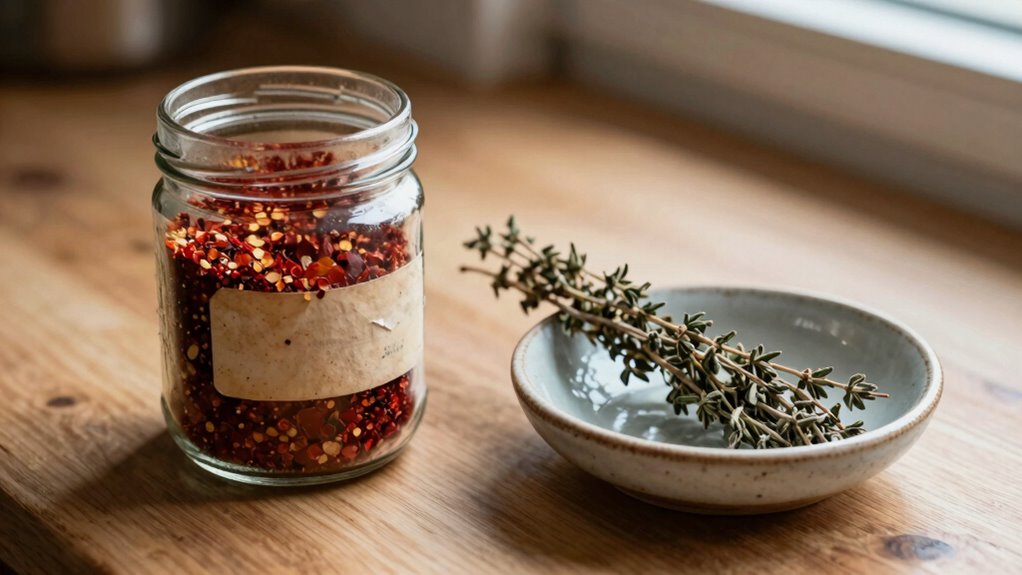

Using expired spices is generally safe as long as you don’t see signs of spoilage like mold, discoloration, or an off smell. Over time, spices lose their flavor and aroma, making your dishes less vibrant, but they usually won’t harm you if stored properly. To guarantee safety and quality, check for obvious signs of deterioration. Want to discover how to tell if your spices are still good and how to keep them fresh? Keep going for helpful tips.
Key Takeaways
- Dried spices are often safe to use past their expiration date if there are no signs of spoilage.
- Check for mold, discoloration, clumping, or off-odor before using expired spices.
- Loss of aroma and flavor indicates diminished potency, but not necessarily safety concerns.
- Proper storage in airtight, cool, dark places helps extend spice shelf life and safety.
- Discard spices if they show mold, significant color fading, or develop a stale or musty smell.
![[10-Pack] Glass Meal Prep Containers with Lids, MCIRCO Food Storage Containers with Snap Locking Lids, Airtight Lunch Containers, Microwave, Oven, Freezer and Dishwasher](https://m.media-amazon.com/images/I/41ZdkMs1ciL._SL500_.jpg)
[10-Pack] Glass Meal Prep Containers with Lids, MCIRCO Food Storage Containers with Snap Locking Lids, Airtight Lunch Containers, Microwave, Oven, Freezer and Dishwasher
10 PACK GLASS MEAL PREP CONTAINERS: With 5 packs 34oz containers and 5 packs 13oz containers, they are...
As an affiliate, we earn on qualifying purchases.
How Do Spices Change Over Time and How Can You Spot Spoilage?

Spices don’t last forever, and over time, they can lose their flavor, aroma, and potency. You’ll notice the herb aroma becomes muted, making your dishes less vibrant. Color fading is another sign; fresh spices tend to have bright, vivid hues, while old spices look dull or faded. As spices age, their essential oils evaporate, decreasing their strength and impact. Over time, their texture may change, becoming brittle or clumpy. To spot spoilage, smell your spices—if the aroma is weak or off, it’s a sign they’ve lost their potency. Check for mold or discoloration as well. Even if they look okay, if the herb aroma isn’t strong or the color has faded considerably, it’s time to replace them for the best flavor. Regularly inspecting your spices can help prevent product quality issues and ensure you’re using ingredients at their peak. Additionally, understanding spice preservation techniques can extend their shelf life and maintain their benefits longer. Proper storage in airtight containers away from heat and light can significantly slow down spice deterioration and keep your spices fresh longer, ultimately preserving their aroma and flavor.
JoyJolt 24pc Borosilicate Glass Storage Containers with Lids | 12 Airtight/Freezer Safe Food Storage Containers for Pantry and Kitchen | Meal Prep Container for Lunch | Glass Tupperware Set
VERSATILE GLASS FOOD STORAGE CONTAINERS WITH LIDS: Prep, stash, stack, store, and more with this glass meal prep...
As an affiliate, we earn on qualifying purchases.
Are Expired Spices Safe to Use? Risks and Precautions
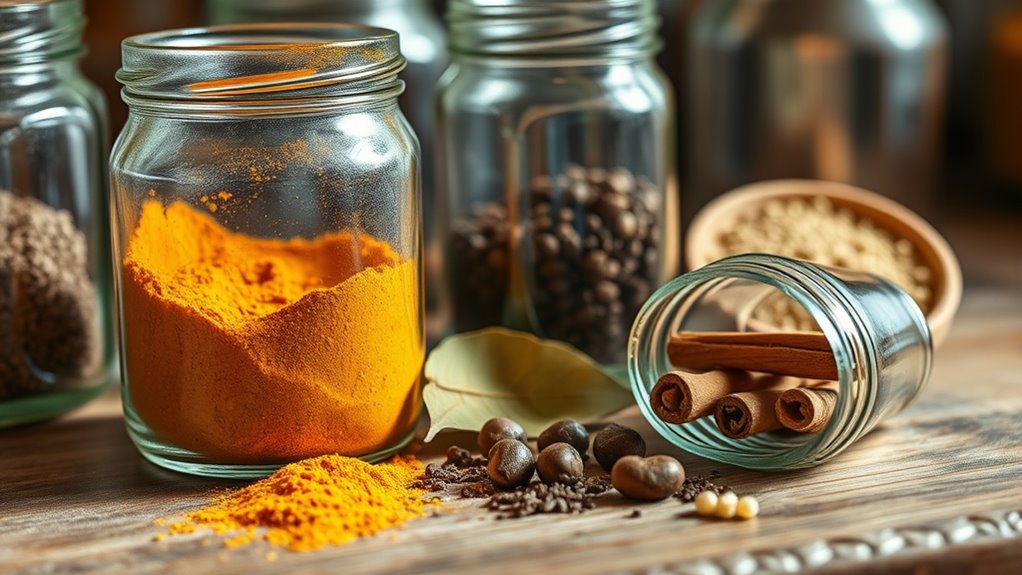
Although expired spices are often still safe to use, it’s important to understand the potential risks involved. Over time, their shelf life diminishes, and preservation techniques become less effective, increasing the chance of flavor loss or contamination. While dried spices typically don’t pose significant health hazards, old spices can harbor mold or bacteria if stored improperly. Be cautious if your spices show signs of discoloration, off-odors, or clumping, which may indicate spoilage. To reduce risks, store spices in airtight containers in a cool, dark place and replace them regularly based on their shelf life. Using expired spices isn’t usually dangerous, but quality and safety depend on proper storage and careful inspection. When in doubt, it’s better to err on the side of caution.

Ello Duraglass 3.4 Cup Meal Prep Sets 10Pc, 5 Pack Set- Glass Food Storage Container with Silicone Boot and Airtight BPA-Free Plastic Lids, Dishwasher, Microwave, and Freezer Safe, Garden Goals
5-PACK MEAL PREP CONTAINERS: Ello Duraglass 10pc Meal Prep Food Storage Containers includes (5) 3.4 cup glass food...
As an affiliate, we earn on qualifying purchases.
Do Old Spices Still Pack a Flavor Punch?

As spices age, their flavor can fade, making your dishes less vibrant. You might notice a milder taste or loss of aroma, which impacts the overall quality of your cooking. So, it’s worth considering whether older spices still deliver the punch your recipes need. Additionally, color retention may diminish over time, affecting the visual appeal of your dishes. Proper storage can slow down this process and help preserve their freshness and potency, especially when you understand how to maximize spice longevity through ideal storage practices. Maintaining proper storage conditions can significantly prolong their shelf life and flavor profile, ensuring your spices remain aromatic and flavorful for as long as possible.
Flavor Retention Over Time
Over time, the potency of spices diminishes, which means they may lose their vibrant flavors and aromatic qualities. As herbs age, their herb potency weakens, resulting in less intense taste and aroma. You’ll notice color fading in your spices, signaling a decline in freshness. This visual cue often correlates with flavor loss, so even if a spice looks okay, it might not deliver the same punch as when it was fresh. Ground spices tend to lose flavor faster than whole ones, so consider storing them properly and using them within a reasonable timeframe. Proper storage conditions, such as keeping spices in airtight containers away from light and heat, can help preserve their flavor retention. Additionally, storing spices in a cool, dark place helps maintain their aromatic qualities for longer periods. While expired spices might still be safe to use, don’t expect them to pack the same flavor punch as fresh ones. Instead, use them to add subtle background notes rather than bold seasoning.
Impact on Culinary Quality
Old spices often lose their ability to deliver bold, vibrant flavors, which can substantially impact the quality of your dishes. As freshness decay sets in, the flavor loss becomes noticeable, leaving your meals lacking the punch they once had. You might find that your seasoned favorites taste dull or flat, making it harder to achieve the desired aroma and taste. Visual cues can include faded colors and a weaker scent. When you open old spice jars, expect:
- Muted, washed-out hues
- A faint or stale aroma
- A powder that crumbles easily or lacks texture
These signs indicate that your spices have lost much of their flavor potential, meaning your dishes won’t be as flavorful or satisfying as they could be with fresh spices.
![[8-Pack,30 oz]Glass Meal Prep Containers,Glass Food Storage Containers,Airtight lunch Containers with Lids, Microwave, Oven, Freezer and Dishwasher](https://m.media-amazon.com/images/I/51Xx2N0Mc7L._SL500_.jpg)
[8-Pack,30 oz]Glass Meal Prep Containers,Glass Food Storage Containers,Airtight lunch Containers with Lids, Microwave, Oven, Freezer and Dishwasher
8 PACK GLASS MEAL PREP CONTAINERS: Our glass containers sets (8 lids and 8 containers) size: 30 Oz,...
As an affiliate, we earn on qualifying purchases.
How to Store Spices to Keep Them Fresh Longer
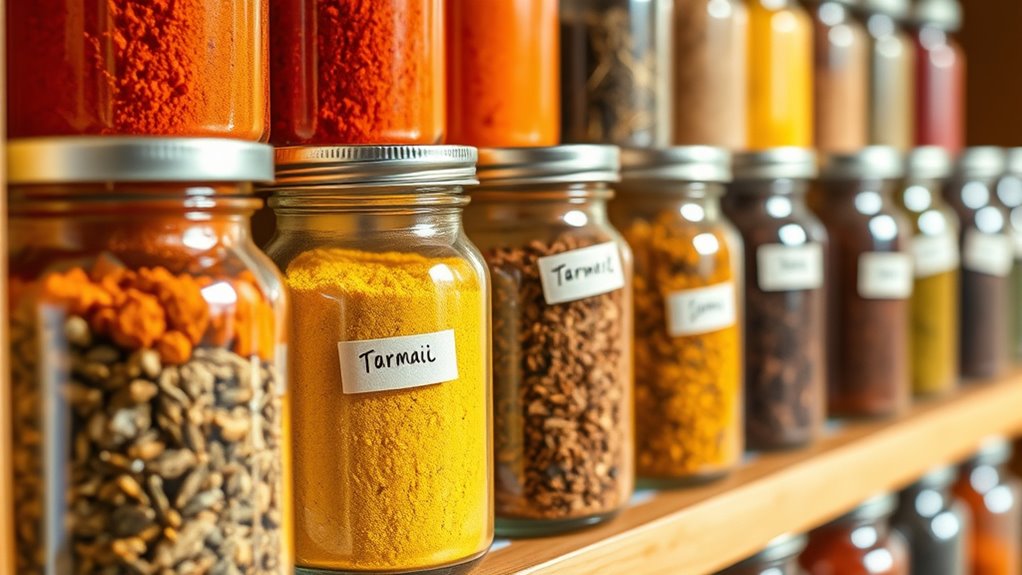
To keep your spices fresh longer, store them in airtight containers to prevent moisture and air exposure. Keep these containers away from light, which can degrade their flavor and potency. Proper storage guarantees your spices stay flavorful and extend their shelf life. Additionally, avoiding exposure to humidity can help maintain their quality over time. Using proper storage techniques can further prevent contamination and spoilage, ensuring your spices remain safe and effective for cooking. Incorporating temperature control into your storage routine can also help preserve their freshness and potency over extended periods. Maintaining a consistent storage environment is essential for optimal spice preservation.
Store in Airtight Containers
Storing spices in airtight containers is essential for preserving their flavor and aroma. Proper airtight storage prevents moisture, air, and contaminants from degrading your spices, extending their spice longevity. When choosing containers, picture these options:
- Small glass jars with tight-fitting lids
- Resealable plastic containers for easy access
- Metal tins that block light and air
These containers keep your spices fresh by creating a sealed environment, reducing exposure to elements that cause flavor loss. Make sure your containers are clean and dry before filling them. Label each container clearly to avoid confusion. By using airtight storage, you protect your spices from spoilage, maintain their potency, and get the most out of their flavor in your cooking.
Keep Away From Light
While airtight containers protect your spices from moisture and air, keeping them out of direct light is equally important. Light exposure accelerates spice degradation, causing flavors to fade and essential oils to break down faster. To preserve freshness, store your spices in containers made of opaque or dark-colored material, which block harmful light rays. Clear glass jars are convenient but should be kept in a dark cabinet or cupboard to shield them from light. Avoid placing spices near windows, under direct sunlight, or on countertops where sunlight hits frequently. Proper storage minimizes light exposure, helping your spices maintain their potency and flavor longer. Additionally, storage guidelines emphasize that protecting your spices from light is a simple yet effective step to extend their shelf life and keep them tasting fresh. Incorporating proper storage practices can further enhance the longevity of your spices and preserve their vibrant flavors.
Moreover, understanding light sensitivity of spices can guide you in choosing the best storage options.
When Should You Discard Old Spices? Signs It’s Time to Replace

You should consider discarding old spices when they lose their aroma and flavor, as these are signs they’ve degraded over time. Over extended shelf life, spices can become dull, losing their potency despite proper storage tips. When you notice a faint scent or flavor that no longer enhances your dishes, it’s time to replace them. Visual cues like clumped or discolored powders also indicate spoilage. Imagine spices that have:
Discard old spices when their aroma and flavor fade to keep your dishes vibrant.
- Lost their vibrant color and become dull
- Developed a musty or stale smell
- Clumped together or formed mold
Proper storage, like keeping spices in airtight containers away from light and heat, can extend their shelf life. storage best practices can help preserve their freshness longer, but when these signs appear, discard old spices to ensure your cooking remains flavorful and safe. Incorporating spice storage tips and topical authority into your spice storage and selection process can help you maintain high standards in your kitchen. Additionally, understanding spice degradation can assist you in making better decisions about when to replace your spices.
How Expired Spices Affect the Taste and Quality of Your Cooking

Expired spices often lose their potency, which means they won’t deliver the vibrant flavors you expect in your dishes. Over time, flavor degradation occurs, diminishing the spice’s ability to enhance your meals. Aroma loss is also common, making your spices smell dull or stale instead of fresh and inviting. As a result, your dishes may taste flat or lack the punch that fresh spices provide. You might notice that recipes don’t turn out as flavorful, even if you use the same amount as before. This decline in quality can make your cooking less appetizing and diminish the overall enjoyment of your meals. While expired spices may not be harmful, their diminished taste and aroma mean they’re not worth using if you want maximum flavor. Additionally, understanding how spice shelf life impacts food quality can help you make better choices when storing your spices. Proper storage conditions can also slow down the flavor degradation process and extend the usability of your spices, helping to preserve their aroma and potency.
Are Certain Spices Safe to Use Even After Expiration?

Are certain spices still safe to use after their expiration date? Yes, some spices retain safety beyond their shelf life guidelines, but their spice freshness may decline. Dried herbs like oregano, thyme, and rosemary often last longer and pose minimal health risks if they’ve dried out or lost flavor. Visual cues include:
Many dried herbs remain safe beyond their expiration date if they look, smell, and taste okay.
- Faded color and dull appearance
- Loss of aroma and flavor
- Clumped or hardened texture
While these signs indicate diminished quality, they don’t necessarily mean the spice is unsafe. Always prioritize spice freshness and follow shelf life guidelines, but if the spice looks, smells, and tastes okay, it’s generally safe to use. Just remember, over time, even safe spices can lose potency.
How to Test Old Spices at Home to Ensure They’re Still Good
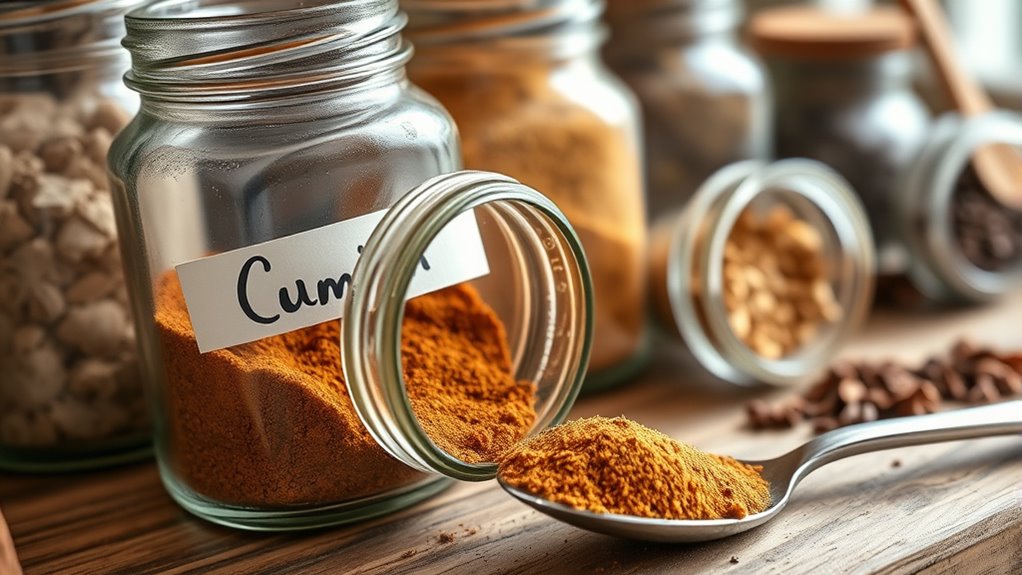
Even if spices look and smell acceptable, it’s wise to verify their quality before using them in your dishes. To test herb potency, rub a small amount of the spice between your fingers and smell it. If the aroma is faint or dull, the herb’s flavor has likely faded. Observe the color; significant fading or dullness indicates the spice may have lost its strength. You can also perform a quick taste test—just a tiny pinch—though remember that a weak flavor suggests it’s past its prime. Keep in mind that spices with diminished potency won’t deliver the same flavor, and their color fading can also mean the essential oils have evaporated. When in doubt, replacing old spices ensures your dishes remain flavorful and safe.
Tips for Organizing and Maintaining Your Spice Collection
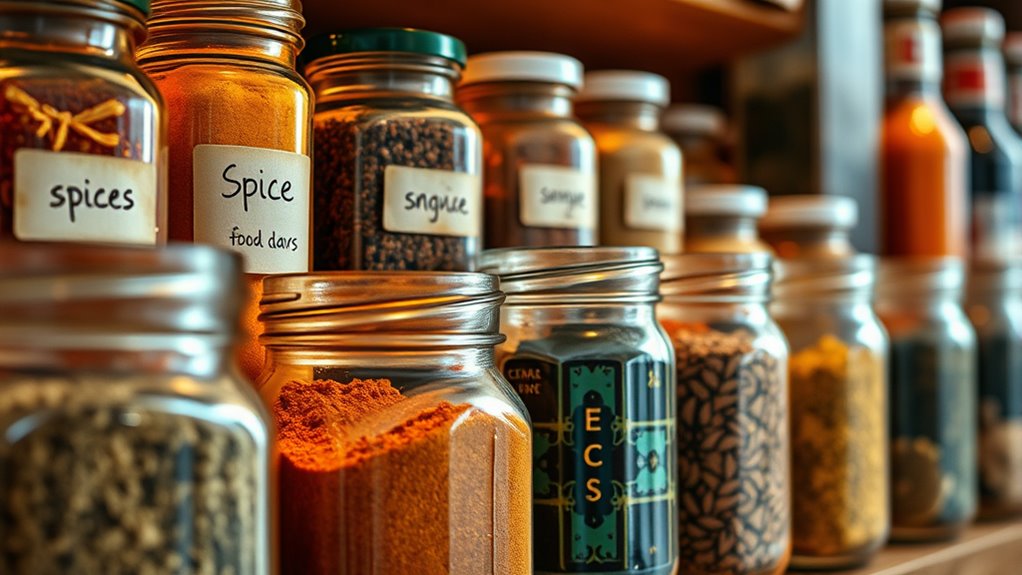
A well-organized spice collection makes cooking more enjoyable and guarantees you can quickly find what you need. To keep your spices fresh and maximize herb shelf life, focus on spice shelf organization. Start by grouping spices by type or frequency of use, making it easier to access what you need. Consider using clear jars or labels to identify each spice at a glance. Keep older spices at the front and new ones at the back to ensure you use them before they lose potency. Regularly check for expired or stale spices and replace them as needed. Visualize your shelf with:
- Bright, labeled jars arranged neatly
- A dedicated spot for frequently used spices
- An organized system that minimizes clutter and preserves freshness
Frequently Asked Questions
Can Expired Spices Cause Food Poisoning?
Expired spices can cause food poisoning if they develop mold or bacteria, especially if stored improperly. While flavor loss is common, moldy spices are a health risk and should be discarded. Using spices with mold or significant flavor decline can lead to stomach issues or allergic reactions. Always check for visible mold, off-odor, or discoloration before using expired spices, and when in doubt, it’s safer to replace them.
How Do I Know if a Spice Is Still Potent?
Think of your spices as ancient relics; if their herb potency feels faded like a worn statue, they’ve lost their magic. To gauge if a spice remains potent, smell and taste it—if the aroma is dull or flavor weak, it’s time to replace. Proper spice storage in airtight containers in a cool, dark place preserves herb potency longer, ensuring your culinary treasures stay vibrant and effective.
Are Organic Spices More Prone to Spoilage?
Organic spices aren’t necessarily more prone to spoilage if stored properly. You need to pay attention to storage conditions, like keeping them in airtight containers away from heat, light, and moisture. Organic preservation methods often avoid artificial additives, which can sometimes make spices more sensitive to environmental factors. If you store them correctly, organic spices can last just as long as conventional ones, maintaining their flavor and potency longer.
Do Different Spice Types Have Different Shelf Lives?
Spices are like delicate musical notes, each with its own lifespan. Ground spices tend to fade faster, losing flavor through storage, while whole spices keep their essence longer. Proper spice storage can slow flavor degradation, but over time, even the most robust spices weaken. Different spice types do have different shelf lives, so knowing their unique timelines helps you preserve their vibrant flavors and keeps your dishes tasting lively.
Is It Safe to Use Ground Spices Past Their Expiration Date?
You can still use ground spices past their expiration date, but be aware that flavor degradation may occur over time. To maximize freshness, store them in airtight containers away from heat and light, which helps maintain their potency. Keep in mind that while they’re generally safe, old spices might lose their aroma and flavor, so consider replacing them if they no longer enhance your dishes as they once did.
Conclusion
While expired spices may still look okay, their flavor often fades, leaving your dishes bland. Yet, some spices might remain safe to use if there’s no mold or off smell. It’s a balancing act—trust your senses over dates. When in doubt, replacing old spices preserves your culinary integrity. After all, sacrificing flavor for safety isn’t worth it, but clinging to faded jars can dull your cooking’s brilliance. Your palate deserves fresh, vibrant seasoning.