
Silicone lids can smell forever because their porous surfaces absorb odors and residues deep inside, making regular cleaning ineffective. To safely deodorize them, you can use natural methods like baking soda or vinegar, which eliminate smells without damage. Proper cleaning, thorough drying, and avoiding harsh chemicals help keep odors at bay. If persistent odors or damage occur, replacing the lids is best. Keep exploring for more tips to keep your lids fresh and odor-free.
Key Takeaways
- Silicone seals absorb odors over time due to their porous surface, making smells difficult to remove completely.
- Regular cleaning may not eliminate deeply embedded smells; natural deodorizers like baking soda and vinegar are more effective.
- Persistent odors indicate possible mold, bacteria, or residual chemicals that require thorough cleaning or replacement.
- Proper drying and environmental control prevent moisture buildup that fosters odor-causing microbes.
- Damaged or degraded silicone seals should be replaced promptly to maintain freshness and prevent ongoing odors.
Why Do Silicone Seals Trap Odors in Lids?
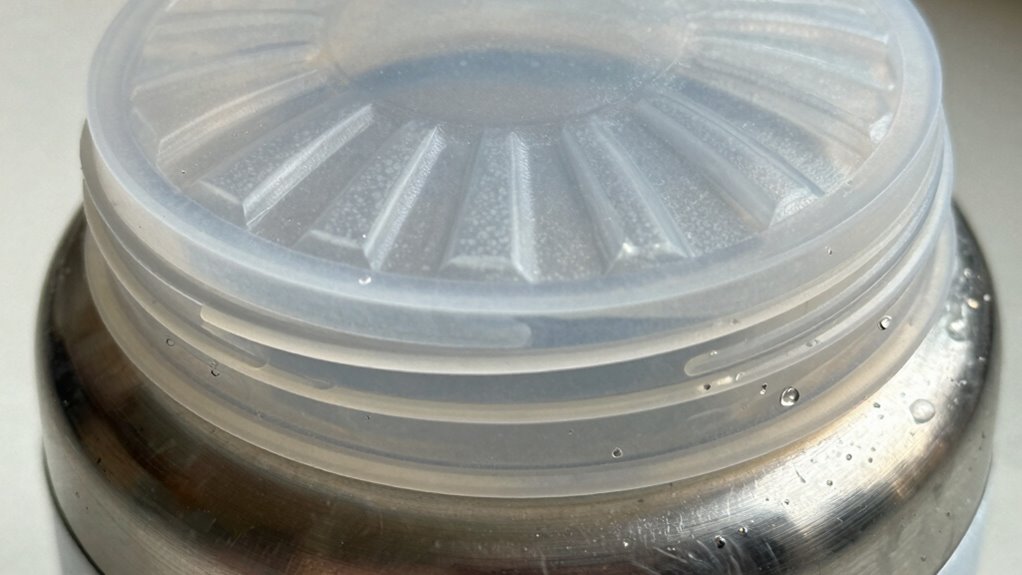
Silicone seals are excellent for creating an airtight barrier, but they can also trap odors inside lids. The silicone material’s porous surface allows it to absorb and hold onto strong smells, especially when exposed to aromatic or spicy foods. Over time, the odor absorption process causes the seal to retain lingering smells, which then transfer to new contents. Unlike other materials, silicone’s flexible nature means it can trap particles and odors deep within its structure, making it difficult to eliminate odors through simple cleaning. This absorption process is why some lids develop a persistent smell, even after washing. To combat this, you need specific deodorizing techniques that target the silicone’s odor retention, rather than relying solely on regular cleaning methods.
How Can You Tell What Kind of Smell Your Lid Has?
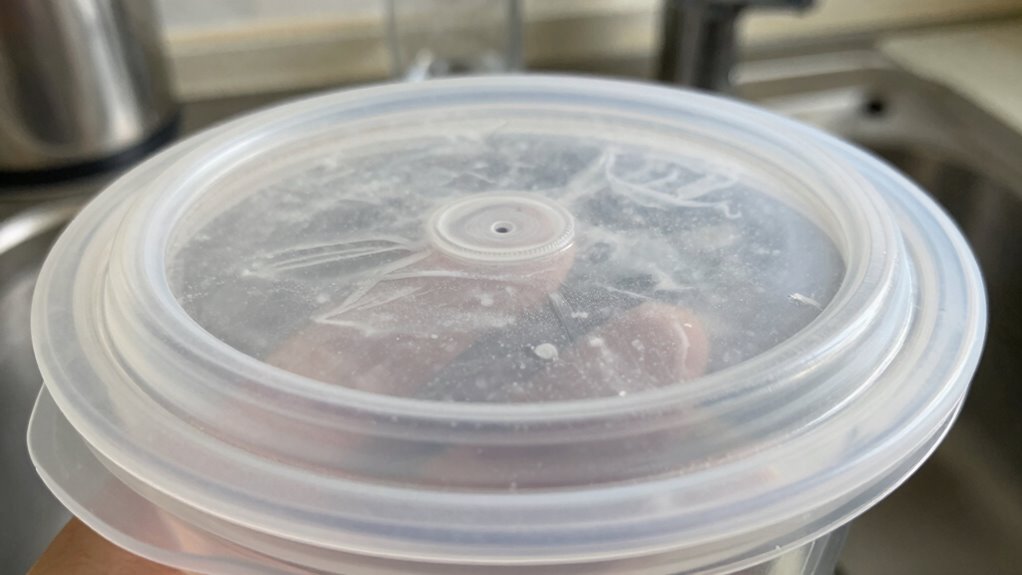
To identify what kind of smell your lid has, start by paying attention to the intensity and nature of the odor. Material identification plays a role here—knowing if it’s plastic, silicone, or rubber helps you understand potential odor sources. Smell detection involves noting if the scent is musty, chemical, or sour. Use this table to classify your lid’s odor:
| Odor Type | Possible Cause | Material Identification |
|---|---|---|
| Musty | Mold or bacteria buildup | Silicone or rubber seals |
| Chemical | Residual manufacturing odors | Plastic or synthetic components |
| Sour | Bacterial contamination or mold | Any material, especially if moist |
| No smell | Clean and odor-free | Well-maintained silicone seals |
This approach helps you pinpoint the smell’s origin and decide on the best deodorizing method. Additionally, understanding the material composition of your lid can guide you in choosing the safest cleaning techniques. Regularly inspecting and cleaning your lid can prevent the buildup of odors caused by moisture retention and microbial growth. Using proper cleaning methods tailored to the specific material can significantly reduce persistent smells. Being aware of environmental factors, such as heat and humidity, can also influence odor development and help prevent persistent smells. Moreover, applying knowledge about odor sources allows you to select the most effective deodorizing solutions.
Easy and Safe Ways to Deodorize Silicone Seals at Home

You can easily deodorize silicone seals at home using simple ingredients. Baking soda works wonders to absorb odors, while a vinegar soak refreshes and cleans the seals effectively. Both methods are safe, affordable, and straightforward to do on your own. Additionally, regularly maintaining your seals can prevent persistent odors from developing over time. Proper air purifier maintenance ensures that your appliances function efficiently and do not contribute to lingering smells. Incorporating connected home technology for routine cleaning can also help monitor and improve your air quality and appliance hygiene. Understanding deep-sky imaging techniques can sometimes enhance your knowledge of observational equipment, leading to better maintenance practices.
Baking Soda Magic
Baking soda offers an easy and safe way to eliminate odors from silicone seals right at home. Its natural odor absorption properties help neutralize stubborn smells without harsh chemicals. To use it, simply sprinkle a small amount of baking soda directly on the seal material or create a paste with water. Let it sit for a few hours or overnight, then rinse thoroughly. Here’s what you can do:
- Sprinkle baking soda directly on the silicone seal
- Make a paste with water for targeted application
- Let it sit to absorb odors effectively
- Rinse thoroughly to remove residue
This method is gentle yet effective, making your silicone seals smell fresh again. Baking soda’s ability to neutralize odors ensures your seal material stays clean without any harmful additives. Odor absorption is a key benefit of baking soda, helping to eliminate persistent smells from silicone seals. Additionally, natural deodorizing properties make it a safe choice for use around food storage and household items. Incorporating proper seal maintenance techniques can further enhance the longevity and freshness of your silicone seals. Moreover, understanding the Gold IRA markets can provide valuable insight into safe and trustworthy investment options if you’re considering diversifying your assets.
Vinegar Soak Solution
Have stubborn odors taken hold of your silicone seals? A vinegar soak solution offers a simple, safe way to eliminate lingering smells. Silicone material is known for its odor absorption, which can trap smells over time. To make the solution, mix equal parts white vinegar and water in a bowl. Submerge your silicone seals in the mixture and let them soak for about 30 minutes. The acidity of vinegar neutralizes odors and breaks down odor-causing residues. After soaking, rinse the seals thoroughly with water and dry completely. This method is gentle yet effective, ensuring your silicone seals stay fresh without harsh chemicals. Regular vinegar soaks can help keep odors at bay, restoring your seals’ original scent and preventing future smell absorption. Proper cleaning techniques can further enhance odor removal and prevent odor buildup, helping to maintain the longevity of your silicone seals. Incorporating regular maintenance into your routine can also prevent odors from developing over time, especially when combined with periodic deep cleanings to refresh your home environment.
Cleaning and Maintaining Silicone Seals to Prevent Odors
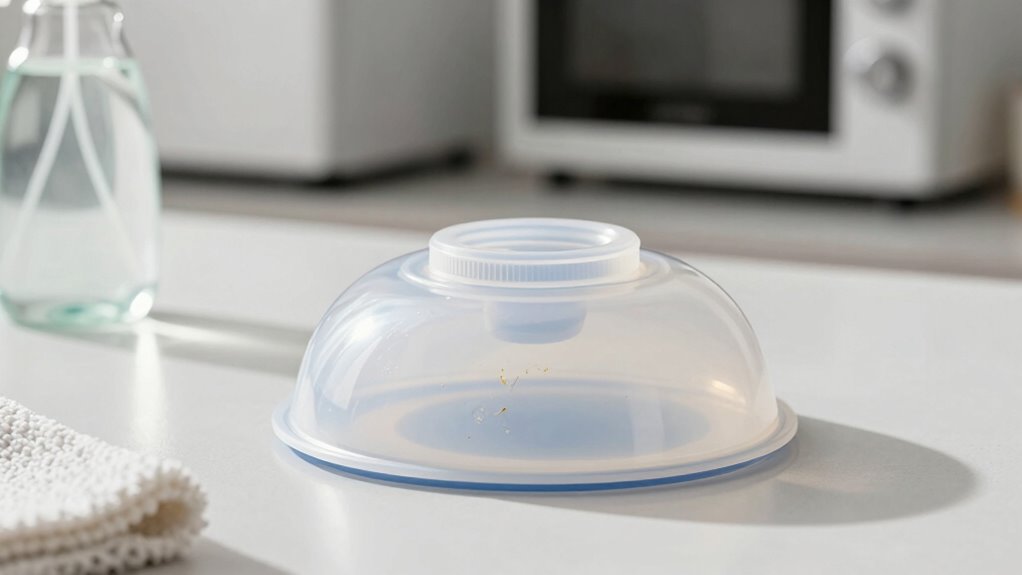
To keep your silicone seals odor-free, regular deep cleaning is essential. Make sure to dry them thoroughly using proper techniques to prevent moisture buildup. You can also sprinkle baking soda on the seals to absorb any lingering smells and keep them fresh. Being aware of the material’s properties can help you choose the safest cleaning methods for your silicone seals. Incorporating eco-friendly cleaning solutions aligns with sustainable travel practices, ensuring safety for both your health and the environment. Additionally, understanding the behavior of odors can aid in selecting effective deodorizing strategies. Recognizing how moisture accumulation contributes to persistent odors can further improve your maintenance routine.
Regular Deep Cleaning
Regular deep cleaning is essential for keeping silicone seals fresh and odor-free. Over time, silicone material can absorb odors, making them stubborn to remove. Deep cleaning helps eliminate trapped residues and prevents odor buildup. To do this effectively, focus on:
- Soaking seals in a mixture of baking soda and warm water
- Using a soft brush or cloth to scrub all crevices
- Rinsing thoroughly to remove soap and residue
- Air drying completely to prevent moisture buildup
- Ensuring the silicone material remains flexible and resilient for long-term use to avoid cracking or deterioration
This routine breaks down odor absorption and prevents lingering smells. Deep cleaning not only maintains the seal’s integrity but also keeps your containers smelling fresh. Proper maintenance contributes to the durability and effectiveness of silicone seals. Consistency is key — regular maintenance ensures your silicone seals stay odorless and in top condition.
Proper Drying Techniques
Proper drying techniques are crucial for preventing odors from developing on silicone seals after cleaning. To avoid trapped moisture, always air dry your seals thoroughly. Leaving them wet encourages bacteria and mold growth, which causes lingering smells. For effective moisture control, place the lid in a well-ventilated area and let it dry completely before reassembling. Use the following table to understand your options:
| Air Drying Method | Best Use Case |
|---|---|
| Natural Air Drying | When time allows, for thorough drying |
| Towel Drying | Quick, initial moisture removal |
| Air Circulation | Keeps airflow moving for faster drying |
Prioritize complete dryness to keep your silicone seals fresh and odor-free.
Using Baking Soda
Baking soda is a simple yet effective tool for keeping your silicone seals fresh and odor-free. It works by absorbing odors from the silicone material, preventing lingering smells that can be hard to eliminate. To use baking soda, create a paste with water and apply it directly to the silicone seal, letting it sit for 15-20 minutes before scrubbing gently. Alternatively, you can place a small bowl of baking soda inside the container and leave it overnight to absorb stubborn odors. For best results, combine these methods regularly to maintain a neutral scent. Keep in mind that baking soda’s odor absorption properties make it ideal for deodorizing silicone seals without harsh chemicals, ensuring your lids stay fresh and odor-free over time.
Natural Remedies for Persistent Odor in Food Lids

When food lids develop a persistent odor, natural remedies can often effectively eliminate the smell without harsh chemicals. You can try simple solutions like soaking silicone materials in vinegar or lemon juice, which neutralize odors naturally. These methods are safe for food storage and won’t damage the silicone. Here’s a quick guide:
| Remedy | How to Use | Benefits |
|---|---|---|
| Vinegar Soak | Soak lids in diluted vinegar for 30 mins | Removes stubborn odors |
| Lemon Juice | Rub or soak lids in lemon juice | Freshens and deodorizes |
| Baking Soda Paste | Make a paste with water and apply | Absorbs lingering smells |
Using these natural remedies keeps your lids smelling fresh without compromising the silicone materials.
When Should You Replace Your Food Container Lids?
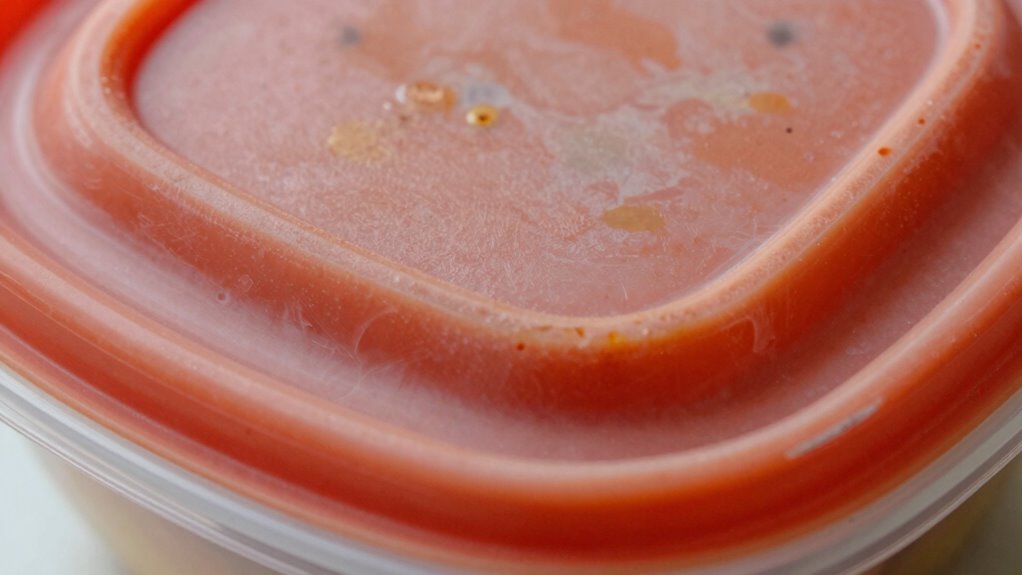
Over time, silicone food container lids can wear out, lose their sealing ability, or develop cracks that compromise their effectiveness. Recognizing when to replace your lid is key to maintaining food freshness and safety. If your lid shows signs of damage, it’s time for a lid replacement to ensure ideal silicone durability. Look out for these indicators:
- Cracks or tears in the silicone
- Persistent odors despite cleaning
- Loss of airtight seal
- Discoloration or stiffness
Even if the lid appears okay, frequent use can degrade silicone over time. Replacing worn lids helps prevent leaks and spoilage. Prioritize lid replacement when silicone no longer performs, ensuring your containers stay safe and odor-free. Proper maintenance and timely replacement extend the life of your food storage solutions.
Tips to Prevent Odor Buildup in Silicone Seals
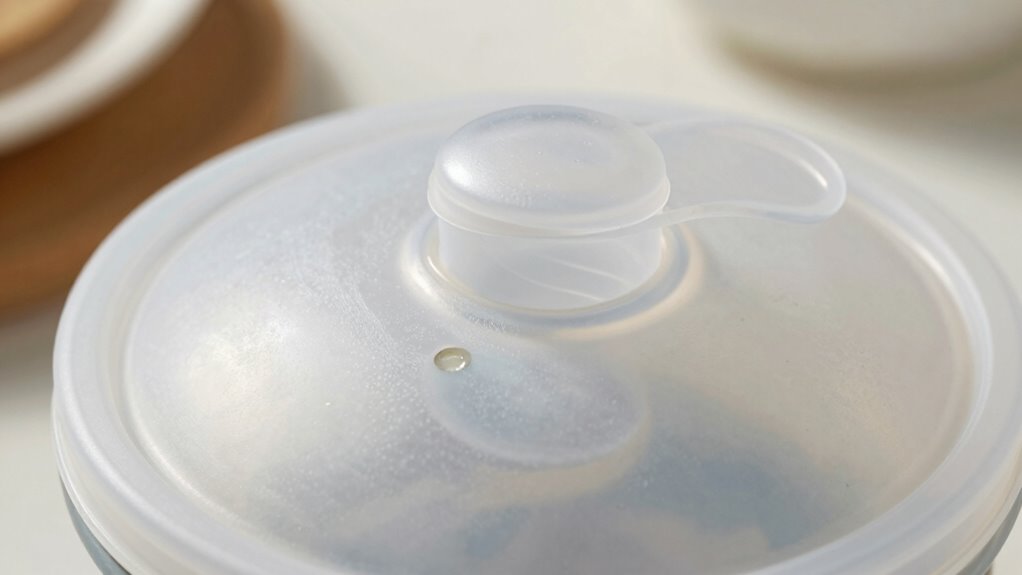
To prevent odor buildup in your silicone seals, maintaining proper cleaning and maintenance habits is essential. Always check for material compatibility before using cleaning agents; some harsh chemicals can degrade silicone and increase odor absorption. Regularly wash your seals with warm, soapy water, ensuring you reach all crevices to remove trapped residues. Avoid leaving food or liquids in containers for extended periods, as this can lead to persistent odors. Store lids and seals in a dry, well-ventilated area to discourage mold and bacteria growth. If odors do occur, gentle baking soda or vinegar solutions can help neutralize smells without damaging the material. Proper care not only prevents odor buildup but also extends the lifespan of your silicone seals, keeping them fresh and odor-free longer.
Common Mistakes That Make Odors Worse: and How to Avoid Them
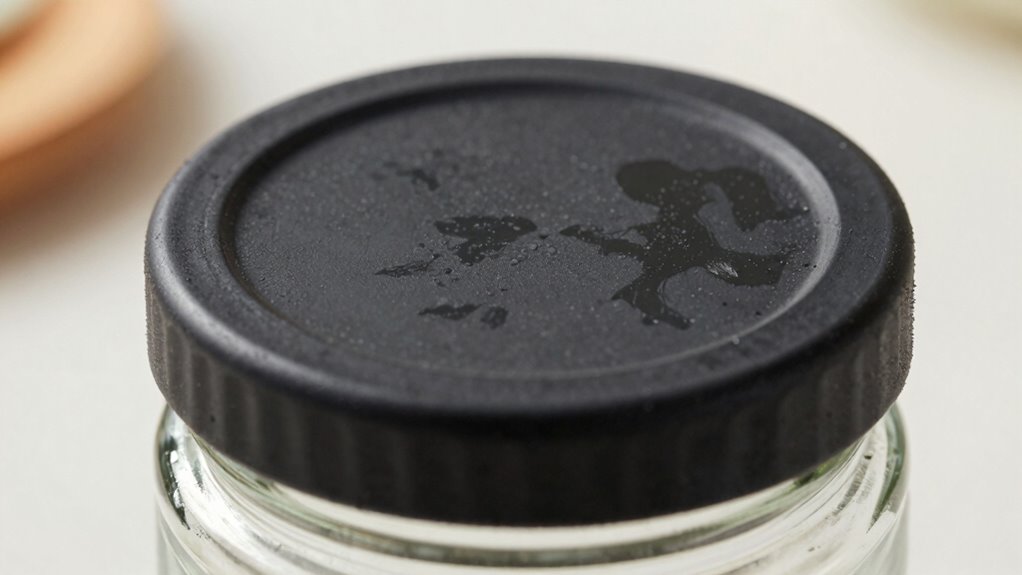
One common mistake that can worsen odors in silicone seals is using harsh cleaning chemicals that damage the material. These chemicals can break down the silicone, compromising the airtight seals and increasing odor absorption. To avoid this, steer clear of strong solvents or abrasive cleaners. Instead, focus on gentle, food-safe solutions. Also, neglecting proper drying can trap moisture, encouraging odors to develop. Using improper storage, like sealing seals while still damp, can trap residual moisture and odors inside. Additionally, overusing scented sprays or chemicals might mask smells temporarily but can worsen odor buildup over time. Remember, maintaining the integrity of your silicone seals and ensuring they’re completely dry and clean is key to preventing persistent odors.
Frequently Asked Questions
Are There Specific Types of Silicone Seals More Prone to Odors?
Some silicone seals are more prone to odors due to their silicone composition and seal design. Cheaper or lower-quality silicone may contain additives that trap smells, while seals with intricate designs or multiple grooves can harbor residue and bacteria. You should choose high-quality, pure silicone with smooth, simple designs for less odor retention. Regular cleaning and occasional deodorizing help keep these seals fresh and odor-free over time.
Can Dishwasher Use Worsen Silicone Seal Odors Over Time?
Dishwasher use can worsen silicone seal odors over time, leading to potential dishwasher damage and seal deterioration. The high heat and harsh detergents may break down the silicone, trapping odors deeper inside. While cleaning is essential, excessive or improper dishwasher use can accelerate odor persistence and damage your seals. To keep them fresh, hand wash with gentle soap and avoid exposing seals to extreme temperatures.
Do Scented Cleaning Products Affect Silicone Seals’ Odor Retention?
Scented cleaning products can affect silicone seals’ odor retention by masking existing smells rather than eliminating them. While they might temporarily hide odors, the scents can sometimes become embedded, making the smell linger longer. To keep your silicone seals fresh, avoid using heavily scented products and opt for natural deodorizing methods. Regular cleaning with unscented, mild soap and proper drying helps prevent odor buildup and keeps your lids smelling clean.
Is It Safe to Use Vinegar or Alcohol-Based Cleaners on Silicone Seals?
You might wonder if vinegar or alcohol-based cleaners are safe for your silicone seals. They’re generally effective cleaning agents, but frequent use can degrade seal longevity over time. Use them sparingly and dilute properly to avoid damage. When used carefully, these cleaners can freshen your lids without risking deterioration. Stay vigilant—how you clean today shapes how long your seals stay effective and odor-free, so choose your cleaning agents wisely.
How Long Does It Typically Take for Odors to Become Permanent?
Odor duration varies, but permanent smells can develop in silicone seals if you don’t clean them regularly. Typically, if you ignore persistent odors for weeks or months, they may become permanent. You might notice this when cleaning no longer removes the smell, indicating it’s deeply embedded. To prevent permanent smells, clean your lids often and use safe deodorizing methods. Acting promptly keeps your silicone seals smelling fresh and odor-free longer.
Conclusion
If you think silicone seals trap odors forever, think again. Regular cleaning and proper maintenance can banish lingering smells, proving that persistent odors aren’t always permanent. Some believe that silicone’s porous nature makes odors impossible to remove, but natural remedies and careful upkeep show otherwise. With patience and the right techniques, you can keep your lids smelling fresh—no replacements needed. Odors might seem stubborn, but they’re often just a sign you need a little extra care.