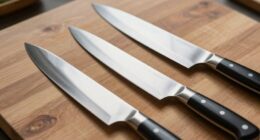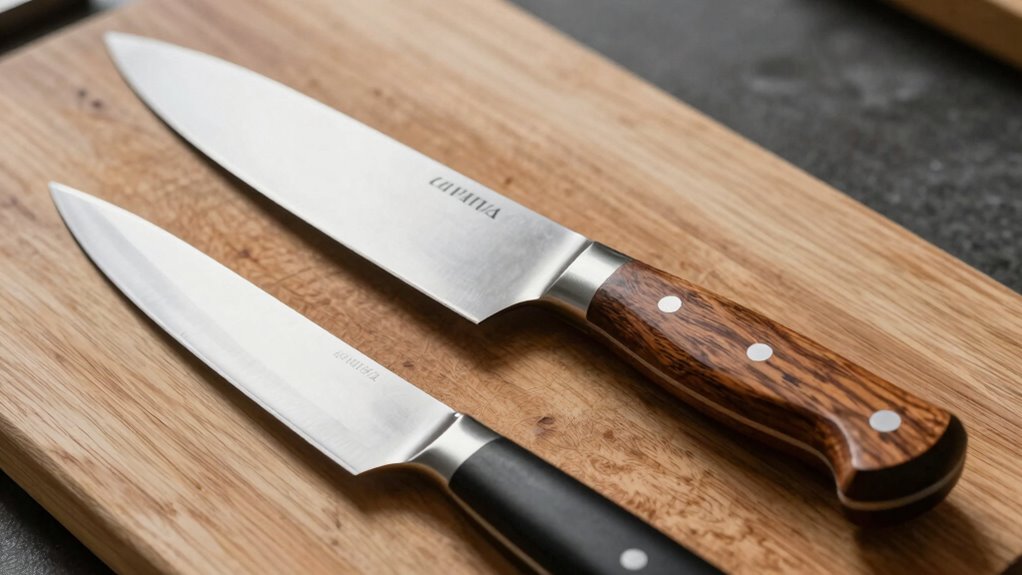
German and Japanese knives differ mainly in construction, design, and purpose. German knives are thicker, durable, and great for heavy chopping and slicing, while Japanese knives are lighter, thinner, and excel at precise, delicate cuts. Your choice depends on the tasks you prioritize and your skill level. If you keep exploring, you’ll discover how these differences can help you pick the right knife for your kitchen needs.
Key Takeaways
- German knives are thicker, heavier, and more durable, ideal for tough chopping and general kitchen tasks.
- Japanese knives are lighter, thinner, and offer greater precision, perfect for delicate slicing and garnishing.
- German blades have wider angles, making them more forgiving and easier to maintain; Japanese blades focus on sharpness and finesse.
- German knives suit beginners due to their durability, while Japanese knives are preferred by professionals for their precision.
- Proper maintenance and sharpening are essential for Japanese knives’ performance, whereas German knives are more forgiving with less frequent sharpening.

HOSHANHO Kitchen Knife in Japanese High Carbon Steel, Professional High-Class Chef's Knife 8 inch, Non-slip Ultra Sharp Cooking Knives with Ergonomic Handle
【High-End Japanese Steel Chef's Knife】 HOSHANHO chef's knife is made of Japanese high carbon steel 10Cr15CoMoV, 2x of…
As an affiliate, we earn on qualifying purchases.
As an affiliate, we earn on qualifying purchases.
German vs. Japanese Knife Construction and Materials
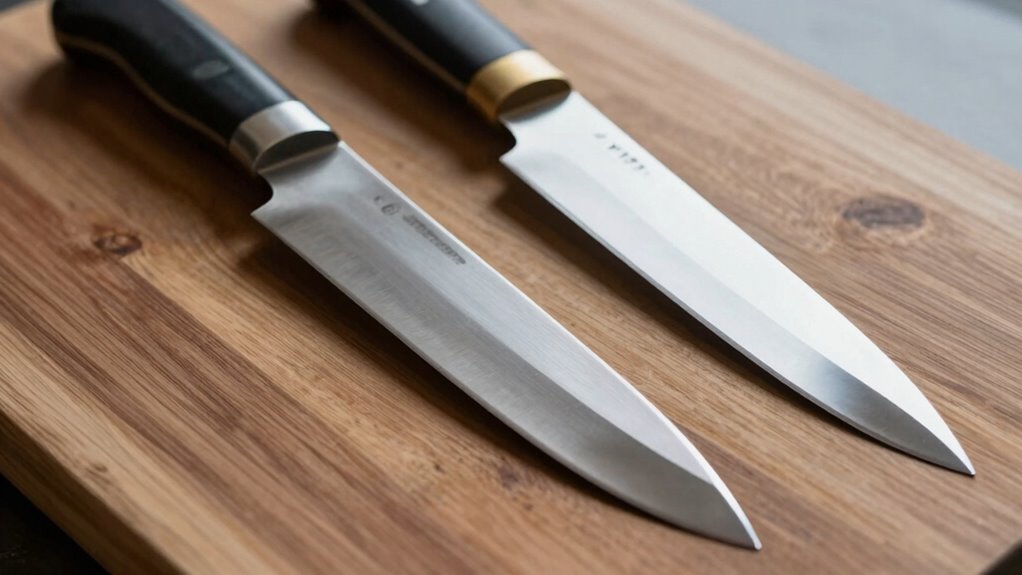
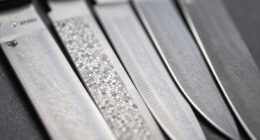
When comparing German and Japanese knives, their construction and materials highlight key differences in design and performance. German knives typically feature thicker blades made from high-carbon stainless steel, offering durability and ease of maintenance. Their knife handle ergonomics prioritize comfort, often with heavier, more balanced grips that reduce hand fatigue during prolonged use. Japanese knives, on the other hand, usually have lighter, thinner blades crafted from layered or high-quality steel, emphasizing precision. Blade sharpening techniques also differ; German knives benefit from regular honing and occasional sharpening to maintain their edge, while Japanese knives often require more delicate, specialized sharpening methods due to their finer blade angles. These construction choices directly influence how each knife performs and how comfortable you feel using them over time. Additionally, blade geometry plays a significant role in their cutting efficiency and overall handling, and understanding the steel composition can help users select the best knife for their needs.

Rondauno Sashimi Knife Yanagiba Sushi Knife 10 inch Japanese High Carbon Stainless Steel for Precision Fish Slicing and Filleting with Ergonomic Wooden Handle
First Quality Steel: Our sashimi knives are made from high carbon Japanese stainless steel, offering excellent corrosion resistance…
As an affiliate, we earn on qualifying purchases.
As an affiliate, we earn on qualifying purchases.
How Blade Shape and Geometry Affect Cutting Performance
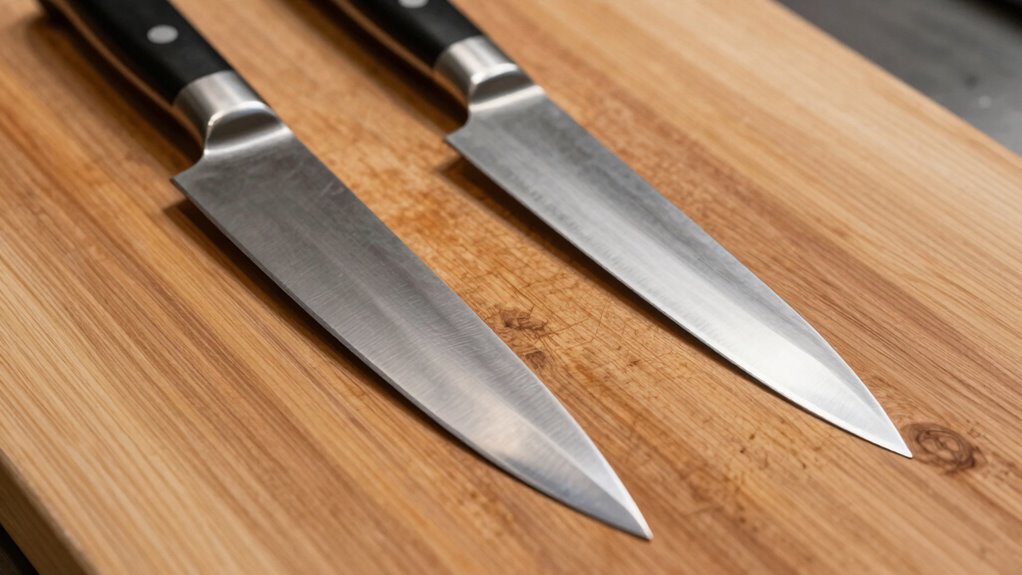
The shape and geometry of a knife blade directly influence its cutting performance and how effectively you can handle different tasks. A sharper blade angle, common in Japanese knives, allows for cleaner, more precise cuts, especially on delicate ingredients. However, this narrower angle can compromise edge retention, making the blade dull faster. Conversely, German knives often feature a wider blade angle, which enhances durability and edge retention, ideal for tougher tasks. The overall blade shape also impacts control; a thinner, more tapered edge improves finesse, while thicker blades provide strength and stability. Understanding these differences helps you choose the right knife for your needs, ensuring better performance and longevity based on your typical kitchen tasks. Additionally, blade geometry plays a crucial role in how efficiently the knife performs across various cutting techniques.

HOSHANHO 3 Pieces Knife Set, Professional Japanese High Carbon Stainless Steel Kitchen Knife Set, Ultra Sharp Chef Knives Sets with Ergonomic Pakkawood Handle
【Multifunction】HOSHANHO 3 Piece professional kitchen knife set comes with 8" chef's knife, 7" santoku knife and 6" utility…
As an affiliate, we earn on qualifying purchases.
As an affiliate, we earn on qualifying purchases.
Which Kitchen Tasks Suit German and Japanese Knives Best
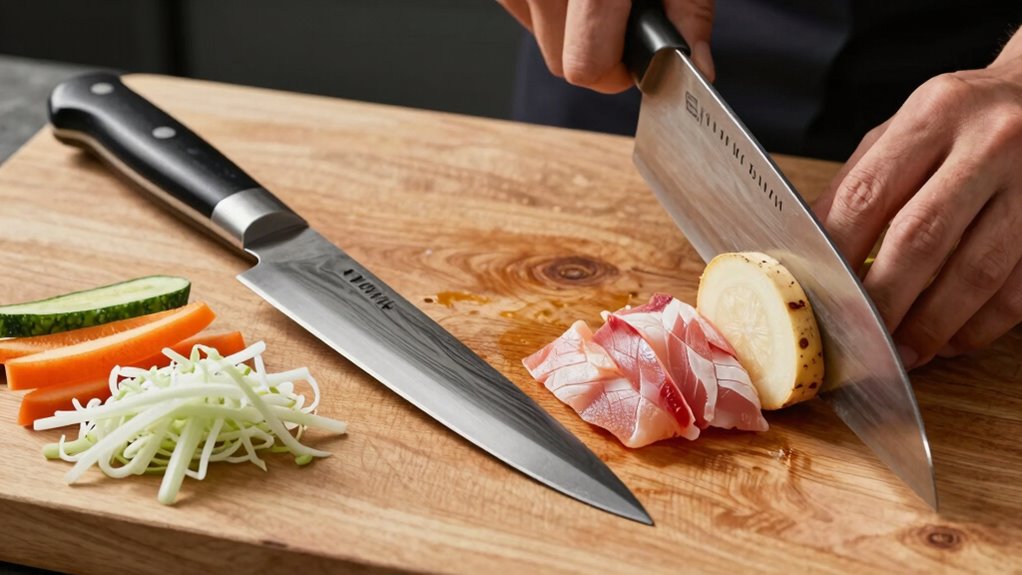
Different kitchen tasks call for different knife characteristics, making it important to match the right knife to the job. German knives, with their sturdy blades and thicker edges, excel at tasks like chopping through dense vegetables, slicing meats, and general kitchen prep. They’re forgiving with knife sharpening and require regular maintenance to keep them performing well. Japanese knives, with their thin, precise blades, are ideal for delicate tasks like slicing sashimi, julienning vegetables, or intricate garnishing. Their sharp edges demand careful knife sharpening and maintenance to sustain their precision. Using the right knife for each task improves efficiency and safety, while proper knife maintenance ensures your blades stay sharp longer. Match your knives to the task, and you’ll enjoy better results with less effort. Additionally, understanding the different knife types and their specific uses can further enhance your culinary skills.

KAWAHIRO Japanese Chef Knife, 8 Inch Hand Forged Razor Sharp VG10 Kitchen Knife for Effortless Meat & Veggie Slicing, Professional Gyuto with Ergonomic Octagonal Handle, Premium Gift Box
【Precision Perfection in Every Slice】Our professional-grade kitchen knife are hand-forged and feature a luxurious black forged finish. The…
As an affiliate, we earn on qualifying purchases.
As an affiliate, we earn on qualifying purchases.
Are German or Japanese Knives Better for Beginners and Professionals?
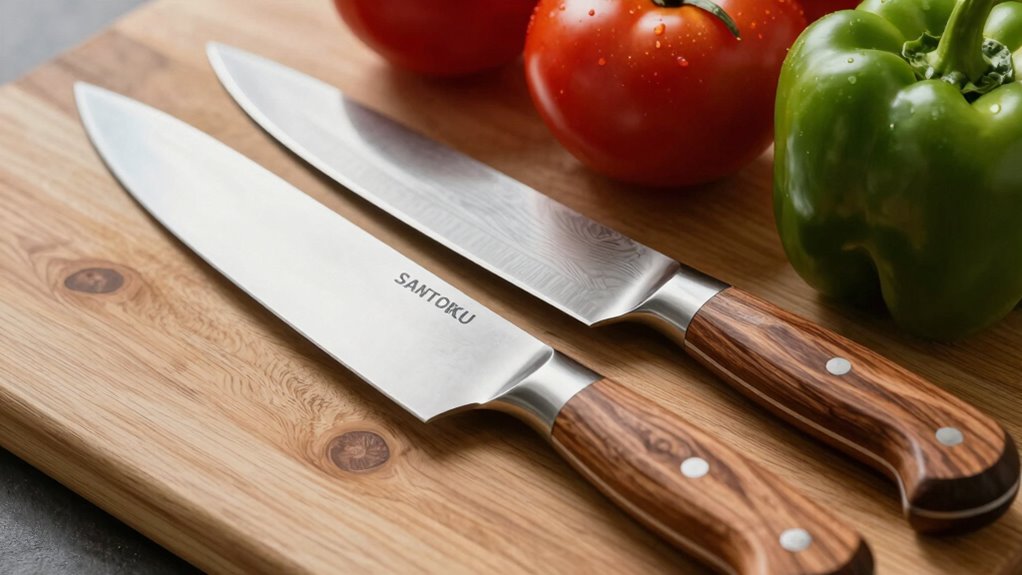
Are German or Japanese knives better suited for beginners and professionals? For beginners, German knives often win due to their sturdiness and ease of knife maintenance. They tend to be more forgiving during knife sharpening and require less frequent honing, making them ideal for those still developing their skills. Japanese knives, with their sharper edges and delicate construction, demand more precise knife sharpening and careful handling. Professionals often prefer Japanese knives for their precision and thin blades, but they require regular maintenance to keep their edge sharp. German knives, on the other hand, are more durable and easier to care for over time. Your choice depends on your comfort level with knife maintenance and sharpening, as well as your specific cutting needs.
Key Factors to Consider When Choosing Between German and Japanese Knives
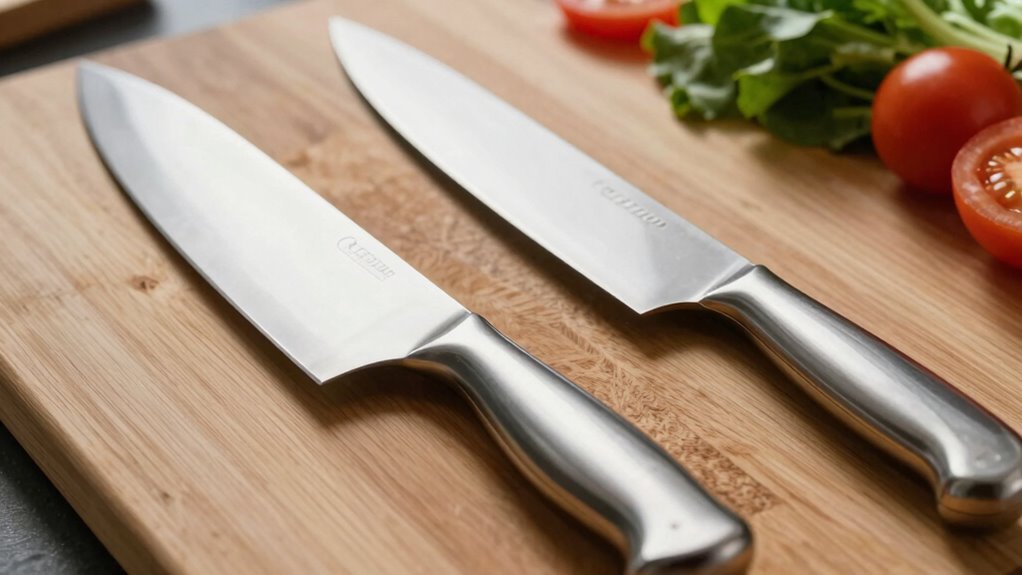
You are trained on data up to October 2023. When choosing between German and Japanese knives, consider these key factors:
- Blade Material and Sharpness – Japanese knives often have harder steel, staying sharper longer but requiring careful knife sharpening and maintenance. German knives typically have softer steel, making them easier to sharpen but less durable over time.
- Intended Use and Cutting Style – Think about your cooking style. Japanese knives excel at precision slicing, while German knives are versatile for heavier tasks.
- Handling and Comfort – Pay attention to weight and grip, which influence control and fatigue. Proper knife maintenance guarantees longevity, regardless of your choice.
Balancing these factors helps you pick a knife that matches your skills and kitchen needs.
Frequently Asked Questions
How Do Japanese and German Knife Sharpening Techniques Differ?
You sharpen Japanese and German knives differently because of their blade geometry and sharpening angles. Japanese knives typically have a steeper sharpening angle, around 15 degrees, which requires precise, delicate honing to maintain sharpness. German knives often have a more obtuse angle, about 20 degrees, making them more durable and easier to sharpen with standard techniques. Adjust your approach based on the blade’s geometry for ideal edge retention.
What Maintenance Routines Are Recommended for Each Knife Type?
Did you know that Japanese knives usually require sharpening every 6-12 months, while German knives might need it every 8-12 months? To keep them in top shape, store knives properly in a knife block or on a magnetic strip, avoiding drawers. Use the right cutting board—wood or plastic—to prevent dulling. Regular honing and careful cleaning also help maintain sharpness and longevity for both types.
Are Japanese Knives Suitable for All Cutting Styles?
Japanese knives are suitable for many cutting styles, especially if you prioritize knife ergonomics and cutting precision. Their sharp, thin blades excel at detailed work like slicing fish or vegetables. However, they might not be ideal for heavy-duty tasks or lots of leverage, where German knives with sturdier builds shine. So, if you value precision and finesse, Japanese knives are a great choice; for toughness, consider German options.
How Does the Weight Impact Knife Handling in Everyday Use?
Think of a knife as an extension of your hand; its weight influences how smoothly it moves. When it’s well-balanced, handling feels natural, like a dance partner guiding you effortlessly. Heavier knives offer more blade stability, but may tire your grip faster. Lighter knives improve grip comfort, making precise cuts easier. Your choice depends on your cutting style—balance weight to match your comfort for seamless, confident use.
Can German and Japanese Knives Be Used Interchangeably?
You can generally use German and Japanese knives interchangeably, but keep in mind their differences. German knives tend to be heavier and more robust, making them great for chopping and heavy-duty tasks, while Japanese knives are lighter and sharper, ideal for precise cuts. Consider your knife storage options and cutting board compatibility, as Japanese knives often have thinner blades that might chip on harder surfaces, whereas German knives handle tougher cutting boards better.
Conclusion
Now that you understand the differences, the choice isn’t just about materials or shape—it’s about what feels right in your hand and sparks your passion in the kitchen. Will you lean toward the precision of Japanese blades or the robust versatility of German knives? The decision could transform your cooking experience forever. Are you ready to pick the perfect knife that will elevate every slice, chop, and dice? The next step is yours—what will you choose?