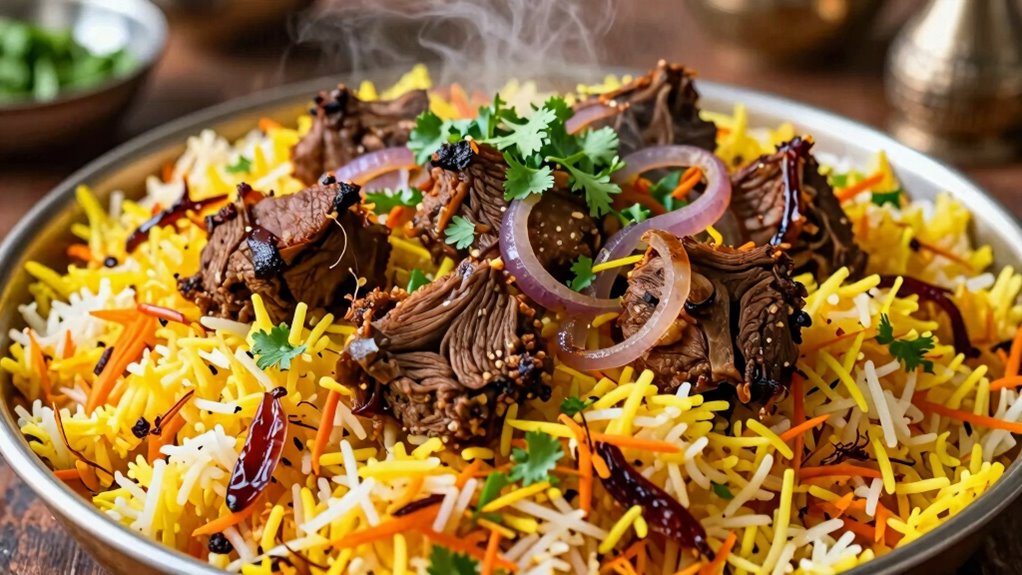

Biryani’s story blends myth, history, and regional flavors, with roots tracing back to Persian influence and Mughal royal kitchens. It’s more than just a dish—it’s a symbol of cultural exchange, celebration, and culinary artistry that connects communities across South Asia and beyond. Different regions put their unique spin on ingredients, spices, and cooking techniques, giving each style its distinctive character. If you continue exploring, you’ll uncover the fascinating blend of legend and logic that makes biryani so special.
Key Takeaways
- Biryani’s origins blend myths of Persian influence and Mughal royal traditions, symbolizing cultural exchange and culinary artistry.
- It embodies history, tradition, and regional customs, with myths adding mystique and cultural significance.
- Regional styles vary in rice preparation, spice blends, and ingredients, reflecting diverse cultural heritages.
- Techniques like rinsing, parboiling, and spice layering are essential for authentic flavor and texture.
- Modern twists and presentation styles celebrate creativity while honoring traditional roots, enhancing its global appeal.
The Origins and Legends of Biryani
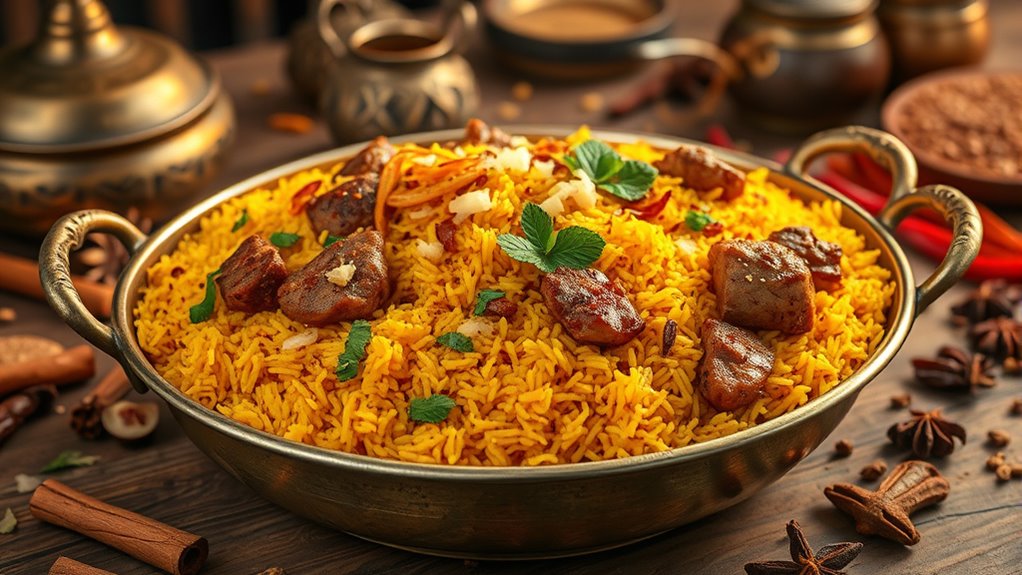
Have you ever wondered where biryani actually comes from? Many historical myths surround its origins, often blending fact with legend. Some say it was brought to South Asia by Persian travelers, while others believe it started in Mughal kitchens as a royal dish. These stories give biryani a rich culinary symbolism, representing more than just food — they embody cultural exchange and royal grandeur. Over centuries, it evolved through regional influences, but the core idea of layered rice and meat remained intact. While the true story is complex, the myths add a sense of mystique to biryani’s history, making it more than a meal; it’s a symbol of history, tradition, and culinary artistry. Additionally, the regional styles of biryani reflect the diverse cultural heritages across South Asia and beyond.
How Biryani Became a Cultural Icon in South Asia and Beyond
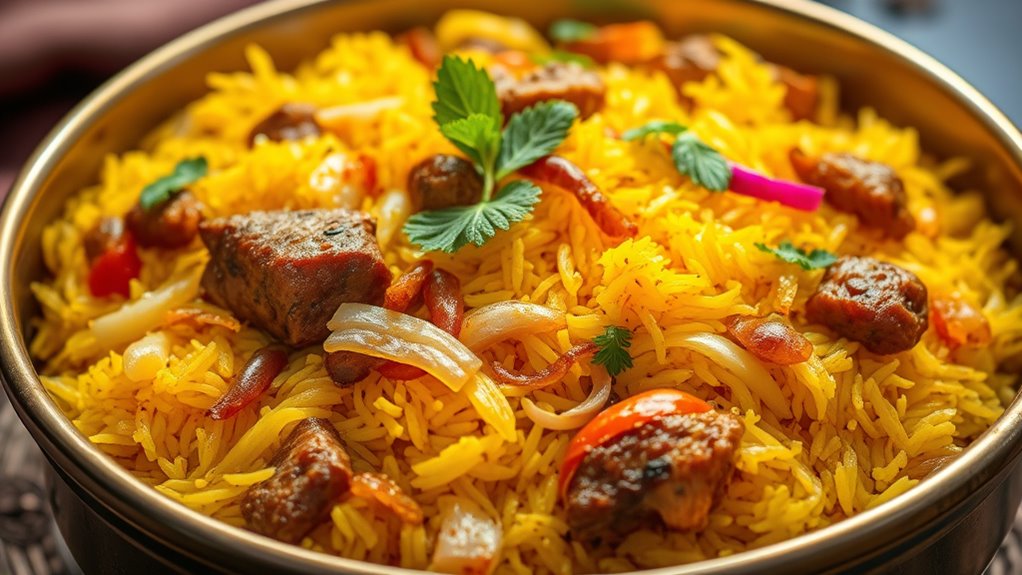
Ever wonder why biryani has become more than just a dish in South Asia and beyond? Its rise as a cultural icon results from the evolution of biryani’s popularity across regions. You see, this flavorful dish has influenced global cuisine through:
Biryani’s global popularity reflects cultural exchange, migration, and culinary innovation across regions.
- Widespread migration and trade spreading its flavors worldwide
- International chefs adapting biryani to local tastes, boosting its popularity
- Media exposure, such as cooking shows and social media, fueling its fame
- The regional variations that showcase diverse ingredients and cooking techniques, further enriching its appeal
- The technological advancements in cooking and presentation that have helped popularize biryani across different cultures
- Deaf Vibes techniques for visual and auditory cues have also played a role in sharing and learning about biryani’s diverse styles, making its appreciation more accessible globally
- Additionally, the cultural significance of biryani in various communities has strengthened its status as a symbol of shared heritage and culinary innovation.
- The global culinary landscape continues to evolve, fostering new ways to enjoy and reinterpret this beloved dish.
As a result, biryani’s influence in global cuisine continues to grow, making it a symbol of shared heritage and culinary innovation. Its journey from regional comfort food to international icon showcases how food connects cultures and evolves over time, solidifying biryani’s place in the global culinary landscape.
How to Make Authentic Biryani: Essential Techniques and Tips

Getting the rice just right is key, so pay attention to water ratios and cooking times. Layering spices evenly enhances the flavor without overpowering the dish. Mastering these techniques guarantees your biryani is authentic and flavorful every time. Additionally, using quality ingredients ensures the best possible taste and texture in your final dish. To achieve the perfect balance, understanding regional styles can also influence the choice of spices and cooking methods used. Recognizing the meaning of consecration can inspire a deeper appreciation for the sacred aspects of traditional cooking practices, elevating your culinary experience. Incorporating natural techniques such as traditional cooking methods and sustainable practices can further enhance the authenticity and environmental friendliness of your biryani. Being aware of essential oils for flavor enhancement can also add aromatic depth to your biryani, elevating its sensory appeal.
Perfect Rice Cooking Techniques
Achieving perfectly cooked rice is the foundation of authentic biryani, and attention to detail makes all the difference. To get the ideal grain texture and water absorption, follow these essential tips:
- Rinse the rice thoroughly until the water runs clear to remove excess starch, ensuring fluffy grains.
- Use a measured amount of water—usually less than what traditional boiling calls for—to prevent sogginess and promote proper water absorption.
- Parboil the rice until it’s about 70% cooked; it should be firm but tender, so it doesn’t overcook during layering.
Balanced Spice Layering
Once your rice is perfectly cooked, the next step is to layer in the spices to create that signature aroma and flavor of authentic biryani. Achieving a balanced spice layer is vital for flavor harmony. Use a mix of whole and ground spices—cinnamon, cloves, cardamom, and bay leaves—sparingly, so they don’t overpower the dish. Toast the spices briefly to release their essential oils before adding them to the rice and meat. Adjust the spice quantities to suit your taste, making certain no single flavor dominates. This careful spice layering enhances aroma and guarantees every bite delivers the right blend of heat, warmth, and complexity. Remember, restraint and precision in spice balance make your biryani truly authentic and memorable.
Regional Biryani Styles: What Makes Each Unique?

Regional Biryani Styles: What Makes Each Unique?
Different regions tweak their biryani by adjusting rice preparation techniques and spice blends, giving each style a distinct flavor. You’ll notice variations in rice texture, from fluffy grains to slightly sticky, depending on local methods. These ingredient choices and spice combinations are what truly set each regional style apart. Additionally, some areas incorporate affiliate links for specific ingredients or cookware, influencing the authenticity and preparation style of their biryani. Interestingly, regional rice preparation methods also reflect local climate and available resources, further shaping each style’s character.
Rice Preparation Techniques
Rice preparation techniques are the foundation of each regional biryani style, giving the dish its distinctive character. To achieve perfect biryani, you focus on creating scented grains through specific steaming techniques. These methods ensure the rice absorbs flavors while remaining fluffy and separate. Key steps include:
- Rinsing and soaking the rice to remove excess starch and improve texture.
- Parboiling the rice with aromatic ingredients like cardamom, cinnamon, or cloves to enhance scent.
- Using steaming techniques that gently cook the rice, locking in aroma and maintaining individual grains. Properly executed steaming also helps achieve the necessary wave and wind conditions for optimal rice texture. Additionally, controlling moisture levels during steaming is essential to prevent sogginess and ensure a perfect rice finish.
Spices and Ingredient Variations
Spices and ingredient variations are what give each regional biryani its distinct personality. You’ll notice that saffron infusions are a hallmark of some styles, lending a luxurious aroma and golden hue. Other regions emphasize aromatic spice blends, such as garam masala, turmeric, and cumin, which define their unique flavor profiles. For example, Hyderabadi biryani often features a rich combination of spices layered with fragrant basmati rice, while Kolkata biryani might include potatoes and a milder spice mix. The choice of ingredients, from fresh herbs to nuts and dried fruits, also varies regionally, adding texture and depth. These variations create a tapestry of flavors that make each biryani style memorable and unique to its cultural roots.
The Cultural Role of Biryani in Celebrations and Daily Life
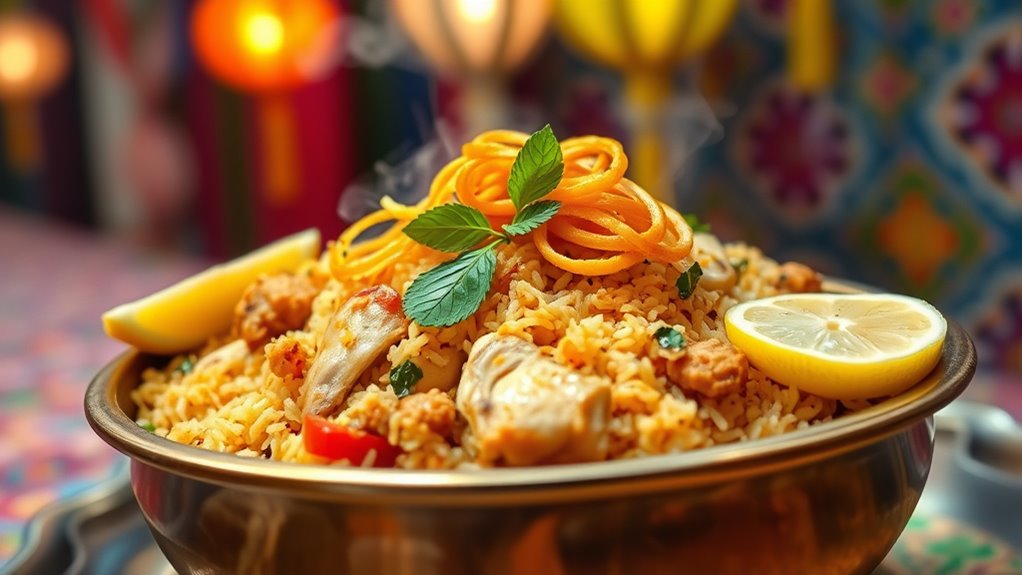
Biryani holds a special place in both celebrations and everyday life, serving as a symbol of unity and shared heritage across diverse communities. During festive traditions like weddings and festivals, it becomes the centerpiece, bringing people together over its rich aroma. On daily occasions, it transforms into a comforting meal that nourishes body and soul. Its cultural importance is reflected in three key ways: 1. It fosters community bonding through shared meals. 2. It honors regional customs and family traditions. 3. It connects generations through culinary heritage. Recognizing the cultural significance of biryani helps us appreciate its role beyond just a delicious dish. Its social and cultural roles reinforce its importance as more than just food. Whether served at grand celebrations or enjoyed as a daily comfort food, biryani’s role goes beyond taste, embodying cultural identity and togetherness in every bite.
Modern Twists and Innovations in Biryani Cooking
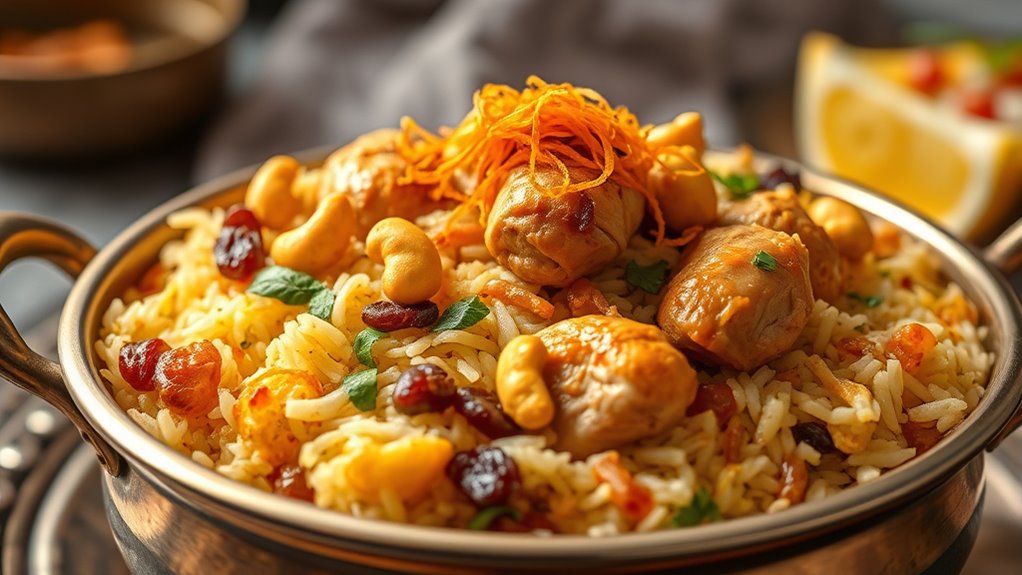
As chefs and home cooks continue to celebrate biryani’s cultural significance, they also experiment with new techniques and ingredients to create modern variations. Fusion innovations blend biryani with flavors from other cuisines, like adding Mediterranean spices or using ingredients such as quinoa or cauliflower rice. These twists appeal to contemporary tastes and dietary preferences. Additionally, chefs focus on contemporary presentations, serving biryani in stylish bowls, layered in transparent glassware, or topped with innovative garnishes like edible flowers or microgreens. These presentation techniques are crucial for making traditional dishes visually appealing to modern audiences. These modern approaches breathe fresh life into a traditional dish, making it visually appealing and adaptable to diverse palates. Incorporating modern twists can also showcase the creativity of chefs and home cooks in elevating traditional recipes. By embracing fusion innovations and contemporary presentations, you can craft biryanis that honor tradition while exciting modern audiences.
How to Identify and Cook Genuine Biryani at Home

To cook genuine biryani at home, you need to start with quality ingredients and follow traditional techniques that preserve its authentic flavor and texture. Be aware of biryani myths that often mislead home cooks, especially regarding spice blending. To guarantee authenticity, focus on these key steps:
- Use long-grain Basmati rice for aroma and fluffiness.
- Master spice blending by combining whole spices like cloves, cardamom, and cinnamon, then grinding them fresh.
- Layer the partially cooked rice with marinated meat or vegetables, sealing the pot to allow flavors to meld.
- Proper storage and handling of spices and rice can significantly impact the final taste and quality of your biryani preservation techniques.
- Investing in a quality vacuum sealer can help maintain the freshness of your spices and rice for longer periods, ensuring consistent flavor in your biryani.
- Utilizing proper venting and clearances in your cooking setup ensures even heat distribution and prevents overcooking or burning of the delicate layers. Regularly checking your cookware’s air circulation can enhance heat efficiency and prevent scorching.
Frequently Asked Questions
What Are the Health Benefits of Eating Traditional Biryani?
Eating traditional biryani offers nutritional benefits like a good mix of carbohydrates, proteins, and healthy fats, giving you sustained energy. It also supports digestive health thanks to spices like cumin and cardamom, which can improve digestion and reduce bloating. Plus, using fresh ingredients boosts your immune system. So, enjoying biryani in moderation can contribute to overall well-being while satisfying your taste buds.
How Does Biryani Differ From Other Rice Dishes Globally?
Think of biryani as a symphony, where each regional rice dish plays a unique instrument. Unlike other rice dishes, biryani combines fragrant spices, layered flavors, and often marinated proteins, creating a rich flavor profile. Its regional variations, from Hyderabadi to Sindhi, add distinct melodies. You’ll notice the emphasis on aromatic rice, complex seasoning, and cooking techniques that set biryani apart from simpler, more uniform rice dishes worldwide.
Which Spices Are Essential for Authentic Biryani Flavor?
You need a specific spice combination to achieve authentic biryani flavor. Key spices include saffron, which adds a subtle aroma, and garam masala, a blend of warmth and complexity. You should also incorporate cumin, cardamom, and cloves to enhance aroma and taste. These flavor enhancers work together, creating a rich, layered profile essential for true biryani. Don’t forget to balance spices carefully for the perfect, aromatic dish.
Can Biryani Be Adapted for Vegetarian or Vegan Diets?
Biryani can definitely be adapted for vegetarian or vegan diets, and it’s like transforming a classic masterpiece into a vibrant new art form. You can use plant-based alternatives like tofu, tempeh, or vegetables to replace meat, ensuring every bite is packed with flavor enhancement. With the right spices and ingredients, you’ll create a mouthwatering dish that keeps the soul of traditional biryani alive while catering to your dietary needs.
What Are Common Mistakes to Avoid When Cooking Biryani at Home?
When cooking biryani at home, avoid overcooking the rice, which can make it mushy and ruin the dish’s texture. Also, don’t neglect spice balance; too little spices can make it bland, while too much can overpower flavors. Be sure to layer flavors carefully, cook the meat or vegetables properly, and use fragrant rice and quality ingredients. These mistakes can compromise the authenticity and deliciousness of your biryani.
Conclusion
Biryani is a tapestry woven with legends, flavors, and traditions, each thread adding richness to its story. As you explore its regional styles and master its techniques, you’ll find yourself steering a vibrant mosaic of history and innovation. Think of biryani as a symphony—each note, whether classic or modern, harmonizes to create a timeless masterpiece. Embrace its diversity and let every bite tell a story worth savoring.