South Indian coffee is unique because it uses a traditional filter brewing method that emphasizes slow extraction, medium roast beans, and the addition of chicory for depth. Unlike espresso, which relies on high pressure and quick extraction for boldness, this method results in a smooth, full-bodied, and aromatic coffee with cultural rituals tied to every cup. If you want to understand how these elements come together, keep exploring how this distinct brew is crafted and enjoyed.
Key Takeaways
- South Indian filter coffee uses a slow drip brewing method with medium roast beans, creating a full-bodied, aromatic flavor distinct from espresso.
- Espresso employs high pressure and rapid extraction with dark roasted beans, resulting in a bold, concentrated, and pungent coffee profile.
- The traditional filter brewing emphasizes a cultural ritual, blending chicory, milk, and jaggery for a unique, community-oriented experience.
- Coffee filter preparation is leisurely and emphasizes subtle nuances, contrasting the quick, intense nature of espresso extraction.
- Regional bean varieties and specific preparation techniques give South Indian filter coffee its cultural identity, setting it apart from espresso-based drinks.

KERAM south indian coffee drip maker-permanent/reusable phin filter for 3-4 serving cup 6.6 Oz(200 ml) made of steel ss304 food grade camping/travelling small decoction dripper maker
High Grade : Uses of Stainless steel 304, Durable high end Indian style coffee filter
As an affiliate, we earn on qualifying purchases.
As an affiliate, we earn on qualifying purchases.
What Makes South Indian Coffee Unique in Flavor and Tradition

Have you ever wondered what sets South Indian coffee apart from other varieties? It all begins with the unique coffee plant varieties cultivated in the region. These plants, often Robusta and Arabica, produce beans with distinct flavor profiles that are essential to South Indian coffee. The traditional brewing method also plays a pivotal role. Using a stainless steel filter, you get a slow, gentle extraction that intensifies the coffee’s rich aroma and bold taste. This process preserves the beans’ natural oils and flavors, creating a robust, full-bodied cup. The combination of specific plant varieties and the time-honored brewing technique results in a coffee that’s not just flavorful but steeped in cultural tradition. That’s what makes South Indian coffee truly special.

Stainless Steel South Indian Filter Coffee Drip Maker
Durable & Easy to Use!
As an affiliate, we earn on qualifying purchases.
As an affiliate, we earn on qualifying purchases.
How Is South Indian Coffee Brewed Using a Filter Coffee Maker
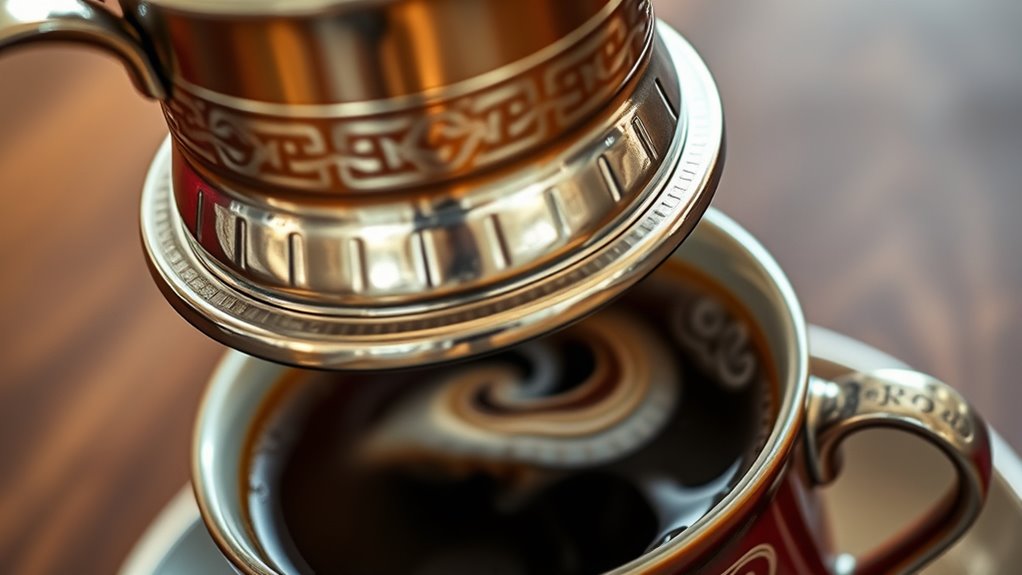
To brew South Indian coffee with a filter coffee maker, start by preparing a strong coffee mixture with finely ground coffee and water. Then, place the mixture in the upper chamber of the filter and let it brew through gravity. As the hot water passes through, rich coffee begins to drip into the lower chamber, ready to be enjoyed. The process benefits from a consistent contrast ratio, which helps produce a clearer and more vibrant brew. Additionally, using energy-efficient appliances can help reduce overall energy consumption during brewing. Incorporating a perfect brewing technique ensures the coffee’s flavor and aroma are optimally extracted, resulting in an authentic South Indian coffee experience. Choosing a reputable brand with a trusted reputation in the market can also enhance the overall brewing process and flavor quality. Proper timing and temperature control during brewing further contribute to achieving the signature boldness and richness of South Indian coffee.
Preparing the Coffee Mixture
Preparing the coffee mixture for a South Indian filter involves selecting the right coffee powder and measuring it accurately. Use a finely ground coffee bean blend, ideally roasted lightly for a smoother flavor. Measure about 2-3 tablespoons per cup, depending on desired strength. The water temperature is vital; it should be just below boiling, around 90-95°C, to extract maximum aroma and flavor. To help you prepare, here’s a quick reference:
| Coffee Type | Grind Size | Quantity per Cup |
|---|---|---|
| Traditional Blend | Fine | 2-3 tbsp |
| Dark Roast | Fine | 2-3 tbsp |
| Medium Roast | Fine | 2-3 tbsp |
Follow these guidelines to guarantee a rich, aromatic South Indian coffee.
Brewing Process in Filter
Once you’ve measured your coffee grounds, the next step is to brew the coffee using a filter coffee maker. In filter brewing, you’ll follow specific process steps to ensure a rich, flavorful cup.
- Place the measured coffee grounds into the perforated chamber of the filter, then set it atop a decanter or mug.
- Pour hot water over the grounds slowly, allowing it to seep through the coffee and extract the flavors.
- Let the brewed coffee drip into the container below, then remove the filter once dripping stops.
- For an authentic experience, consider utilizing proper filtration techniques to enhance the clarity and purity of your South Indian filter coffee. Using high-quality filter coffee can also significantly impact the overall flavor and aroma of the brew. Additionally, controlling the water temperature during brewing can help optimize extraction and flavor.
This process creates a smooth, concentrated brew characteristic of South Indian filter coffee. The process steps emphasize precision in filter brewing, resulting in a distinct taste that sets it apart from other coffee styles.

ZenithCart Brass Filter Coffee Dabara Set – Traditional South Indian Cup & Tumbler Set for Authentic Serving – Pital Finish – Set of 4
EMBRACE TRADITION: Discover the essence of South Indian coffee culture with our Brass Dabara Set, a symbol of…
As an affiliate, we earn on qualifying purchases.
As an affiliate, we earn on qualifying purchases.
What Are the Key Features of Espresso and How Do They Compare?
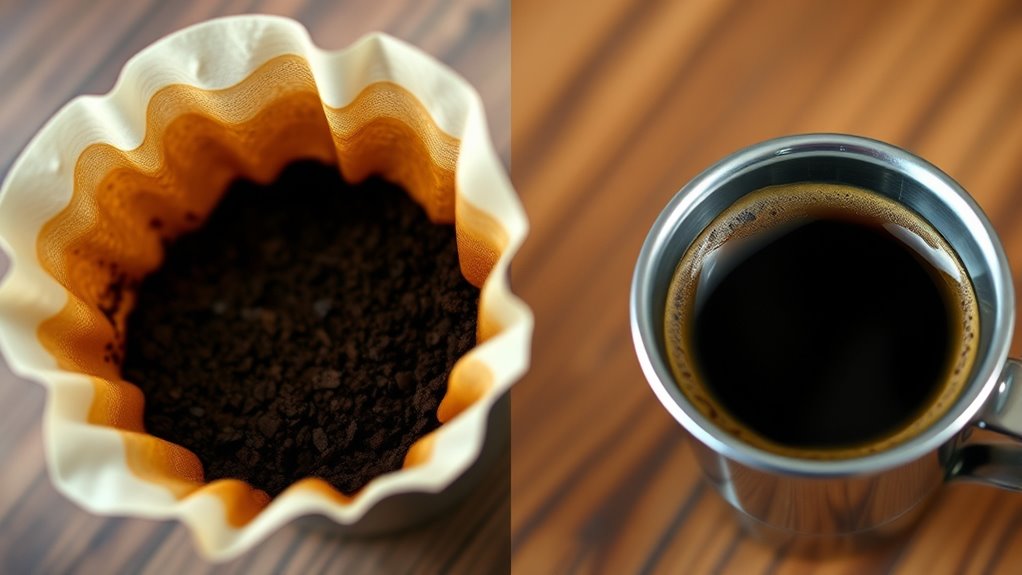
Espresso stands out for its rich, concentrated flavor and thick, velvety texture, making it a distinct brewing method compared to a coffee filter. The espresso features include a bold aroma, a crema layer on top, and a quick extraction process that intensifies flavors. Unlike drip coffee, which uses longer brewing times and larger quantities of water, espresso is brewed under high pressure, resulting in a small, potent shot. When you compare brewing methods, espresso’s rapid, pressurized extraction creates a compact beverage with a robust taste and thicker consistency. Its intensity and texture set it apart from filter coffee, which emphasizes clarity and smoothness. Additionally, the use of specialized filters and tips in espresso brewing helps achieve the desired flavor profile, highlighting the importance of equipment choices in the process. Understanding these key features helps you appreciate why espresso commands a unique place in coffee culture.
Stainless Steel South Indian Filter Coffee Drip Maker
Durable & Easy to Use!
As an affiliate, we earn on qualifying purchases.
As an affiliate, we earn on qualifying purchases.
Flavor Differences: South Indian Filter Coffee vs. Espresso

Your taste buds will notice that South Indian filter coffee and espresso differ markedly in flavor. These differences come from their ingredients, brewing methods, and resulting profiles. Exploring how each element influences the taste can help you appreciate what makes each coffee unique. For instance, South Indian filter coffee typically uses a blend of strong, dark roasted beans and is prepared with a slow drip method, lending it a rich and full-bodied flavor, whereas espresso is brewed quickly under high pressure, resulting in a concentrated and intense shot. Additionally, the brewing process plays a significant role in shaping the distinct characteristics of each coffee type. The coffee bean origin and roast level further accentuate these flavor distinctions, giving each brew its signature taste. Moreover, the preparation style influences not just flavor but also the traditional rituals and cultural significance associated with each coffee. Understanding the coffee extraction process can also deepen your appreciation for the unique qualities of South Indian filter coffee and espresso. The use of water temperature and quality can further influence the final flavor profile of each brewing method.
Ingredient Composition Impact
The ingredient composition of South Indian filter coffee and espresso plays a crucial role in shaping their distinct flavors. Your experience depends heavily on the ingredient mix and brewing chemistry. First, the coffee beans used are typically roasted differently—South Indian filter coffee favors a medium roast, enhancing earthy and spicy notes, while espresso often uses a darker roast for boldness. Second, the coffee-to-water ratio varies, with filter coffee having a coarser grind and more water, affecting extraction. Third, the addition of chicory in South Indian filter coffee alters the ingredient composition, adding bitterness and depth. These differences influence extraction, flavor complexity, and aroma, highlighting how ingredient choices and brewing chemistry create the unique profiles of each brew. Understanding the impact of ingredient composition helps explain why these coffees taste so different. Additionally, the brewing process itself significantly contributes to the final flavor profile, emphasizing the importance of both ingredient selection and technique. Recognizing how ingredient variations affect the final taste can deepen appreciation for each coffee style. Moreover, ingredient quality can further enhance or diminish the overall flavor experience, especially when using specialized infusion tools to optimize flavor extraction and consistency.
Brewing Technique Variations
Brewing techniques fundamentally shape the distinct flavor profiles of South Indian filter coffee and espresso. Your approach influences coffee acidity and brewing temperature, which are key to flavor development. South Indian filter coffee uses a slower drip process, resulting in moderate brewing temperatures and a balanced acidity. Espresso, on the other hand, employs high pressure and rapid extraction, creating a bolder, more intense flavor with sharper acidity. Additionally, the role of skilled baristas is crucial in optimizing these techniques to bring out the best in each style. Mastery over precise temperature control is essential for achieving the ideal flavor extraction in both brewing methods. Proper equipment maintenance also plays a significant role in maintaining consistent quality and flavor. Understanding thermal behavior helps in fine-tuning the brewing process to enhance flavor profiles.
Flavor Profile Characteristics
While both South Indian filter coffee and espresso deliver rich coffee experiences, their flavor profiles differ markedly due to their unique brewing methods. Your taste buds will notice that filter coffee offers a mellow, full-bodied flavor with a hint of sweetness, while espresso provides a bold, intense, and slightly bitter profile. This difference stems from factors like temperature control and grind size. Additionally, the brewing process impacts the flavor extraction, which further influences the overall taste. The brewing technique employed in each method plays a crucial role in defining these distinct flavor characteristics. 1. Filter coffee uses a coarser grind and lower temperature, producing a smooth, balanced taste with subtle acidity. 2. Espresso employs a fine grind and high pressure, extracting a concentrated, robust flavor with prominent bitterness. 3. The brewing process influences aroma intensity, with espresso delivering a sharper, more pungent scent, compared to the more nuanced aroma of filter coffee.
How to Brew South Indian Coffee: Grinding, Brewing, and Extraction

To make authentic South Indian coffee, start by selecting the right coffee beans—preferably dark roasted and finely ground. Proper coffee grinding is essential; use a fine, powdery consistency to guarantee excellent extraction. Traditional brewing techniques involve placing the ground coffee in a filter, then pouring hot water over it. Allow the coffee to slowly drip through the filter, which takes a few minutes. For the best flavor, use boiling water and a steady, gentle pressure. Once brewed, pour the strong decoction into a tumbler, dilute with hot milk and sugar to taste, and mix well. This extraction process emphasizes the rich, bold flavors characteristic of South Indian coffee. Precision in grinding and patience during brewing are key to capturing its unique taste.
Coffee Beans and Roasting Styles for Authentic South Indian Coffee
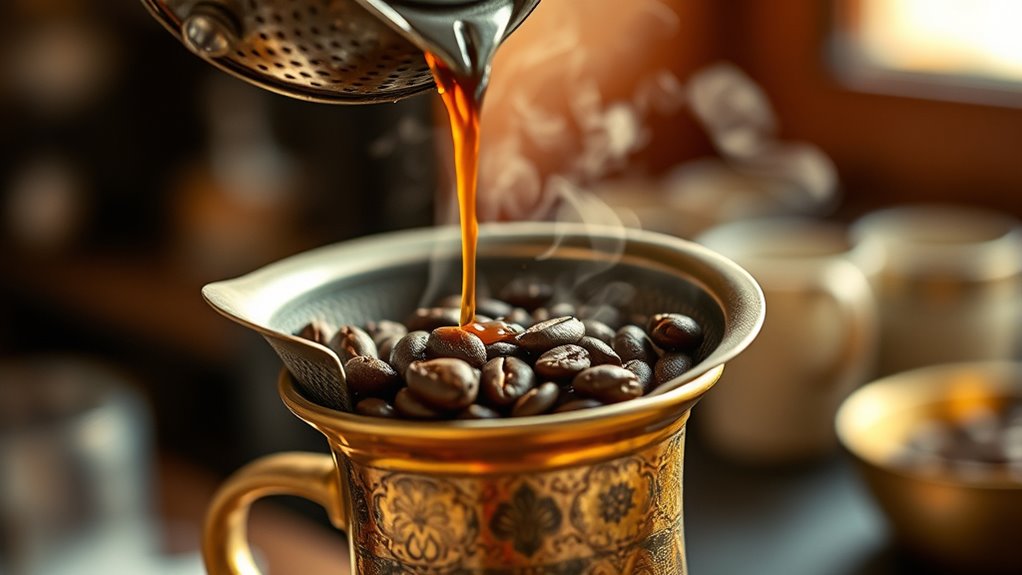
Choosing the right coffee beans is essential for capturing the authentic flavor of South Indian coffee, and traditionally, dark roasted beans are preferred because they develop the bold, robust profile characteristic of the region. These beans often come from local coffee plantations, ensuring freshness and quality. The roasting techniques emphasize a deep, smoky flavor, achieved through longer, slower roasts that bring out the beans’ natural richness. To picture it:
- Beans are sourced from regional coffee plantations, highlighting freshness.
- Roasting involves slow, dark roasting techniques to enhance boldness.
- The resulting beans have a smoky aroma with a full-bodied, intense flavor profile.
This combination creates the foundation for the strong, aromatic South Indian coffee that’s loved worldwide.
How Milk and Jaggery Are Used to Prepare South Indian Coffee
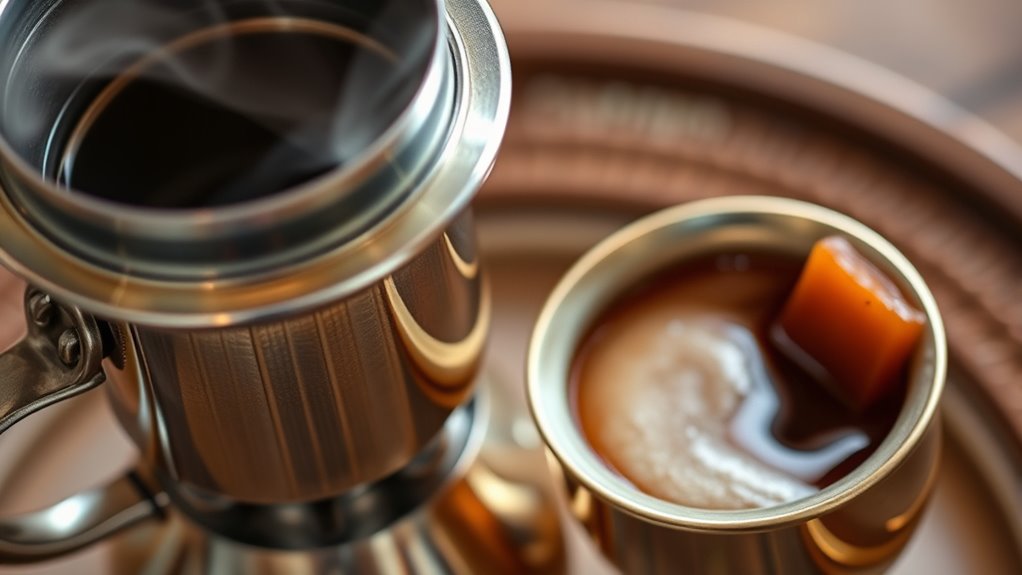
After selecting and roasting the perfect beans, the next step in making authentic South Indian coffee involves adding milk and jaggery. You start by preparing a strong coffee infusion using a traditional filter, which extracts rich flavors. Once brewed, pour the hot coffee into a tumbler or tumbler and mix in warm milk to create a smooth milk infusion. Then, add jaggery to the mixture, stirring until it dissolves completely. The jaggery sweetness balances the boldness of the coffee, creating a harmonious flavor profile. This combination results in a creamy, sweet, and aromatic beverage that’s unique to South India. The careful blending of milk and jaggery elevates the coffee, making it a comforting and culturally rich experience.
Should You Use a Coffee Filter or Espresso Machine? When and Why?
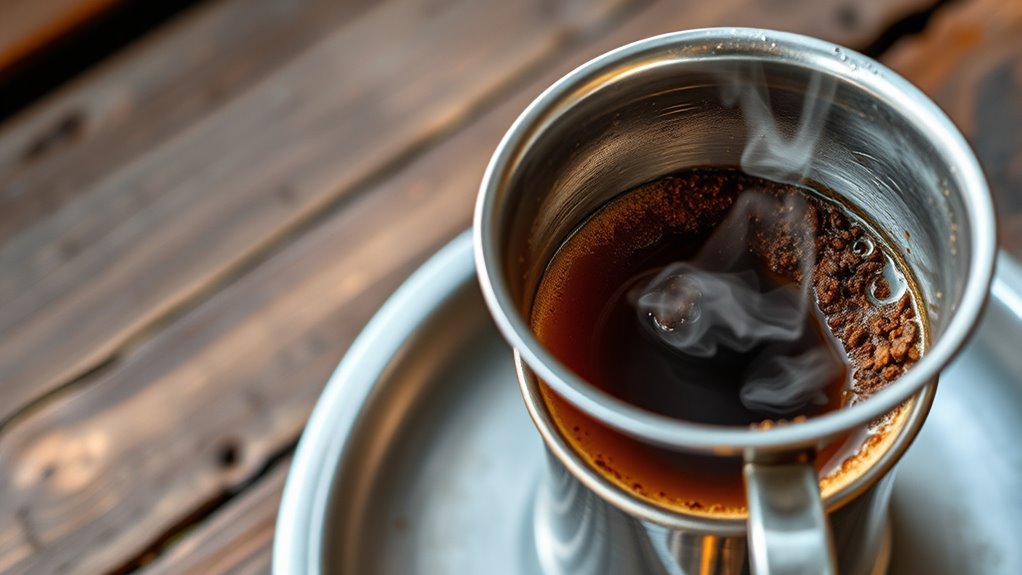
Choosing between a coffee filter and an espresso machine depends on your preferred brew method and flavor. If you want a quick, convenient cup with a lighter taste, a coffee filter works best; for a rich, intense shot, an espresso machine is ideal. Consider how much time you have and what flavor profile you crave to make the right choice.
Brew Method Suitability
The decision to use a coffee filter or an espresso machine depends largely on what kind of coffee experience you’re after. Your choice hinges on the brew process and equipment suitability for your preferences. Consider these factors:
- If you prefer a lighter, clean cup with subtle flavors, a coffee filter’s gentle brew process suits you.
- For a rich, concentrated shot with bold intensity, an espresso machine offers the robust brew that matches that desire.
- Your daily routine and convenience also matter—the coffee filter is simple and low-maintenance, while an espresso machine demands more attention but provides versatility.
Choosing the right equipment depends on whether you value ease or intensity, making your brew process align with your taste and lifestyle needs.
Flavor Profile Differences
When it comes to flavor profiles, your choice between a coffee filter and an espresso machine can substantially impact the taste of your brew. Coffee filters typically produce a lighter, cleaner cup that highlights subtle flavor nuances and preserves the coffee’s natural brightness. The aroma differences tend to be more delicate, allowing you to enjoy the intricate layers of aroma in each sip. Conversely, espresso machines create a concentrated, bold flavor with a rich, full-bodied profile. The intense extraction emphasizes deeper flavor notes and produces a more robust aroma. If you prefer a nuanced, bright cup, a coffee filter is ideal. For a powerful, intense experience with pronounced flavor nuances, an espresso machine delivers the depth you crave. Your choice shapes the sensory experience uniquely.
Time and Convenience
Deciding between a coffee filter and an espresso machine often comes down to how much time you have and how quickly you want your coffee. If you need a quick brew, an espresso machine offers rapid brewing speed, often delivering a shot in under a minute. Conversely, a coffee filter takes longer but allows you to prepare larger quantities at once. Consider these factors:
- Brewing speed: Espresso machines are fast, perfect for busy mornings.
- Equipment portability: Coffee filters are lightweight and easy to carry around.
- Convenience: Filters require minimal maintenance, while espresso machines may need more setup.
Choose based on your schedule—quick and portable or slow and relaxed—making sure your coffee routine suits your lifestyle.
Cultural Significance and Rituals of South Indian Coffee

South Indian coffee isn’t just a beverage; it’s an essential part of daily life and social rituals. You’ll notice that serving and drinking coffee follows specific coffee etiquette, emphasizing respect and hospitality. The ritual significance of this coffee runs deep—it’s a symbol of warmth, community, and tradition. When you visit a home or local café, offering or accepting a cup reflects mutual respect. The preparation process itself is a cherished routine, often involving a simple filter and specific pouring gestures. Here’s a quick look at these customs:
| Aspect | Significance |
|---|---|
| Coffee Etiquette | Respect through serving |
| Ritual Significance | Tradition and community bonds |
| Serving Style | Pouring with care |
| Sharing Coffee | Building relationships |
| Morning Ritual | Starting the day with warmth |
Which Brewing Method Best Highlights South Indian Coffee’s Unique Flavors
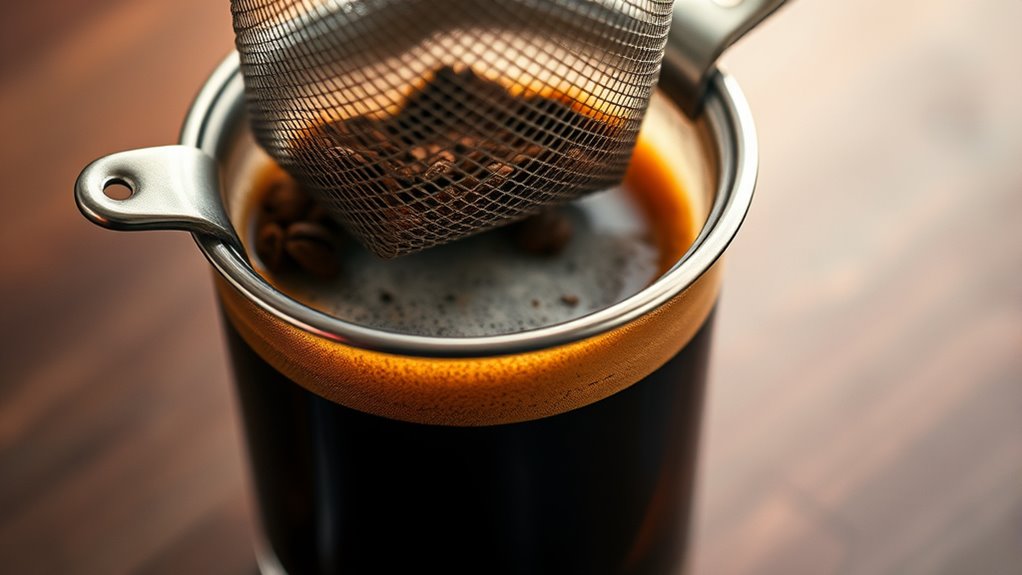
The brewing method plays a key role in bringing out the distinct flavors of South Indian coffee, shaping the sensory experience from aroma to taste. To highlight its unique qualities, focus on methods that preserve the coffee plant’s rich profile.
- Using a traditional coffee filter preserves the delicate nuances of the coffee plant, allowing a slow extraction that highlights earthy and spicy notes.
- Maintaining the right brewing temperature—around 80-85°C—ensures the coffee’s flavor compounds are extracted without bitterness.
- The technique’s gentle pressure and prolonged brew time bring out a robust, full-bodied flavor, characteristic of South Indian coffee.
Choosing the right brewing method emphasizes the coffee’s natural qualities, making each cup a true reflection of the region’s rich coffee heritage.
Frequently Asked Questions
Can I Make Authentic South Indian Coffee Without a Traditional Filter?
You can make authentic South Indian coffee without a traditional filter by exploring alternative brewing methods and modern coffee gadgets. While a traditional filter produces the characteristic strong, aromatic brew, devices like pour-over or AeroPress can mimic the process if you use finely ground coffee and brew slowly. These methods allow you to enjoy rich, flavorful South Indian coffee even if you don’t have the classic filter, making it accessible and convenient.
What Are the Health Benefits of South Indian Coffee Compared to Espresso?
You might think espresso’s more intense, but South Indian coffee actually offers surprising health benefits. It’s rich in antioxidant properties, helping your body fight free radicals, and can aid in blood sugar regulation, making it a smarter choice for daily sipping. Ironically, that traditional filter brew keeps you healthier with every cup, proving that sometimes, the simplest methods pack the biggest health punch.
How Does the Caffeine Content Differ Between Filter Coffee and Espresso?
You’ll find that espresso generally has more caffeine per ounce because of its rapid extraction process, but your filter coffee often has more caffeine overall due to longer brewing times. The caffeine extraction process in espresso is quick, typically under 30 seconds, resulting in a concentrated shot. In contrast, filter coffee’s longer brewing time allows for more caffeine to be extracted, making the total caffeine content comparable or higher depending on serving size.
Are There Regional Variations in South Indian Coffee Recipes?
Ever wondered if South Indian coffee varies by region? You’d be right—different areas add unique touches, like regional spices or specific brewing techniques. For example, some places infuse cardamom or ginger, while others stick to traditional methods like decoction brewing. These variations give each region’s coffee its distinct flavor profile, making South Indian coffee a rich, diverse experience you won’t find elsewhere.
What Are the Best Accompaniments for South Indian Filter Coffee?
You’ll love pairing South Indian filter coffee with traditional snack pairings like crispy vada or sweetened buns, which complement its rich, bold flavor. These snacks enhance the coffee’s aroma, creating a delightful flavor enhancement. You can also try savory snacks like masala peanuts or banana chips for a crunchy contrast. These accompaniments not only elevate your coffee experience but also make your tea-time more enjoyable and satisfying.
Conclusion
Ultimately, whether you prefer the rich, earthy notes of South Indian coffee or the bold punch of espresso, each brewing method tells its own story. Think of it as choosing between a warm, familiar hug or a lively spark of energy—both delightful in their own way. So, embrace the ritual and flavors you love, and let each cup be a journey into a world of aromatic tradition and personal comfort.