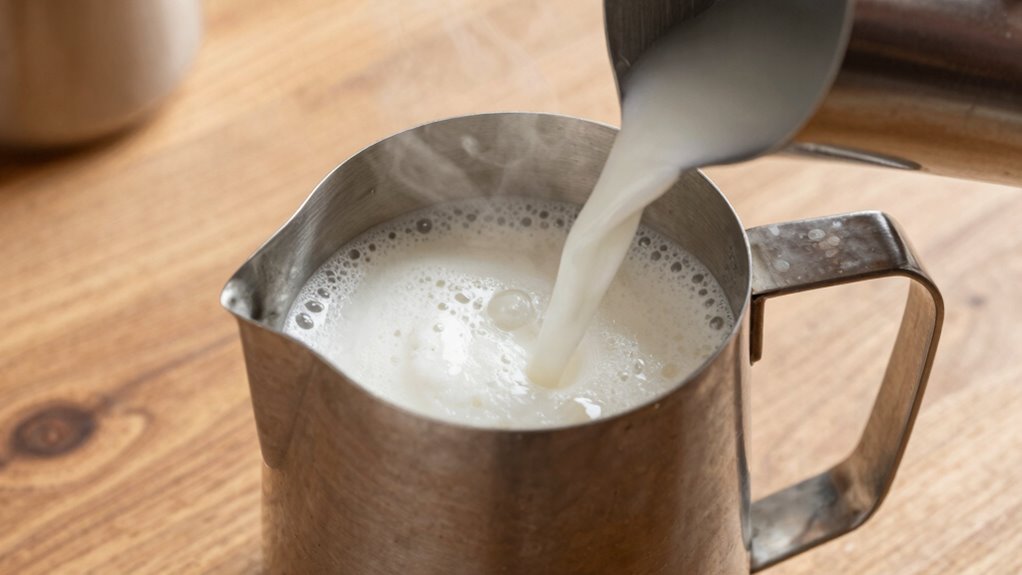

To froth milk without scalding it, use a thermometer to keep the temperature at around 140°F (60°C) and heat gently, whether on the stovetop, microwave, or with an electric frother. Avoid high heat and rapid heating, stirring gently for even warmth. For best results, monitor the temperature closely and choose tools designed for safe frothing. Keep these tips in mind, and you’ll learn how to produce silky, scald-free foam every time.
Key Takeaways
- Use a thermometer to monitor milk temperature, aiming for around 140°F (60°C) to prevent scalding.
- Froth milk gradually over low heat or with gentle, steady steam to avoid overheating.
- For stovetop frothing, employ a double boiler or heatproof bowl, stirring gently and maintaining low, even heat.
- When microwaving, heat in short intervals (15-20 seconds), stirring between intervals to ensure even temperature.
- Use frothers with temperature control or built-in sensors to maintain optimal, safe milk temperature during frothing.

SIMPLETASTE Milk Frother, 4-in-1 Electric Milk Frother and Steamer, Automatic Warm and Cold Foam Maker and Milk Warmer for Latte, Cappuccinos, Dark Blue
4-in-1 Multifunctional: Customize your favorite café-style drinks at home with this versatile milk frother. Choose from warm dense…
As an affiliate, we earn on qualifying purchases.
As an affiliate, we earn on qualifying purchases.
Why Proper Milk Frothing Matters for Your Coffee
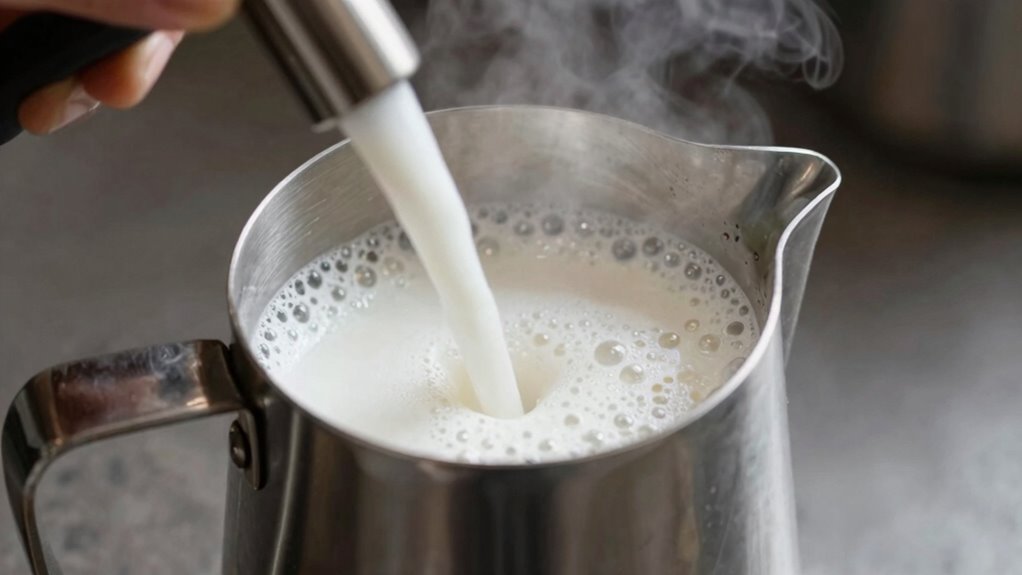
Proper milk frothing is essential because it directly impacts the texture and flavor of your coffee. When you understand milk composition, you can adjust your technique to achieve ideal frothing consistency. Milk with the right balance of proteins, fats, and sugars creates a stable foam that enhances your drink’s mouthfeel. If the milk is too cold or not properly heated, the frothing consistency suffers, resulting in thin or uneven foam. Conversely, over-heating can scald the milk, ruining both texture and flavor. Mastering proper frothing ensures a creamy, velvety layer that complements espresso or brewed coffee. This not only elevates the sensory experience but also helps you create consistently delicious beverages at home. Additionally, understanding milk temperature can help prevent scalding and achieve optimal froth quality. Paying attention to temperature control techniques can further improve your milk frothing results, especially when using different types of milk or frothing equipment. Being aware of milk proteins is crucial because they contribute to foam stability and overall texture, ensuring a rich and long-lasting froth.
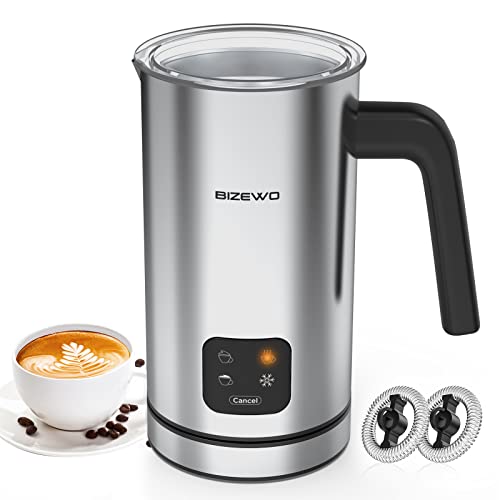
BIZEWO Milk Frother Electric, Warm and Cold Milk Steamer, 4 IN 1 Automatic Milk Warmer Stainless Steel with Touch Screen for Coffee, Latte, Macchiato, Cappuccino, Hot Chocolate
4-in-1 Function Milk Frother: The 4-in-1 milk frother can be used as a milk frother, milk frother, hot…
As an affiliate, we earn on qualifying purchases.
As an affiliate, we earn on qualifying purchases.
The Risks of Scalded Milk: Texture, Flavor, and Safety

Scalded milk not only ruins the texture of your froth but also affects the flavor of your coffee. When milk reaches too high a temperature, its composition changes, causing a burnt taste and a grainy feel. This can diminish the overall quality of your drink. Additionally, scalding can pose safety risks, especially if you or someone else has dairy allergies, as it may trigger allergic reactions or intolerance symptoms. The heat can also degrade beneficial nutrients and alter the milk’s natural sweetness. To avoid these issues, pay attention to:
- Changes in milk texture and flavor
- Potential allergy concerns due to altered milk composition
- Loss of nutrients and natural sweetness
- Temperature control techniques are essential for maintaining milk quality and safety during frothing.
Maintaining the proper temperature is essential for energy-efficient and safe milk preparation. Keeping milk at the right temperature preserves its quality and safety.

KSJONE Stainless Steel Milk Boiler Pot, Double Wall Milk Cooker with Whistle and Funnel, Silver (2.5 Quart)
It is Diswasher Safe and BPA Free Product. It is an Induction bottom. This Flat Boiler has Ergonomic,…
As an affiliate, we earn on qualifying purchases.
As an affiliate, we earn on qualifying purchases.
How to Choose the Best Tools for Frothing Without Burning Milk
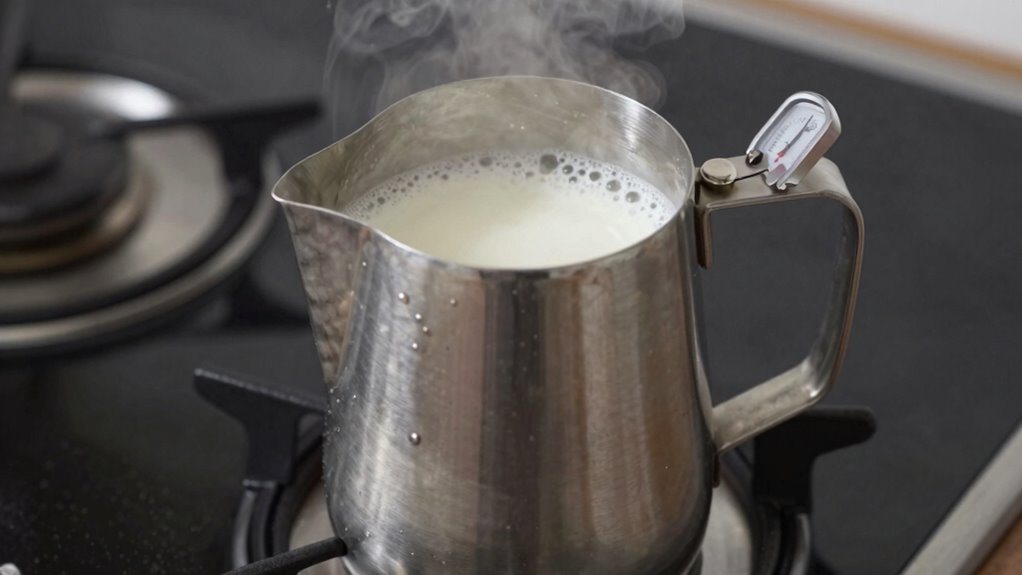
Choosing the right tools is vital for frothing milk without risking burns or unwanted textures. Start by selecting a thermometer to monitor milk temperature, guaranteeing you avoid overheating during frothing. Opt for a steam wand or electric frother with temperature control features, which help prevent scalding. Proper milk storage is also essential—keep milk refrigerated and bring it to the right temperature before frothing, reducing the chance of scorching. Consider tools that handle pasteurized milk, as it’s more prone to burning if heated unevenly. Using high-quality equipment, like a double boiler or a dedicated milk frother with built-in safeguards, helps you maintain consistent temperature and texture. Reliable equipment is key to achieving consistent results and avoiding accidents. Additionally, choosing tools with temperature regulation features ensures safer and more precise frothing. Incorporating precise temperature control can further enhance your ability to prevent overheating and achieve ideal foam quality. Selecting tools with thermal safety features can also provide extra protection against accidental burns during the frothing process. Incorporating AI-powered monitoring systems can help maintain optimal temperatures with minimal effort, reducing the risk of human error.

MiiCoffee Digital Milk Frothing Thermometer with Clip, Espresso Machine Accessories for Steaming Milk (Fahrenheit)
【Designed for Espresso】MiiCoffee Digital Milk Frothing Thermometer was designed to help you steam milk to the perfect temperature,…
As an affiliate, we earn on qualifying purchases.
As an affiliate, we earn on qualifying purchases.
Safe Techniques for Frothing Milk on the Stovetop
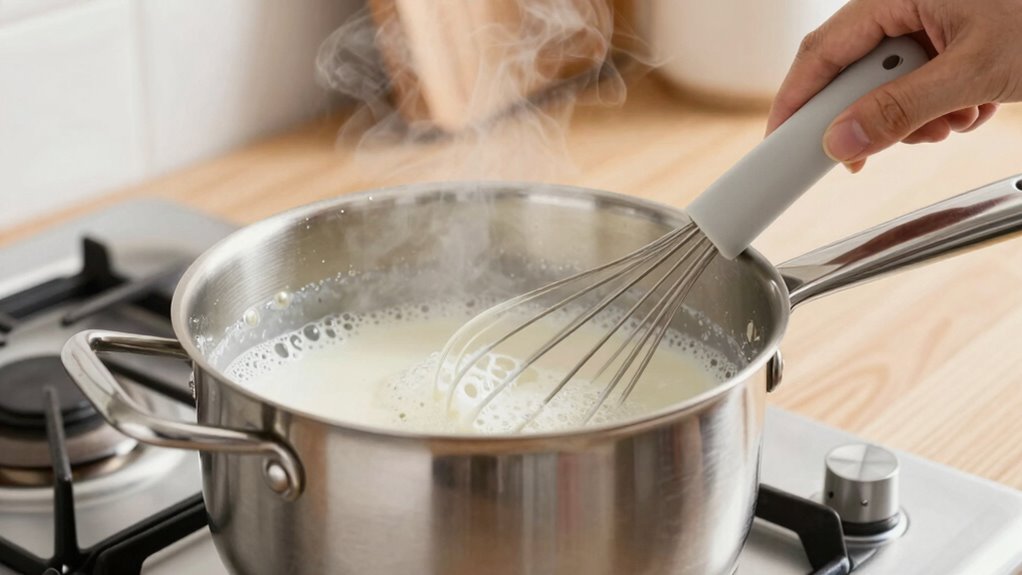
Frothing milk on the stovetop requires careful attention to safety to prevent burns and guarantee good results. To do this, monitor the milk’s temperature closely, as understanding milk chemistry helps prevent overheating that can ruin froth stability. Use a double boiler or a heatproof bowl over simmering water, avoiding direct heat, to keep the temperature steady. Additionally, stir gently and consistently, which promotes uniform heat and better froth formation. Keeping the environment safe and aware of proper kitchen safety practices minimizes the risk of accidents. Being mindful of temperature control techniques helps ensure the milk doesn’t scorch or overheat, preserving both safety and quality. Keep the heat low and steady to avoid scorching the milk. Use a thermometer to maintain ideal temperature (around 140°F/60°C). Stir gently for even heating and better froth stability. Recognizing heat distribution within your cookware can further improve results and safety. Maintaining proper stirring techniques can also contribute to more consistent frothing without burning the milk. Being attentive to heat sources and how they transfer heat allows for more precise control. Following these techniques ensures safe, effective stovetop frothing without risking burns or quality loss.
Microwave Frothing Tips to Prevent Scalding
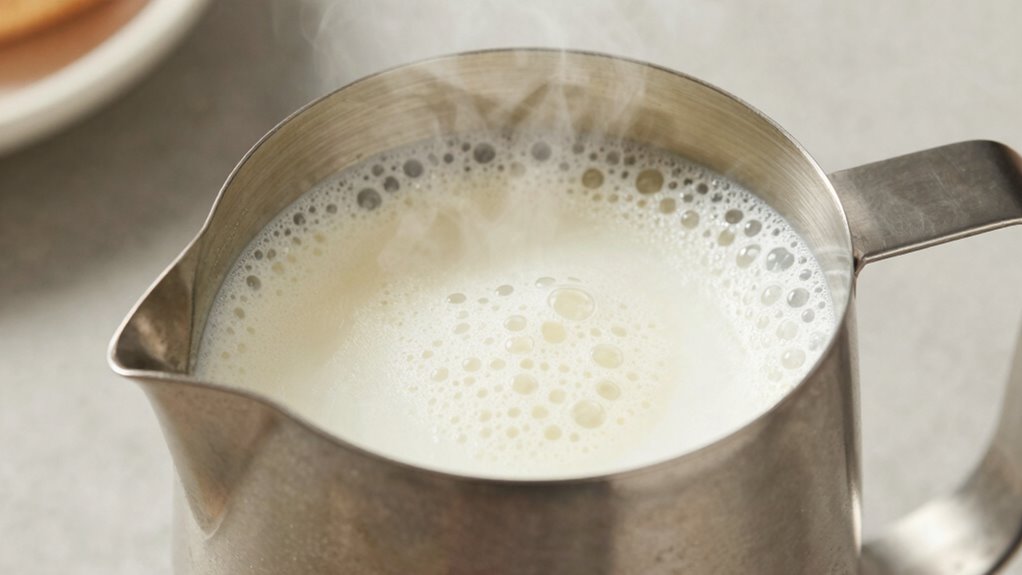
To prevent scalding when frothing milk in the microwave, it’s essential to monitor the temperature carefully and heat in short, controlled bursts. Use a microwave-safe container and heat the milk in 15-20 second intervals, stopping to check the frothing temperature each time. This approach helps you avoid overheating, which can ruin the milk foam and create a scorched taste. When microwaving, aim for a frothing temperature of around 140°F (60°C); this is ideal for creating creamy milk foam without risking burns. Stir or gently shake the milk between intervals to distribute heat evenly. Keep a close eye on the temperature with a thermometer if possible. This method guarantees you get smooth, airy milk foam without the risk of scalding. Additionally, understanding the frosting process can help you better control the heat and achieve the perfect foam every time. Knowing the thermal properties of milk can also assist in timing your heating precisely. For best results, consider using a milk frother to further control temperature and frothing quality. Incorporating a thermometer into your process can further help in maintaining accurate temperature control, ensuring consistent results. Being aware of the heat transfer mechanisms can also improve your ability to prevent overheating during microwave frothing.
Using Steam Wands and Frothers to Froth Milk Safely and Effectively
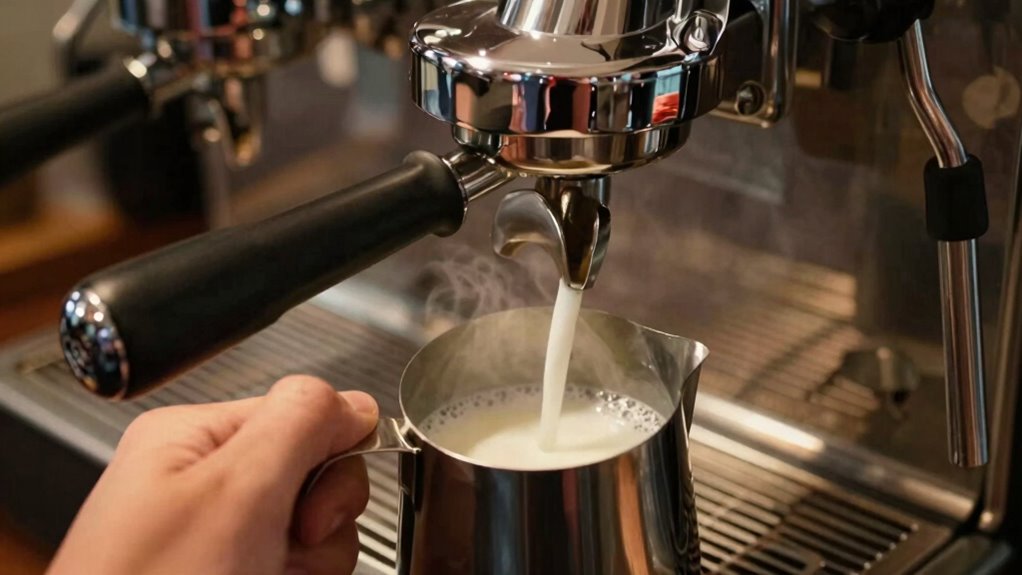
Steam wands and frothers are effective tools for creating rich, velvety milk foam, but using them safely requires proper technique and attention. To achieve the best milk texture and preserve flavor, start with fresh milk and position the wand just below the surface. Keep the wand moving in a consistent motion to prevent overheating or scalding. Pay attention to these key points:
- Maintain a steady hand to avoid splashing or uneven heating
- Use small amounts of milk to control temperature and foam quality
- Listen for a hissing sound, indicating proper steam engagement without excess heat
- Expert voice actors often emphasize the importance of proper technique to ensure consistent results and avoid common mistakes. Proper steam wand positioning helps prevent overheating and ensures even frothing.
Following these steps ensures your milk remains flavorful while attaining the desired texture, all without risking scorching the milk. Proper technique guarantees delicious results every time.
How to Monitor Milk Temperature During Frothing
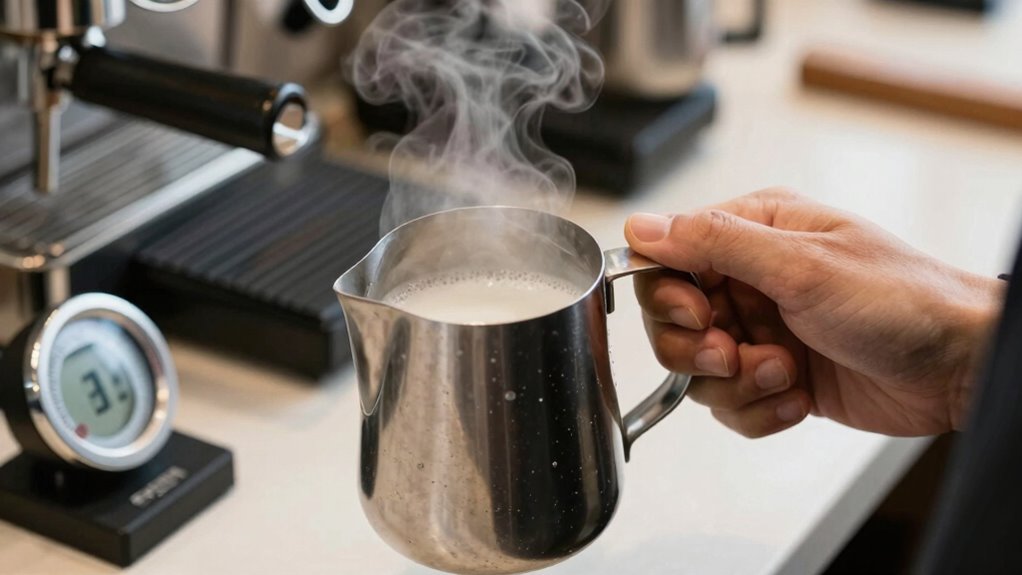
Monitoring milk temperature during frothing is essential to prevent overheating and guarantee a smooth, creamy texture. To stay within the ideal range, use reliable frothing tools like a thermometer or an automatic milk frother with temperature sensors. Keep an eye on the temperature to avoid scalding your milk, typically aiming for around 140°F (60°C). Proper temperature control can also help maintain the quality of your milk and prevent burnt flavors. Here’s a quick comparison:
| Tool | Advantage |
|---|---|
| Instant-read thermometer | Precise control |
| Frothing with built-in thermometer | Convenience |
| Infrared thermometer | Non-contact measurement |
| Smartphone app + thermometer | Easy monitoring |
| No tool (by feel) | Less accurate |
Choose your preferred method to ensure your milk stays just right, maintaining quality and preventing burnt flavors during frothing. Proper maintenance of your frothing equipment can also help keep sensors accurate and extend the lifespan of your tools.
Alternative Ways to Froth Milk Without Heating It Too Much
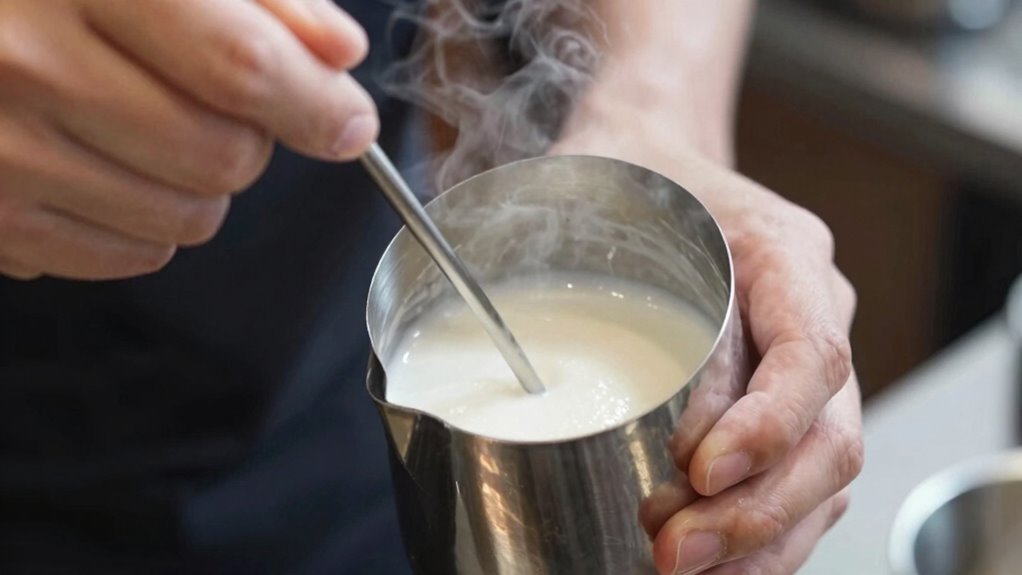
If you want to froth milk without risking overheating, there are several effective methods that don’t require traditional heat. You can explore alternative frothing techniques using milk alternatives like almond, soy, or oat milk, which often foam easily without heating. One popular method involves using a handheld milk frother; simply insert it into your milk and turn it on until you achieve the desired froth. Another option is to shake the milk vigorously in a sealed jar for 30-60 seconds—this creates foam without any heat. You can also use an electric whisk or a small, battery-operated frother. These options let you enjoy perfectly frothed milk while avoiding the risk of burning or scalding.
Common Mistakes That Lead to Burnt or Scalded Milk: And How to Avoid Them
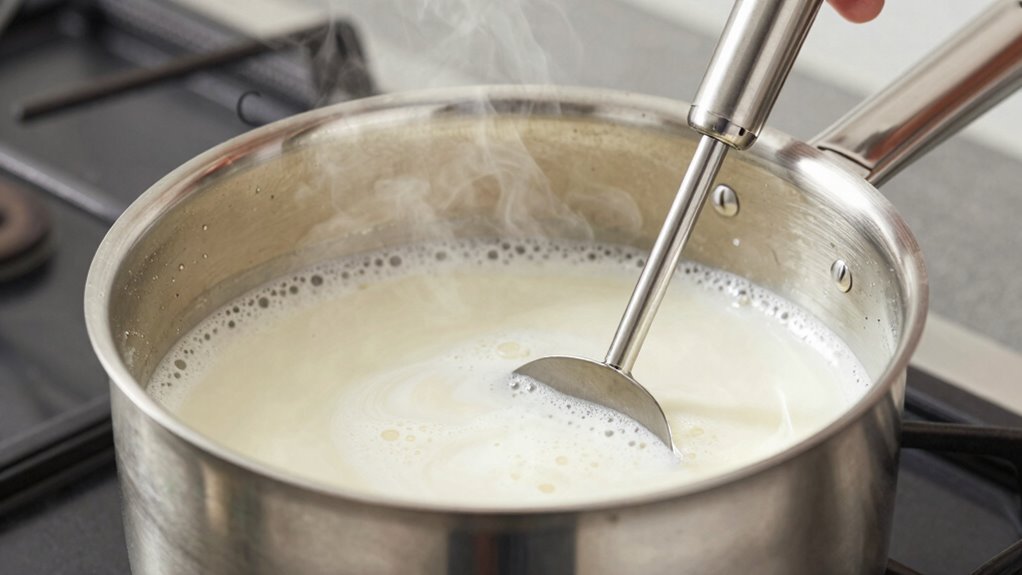
One common mistake is using high heat, which quickly burns the milk. Overfilling the pan can cause uneven heating and spills, while ignoring frothing signs leads to overheating. To prevent these issues, keep the heat moderate, fill your pan properly, and watch for the right frothing stage.
Using High Heat
Using high heat when frothing milk can seem like a quick fix, but it often leads to burnt or scorched milk if you’re not careful. When you raise the temperature too rapidly, the milk’s milk temperature rises unevenly, resulting in poor foam density and a burnt flavor. To avoid this, keep the heat moderate and monitor closely.
Remember:
- Rapid heating can cause uneven milk temperature distribution.
- Excessive heat destroys delicate proteins, reducing foam density.
- Scalded milk develops a burnt taste and texture that’s hard to fix.
Overfilling the Pan
Overfilling the pan can lead to burnt or scorched milk, especially when you’re focused on controlling the heat. When you exceed the pan capacity, milk can easily boil over or burn along the sides, creating uneven heat distribution. This not only risks ruining the milk’s flavor but also affects foam consistency, making it harder to achieve smooth, velvety froth. To prevent this, use a pan with enough room for the milk to expand as it heats. Leave some space at the top to allow gentle movement and proper frothing. Overfilling also makes it difficult to monitor the milk’s temperature, increasing the chance of scorching. Keeping the pan properly filled ensures more consistent heat, better foam, and a safer, more controlled frothing process.
Ignoring Frothing Signs
Ignoring the subtle signs that milk is approaching scorching point can quickly lead to burnt or scalded milk. You need to monitor milk temperature closely to prevent overheating. Signs include steam escaping loudly, a change in foam consistency, or a slight film forming on the surface. If you ignore these cues, the milk can scorch, ruining both flavor and texture. To avoid this, watch for:
- Sudden increase in steam or bubbling
- Changes in foam’s texture, becoming grainy or thin
- Slight film or skin forming on top
Tips for Achieving Velvety, Scald-Free Milk Foam Every Time
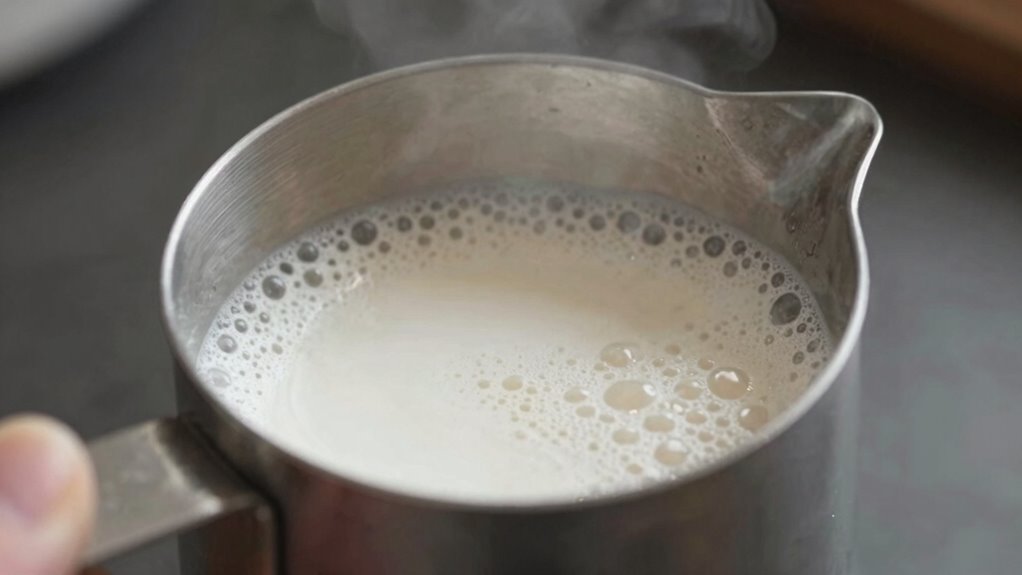
To get perfectly velvety, scald-free milk foam, you need to focus on proper temperature controls and gentle heating. Picking the right frothing tool can make a big difference, ensuring consistent results. With these techniques, you’ll master creating smooth, creamy foam every time.
Use Proper Temperature Controls
Maintaining the right temperature is essential for creating smooth, velvety milk foam without scalding. When you control the milk temperature, you guarantee consistent frothing and prevent burning or ruining the delicate texture. To do this effectively, keep these tips in mind:
- Use a thermometer to monitor milk temperature, aiming for around 140°F (60°C) for ideal frothing.
- Avoid overheating, which can cause the milk to scald and alter frothing consistency.
- Preheat your equipment to ensure even heat distribution, helping you maintain steady milk temperature.
Choose the Right Frothing Tool
Choosing the right frothing tool can make all the difference in achieving smooth, velvety milk foam without risking scalding. Your choice depends on milk composition and desired frothing consistency. A handheld frother is perfect for quick, controlled frothing, especially with whole or low-fat milk, ensuring even aeration. Steam wands on espresso machines provide precise temperature control and consistent microfoam, ideal for achieving uniform froth. Milk frothers, whether manual or electric, often come with adjustable settings to match different milk types, helping you avoid overheating. Selecting the appropriate tool guarantees gentle, consistent aeration, preserving milk’s natural sweetness and texture while preventing scalding. With the right device, you’ll consistently produce glossy, velvety foam that elevates your coffee experience.
Master Gentle Heating Techniques
Achieving velvety, scald-free milk foam starts with gentle heating techniques that prevent overheating and preserve milk’s natural sweetness. To do this effectively, focus on controlling temperature and understanding milk’s properties. Milk protein is sensitive to heat; excessive temperatures can break down proteins, causing undesirable textures. Because of milk’s thermal conductivity, heat spreads quickly, so avoid direct heat sources that can create hot spots. Instead, use these tips:
- Warm milk gradually over low heat, stirring gently to distribute heat evenly.
- Use a double boiler or a heatproof container in simmering water for better temperature control.
- Monitor the temperature with a thermometer, aiming for around 140°F (60°C) to prevent scalding and maintain optimal milk quality.
These techniques help you master gentle heating for perfect froth every time.
Frequently Asked Questions
Can I Use Non-Dairy Milk for Frothing Without Scalding?
Yes, you can use non-dairy alternatives for frothing without scalding. Choose options like almond, soy, or oat milk, which froth well. Use gentle frothing techniques, such as steaming at a lower temperature or using a manual frother, to prevent scalding. Keep an eye on the temperature, and avoid overheating. With the right approach, you’ll get creamy, frothy non-dairy milk perfect for your coffee drinks.
How Do Ambient Room Temperature and Humidity Affect Milk Frothing?
Ironically, your room temperature and humidity levels secretly control your milk frothing success. When your room’s warm and humid, the milk heats faster and froths more easily—sometimes too much! Cooler, dry environments make frothing a challenge, requiring extra patience. So, next time your froth isn’t as perfect as you’d like, blame the ambient conditions. Adjust your room temperature or try to control humidity to get that ideal, creamy foam every time.
Is There a Difference in Frothing Techniques Between Cold and Warm Milk?
Yes, there is a difference in frothing techniques between cold and warm milk. When frothing cold milk, you’ll need to focus on temperature control to prevent it from warming too quickly, which can affect frothing consistency. Warm milk froths more easily and creates a creamier texture, so you can use gentler, slower movements. Adjust your technique accordingly to maintain ideal temperature control and achieve the perfect frothing consistency.
Are There Specific Brands of Milk That Froth Better Without Scalding?
Think of frothing milk like gently shaking a snow globe—you want smooth, even results. Certain brands, like Barista Prima or Organic Valley, are known for better milk frothing tips because they have the right fat content and freshness. The best milk brands froth easily without scalding, especially whole or 2% milk. Always choose fresh, high-quality milk and froth at moderate temperatures for the best, creamy foam every time.
How Long Can Milk Be Kept Warm While Frothing Safely?
You should keep milk warm for no more than 2 minutes while frothing to prevent scalding. Maintaining the right frothing temperature, around 140°F (60°C), is key for safety and quality. If you’re using milk storage, pre-warming gently helps achieve good froth without risking overheating. Be attentive during frothing, and avoid leaving milk warm for too long, as bacteria can grow if it stays at unsafe temperatures.
Conclusion
Mastering the art of frothing milk without scalding transforms your coffee into a silky symphony of flavors. With steady hands and mindful techniques, you’ll turn everyday milk into a cloud of velvety perfection—an invisible dance of heat and foam. Remember, patience is your best barista. When you tame the flames and monitor the temperature, you craft not just a drink, but a warm embrace in every cup—true artistry in motion.