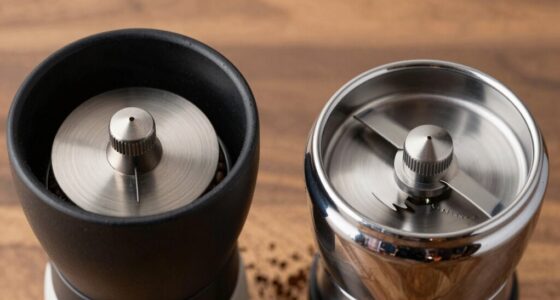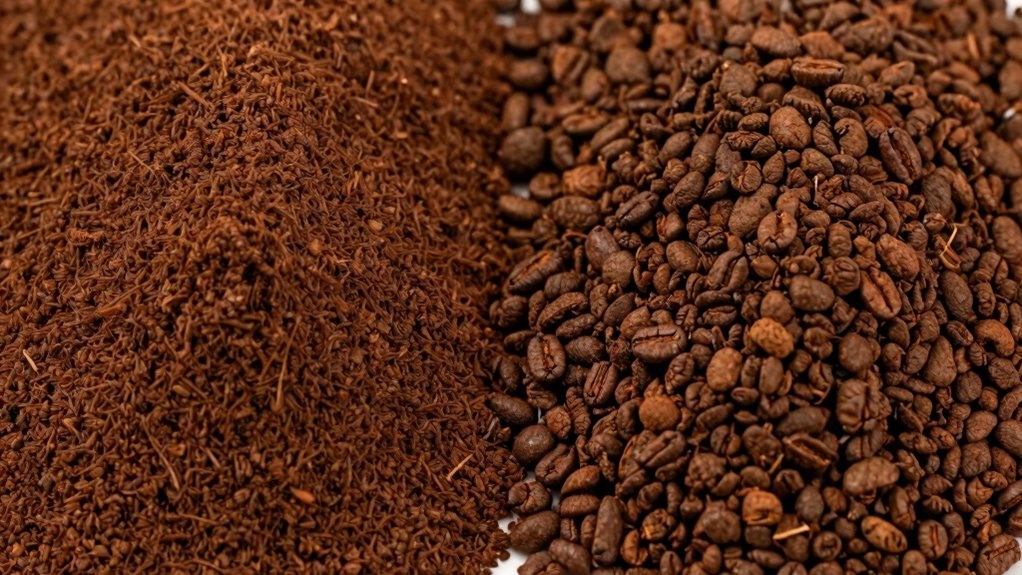

When comparing flat and conical burrs, you’ll notice that flat burrs produce a consistent grind with a fuller, richer mouthfeel and a smoother, more uniform extraction—leading to a stronger, more robust flavor. Conical burrs, on the other hand, create a lighter, brighter cup with delicate acidity and a cleaner texture. The noise and vibrations also differ during grinding, affecting your sensory experience. Continue exploring to discover how these differences influence what you taste in your coffee.
Key Takeaways
- Flat burrs produce more uniform grounds, resulting in a fuller, richer mouthfeel and consistent flavor extraction.
- Conical burrs create a lighter, brighter cup with delicate acidity and nuanced flavor notes.
- Flat burr grinding often yields a fuller-bodied, creamier texture, ideal for espresso and high-precision brewing.
- Conical burrs tend to preserve bright, fruity flavors, delivering a cleaner, more delicate sensory experience.
- The grind uniformity from flat burrs enhances overall brew consistency, impacting the feel and depth of the cup.
flat burr coffee grinder
As an affiliate, we earn on qualifying purchases.
As an affiliate, we earn on qualifying purchases.
How Do Flat and Conical Burrs Feel and Sound During Grinding?
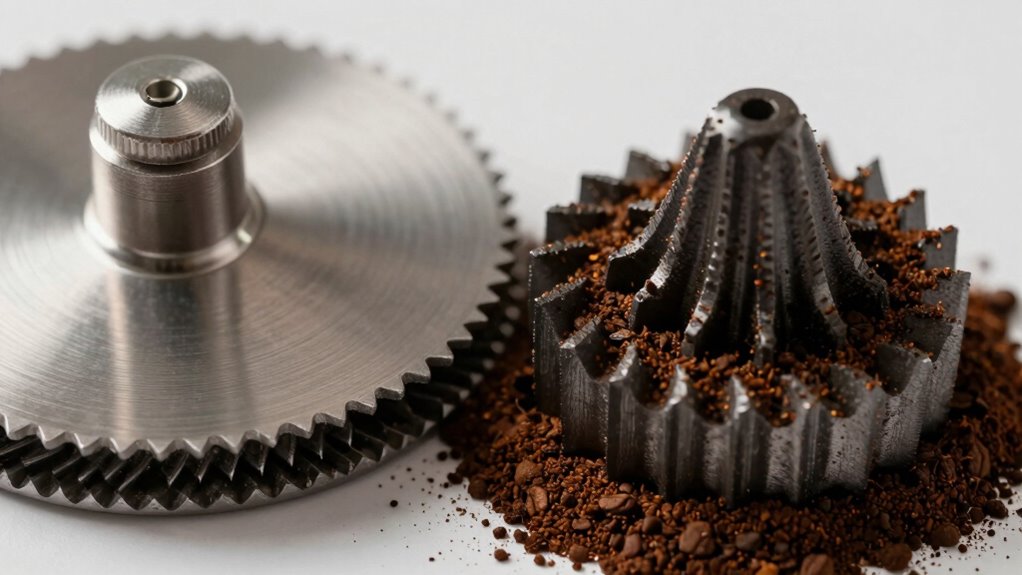
During grinding, you’ll notice that flat and conical burrs produce distinct sensations and sounds. With flat burrs, the grind noise tends to be steadier and more consistent, creating a uniform sound as the burrs rotate smoothly. You might also feel a gentle burr vibration through the grinder’s body, especially at higher speeds. Conical burrs, on the other hand, often generate a softer, more variable grind noise, sometimes with a slight whine or hum. The burr vibration can be less noticeable or feel more sporadic, depending on the grinder’s design. These differences in grind noise and burr vibration reflect how each burr type interacts with the beans, influencing your grinding experience and the overall feel during use.
conical burr coffee grinder
As an affiliate, we earn on qualifying purchases.
As an affiliate, we earn on qualifying purchases.
How Do Burr Types Affect Coffee Particle Size and Extraction?
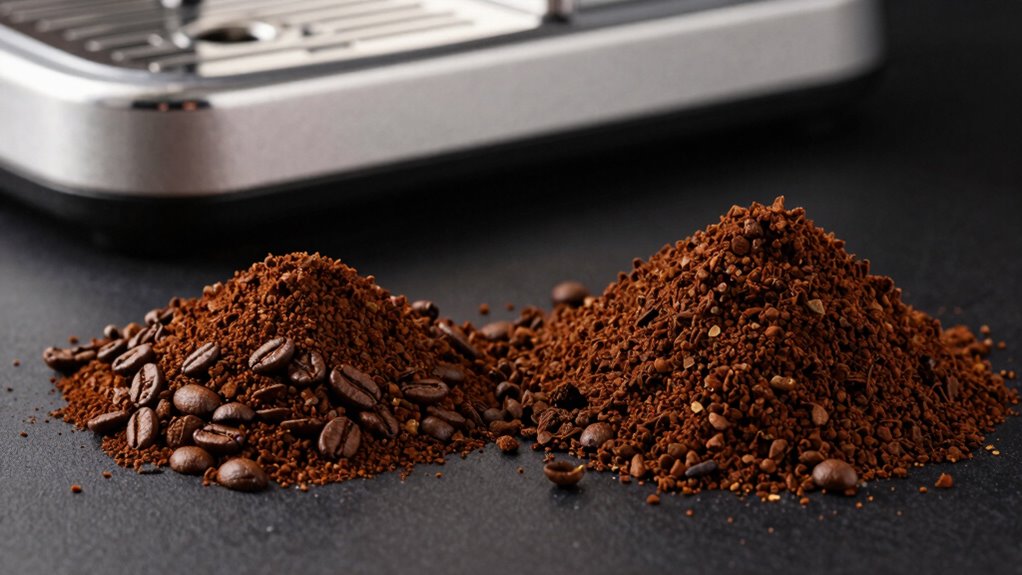
Burr type influences how uniform and consistent your coffee particles are, which directly impacts extraction and flavor. Flat burrs tend to produce more uniform particle sizes, leading to steadier extraction, while conical burrs often create a wider range of sizes. Understanding these differences helps you optimize your grind for better flavor and consistency. Additionally, the material of the burrs can affect their durability and performance over time. In fact, burr design plays a crucial role in achieving the desired grind profile and overall coffee quality. Moreover, the manufacturing process of the burrs can influence their sharpness and longevity, further impacting grind quality.
Particle Uniformity and Size
The type of burr you choose substantially impacts the uniformity and size of coffee grounds, which in turn influences extraction quality. Flat burrs typically produce a more consistent particle size, leading to a uniform particle distribution. This consistency results in a smoother grind noise during grinding, signaling steady operation. Conical burrs, however, often create a wider range of particle sizes, which can cause uneven extraction. The grind noise may vary more, reflecting the irregularities in particle size. Uniform particle size allows water to flow evenly through the coffee bed, maximizing extraction efficiency. Additionally, grind noise can serve as an auditory cue to assess the consistency of your grind, guiding adjustments for the perfect brew. Understanding how burr design influences particle uniformity helps you achieve a balanced brew with optimal flavor clarity.
Extraction Consistency and Flavor
Since particle size directly influences how evenly water interacts with coffee grounds, the type of burr you choose plays a crucial role in extraction consistency and flavor. Flat burrs tend to produce more uniform grounds, leading to steadier extraction and balanced flavors. Conical burrs may generate slightly uneven particles, affecting extraction precision. Here’s what to evaluate:
- Flat burrs offer consistent grind size, improving flavor clarity.
- Conical burrs might produce more grind noise, indicating burr wear or misalignment.
- Regular burr maintenance guarantees ideal particle size, regardless of burr type.
- Inconsistent grind size affects extraction, making flavor profiles less predictable.
Choosing the right burr type and maintaining it regularly ensures you get the most consistent, flavorful cup every time.
best burr grinder for espresso
As an affiliate, we earn on qualifying purchases.
As an affiliate, we earn on qualifying purchases.
What Are the Flavor and Texture Differences in Your Coffee?
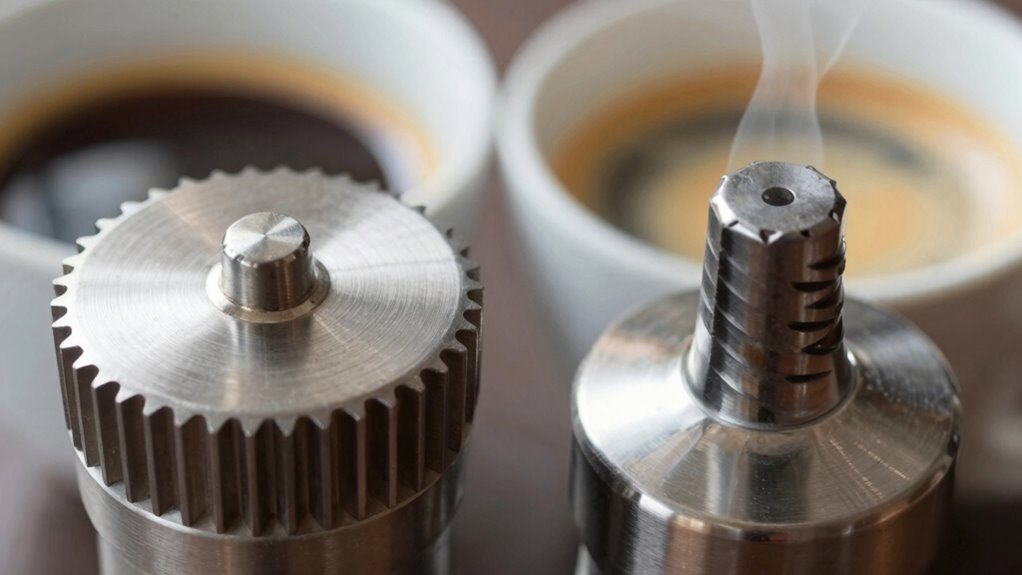
Your choice of burr can influence the clarity and brightness of your coffee’s flavor, making certain notes stand out more. It also affects the body and mouthfeel, giving each brew a distinct texture. Additionally, a consistent grind helps preserve subtle nuances, enhancing your overall tasting experience. For instance, a free floating mechanism can provide more uniform grinding, contributing to a more balanced cup. Understanding the role of grind consistency can further improve your brewing results. Recognizing how different burr types impact flavor extraction can help you tailor your brewing process to achieve your desired taste profile.
Flavor Clarity and Brightness
When choosing between flat and conical burr grinders, the type of burr can markedly affect the clarity and brightness of your coffee’s flavor. Flat burrs often produce a more uniform grind, which enhances flavor clarity by ensuring consistent extraction. Conical burrs, on the other hand, tend to generate less grind noise and preserve the delicate brightness of fruity and acidic notes. The burr material also influences flavor; ceramic burrs typically provide cleaner, brighter results due to minimal heat transfer, while steel burrs may introduce subtle warmth. Consider these points:
- Flat burrs yield sharper clarity and more precise flavor profiles.
- Conical burrs tend to produce a brighter, more vibrant cup.
- Grind noise varies, with conical burrs generally quieter.
- Burr material impacts heat, affecting brightness and flavor integrity.
Body and Mouthfeel Variations
The type of burr grinder you choose can substantially influence the body and mouthfeel of your coffee. Flat burr grinders tend to produce a more uniform grind, resulting in a fuller, richer body with a creamy texture. Conical burr grinders often generate a slightly lighter mouthfeel, emphasizing clarity over weight. You might notice that grind noise differs—flat burrs can be louder, with more pronounced burr vibrations, which can subtly affect the extraction process. These vibrations may lead to uneven extraction if not managed carefully, impacting the coffee’s texture. On the other hand, conical burrs typically operate more quietly and smoothly, delivering a consistent grind that enhances delicate mouthfeel nuances. Your choice influences not just flavor clarity but also how your coffee feels on your palate.
Brew Consistency and Nuance
Brew consistency and nuance are directly influenced by the type of burr grinder you use, as each impacts how evenly your coffee extracts and the subtle flavor differences that emerge. Flat burrs tend to produce a more uniform grind, leading to consistent extraction and clearer flavor nuances. Conical burrs, however, often generate less grind noise and handle burr material differently, which can affect the texture and aromatic complexity of your brew.
Consider these factors:
- Uniformity of grind size impacts flavor clarity.
- Grind noise varies with burr material, influencing your brewing environment.
- Consistent grind sizes improve brew consistency.
- The subtlety of flavor nuances depends on how evenly your beans are ground.
Choosing the right burr type enhances both texture and flavor clarity in your coffee.
coffee grinder with uniform grind
As an affiliate, we earn on qualifying purchases.
As an affiliate, we earn on qualifying purchases.
Which Burrs Are Easier to Maintain and Last Longer?
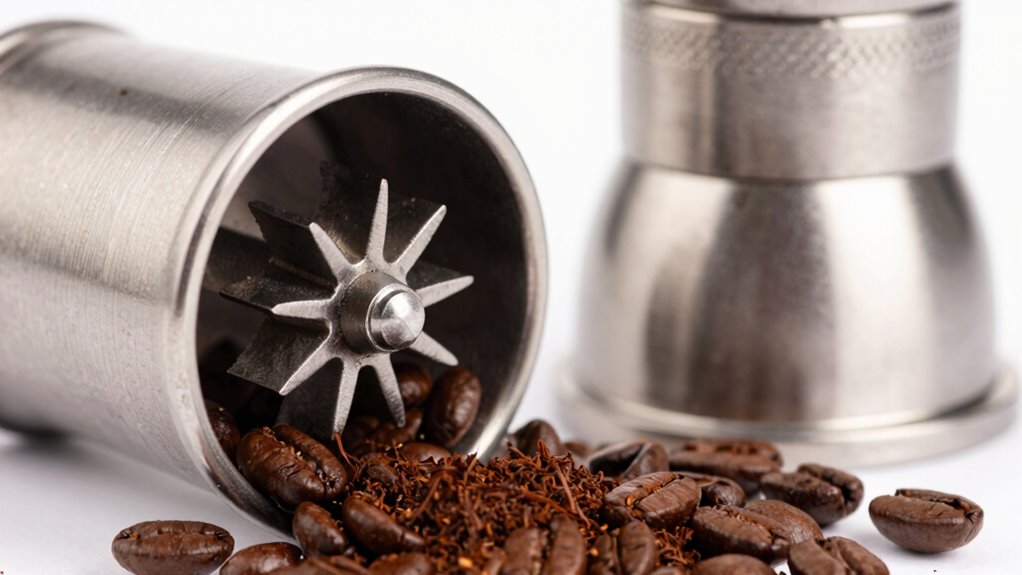
Choosing between flat and conical burrs often comes down to burr maintenance and durability comparison. Flat burrs tend to require more frequent cleaning because their sharp edges can trap coffee grounds, making burr maintenance a bit more involved. Conical burrs, with their tapered shape, usually experience less buildup and are easier to clean. When it comes to durability, conical burrs generally last longer due to their design, which reduces stress on the grinding surfaces. Flat burrs, while often more precise, can wear out more quickly under heavy use. Overall, if you prioritize longevity and easier maintenance, conical burrs are the better choice. They’re built to withstand regular use and simplify cleaning, helping you keep your grinder in top shape.
Which Burr Type Fits Best With Your Brewing Routine?
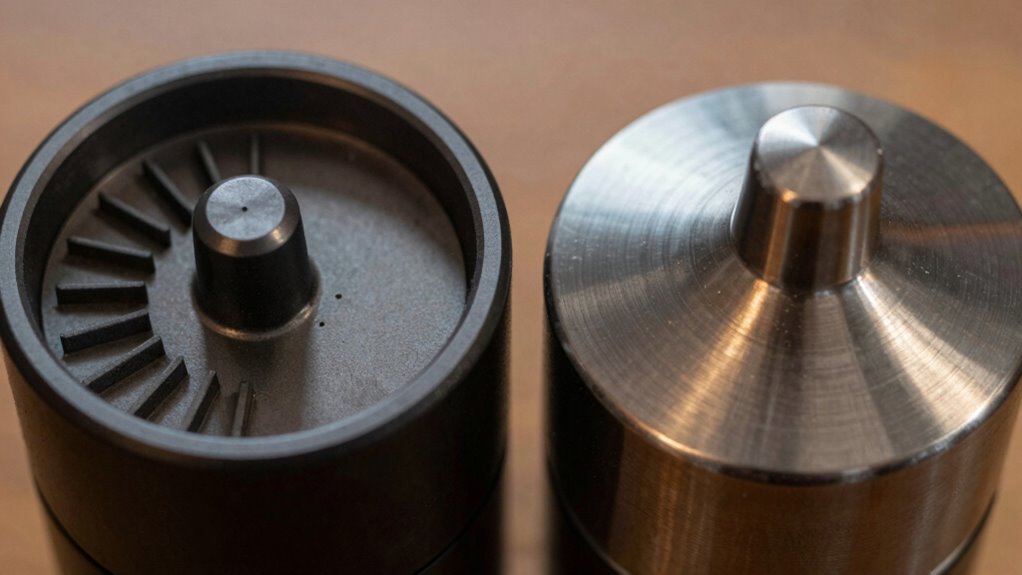
Are you looking for a burr type that seamlessly integrates into your daily coffee routine? Your choice depends on your preferences and schedule.
- If you value quiet operation, conical burrs tend to produce less grind noise, making early mornings less disruptive.
- For frequent use, consider burr durability; flat burrs often handle high-volume grinding better over time.
- If you prefer a consistent grind for pour-over or espresso, flat burrs excel at maintaining uniform particle size.
- On the other hand, if you want a versatile grinder that adapts easily to different brewing methods, conical burrs offer flexibility and ease of use.
Matching your routine with the right burr type ensures smoother brewing and a more satisfying coffee experience.
How Do Flat and Conical Burrs Impact Brew Time and Consistency?
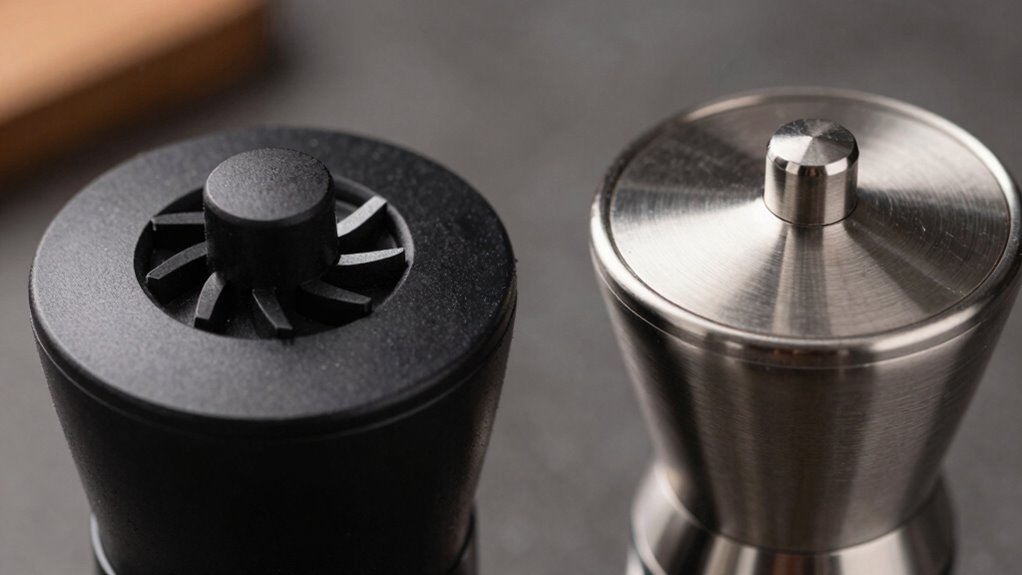
The type of burr you choose can considerably influence both brew time and the consistency of your coffee grounds. Flat burrs typically produce more uniform grounds, resulting in consistent extraction, but they may take slightly longer due to their shape. Conical burrs often grind faster and generate less grind noise, thanks to their cone shape that allows for smoother operation.
| Burr Shape | Impact on Brew Time | Consistency of Grounds |
|---|---|---|
| Flat Burr | Slightly longer | Very uniform |
| Conical Burr | Faster, quieter | Slightly less uniform |
Your choice affects grind noise and how evenly your coffee is extracted, influencing the final cup’s flavor and strength.
Choosing the Right Burrs: A Sensory and Practical Guide
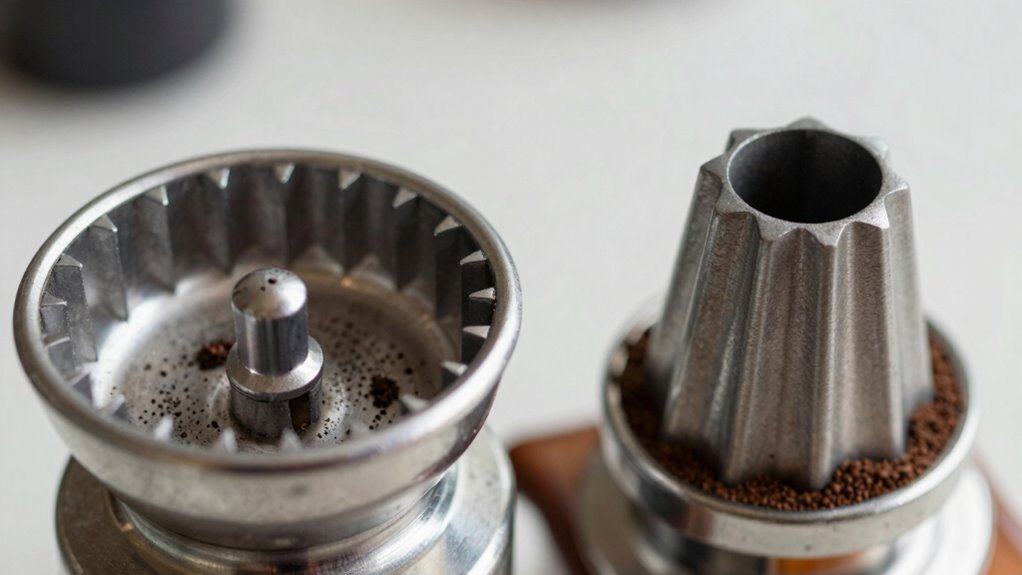
Selecting the right burrs can considerably enhance your coffee experience by aligning with your sensory preferences and practical needs. To choose wisely, consider these factors:
Choosing the right burrs enhances flavor, consistency, and brewing efficiency for your perfect cup.
- Burr manufacturing quality: High-quality burrs, whether flat or conical, produce more consistent grinds and better flavor extraction.
- Flavor profile: Conical burrs often preserve nuanced flavors, while flat burrs tend to produce uniform grounds suitable for espresso.
- Cost considerations: Flat burrs generally cost more due to complex manufacturing, but they may last longer with proper maintenance.
- Practical use: Think about your brewing method—conical burrs suit pour-over, while flat burrs excel in espresso setups.
Frequently Asked Questions
Are Flat or Conical Burr Grinders More Affordable?
You’ll find that conical burr grinders are generally more affordable than flat burr grinders. They often require less burr maintenance and are easier to calibrate for consistent results. Flat burrs tend to be pricier but offer more uniform grind size. When choosing, consider how often you’ll calibrate your grinder and the maintenance involved, as these factors impact overall cost and performance.
Which Burr Type Is Better for Espresso?
You’ll find conical burrs excel for espresso, offering superior grind consistency and flavor clarity. Studies show conical grinders produce less heat during grinding, preserving delicate aromas. This means your espresso will have a richer, more vibrant taste with better extraction. Flat burrs can also perform well, but conical burrs tend to be preferred for espresso due to their ability to grind more uniformly and retain more nuanced flavors.
Do Burr Types Influence Grinder Noise Levels?
Yes, burr types influence grinder noise levels. Flat burr grinders tend to produce more noise because their design requires higher power and creates more grinding resistance. Conical burr grinders generally operate more quietly, thanks to their shape and less resistance during grinding. So, if you prefer a quieter experience, conical burrs are your best choice, while flat burrs might give you a louder grinder noise but with consistent grind quality.
Can Burr Material Affect Coffee Flavor?
Think of your burr material as the paintbrush for your coffee masterpiece. Different materials, like steel or ceramic, can subtly influence flavor consistency by minimizing heat transfer and wear. I once switched to ceramic burrs, and I noticed a smoother, more balanced taste over time. So, yes, burr material impacts flavor, helping you maintain a consistent, high-quality cup every time.
Which Grinder Type Is More Suitable for Travel?
You should choose a conical burr grinder for travel because of its portable design and lighter weight. It’s easier to pack and carry, making it ideal for brewing on the go. Conical grinders tend to be more durable and quieter, which is perfect for travel situations. Flat burr grinders, while offering consistent grind size, are usually heavier and bulkier, making them less suitable for frequent travel.
Conclusion
Choosing between flat and conical burrs ultimately depends on your brewing style and preferences. Flat burrs often deliver more uniform grounds, leading to consistent extraction, while conical burrs excel in quieter operation and easier maintenance. Did you know that 70% of professional baristas prefer flat burrs for precision? By understanding how each type influences flavor and grind quality, you can make a more informed choice to elevate your coffee experience every morning.