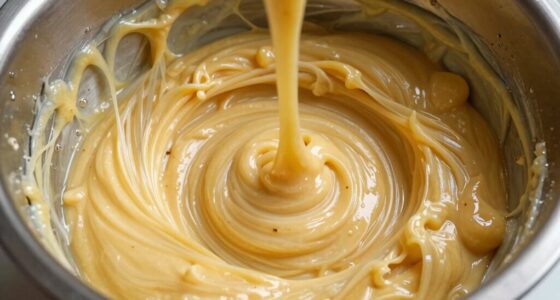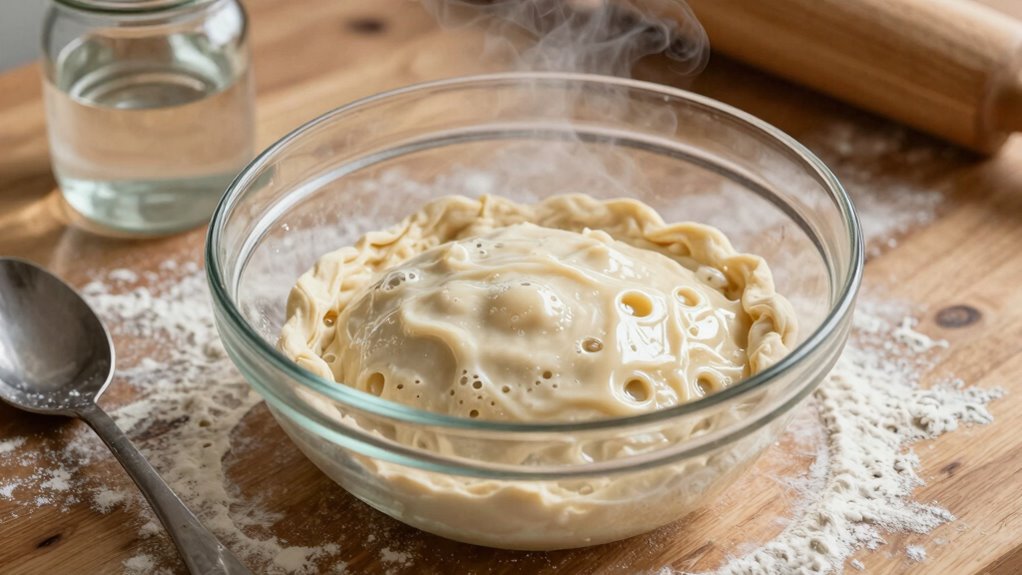

For home pizza baking, a hydration range of about 60-65% works well, balancing dough workability and crust quality. If you want a lighter, airier crust, try around 65-70%, but keep in mind this makes the dough wetter and a bit stickier to handle. For a firmer, denser crust, stick closer to 60%. Adjusting within this range based on your flour type and oven setup helps achieve the best results; discover the details ahead.
Key Takeaways
- Typical home pizza dough hydration ranges from 60% to 65%, balancing ease of handling and crust quality.
- Using 65-70% hydration results in lighter, more extensible dough with better oven spring.
- Adjust hydration based on flour type, with higher protein flours needing more water.
- Precise measurement with a digital scale ensures consistent hydration levels.
- Experiment within 60-70% hydration to find the best balance for your oven, flour, and desired crust texture.
What Is Dough Hydration and Why Does It Matter for Pizza?

Dough hydration refers to the percentage of water relative to the flour in your pizza dough, and it plays a crucial role in determining the dough’s texture and workability. Higher hydration levels create a wetter dough, which influences the fermentation process by allowing yeast to activate more efficiently and produce better flavor development. Proper hydration also affects ingredient interactions, ensuring the flour absorbs water thoroughly for a smoother, elastic dough. This balance impacts how your dough ferments, develops gluten, and ultimately results in a lighter, airier crust. Understanding dough hydration helps you control these interactions, making it easier to achieve the desired texture and flavor. Adjusting hydration levels can optimize fermentation and improve your overall pizza-making results. A proper hydration level is essential for consistent and professional-quality pizza dough.
How Hydration Levels Affect Pizza Dough Texture and Crust

Higher hydration levels make your dough more elastic and easier to stretch without tearing, giving you a better handle during shaping. They also influence the crust’s crispness, with wetter dough often producing a lighter, airier finish. Adjusting hydration affects how manageable your dough is and the final texture of your pizza.
Hydration and Dough Elasticity
When the hydration level of your pizza dough increases, it directly influences its elasticity and texture. Higher hydration allows gluten strands to develop more fully during fermentation, resulting in a dough that’s more extensible and resilient. This is because gluten development is enhanced with adequate hydration, leading to better dough structure. This improved gluten development creates a dough that’s easier to stretch without tearing, giving you a lighter, airier crust. Additionally, understanding the role of high refresh rates can help in timing the fermentation process for optimal elasticity. Moreover, the balance of hydration affects dough extensibility, making it easier to shape and less prone to tearing. Proper hydration levels are essential to achieving the desired dough consistency and crust quality. However, too much hydration can make the dough sticky and harder to handle, so balancing it is key. As fermentation progresses, the dough’s elasticity continues to evolve, becoming more supple and easier to shape. Understanding how hydration impacts gluten development and fermentation timing helps you achieve the perfect dough—stretchy, elastic, and ready for baking.
Crust Crispness Connection
The amount of hydration in your pizza dough directly influences the crispness of the crust you end up with. Higher hydration levels create a wetter dough that ferments more effectively, developing complex flavors and a lighter texture. This fermentation process impacts how the crust crisps, as hydrated dough forms a thinner, crisper exterior when baked. Oven temperature plays a vital role too—an adequately hot oven (ideally around 500°F or higher) helps achieve that desirable crispy crust by quickly evaporating moisture. If your dough is too dry, it won’t ferment properly or develop the right structure for crispness. Conversely, overly hydrated dough can turn soggy if not baked at the right temperature. Balancing hydration and oven heat ensures your crust achieves the perfect crispness every time. Additionally, understanding the Free Floating nature of dough hydration can help you customize your recipe for optimal results. Being aware of hydration levels and their effect on gluten development is crucial for consistent results across different recipes and baking conditions. Proper gluten structure formation is essential for maintaining dough elasticity and achieving the desired texture in your crust.
Handling and Workability
Hydration levels play a crucial role in determining how easy it is to handle and shape your pizza dough. Higher hydration creates a wetter, more pliable dough that’s easier to stretch and shape, thanks to better dough elasticity. This makes your work smoother and reduces tearing. However, too much water can slow fermentation speed, leading to a wetter dough that’s harder to manage initially but develops better flavor over time. Conversely, lower hydration results in firmer, less sticky dough that’s easier to work with but may lack the desired open crumb and airy crust. Finding the right hydration balance ensures your dough remains workable, elastic, and responsive during shaping, ultimately producing a crust with ideal texture and structure. Additionally, understanding how dough handling is affected by hydration can help you troubleshoot and improve your pizza-making process. Proper hydration also impacts the dough’s fermentation, influencing both rise and flavor development for a more consistent result. Achieving the optimal hydration level can also enhance the crust’s final texture, giving your pizza the desired chewiness and crispiness. Incorporating professional baking techniques and a thorough understanding of gluten development into your process can further optimize hydration and dough performance.
Standard Hydration Ratios for Home Pizza Dough
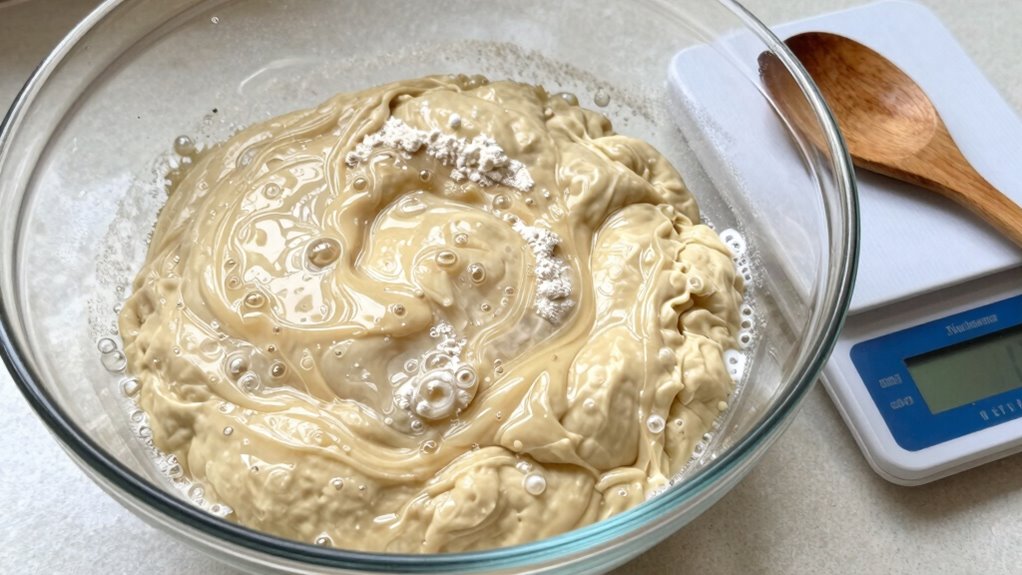
Most home pizza recipes use hydration levels around 60-65%, which balance ease of handling and a good crust. Adjusting this ratio can change the dough’s texture—higher hydration makes it lighter and more airy, while lower keeps it firmer. Keep in mind that different flour types may require tweaks to these standard ratios for the best results. For optimal results, exploring best garage door openers can also enhance your home improvement projects.
Typical Hydration Levels
Have you ever wondered what the ideal water-to-flour ratio is for making great home pizza dough? Typically, hydration levels fall between 60% and 70%. This range supports optimal gluten development, giving your dough strength and elasticity. Higher hydration (around 65-70%) results in a softer, more extensible dough, which can improve oven spring and create a tender crust. Lower hydration (about 60%) produces a firmer, easier-to-handle dough, while still enhancing flavor through proper fermentation. Keep in mind, adjusting hydration influences dough consistency and gluten structure. For most home bakers, sticking within this range balances ease of handling with flavor enhancement, ensuring your pizza crust turns out delicious and well-textured every time. Incorporating water for therapeutic benefits can also help improve dough hydration and elasticity during mixing. Additionally, understanding hydration levels allows bakers to tailor their recipes to achieve specific textures and flavors. Moreover, controlling hydration is essential for consistent results, especially when experimenting with different flours or techniques. Recognizing the impact of hydration on dough can help bakers troubleshoot and refine their pizza-making process effectively. Proper hydration also plays a role in achieving the desired crust texture, whether aiming for a chewy or crisp base.
Variations for Texture
Adjusting the water-to-flour ratio can considerably change the texture of your pizza dough, giving you options tailored to your preferences and baking conditions. A slightly higher hydration creates a softer, more extensible dough that’s easier to dough stretch, resulting in a light, airy crust. It also promotes better flavor development, as more water facilitates fermentation and enhances taste. Conversely, lower hydration yields a firmer, denser crust with a chewier bite, ideal for those who prefer a more substantial bite. Experimenting within this range allows you to find the perfect balance between softness and structure. Keep in mind that higher hydration may require longer mixing and handling, but it ultimately offers a more tender, flavorful crust. Proper hydration is also essential for achieving the desired crust texture in your pizza. Adjust your hydration to achieve the texture that best suits your style and oven.
Adjusting for Flour Types
Ever wondered how different types of flour affect your pizza dough’s hydration? The key is understanding how flour protein impacts water absorption. Higher protein flours, like bread flour, absorb more water, so you’ll need to adjust hydration ratios accordingly. Conversely, lower protein flours, like all-purpose, require less water for the same dough consistency. Flour protein content plays a significant role in how much water your dough needs. Here are some tips:
- For bread flour, aim for a hydration of 65-70% due to higher water absorption.
- For all-purpose flour, stick to 60-65% hydration.
- Consider whole wheat or specialty flours, which may need even more water for proper hydration.
- Always test and tweak based on your specific flour’s water absorption, as brands vary. Adjusting for flour types ensures your dough achieves the perfect texture.
- Incorporating sound healing science principles by paying attention to the dough’s texture and elasticity can help you fine-tune your hydration for optimal results. Additionally, understanding flour hydration properties can help you predict how different flours will behave in your dough.
Measuring and Tweaking Your Pizza Dough’s Water Content
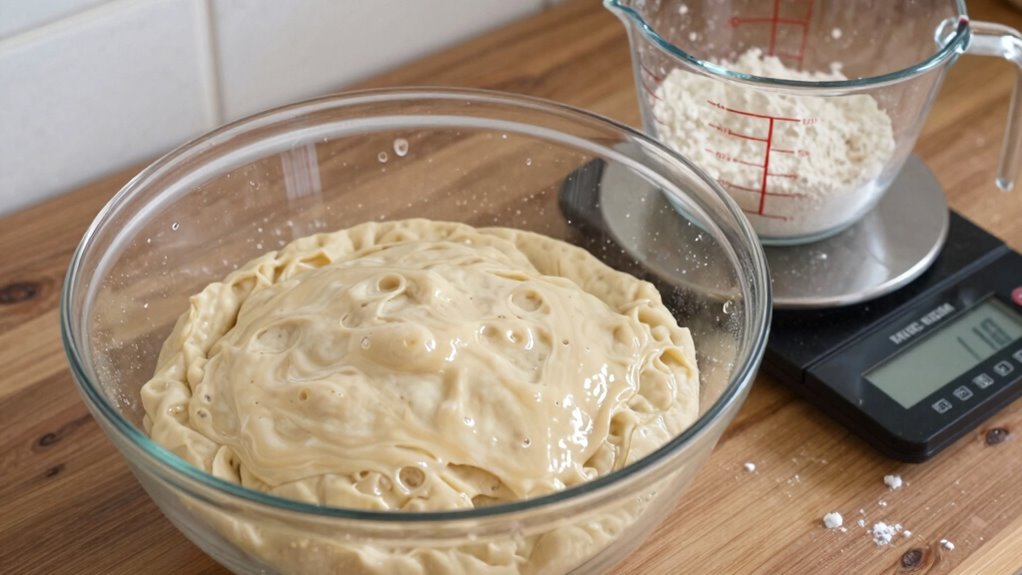
To achieve the perfect pizza crust, accurately measuring and tweaking your dough’s water content is essential. Use a digital scale to weigh your ingredients precisely, especially water, to control hydration levels. Keep in mind that fermentation effects can alter dough hydration—longer fermentation can make dough feel wetter or stickier, which isn’t necessarily a hydration problem. Avoid hydration myths that suggest adding more water always improves texture; instead, adjust gradually, noting how your dough responds. If your dough feels too dry after mixing, add small amounts of water until it reaches the right consistency. Conversely, if it’s too sticky, a slight decrease in water can help. Recording your adjustments helps you fine-tune hydration for consistent, ideal results.
Common Hydration Levels and When to Use Them

Understanding common hydration levels helps you select the right dough for your pizza style. Generally, hydration ranges from 55% to 70%, each affecting fermentation effects and gluten development differently.
- 55-60%: Ideal for thin, crisp crusts. It results in firm gluten networks but less extensibility, so handle gently.
- 60-65%: Versatile for medium-thick crusts, providing a balanced fermentation and good gluten development for chewy textures.
- 65-70%: Suitable for airy, chewy crusts. Higher hydration boosts fermentation effects and creates a tender crumb, but requires careful handling.
- Above 70%: Less common at home; yields open, bubbly crusts. It enhances fermentation effects but demands precise technique to maintain gluten structure.
Tips for Handling Dough at Different Hydration Levels
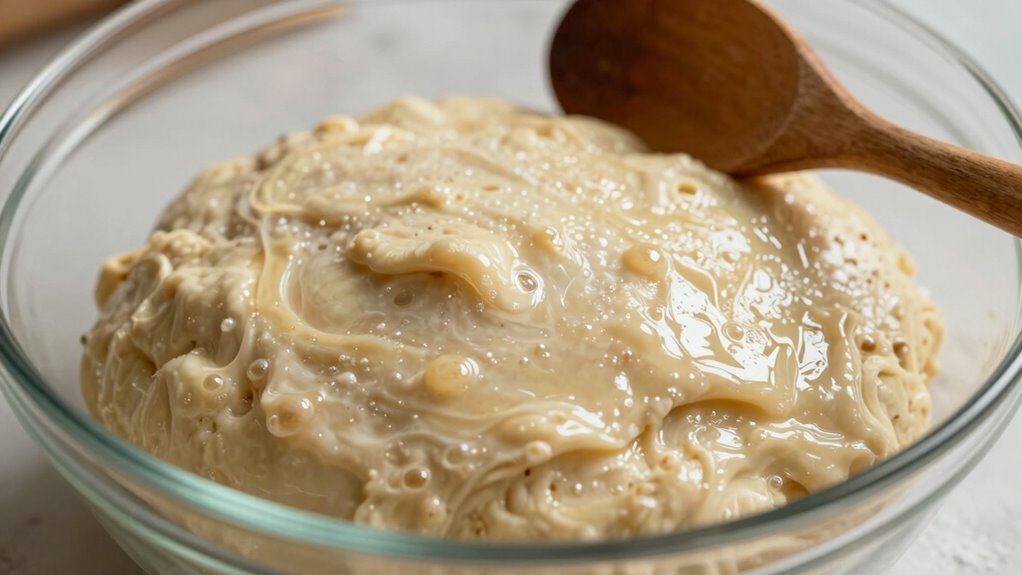
Handling dough efficiently depends heavily on its hydration level, as each affects elasticity and stickiness. For lower hydration doughs, use gentle folding and minimal handling to promote gluten development without overworking the dough, which can make it tough. Higher hydration doughs tend to be stickier, so applying bench flour helps manage stickiness while maintaining flexibility. To control fermentation, keep an eye on hydration—more water can speed up fermentation, so adjust proofing times accordingly. Knead thoroughly for excellent gluten development at moderate hydration levels, but avoid over-kneading at high hydration, which can weaken the dough’s structure. Overall, understanding how hydration impacts handling allows you to adapt techniques, ensuring your dough remains manageable and yields excellent results.
Troubleshooting Pizza Dough Problems Caused by Hydration

When dough hydration levels are off, it can lead to common problems that frustrate even experienced bakers. Too high hydration can make the dough sticky, hindering gluten development and making shaping difficult. Too low hydration results in a stiff dough that won’t ferment properly, slowing fermentation rate and producing a dense crust. To troubleshoot:
Proper dough hydration is key to avoiding sticky or stiff textures and achieving perfect fermentation.
- Adjust hydration gradually to find the ideal balance for your flour type.
- Ensure proper gluten development by kneading adequately, especially with wetter doughs.
- Monitor fermentation time; under-hydrated dough ferments slowly, while overly hydrated dough ferments too quickly.
- Use the right flour for your hydration level to improve dough strength and elasticity. Proper hydration helps control gluten formation and fermentation, resulting in a better pizza crust.
Choosing the Right Hydration for Your Pizza Style

Choosing the right hydration depends on the style of pizza you’re aiming to make, as different crusts require different dough characteristics. Higher hydration levels produce a softer, more open crumb, ideal for Neapolitan or artisan styles, while lower hydration yields a firmer crust suited for thin or crispy pizzas. Adjusting hydration influences fermentation effects, impacting how the dough develops flavor over time. More water typically promotes longer fermentation, enhancing flavor development and complexity. Conversely, lower hydration can speed up fermentation but may limit depth of flavor. Consider your desired crust texture and fermentation schedule to select the appropriate hydration level. By fine-tuning hydration, you control not just dough consistency but also how flavors develop during fermentation, helping you craft pizza tailored to your style.
Summary: Finding Your Ideal Dough Hydration
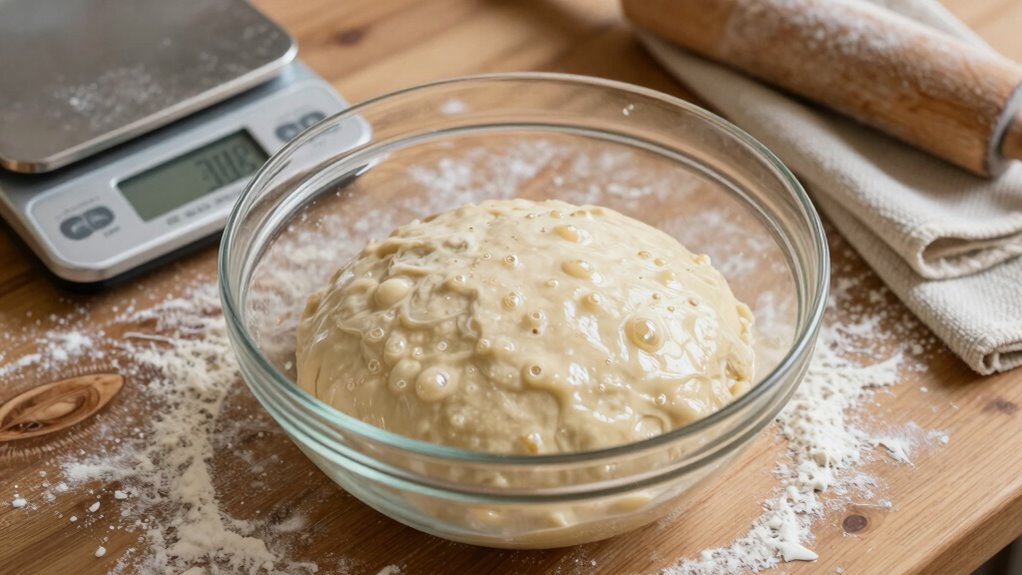
Finding your ideal dough hydration is a process of experimentation and observation. You’ll discover that the right hydration level fosters proper gluten development and supports sourdough fermentation. To refine your technique, consider these steps:
Discover your perfect dough hydration through experimentation to enhance gluten development and fermentation.
- Start with a moderate hydration and adjust based on dough consistency.
- Observe how the dough handles and whether it’s sticky or supple.
- Note how well gluten develops during kneading, influencing elasticity.
- Experiment with hydration levels to see how they affect fermentation speed and flavor.
Frequently Asked Questions
How Does Humidity Affect Dough Hydration at Home?
Humidity impacts your dough hydration by altering moisture levels. When humidity is high, your dough absorbs more moisture, making it wetter and potentially stickier, so you might need to reduce the water slightly. In dry conditions, the dough loses moisture faster, requiring a bit more water for proper consistency. To maintain consistent results, focus on moisture control, adjusting your recipe as needed based on your home’s humidity levels.
Can Hydration Levels Vary Between Different Flour Brands?
Yes, hydration levels can vary between flour brands because of differences in flour protein content. Higher protein flour, like bread flour, absorbs more water, promoting better gluten development and a chewier crust. Lower protein flour, such as cake or pastry flour, absorbs less water, resulting in a softer dough. Always adjust your hydration based on the flour’s protein level to achieve the best dough consistency and gluten development.
What Signs Indicate My Dough Has Too High or Low Hydration?
You might notice your dough is too high in hydration if it feels overly sticky and lacks elasticity, making it hard to shape. Conversely, low hydration dough often feels firm, dry, and resists stretching, resulting in a dense crust with poor oven spring. Proper hydration balances elasticity and workability, ensuring a light, airy pizza. Adjust hydration gradually, observing these signs to perfect your dough consistency.
How Does Hydration Influence Pizza Dough Fermentation Speed?
Higher hydration levels speed up fermentation because more water enhances yeast activity, making the dough ferment faster. Conversely, lower hydration slows down the fermentation rate, as less water limits yeast movement. You’ll notice this through quicker rise times with wetter doughs, while drier doughs take longer to develop flavor and texture. Adjust hydration based on your desired fermentation speed, ensuring ideal yeast activity for perfect pizza crust.
Is There a Difference in Hydration Needs for Thin Crust Versus Deep-Dish Pizza?
You’ll find that thin crust pizza benefits from lower hydration levels, around 55-60%, which helps keep it crisp and manageable. Deep-dish, with its thicker crust, usually needs higher hydration, about 65-70%, to create a softer, more pliable dough. These ingredient ratios directly influence crust thickness; higher hydration yields a more tender, airy crust, while lower hydration results in a sturdier, crispier finish.
Conclusion
Finding the right dough hydration is like tuning a fine instrument—you’ll create a symphony of perfect pizza crusts. Experiment with different water levels until you find what works best for your style and environment. Remember, small tweaks can turn a dough that’s too sticky or too dry into a masterpiece. Trust your senses, stay patient, and soon you’ll be baking pizzas that turn your home into a pizzeria paradise.