To distinguish soft from stiff peaks in egg whites, look at how they hold their shape when whipped: soft peaks gently fold over with a glossy, creamy texture, ideal for light desserts. Stiff peaks stand tall and firm, with peaks that stay pointed and don’t bend, perfect for stable meringues and decorations. Knowing these differences guarantees you attain the perfect stage every time—continue to learn more to master them confidently.
Key Takeaways
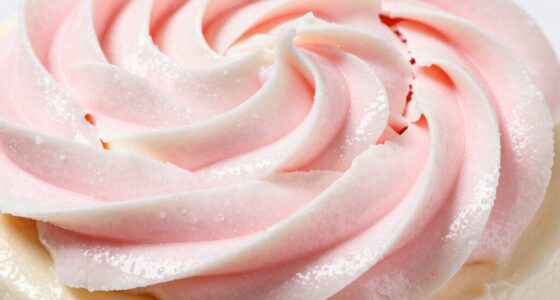
- Soft peaks gently curl over when lifted, with a glossy, smooth surface and a creamy texture.
- Stiff peaks stand upright with firm, pointed tips, and have a dense, matte appearance.
- Recognize soft peaks by tips that droop or curl; stiff peaks by peaks that stay erect and firm.
- Stop whipping at soft peaks for airy, delicate recipes; continue to stiff peaks for structure and stability.
- Proper technique and visual cues help differentiate peaks without guesswork.

OXO Good Grips 2QT Batter Mixing Bowl, White
Bright red measurement markings for easy visibility
As an affiliate, we earn on qualifying purchases.
As an affiliate, we earn on qualifying purchases.
Why Soft and Stiff Peaks Matter for Perfect Egg Whites

Understanding the difference between soft and stiff peaks is crucial for achieving perfect egg whites. Egg stability plays a key role in meringue techniques, influencing how well your mixture holds its shape. Soft peaks form when egg whites are whipped just enough to create gentle, drooping peaks, ideal for delicate recipes like soufflés or certain cakes. Stiff peaks, on the other hand, are firm and stand upright without collapsing, perfect for decorating or creating stable meringue toppings. Recognizing these differences helps you select the right stage for your recipe, ensuring your meringue’s texture and stability are just right. Proper stability is essential for reliable results when working with egg whites. Achieving the correct peak stage depends on factors like whipping time and the presence of any stabilizers, which can help control the egg white structure. Properly understanding and manipulating peak formation allows for consistent and successful baking results. Additionally, being aware of techniques for peak control can elevate your baking precision. Mastering peak consistency improves your overall egg white success, making your baked goods look professional and taste impeccable.

Stainless Steel Egg Whisk, Digead Hand Push Rotary Whisk Blender, whisks for cooking, Hand Push Mixer Stirrer for Blending, Whisking, Beating & Stirring (10+12in)
★FOOD GRADE STAINLESS STEEL – The hand push whisk is made of food grade stainless steel, so it’s…
As an affiliate, we earn on qualifying purchases.
As an affiliate, we earn on qualifying purchases.
What Are Soft and Stiff Egg White Peaks?

When beating egg whites, you’ll notice different peak styles forming. Soft peaks gently curl over when you lift the beaters, indicating they’re not fully stiff. Stiff peaks stand tall and hold their shape firmly, showing you’ve reached the right consistency. Achieving the proper peak type is essential for creating stable and secure meringues and soufflés. Consistent feedback during beating can help ensure you reach the desired peak. Recognizing the passive voice in your writing can improve clarity and engagement. Additionally, the support breakfast concept emphasizes the importance of proper technique to enhance your culinary results. Understanding the techniques for beating egg whites can significantly impact the final texture of your baked goods.
Soft Peaks Characteristics
Soft peaks form when you beat egg whites just enough for the mixture to hold gentle, rounded tips that curl over slightly when you lift the beaters. In meringue techniques, achieving soft peaks shows you’ve reached a stage where egg white stability is developing but not yet at its maximum. The mixture should appear glossy and smooth, with a slightly airy texture. Soft peaks are ideal for recipes like soufflés or mousses, where a light, airy structure is essential. You’ll notice the peaks gently bend over rather than stand upright. This stage indicates that your egg whites have enough air incorporated without overbeating, helping you avoid deflation or over-stability that can hinder proper folding or mixing later.
Stiff Peaks Indicators
To identify stiff peaks, look for egg whites that stand upright with firm, pointed tips that hold their shape without bending. This indicates a meringue texture with maximum aeration and stability, essential for recipes like pavlova or sturdy mousses. Stiff peaks result from the egg white chemistry reaching its peak aeration point, where proteins form a strong network that traps air efficiently. When you lift the beaters, the peaks should stand tall and stay in place without collapsing or drooping. The texture should feel firm yet smooth, with glossy, well-formed peaks. Recognizing stiff peaks ensures your meringue has the right structure for baking or folding into other ingredients, giving your desserts the perfect consistency and stability. Additionally, understanding the peaks stages helps you achieve the desired outcome for various recipes. Achieving stiff peaks often involves proper technique and patience during the whipping process. Being aware of the egg white chemistry can help refine your skills for perfect results every time.

Talcufon Egg White Protein Powder 8Oz Pasteurized No Additives, High Protein, Gluten-Free Ideal for Baking and Cooking, Unflavored 227G
Fresh Egg White Protein Powder offers a pure and natural source of premium quality protein, source with 25g…
As an affiliate, we earn on qualifying purchases.
As an affiliate, we earn on qualifying purchases.
How Do You Recognize Soft and Stiff Peaks?

You can tell soft and stiff peaks apart by looking at their texture and firmness. Soft peaks gently curl over when you lift the whisk, while stiff peaks stand straight and hold their shape firmly. Pay attention to these visual clues and the stiffness to achieve perfect egg whites every time. Additionally, understanding the peaks’ formation can help you better recognize the desired stage for different recipes. Proper whisking technique ensures you reach the ideal peak consistency, whether soft or stiff. Mastering the egg whites’ texture can also improve the overall outcome of your baking. Recognizing these subtle differences is essential for consistent results in your culinary creations. Developing an awareness of visual cues can further refine your ability to judge the right peak stage without guessing.
Visual Texture Differences
Ever wondered how to tell if your egg whites have reached the perfect peak stage? The key lies in the texture comparison and visual cues. Soft peaks have a smooth, shiny surface with gentle curves that droop slightly when lifted. Their texture appears creamy and light, with a slight elasticity. Stiff peaks, on the other hand, stand tall and hold their shape firmly. You’ll notice a matte finish and a firm, dense texture that doesn’t easily bend or fold over. When you lift your whisk or beaters, stiff peaks form sharp, pointed tips that stay upright. Soft peaks are more delicate and gentle. Recognizing these visual texture differences helps guarantee you achieve the right stage for your recipe, whether it’s for meringues, soufflés, or other delicate dishes. Mastering the peaks’ firmness ensures your egg whites are perfectly prepared for any culinary creation. Additionally, understanding the proper mixing techniques can prevent overbeating, which can lead to stiff, dry peaks. Being aware of egg freshness can also impact the whipping quality and final texture. Recognizing the visual cues of peak stages can help you refine your technique and achieve consistent results.
Peak Stiffness Indicators
Recognizing soft and stiff peaks primarily involves observing how the egg whites respond when you lift your whisk or beaters. For stiff peaks, the meringue texture should hold its shape firmly, standing straight without collapsing. When you lift the whisk, the peaks should form sharp, defined tips that don’t bend over. Soft peaks, on the other hand, have a more delicate meringue texture, with peaks that curl over or bend when lifted. Your whipping technique plays a vital role in achieving the right peak stiffness—overwhipping can turn soft peaks into stiff, grainy meringue, while underwhipping results in soft, runny whites. Pay close attention to these peak indicators to guarantee your meringue achieves the perfect stiffness for your recipe. Additionally, understanding the visual cues of the peaks can help you better judge the readiness of your egg whites during whipping.

Sur La Table Stainless Steel Balloon Whisk, 8", Silver
Perfect for whipping up airy meringues, light cream sauces, custards and more, these professional-quality whisks were created Made…
As an affiliate, we earn on qualifying purchases.
As an affiliate, we earn on qualifying purchases.
How to Whip Egg Whites to Achieve Perfect Peaks

Achieving perfect peaks when whipping egg whites requires attention to detail and proper technique. First, ensure your eggs are properly separated, with no yolk mixing in, as fat can prevent foaming. Using a clean, dry hand mixer, start at a low speed to break up the egg whites and then gradually increase to medium-high. As you whip, look for soft peaks initially; then, continue beating until stiff peaks form, where the whites hold their shape firmly. Keep a close eye on the texture and stop once you see the desired peak type. Avoid over-whipping, which can cause the whites to become grainy. Proper equipment such as a stainless steel bowl can help achieve better volume and stability. With patience and precision, your egg whites will reach the perfect consistency for any recipe.
Common Mistakes That Prevent Egg Whites From Peaking

One common mistake that prevents egg whites from peaking is using eggs that contain even a small amount of yolk or grease, which can inhibit foaming. Proper egg shell removal is essential—any trace of shell can introduce unwanted fats or contaminants that weaken the foam. Additionally, improper egg white storage can impact their ability to whip properly; egg whites stored too long or at incorrect temperatures may become thin or watery, making it difficult to reach soft or stiff peaks. Always use fresh eggs and carefully remove any shell fragments. For best results, let eggs come to room temperature before whipping, and avoid reusing leftover egg whites that might have been stored improperly or for too long. This helps ensure your egg whites whip up to perfect peaks.
Tips for Consistently Making Perfect Egg White Peaks

To consistently make perfect egg white peaks, focus on preparing your eggs and equipment properly. Start with fresh eggs, as high-quality egg sourcing guarantees better volume and stability. Use a clean, grease-free bowl—preferably glass or metal—since grease can prevent peaks from forming. When whisking, employ the right techniques: start slowly to break up the whites, then increase speed gradually. Incorporate a pinch of salt or cream of tartar to stabilize the structure. Avoid over-whisking, which can cause dryness or collapse. For best results, consider using an electric mixer on medium-high speed for uniformity. Remember, consistent results come from attention to detail in both your whisking techniques and egg sourcing, ensuring your peaks are perfectly fluffy every time.
Practical Uses of Soft and Stiff Egg White Peaks in Baking

Soft and stiff egg white peaks serve crucial roles in a variety of baked goods, each offering different textures and structures. Soft peaks are ideal when you need gentle meringue stability, such as in soufflés or mousses, where a lighter, airy texture is key. They help incorporate air into batters, improving batter aeration without over-structuring. Stiff peaks are indispensable for recipes like Swiss meringue or baked Alaska, where firm meringue stability ensures the structure holds during baking or torching. When whipped to stiff peaks, egg whites create a sturdy foam that adds volume and firmness. Using the right peak stage guarantees your baked goods achieve the desired height, texture, and stability, making your baking process more predictable and successful.
Troubleshooting Egg White Peaks: What to Do When They Don’t Form Properly

Sometimes, despite following the proper steps, egg whites refuse to reach the desired peaks. Common issues include poor air bubble formation or unstable foam. To troubleshoot, first check your bowl and whisk for grease or residue, which can hinder foam formation. Make sure you’re using fresh eggs, as older whites don’t whip as well. Temperature control is essential—egg whites whip best at room temperature, so consider letting them sit out for 20-30 minutes. If peaks aren’t forming, try gently re-whipping or starting over with a clean, dry bowl. Also, avoid over-whisking, which can cause collapse. Remember, consistent air bubble formation and proper temperature management are key to achieving perfect peaks every time.
Quick Guide: Soft vs. Stiff Egg White Peaks – Key Differences
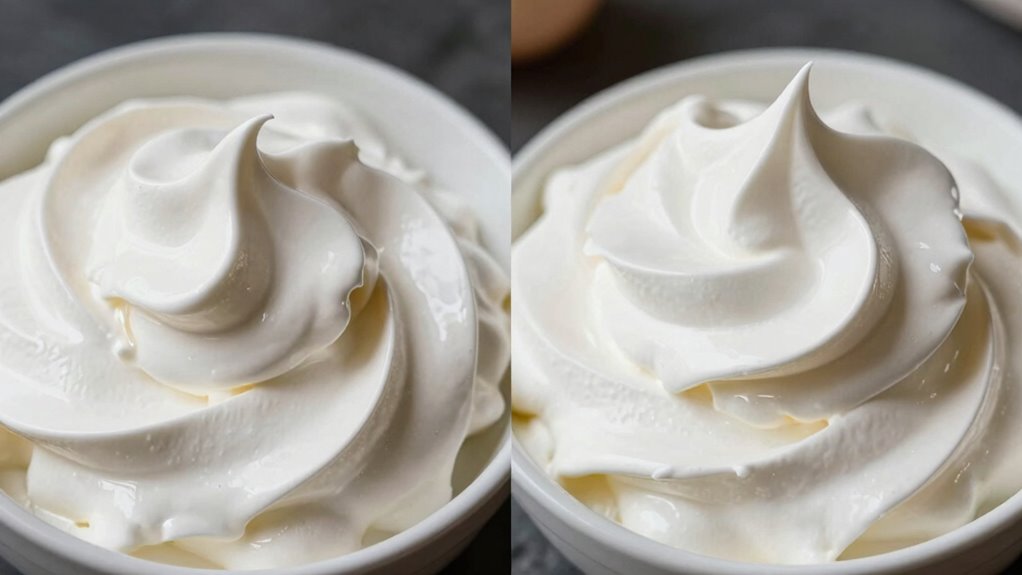
Understanding the key differences between soft and stiff egg white peaks is essential for achieving the right texture in your recipes. Soft peaks are gentle, with a glossy, smooth surface that bends over when you lift the beaters, ideal for meringue techniques requiring lightness. Stiff peaks stand firm, holding their shape without drooping, perfect for structured desserts like pavlova or soufflés. Here’s a quick comparison:
| Feature | Soft Peaks | Stiff Peaks |
|---|---|---|
| Egg white stability | Moderate, delicate hold | Strong, holds shape firmly |
| Texture | Glossy, slightly drooping | Glossy, firm, pointed tips |
| Use in recipes | Soufflés, light mousses | Meringues, stabilizing fillings |
| Meringue techniques | Gentle folding, delicate mixes | Structural, firm meringue |
Mastering these peaks enhances your meringue techniques and guarantees perfect egg white stability every time.
Frequently Asked Questions
Can I Overmix Egg Whites When Trying to Reach Stiff Peaks?
Yes, you can overmix egg whites when trying to reach stiff peaks. Overmixing pitfalls include breaking down the structure, causing the whites to become grainy or dry, and losing volume. Fresh eggs make reaching stiff peaks easier, so guarantee your eggs are fresh for better results. Keep a close eye and stop once you see firm, glossy peaks to avoid overmixing and compromising your meringue or whipped dish.
How Does Adding Sugar Affect the Formation of Soft and Stiff Peaks?
Adding sugar affects the formation of soft and stiff peaks by promoting sugar crystallization, which stabilizes the egg whites and makes the peaks more glossy and firm. However, if you add sugar too quickly or in excess, it can alter the texture, causing the mixture to become grainy or over-stiffened. To achieve the best peaks, add sugar gradually and guarantee it’s fully dissolved, creating a smooth, stable foam.
Are There Specific Eggs Better Suited for Whipping Into Peaks?
You should choose fresh eggs for better peak formation, as they have thicker whites that whip up more easily. Egg breed also matters; hens like Leghorns produce whites that tend to be more elastic and ideal for whipping. Avoid older eggs, which tend to have runnier whites, making it harder to achieve stiff peaks. By selecting fresh, high-quality eggs from suitable breeds, you’ll get the best results for whipping into perfect peaks.
How Does Room Temperature Influence Egg White Peak Formation?
Room temperature notably influences egg white peak formation because warmer whites whip up more easily, creating stronger peaks. The temperature effects improve foam stability and volume, making your peaks stiffer faster. Fresh eggs also help since older whites tend to be thinner and less stable. So, for best results, let your eggs sit at room temperature before whipping, and choose fresh eggs for ideal peak formation.
Can I Re-Whip Egg Whites if They Don’t Reach Stiff Peaks Initially?
Re-whipping egg whites is like trying to untangle a knot—you can often fix it. If your egg whites haven’t reached stiff peaks, you can re-whip them, but only if they haven’t become overwhipped. For better egg white stability, use proper whipping techniques and make certain your bowl and beaters are clean. Gently fold in any additions, and don’t overbeat to avoid losing that perfect peak.
Conclusion
Mastering soft and stiff peaks transforms your baking from good to extraordinary, like a maestro tuning an instrument. With keen eyes and gentle hands, you’ll coax perfect peaks out of your egg whites every time. Think of it as a dance—each peak a graceful move—culminating in desserts that sing with elegance. So, trust your instincts, practice with patience, and let your culinary artistry rise to new heights, one delicate peak at a time.