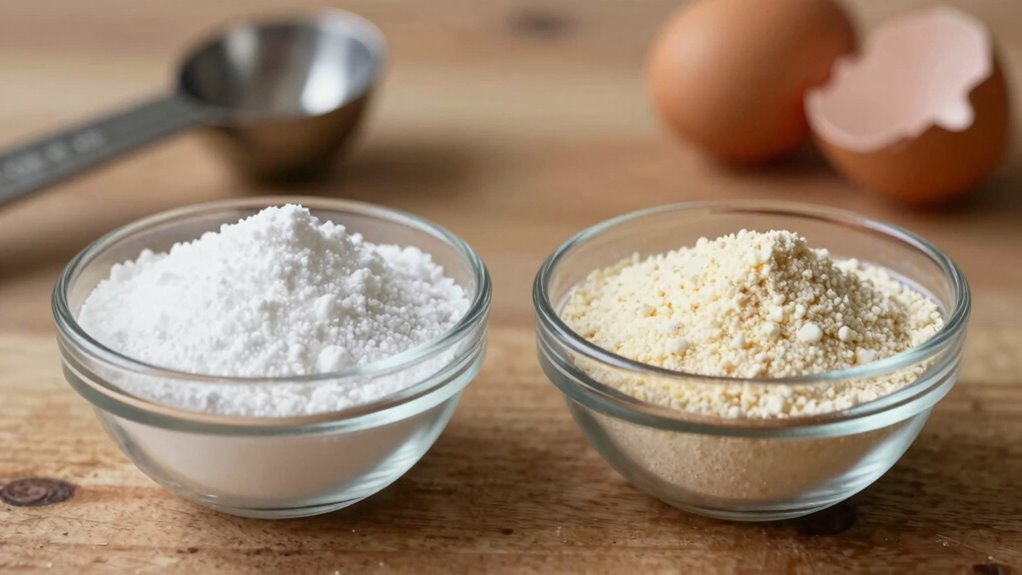

Baking soda is pure sodium bicarbonate that needs acid to produce carbon dioxide and help your cake rise quickly. Baking powder contains baking soda plus an acid and is activated by moisture and heat, offering a steadier lift. Using baking soda without enough acid can cause a metallic or soapy taste and prevent proper rising. To avoid mistakes like collapsed or tasteless cakes, understanding these differences is key—stick around to discover more.
Key Takeaways
- Baking soda needs an acid to produce carbon dioxide; without it, cakes may not rise properly and can taste metallic or soapy.
- Baking powder contains both an acid and a base, allowing it to create gas and leaven baked goods without additional ingredients.
- Using baking soda instead of baking powder can cause dense or flat cakes if the recipe lacks sufficient acidity.
- Overusing baking soda can lead to excessive bubbling and a metallic or bitter flavor in the finished cake.
- Proper understanding of each leavening agent’s chemistry ensures cakes rise correctly and avoid common pitfalls.
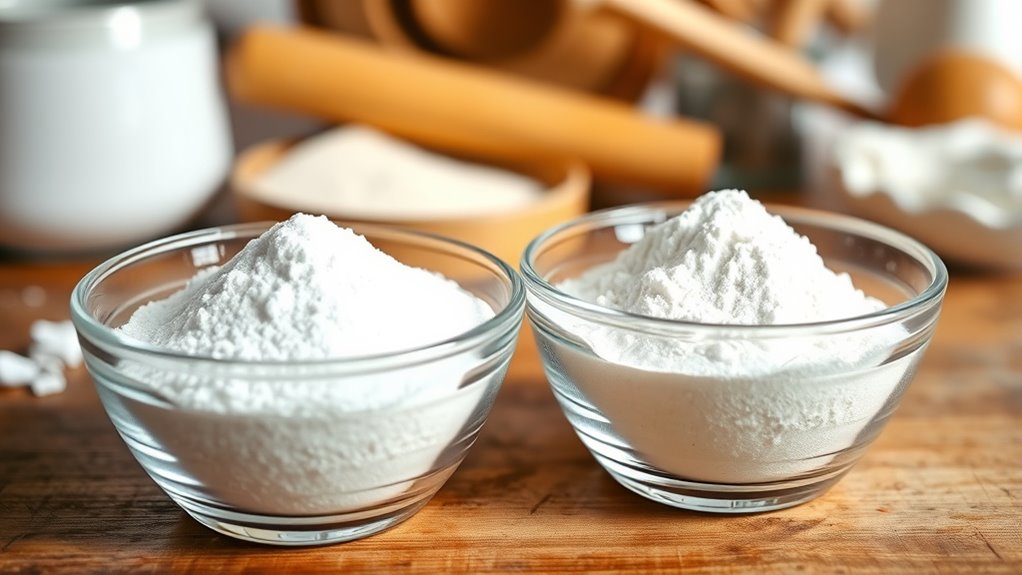
When it comes to baking, understanding the difference between baking soda and baking powder is essential, because they serve distinct functions in your recipes. Both are leavening agents, meaning they produce the gas necessary to make your baked goods rise, but they do so through different chemical reactions. Baking soda is pure sodium bicarbonate, which reacts with acidic ingredients like buttermilk, yogurt, or vinegar to produce carbon dioxide gas. This reaction happens quickly, so it’s important to bake immediately after mixing to capture the leavening power. If you don’t have enough acid in your recipe, baking soda can leave behind a soapy or metallic taste, which ruins the flavor of your cake. On the other hand, baking powder contains baking soda combined with an acid, usually cream of tartar, along with a moisture absorber like cornstarch. Because it already has the acid built-in, baking powder only needs moisture and heat to activate its chemical reactions, making it more forgiving and easier to use in recipes lacking acidic ingredients.
Understanding how these leavening agents work helps you prevent common baking mistakes. For instance, using baking soda in a recipe without enough acid won’t produce enough carbon dioxide, resulting in a flat or dense cake. Conversely, using too much baking soda can cause excessive bubbling and an unpleasant metallic taste. Baking powder, which often comes in single-acting or double-acting varieties, releases gas in two stages: once when wet and again when heated. Double-acting baking powder is more common, providing a more controlled rise and giving you a little extra leeway if your batter sits out briefly. If you confuse the two or substitute one for the other without adjusting the quantities, your baked goods might not rise properly, ending up heavy or uneven. Recognizing the chemical reactions involved helps bakers adjust their techniques accordingly for perfect results. Additionally, understanding the pH level of your ingredients can influence how well the leavening agents work and can impact the overall flavor and texture of your baked goods. Proper knowledge of leavening chemistry can greatly improve your baking outcomes and prevent common pitfalls. When baking soda reacts with acids, it produces carbon dioxide gas rapidly, which creates tiny bubbles that expand during baking, giving your cake its airy texture. Baking powder’s reaction produces gas more gradually, thanks to its added acids, helping to ensure a steady rise. Knowing these differences allows you to choose the right leavening agent for each recipe, ensuring your cakes turn out light, fluffy, and perfect every time. If you want to avoid ruining your cakes, pay attention to the ingredients and the type of leavening agent specified.
A chemical reaction occurs when baking soda interacts with acids, and understanding this process ensures better control over your baked goods’ rise. When used correctly, baking soda and baking powder are powerful tools that help you achieve bakery-quality results at home, but misusing them can quickly lead to disappointment. Knowing the chemical properties of each leavening agent can help you troubleshoot baking issues and refine your technique.

Clabber Girl Baking Soda, 12 Ounce
PURE BAKING SODA – 100% Sodium Bicarbonate
As an affiliate, we earn on qualifying purchases.
As an affiliate, we earn on qualifying purchases.
Frequently Asked Questions
Can Baking Soda and Baking Powder Be Used Interchangeably?
You can’t really use baking soda and baking powder interchangeably because their substitution potential is constrained; they react differently in recipes. Using baking soda instead of baking powder might cause a bitter or metallic flavor impact, while the opposite could result in flat, dense baked goods. For best results, stick to the specific leavening agent called for in your recipe to ensure proper rise and flavor.
How Do I Know if My Baking Soda or Powder Is Expired?
You can tell if your baking soda or powder is expired by checking the expiration date on the packaging. For a freshness test, mix a small amount of baking soda with vinegar; if it bubbles vigorously, it’s still good. If there’s little to no reaction, it’s time to replace it. Regularly testing guarantees your baked goods rise perfectly, avoiding flat or dense cakes caused by expired leavening agents.
What Are the Health Risks of Using the Wrong Leavening Agent?
Did you know improper leavening can cause digestive issues in 1 out of 10 people? Using the wrong leavening agent poses health risks like stomach discomfort, bloating, or allergic reactions. You might also end up consuming chemicals that are not intended for ingestion, which can be harmful over time. Always verify you’re using fresh, correct leavening to avoid these risks and keep your baking safe and healthy.
Does Altitude Affect the Choice Between Baking Soda and Baking Powder?
At high altitudes, altitude adjustments become vital because they affect leavening effectiveness. You should use baking powder instead of baking soda because it works better in lower pressure environments, helping your cakes rise properly. Baking soda can cause over-leavening or collapse, so adjusting your recipe with more baking powder or reducing leavening agents guarantees your baked goods turn out light and fluffy. Always tweak recipes for altitude to get the best results.
How Do I Properly Store Baking Soda and Baking Powder?
Think of baking soda and baking powder as treasure chests of power that need proper guarding. To keep their magic alive, store them in airtight containers away from moisture and heat. Check their shelf life—baking soda lasts about 2-3 years, baking powder 6 months to a year. Keep them in a cool, dry place, and always reseal promptly after use to make certain your baked goods rise perfectly every time.

B0014E4DS6
As an affiliate, we earn on qualifying purchases.
As an affiliate, we earn on qualifying purchases.
Conclusion
So, now you know the key difference: baking soda needs an acid, while baking powder already has one. Mixing them up can turn your cake into a floury disaster, like trying to find a turntable in a medieval castle. Pay attention to your recipe, and you’ll avoid the baking blunders of yore. With this knowledge, your baked goods will rise to the occasion—no need to summon a wizard’s spell to fix it!

Arm & Hammer Baking Soda, 3lb Powder Bag, Pure Baking Soda for Baking, Cooking, Cleaning – Grocery
As an affiliate, we earn on qualifying purchases.
As an affiliate, we earn on qualifying purchases.
B0014E4DS6
As an affiliate, we earn on qualifying purchases.
As an affiliate, we earn on qualifying purchases.