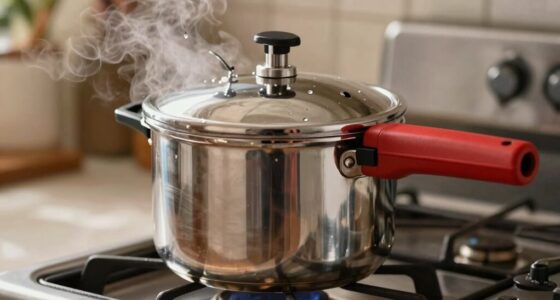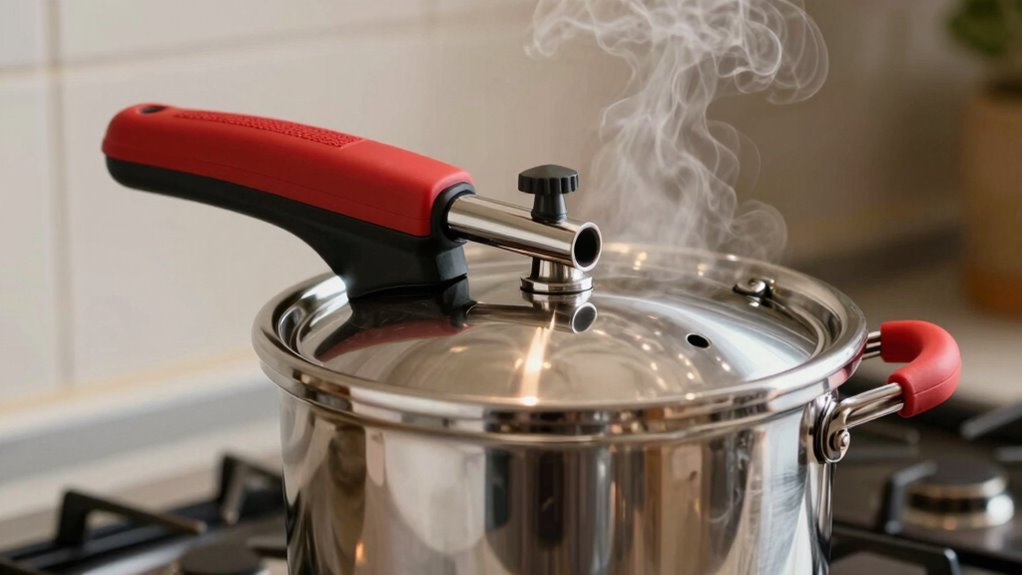

If your pressure cooker whistles loudly and often, it’s usually due to steam escaping through the vent to regulate internal pressure. The sound varies based on pressure levels, vent size, and component condition. Excessive or irregular whistling can mean issues like blockages, worn gaskets, or improper sealing. Factors like altitude and cooker size also affect noise levels. Staying alert to these signs helps guarantee safe operation—more details can guide you to troubleshoot effectively.
Key Takeaways
- Excessive whistling may indicate high internal pressure or vent blockage, signaling the need for inspection.
- A loose or damaged gasket can cause irregular steam release, leading to louder or more frequent whistles.
- Overfilling the cooker increases pressure, resulting in louder whistles and potential safety concerns.
- Debris or debris in the vent pipe can restrict steam flow, causing abnormal whistling patterns.
- External factors like high altitude or large cooker size can alter pressure behavior, increasing whistling frequency and volume.
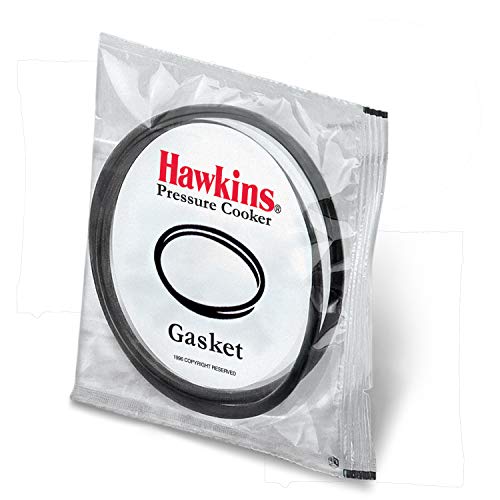
Hawkins Gasket For 3.5 Liter To 8 Litre Except Wide Hawkins Pressure Cookers | 3 Liter To 7 Litre Hawkins Stainless Steel Pressure Cookers |Contura Pressure Cookers (Std Gasket SG)
Suitable for All Hawkins 3.5 Litre to 8 Litre Tall Pressure Cookers, Hawkins Stainless Steel 3 Litre to…
As an affiliate, we earn on qualifying purchases.
As an affiliate, we earn on qualifying purchases.
How Does a Pressure Cooker Whistle Work?

A pressure cooker whistle works by releasing excess steam to maintain a safe cooking pressure. As pressure builds inside the cooker, the pressure release mechanism activates, allowing steam to escape through a small vent. This creates the characteristic whistling sound. The whistle frequency depends on the amount of pressure inside and the size of the vent. When pressure rises, the steam escapes faster, increasing the pitch and loudness of the whistle. Conversely, as pressure stabilizes or drops, the whistle slows down or stops. The consistent pressure release guarantees your food cooks properly while preventing dangerous buildup. Understanding how the pressure release influences the whistle frequency helps you monitor cooking progress and safety without opening the lid prematurely. Additionally, the vent size and the design of the pressure release mechanism play a crucial role in how often and loud the whistle sounds. The pressure regulation system ensures that the pressure remains within safe limits, contributing to the predictable whistling pattern. Moreover, the quality of the gasket affects how well the cooker maintains pressure, which in turn influences the whistling behavior. Proper maintenance of the pressure cooker ensures the whistle functions correctly and safely over time.

Holikme 35Feet Dryer Vent Cleaner Kit – Lint Remover,Fireplace Chimney Brushes,Replacement Parts,Duct Cleaning,Flexible Lint Brush with Drill Attachment×2,Use with or Without a Power Drill
【All-in-One Dryer Duct Cleaning Kit】No more running to the hardware store for missing parts. This complete vent cleaning…
As an affiliate, we earn on qualifying purchases.
As an affiliate, we earn on qualifying purchases.
Why Does My Pressure Cooker Whistle So Loudly?
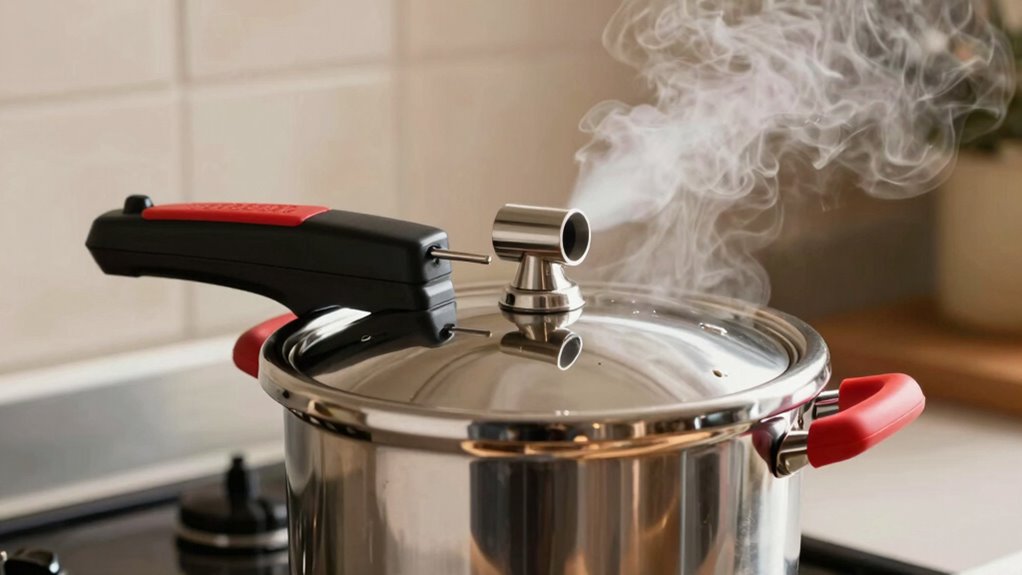
Ever wonder why your pressure cooker whistles so loudly? It’s usually due to the steam release, which can be affected by pressure levels and whistle upkeep. A loud whistle can signal that your pressure cooker isn’t regulating pressure properly, raising safety concerns. Check for blockages or build-up around the valve, as these can cause noisy releases. Regularly cleaning and inspecting the whistle ensures it functions smoothly. Here’s a quick guide:
| Issue | Cause | Solution |
|---|---|---|
| Excessive noise | Valve isn’t sealing correctly | Replace or adjust the valve |
| Blockages | Debris blocking steam flow | Clean the whistle thoroughly |
| Loose parts | Valve or lid isn’t secure | Tighten all fittings |
| Aging components | Wear and tear | Replace worn parts |
| Pressure irregularities | Overfilled or underfilled | Follow proper filling guidelines |
Proper whistle maintenance enhances pressure cooker safety and reduces loud noises. Additionally, understanding the contrast ratio in your pressure cooker’s design can help you optimize performance and safety. Regularly inspecting the valve mechanism can prevent unexpected loud whistles caused by malfunctioning components. Maintaining the seal integrity is also crucial for consistent pressure regulation and quiet operation. Moreover, ensuring the whistle mechanism is free of debris helps maintain optimal performance. To further improve safety, consider regular inspections to identify potential issues early.

Hawkins B1010 3 Piece Pressure Cooker Safety Valve – B1010-3pcSet
Size: Small
As an affiliate, we earn on qualifying purchases.
As an affiliate, we earn on qualifying purchases.
What Do Different Whistle Sounds and Patterns Mean?
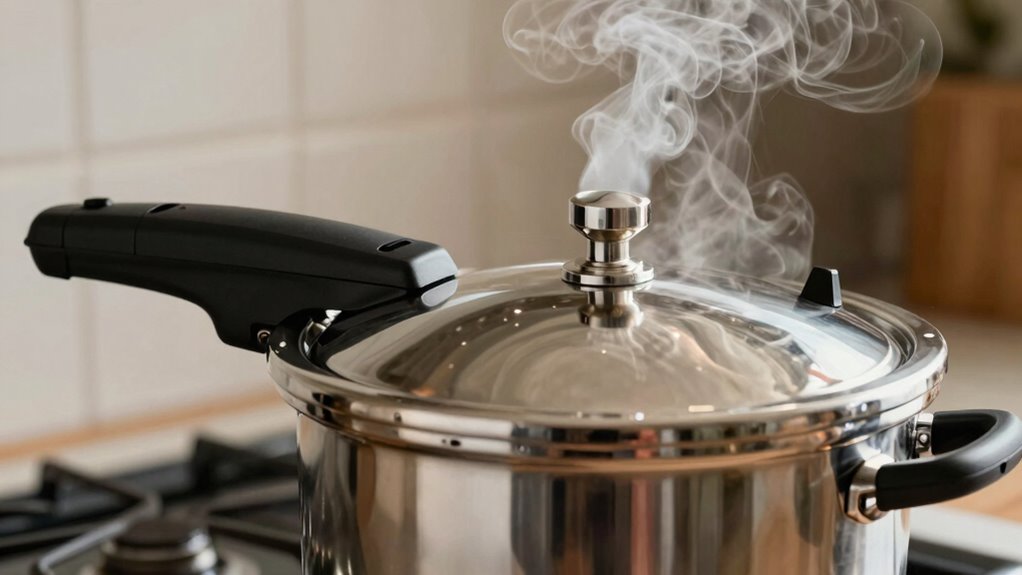
Have you noticed that your pressure cooker’s whistle varies in tone and pattern? These pressure variations and whistle patterns reveal important information about your cooking process.
- A steady, high-pitched whistle often indicates that the pressure is consistently maintained, signaling that your food is cooking at the right pressure.
- Intermittent or irregular whistle patterns may suggest fluctuations in pressure, which could mean a leak or that the valve isn’t functioning properly.
- A loud, prolonged whistle could indicate excessive pressure buildup, alerting you to reduce heat immediately.
Understanding these whistle patterns helps you monitor your cooker’s performance and ensures safe, effective cooking. Recognizing what different sounds mean can prevent accidents and improve your culinary results.

Prestige Pressure Regulator Weight Whistle for Prestige Brand Pressure Cookers Only, SS 23mm
Suitable for FLIP-ON TRI-PLY, Svachh Flip-on Hard Anodised & Stainless Steel, Clip-on Svachh Hard Anodised & Stainless Steel,…
As an affiliate, we earn on qualifying purchases.
As an affiliate, we earn on qualifying purchases.
How Can Altitude and Cooker Size Affect the Whistling?
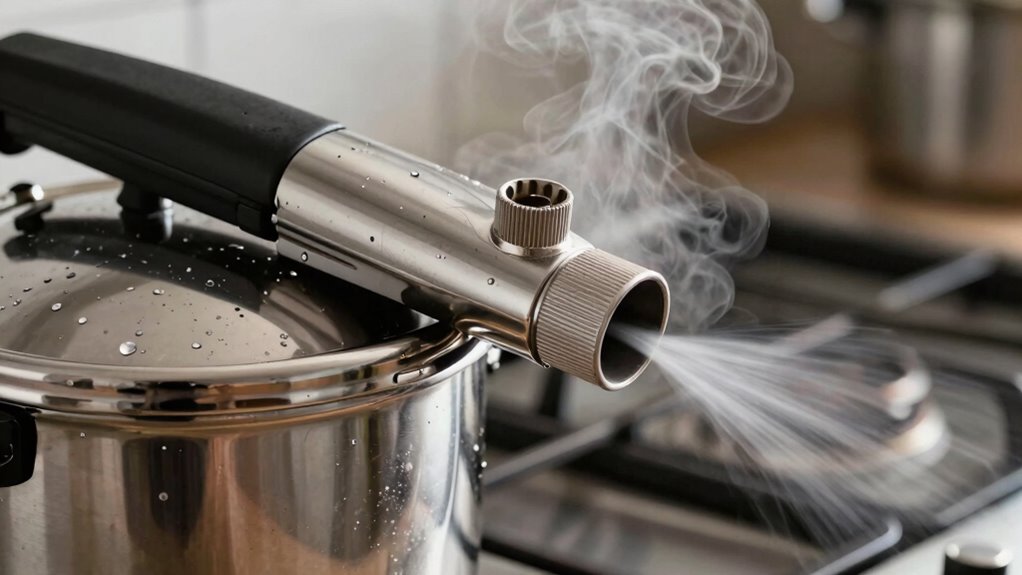
Altitude and cooker size both influence how your pressure cooker whistles during operation. Altitude effects cause the boiling point to decrease, meaning you might need to adjust the pressure settings, which can change the frequency and intensity of the whistle. Higher altitudes often lead to a louder or more frequent whistle because the cooker works harder to reach the necessary pressure. Additionally, pressure regulation mechanism of your cooker plays a significant role in how consistently it whistles under varying conditions. The boiling point at different altitudes affects how the pressure builds and releases, impacting the whistling pattern. Changes in pressure settings can also influence how your cooker behaves at different altitudes. The size of your cooker also matters; larger cookers require more steam to reach the ideal pressure, which can result in a different whistling pattern compared to smaller models. A bigger cooker may produce a steadier, less frequent whistle, while smaller ones tend to whistle more often. Understanding these factors helps you anticipate how your pressure cooker will behave at different altitudes and sizes. Proper adjustment and awareness of these variables can improve your cooking experience and safety, especially considering the performance of pressure cookers under diverse conditions.
Is Your Pressure Cooker Operating Safely? Key Signs to Watch For
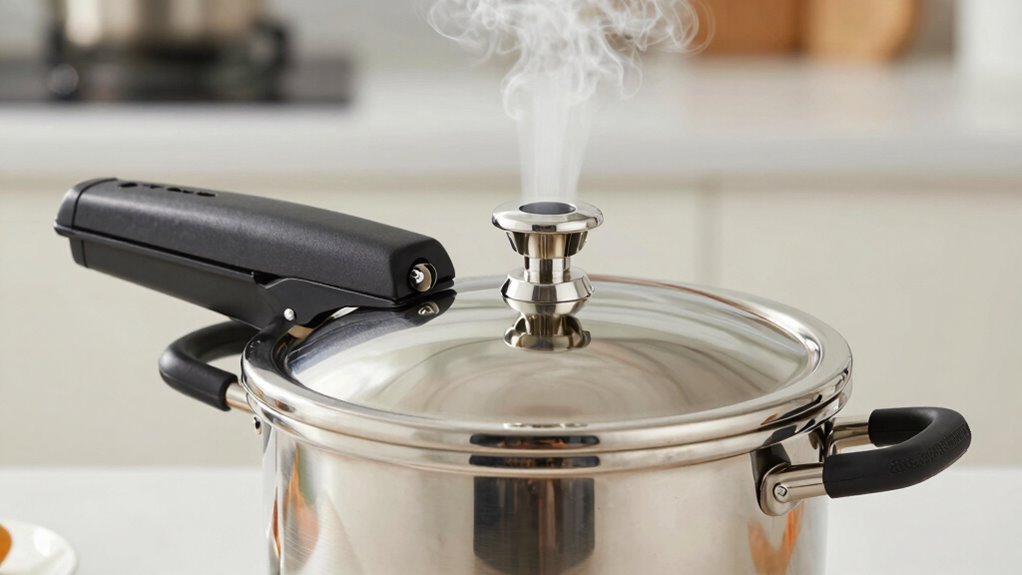
Ensuring your pressure cooker operates safely is essential to prevent accidents or damage. Watch for these key signs:
- Unusual noises or persistent hissing, which may indicate a safety vent or gasket issue.
- Excessive pressure buildup or if the cooker doesn’t release steam properly, signaling a malfunction.
- Leaks around the lid or safety valves, risking dangerous steam escape.
- Regular inspection of components like gaskets and safety valves helps maintain proper pressure regulation. Additionally, understanding the pressure cooking process can help you identify normal versus abnormal sounds or behaviors.
- Being aware of AI-related job opportunities and how automation may impact traditional roles can also prepare you for changes in the kitchen or tech environment.
- Staying informed about safety standards and manufacturer guidelines ensures you follow best practices for pressure cooker maintenance and use. Incorporating electric appliances like pressure cookers into your kitchen setup requires awareness of their specific safety features and maintenance needs.
Following proper safety precautions is vital—never ignore these signs. Regular maintenance tips include checking the gasket for cracks, ensuring the safety valve functions correctly, and cleaning steam vents. If you notice any irregularities, stop using the cooker immediately and consult your manual or a professional. Staying vigilant helps keep your cooking safe and prolongs your pressure cooker’s lifespan.
Why Is My Pressure Cooker Whistling Excessively? Common Causes and Fixes
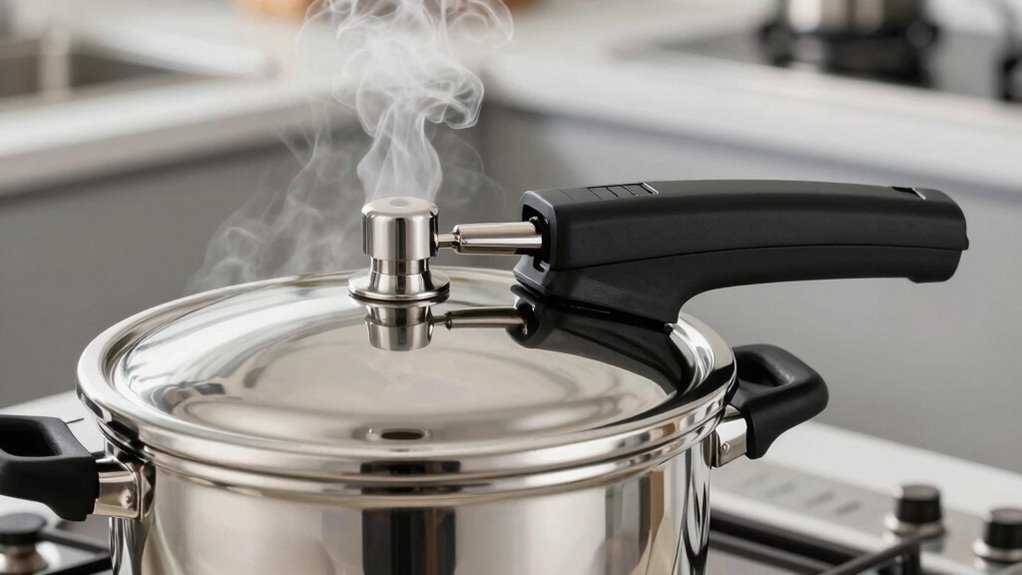
If your pressure cooker is whistling excessively, it’s a sign that something may be off with the venting or pressure regulation. Excessive whistling often indicates pressure buildup beyond normal levels, which can be caused by steam leakage or a partially blocked vent. When steam escapes through a small gap or crack, it can create continuous or loud whistling sounds. To fix this, check the rubber gasket for damage or misalignment, as an improper seal can cause pressure fluctuations. Also, inspect the vent pipe for any clogs or debris that might restrict steam release. Ensuring the lid is properly secured and the vent is clear helps maintain steady pressure and reduces unnecessary whistling. Proper maintenance prevents pressure buildup issues and keeps your cooker operating safely. Additionally, understanding the importance of feature Buddies can help you troubleshoot and maintain your pressure cooker more effectively. Regularly cleaning and inspecting pressure release mechanisms and venting systems ensures safe and efficient operation. Paying close attention to these components aligns with the modern farmhouse decor trend of combining functionality with timeless style, even in your kitchen.
When Should You Adjust or Replace the Pressure Release Valve?

A pressure release valve plays a crucial role in maintaining safe and consistent pressure levels in your cooker, so knowing when to adjust or replace it is essential. If you notice persistent or irregular whistling, it’s time to check the valve. Consider these signs:
- Inconsistent pressure readings – indicating the valve isn’t regulating properly.
- Excessive whistling or noise that persists even after initial adjustments.
- Physical damage or wear such as cracks, corrosion, or buildup, which hinder proper functioning. Regular inspection and maintenance can prevent many issues related to pressure regulation and ensure optimal performance.
Additionally, safe electrical practices should be followed when inspecting or replacing the valve to prevent accidents. If these issues occur, you should perform a valve adjustment to restore proper pressure release. If the valve shows significant damage or doesn’t respond to adjustment, replacing it is necessary for safety and performance. Regular inspection ensures your pressure cooker operates reliably.
How Can You Reduce Noise While Ensuring Proper Cooking? Tips and Tricks
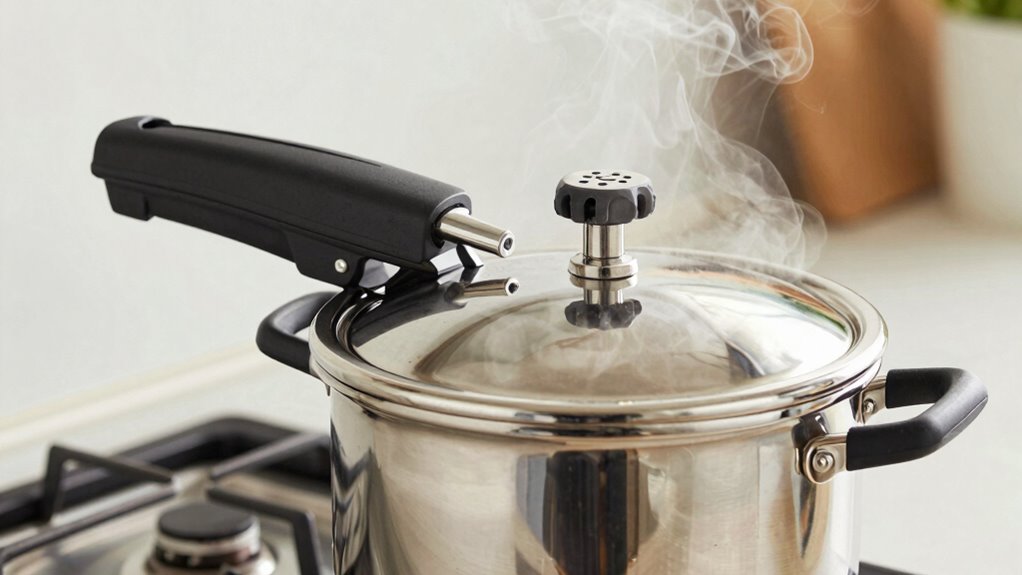
To reduce noise while cooking with a pressure cooker, start by selecting models with quieter pressure release valves and sturdy construction. This helps minimize the whistling and loud sounds during operation. You can also explore soundproofing tips, such as placing a silicone mat or towel underneath the cooker to dampen vibrations and noise. Additionally, consider using alternative cooking methods like slow cookers or stovetop simmering when noise is a concern, especially for delicate dishes. Proper maintenance of the pressure valve and ensuring a snug lid fit also helps reduce unnecessary noise while maintaining efficient cooking. Combining these strategies allows you to enjoy quieter cooking sessions without sacrificing safety or meal quality.
Troubleshooting Unusual Whistling or Noises in Your Pressure Cooker
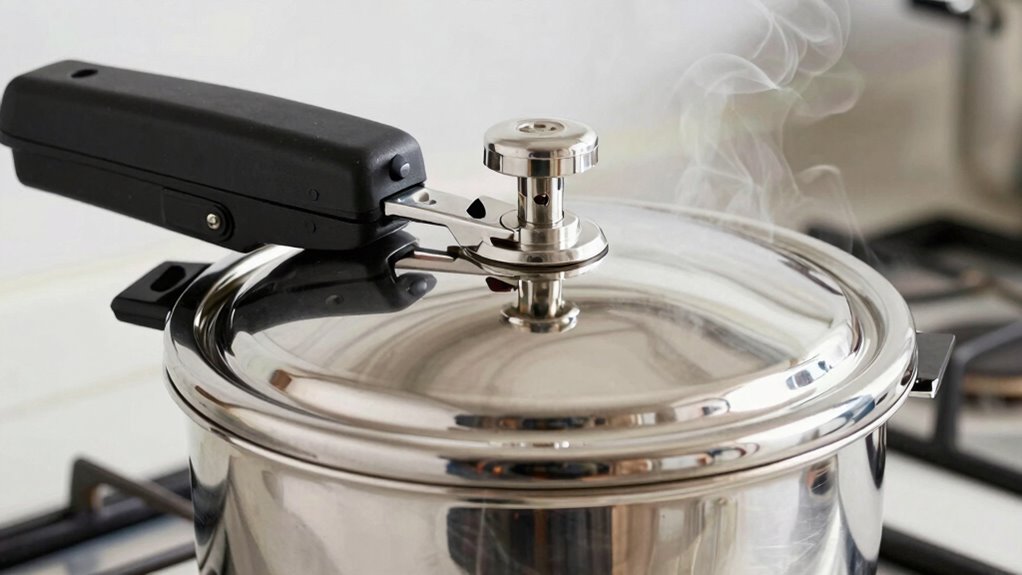
Unusual noises or unexpected whistling from your pressure cooker can signal a problem that needs attention. First, check if the pressure release valve is clogged or not sealing properly, as this can cause excess noise. Second, guarantee your lid is sealed tightly; a loose lid may lead to irregular whistling and noise. Third, inspect the gasket for damage or debris, since a faulty gasket affects pressure control and noise levels. To troubleshoot, clean or replace the pressure release valve and gasket if needed. Proper pressure regulation helps reduce unnecessary noise and ensures safe operation. By addressing these issues, you’ll improve noise reduction and maintain ideal pressure, preventing loud whistling or strange sounds during cooking.
Frequently Asked Questions
Can a Damaged Gasket Cause Increased Whistling Noise?
Yes, a damaged gasket can cause increased whistling noise. Gasket deterioration leads to sealing issues, allowing steam to escape unevenly. This steam escape creates extra pressure and noise, making your pressure cooker whistle more than usual. Check your gasket regularly for cracks, warping, or other damage. Replacing a worn gasket will restore proper sealing, reduce whistling, and ensure safe, efficient cooking.
Does the Type of Food Affect Pressure Cooker Whistles?
Yes, the type of food affects how your pressure cooker whistles. Foods with different textures, like tender vegetables versus dense meats, influence cooking duration, which in turn impacts the pressure release and whistling. Softer foods cook faster, leading to fewer whistles, while tougher foods require longer cooking, possibly causing more frequent whistles. Pay attention to these factors to maintain proper pressure and avoid over- or undercooking.
How Often Should I Inspect the Pressure Release Valve?
Think of your pressure cooker’s valve like a vigilant guard at the gate. You should inspect the pressure release valve at least once a month to make certain it’s clean and functioning properly. Regular valve inspection helps prevent buildup or blockages that can cause excessive whistling or safety issues. If you notice any damage or irregularities, replace the valve immediately. Staying vigilant keeps your cooker safe and efficient during every use.
Can Using Different Lid Positions Change the Whistle Sound?
Yes, changing lid positions can affect the whistle sound. When you adjust the lid, it modifies the pressure and the way steam escapes, leading to whistle variations. For example, a tighter lid may produce a sharper, louder whistle, while a looser one results in a softer sound. Always guarantee the lid is properly aligned and secure to maintain consistent pressure and avoid excessive whistling or safety issues.
Is It Normal for Whistles to Change During Cooking?
Yes, it’s normal for whistles to change during cooking. As pressure builds up, the sound consistency can vary because the pressure inside the cooker fluctuates slightly. You might notice a louder or softer whistle at different stages, which indicates changes in pressure levels. These variations are normal and show your pressure cooker is working properly. Just make certain the lid stays securely in place and the pressure valve functions correctly for safe cooking.
Conclusion
Understanding why your pressure cooker whistles helps you make certain safe and efficient cooking. By recognizing the sounds and patterns, you can troubleshoot issues and maintain your appliance properly. Remember, a little noise isn’t always a problem—sometimes it’s just how your cooker communicates. So, next time it whistles, ask yourself: are you listening carefully enough to catch the message it’s trying to send? After all, paying attention keeps your cooking safe and enjoyable.