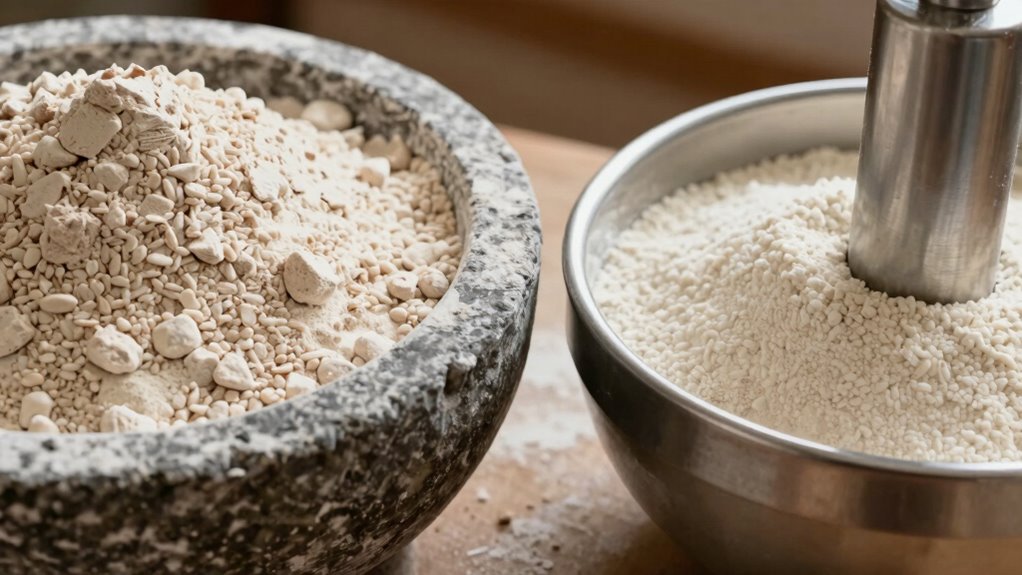

Stone milling produces coarser flour with a richer flavor, retains more nutrients and natural oils, and preserves enzymes and antioxidants because it operates at lower temperatures. Steel milling yields finer, milder flour with a longer shelf life but can cause some nutrient loss due to heat exposure. The choice impacts taste, texture, nutrition, and production efficiency. To understand which method best suits your needs, you’ll find detailed insights that can help guide your decision.
Key Takeaways
- Stone milling produces coarser, uneven flour with richer flavor and natural grit, while steel milling results in finer, smoother flour.
- The lower processing temperatures of stone milling preserve more nutrients, enzymes, and antioxidants compared to steel milling.
- Flour from stone milling tends to have a coarser texture and stronger flavor, whereas steel-milled flour is milder and more uniform.
- Stone milling often shortens shelf life due to higher oil retention, while steel-milled flour generally lasts longer.
- Steel milling offers faster, more efficient production with less maintenance, whereas stone milling is slower but preserves more grain quality.

Natural Stone Grain Mill, Manual Granite stone grinder with Wooden Base & Heavy-Duty Handle, Stone Mill for Flour for Grain & Spice Grinding, stone flour mill grinder for Home Kitchen
Natural Granite Stone: Made from solid natural granite, this stone grain mill offers long-lasting use and strong wear…
As an affiliate, we earn on qualifying purchases.
As an affiliate, we earn on qualifying purchases.
How Do Stone Mills and Steel Mills Differ in Their Grinding Methods?

Stone mills and steel mills differ primarily in how they grind grains. With stone mills, you control the milling speed by adjusting the pressure and movement of the stones, which allows for a gentle, slower process. This slower milling helps preserve the integrity of certain grains, making the flour more flavorful and nutritious. In contrast, steel mills operate at much higher speeds, grinding grains quickly and efficiently. The milling speed in steel mills results in a finer, more uniform flour but can generate heat, which might affect some nutrients. Grain selection plays a key role in each method; softer grains respond well to the gentle stone milling, while steel mills handle a wider variety of grains rapidly. Your choice depends on the texture, flavor, and nutrient profile you want, and understanding milling techniques can help you choose the best method for your needs. Additionally, energy efficiency is a significant factor to consider, as stone milling generally consumes less power and aligns better with sustainable practices. Recognizing the impact on nutrients can guide you toward a method that preserves the health benefits of whole grains. Furthermore, the cost of equipment can vary considerably between the two methods, influencing your long-term investment in flour production. It is also worth noting that the maintenance requirements for each type of mill differ, affecting overall durability and operational costs.
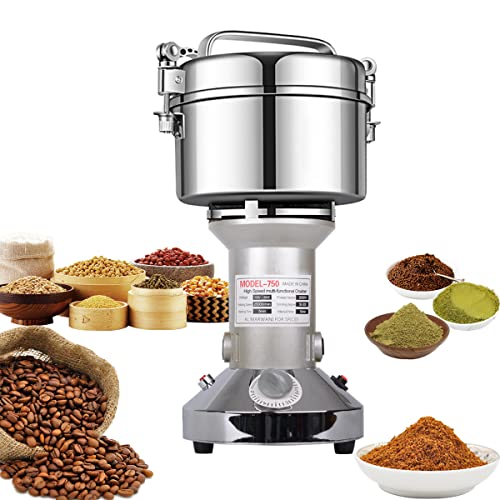
Grain Mill Grinder 750g High Speed Electric Stainless Steel Grinder Cereals Corn Flour Pulverizer Powder Machine for Dry Spice Herbs Grains Coffee Rice Pepper
✅ MIXER GRINDER : Power:2000W ; Capacity:750g; Interval Time:5-10 min;Rotating Speed: 25000R/Min,Triples blade: grinding blade, rotary blade, and…
As an affiliate, we earn on qualifying purchases.
As an affiliate, we earn on qualifying purchases.
Which Minerals and Nutrients Are Preserved in Each Milling Technique?
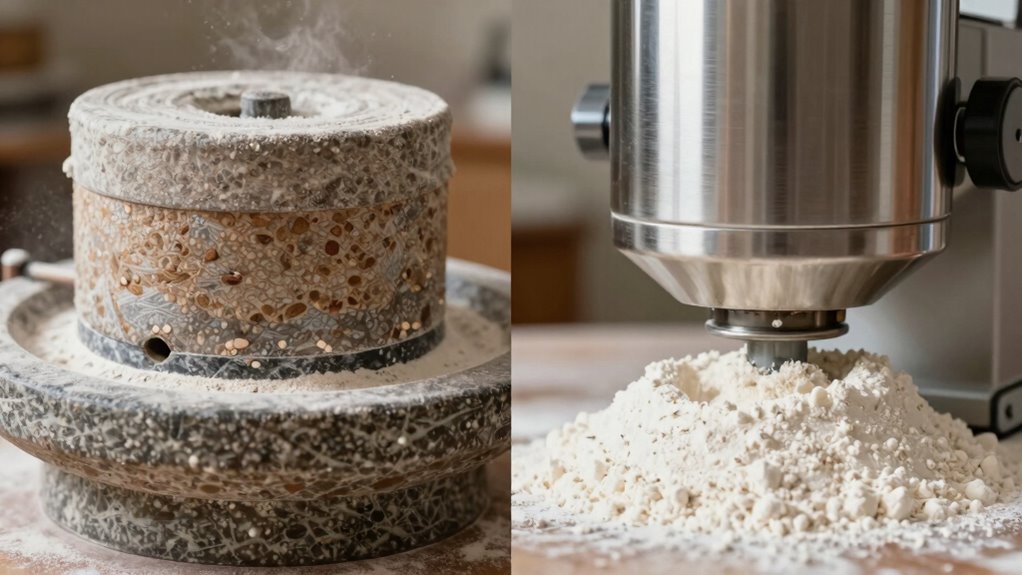
The milling technique you choose considerably influences which minerals and nutrients are retained in the final product. Stone milling tends to preserve more minerals and nutrients because it operates at lower temperatures and involves less processing, maintaining the integrity of the grain’s natural components. As a result, flour from stone mills typically has higher minerals retention and better nutrient preservation. In fact, sound vibrations generated during stone milling can help preserve delicate nutrients by minimizing heat exposure. In contrast, steel milling often generates more heat and produces finer flour, which can lead to some nutrient loss, especially of sensitive vitamins. While both methods retain essential minerals like magnesium, zinc, and iron, stone milling generally offers a more nutrient-rich flour. Your choice of milling impacts the overall nutritional quality, making stone milling preferable if nutrient preservation is a priority. Additionally, understanding the milling process can help ensure the retention of maximum nutrients in your flour. Recognizing processing temperatures and their effect on nutrient stability is crucial for selecting the best milling method for your dietary needs. Moreover, grain preservation techniques play a vital role in maintaining nutrient content throughout the milling process.

NutriMill Impact Compact High Speed Electric Grain Mill for Fresh Flour Wheat Grinder with Stainless Steel Milling Heads
1200-Watt Motor: Provides the power necessary to mill hard grains like wheat, delivering the perfect texture for bread…
As an affiliate, we earn on qualifying purchases.
As an affiliate, we earn on qualifying purchases.
How Does Milling Affect Flour Texture and Flavor?
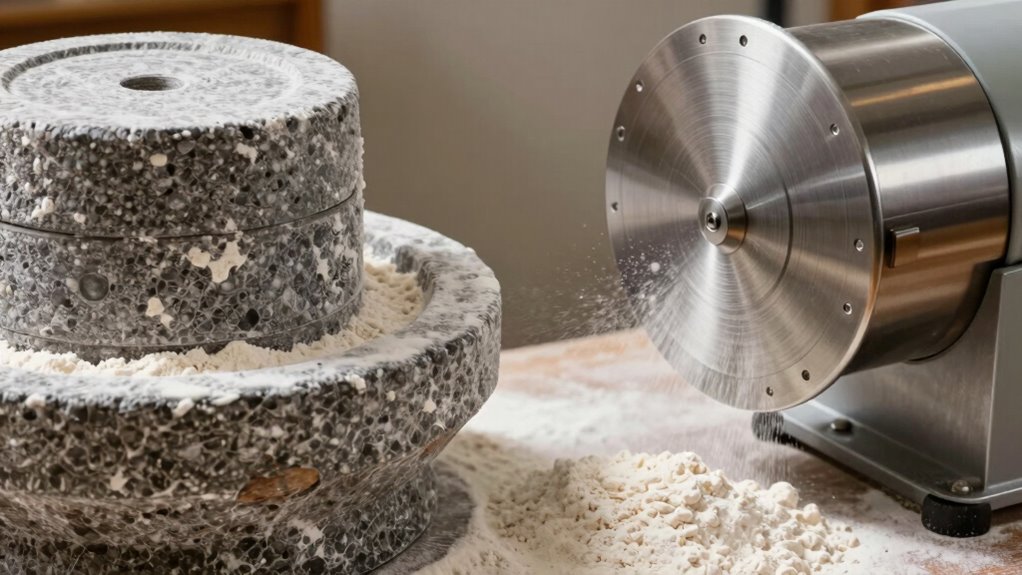
Milling methods directly influence the texture and flavor of flour, shaping how it feels and tastes in your baked goods. Stone milling produces larger, uneven grain particles, giving flour a coarser texture and a more complex flavor profile. This process preserves more of the grain’s natural oils and nutrients, resulting in a richer taste. Steel milling, on the other hand, creates finer, uniform particles, leading to a smoother texture and a milder flavor. The smaller grain particles in steel-milled flour often result in a lighter crumb in baked products. Your choice of milling impacts the overall sensory experience—stone-milled flour offers rustic, robust flavors, while steel-milled flour provides a cleaner, more neutral taste. Additionally, milling techniques play a crucial role in determining the preservation of nutrients and oils within the flour. The grain size produced by each method also influences how quickly the flour absorbs liquids during baking, affecting dough consistency and final texture. Furthermore, nutrient retention varies significantly between the two methods, impacting the nutritional value of the flour. A deeper understanding of milling processes can help bakers select the best flour for their specific needs.
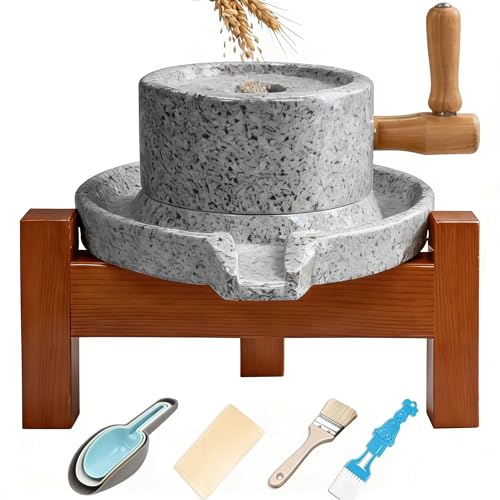
Handmade Stone Grain Mill – Manual Flour Mill & Grinder with Red Oak Frame for Home, Grinds Wheat, Nuts, Spices (Complete Kit)
HOUSEHOLD STONE MILL – Experience true slow grinding with our handmade stone mill. The polished red oak frame…
As an affiliate, we earn on qualifying purchases.
As an affiliate, we earn on qualifying purchases.
How Does Milling Impact Flour Freshness and Shelf Life?
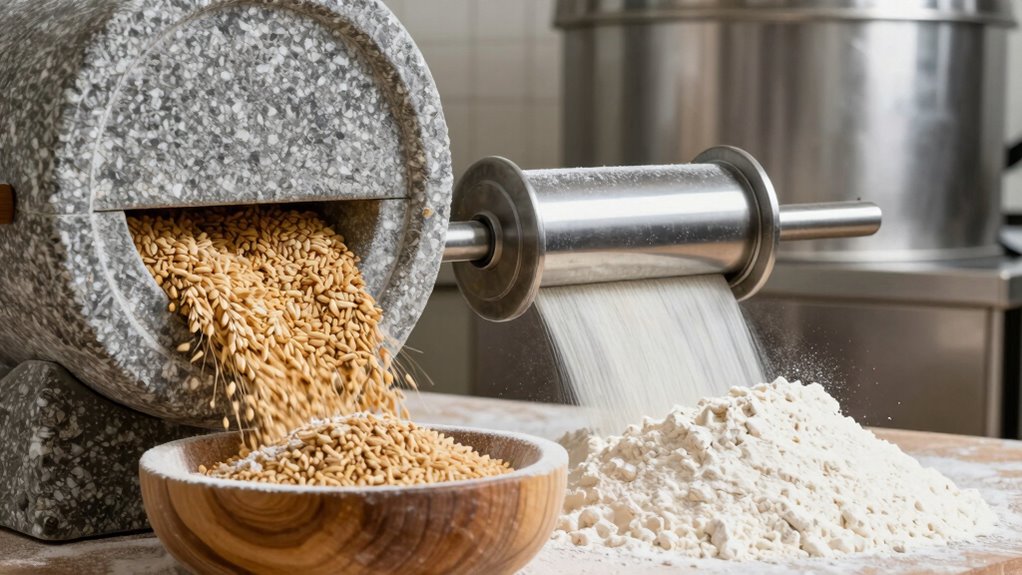
Because milling methods influence how quickly flour loses its freshness, understanding their impact is essential for maintaining quality. Stone milling typically produces flour with higher antioxidants, helping it stay fresh longer, whereas steel milling may generate slightly more heat and oxidation, reducing shelf life. Proper grain storage is crucial regardless of the method, as exposure to moisture or air accelerates spoilage. Additionally, milling noise can provide clues about the process; stone mills tend to be quieter, preserving flour integrity, while steel mills can be noisier, indicating more mechanical stress. This mechanical activity can affect the flour’s exposure to oxygen and heat, impacting freshness. Milling efficiency also plays a role in how well flour retains its quality over time. Furthermore, grain cooling techniques during milling can help mitigate heat generation and preserve flour freshness. Implementing proper storage methods is vital for extending shelf life. Technological advancements in milling equipment continue to improve process control and flour stability. Overall, choosing the right milling method and managing storage conditions are key to extending flour’s shelf life and maintaining its quality, especially considering the oxidation process that occurs during milling and storage.
Which Method Is Better for Producing Whole Grain Flour?

When choosing a method for whole grain flour, you should consider how each preserves nutrients and affects flavor. Stone milling often retains more of the grain’s natural oils and nutrients, enhancing nutritional value. Meanwhile, steel milling can produce a finer texture, influencing the flour’s taste and baking qualities. Additionally, understanding the topical authority of each method can help ensure you select the most suitable process for your needs. The choice of milling method also impacts the flour’s shelf life, with stone-milled flour typically having a shorter freshness window due to higher oil content. Considering the milling process, some methods may require more maintenance and have different energy efficiencies, which can be important factors for production at scale. Advances in AI-powered machinery are also beginning to influence milling efficiency and consistency in modern facilities.
Nutritional Preservation Benefits
Choosing the right milling method can considerably impact the nutritional quality of whole grain flour. Stone milling tends to preserve more nutrients because it generates less heat, maintaining enzyme activity and supporting grain germination processes that boost nutrient retention. Steel milling, however, often produces higher temperatures, which can degrade sensitive nutrients and diminish enzyme activity. To understand this better, consider the table below:
| Milling Method | Nutritional Impact | Preservation of Enzymes |
|---|---|---|
| Stone Milling | Higher retention | Better preservation |
| Steel Milling | Slight nutrient loss | Reduced enzyme activity |
| Grain Germination | Enhances nutrients | Encourages enzyme activity |
In essence, stone milling better preserves nutrients linked to grain germination and enzyme activity, making it superior for nutrient retention in whole grain flour.
Texture and Flavor Impact
Stone milling typically produces a coarser, more textured flour that retains the natural grit and hearty mouthfeel of whole grains, making it ideal for those seeking a rustic or artisanal product. The grain particle size remains larger, contributing to a richer flavor profile. In contrast, steel milling creates finer flour with a smoother texture, often altering the flavor slightly due to increased heat.
Consider these points:
- Stone milling preserves the natural grain particle structure, enhancing flavor complexity.
- Lower milling temperatures help maintain the flour’s original taste and texture.
- Steel milling’s higher temperatures can produce a more uniform, less flavorful flour.
Ultimately, stone milling tends to deliver a more pronounced texture and flavor, ideal for rustic baking.
What Are the Pros and Cons of Stone Milling Versus Steel Milling?
When comparing stone and steel milling, you’ll want to contemplate how each method affects nutritional preservation, efficiency, and cost. Stone milling often retains more nutrients but can be slower and more expensive, while steel milling is faster and more cost-effective but may impact nutrient levels. Understanding these trade-offs helps you choose the best method for your needs.
Nutritional Preservation Benefits
Different milling methods impact the preservation of nutrients in your grains, with stone and steel milling each offering distinct advantages and drawbacks. Stone milling generally retains more of the grain’s original nutrients, leading to better antioxidant retention and phytochemical preservation. Steel milling, on the other hand, often produces a finer flour but may result in some nutrient loss due to heat generated during processing. To visualize the differences:
- Stone milling preserves more antioxidants, maintaining the grain’s natural defenses.
- Phytochemicals stay intact longer in stone-milled flour, boosting nutritional value.
- Steel milling can cause slight nutrient degradation from heat exposure, reducing overall nutritional benefits.
Milling Efficiency and Cost
While steel milling generally offers faster processing times and higher throughput, stone milling tends to be more labor-intensive and slower, which can increase production costs. Steel mills produce a consistent grain size, leading to efficient processing and less energy consumption per batch. In contrast, stone milling often results in a less uniform grain size, requiring more effort to achieve the desired flour quality. The energy used in steel milling is typically lower due to mechanized equipment designed for high-speed operation. However, stone milling’s slower pace and manual processes can lead to higher labor costs, despite potentially lower initial equipment expenses. Overall, steel milling is more cost-effective for large-scale production, while stone milling may appeal to artisanal producers prioritizing quality over efficiency.
How Do Cost, Maintenance, and Equipment Longevity Compare?
Steel milling equipment typically has higher upfront costs but tends to require less frequent repairs, which can lower maintenance expenses over time. When considering the cost comparison, steel mills often have higher initial investments but benefit from reduced maintenance requirements. Over the long term, this can result in lower total ownership costs.
Steel milling equipment has higher initial costs but often results in lower maintenance expenses over time.
To illustrate:
- Steel mills usually need fewer parts replaced, reducing downtime and repair costs.
- They often require less frequent lubrication and adjustments.
- Maintenance tasks are generally quicker and less specialized, saving labor costs.
In contrast, stone mills tend to have lower initial costs but involve more frequent repairs and adjustments. This ongoing maintenance can increase expenses and affect equipment longevity.
Which Milling Technique Is Best for Artisanal and Small-Scale Baking?
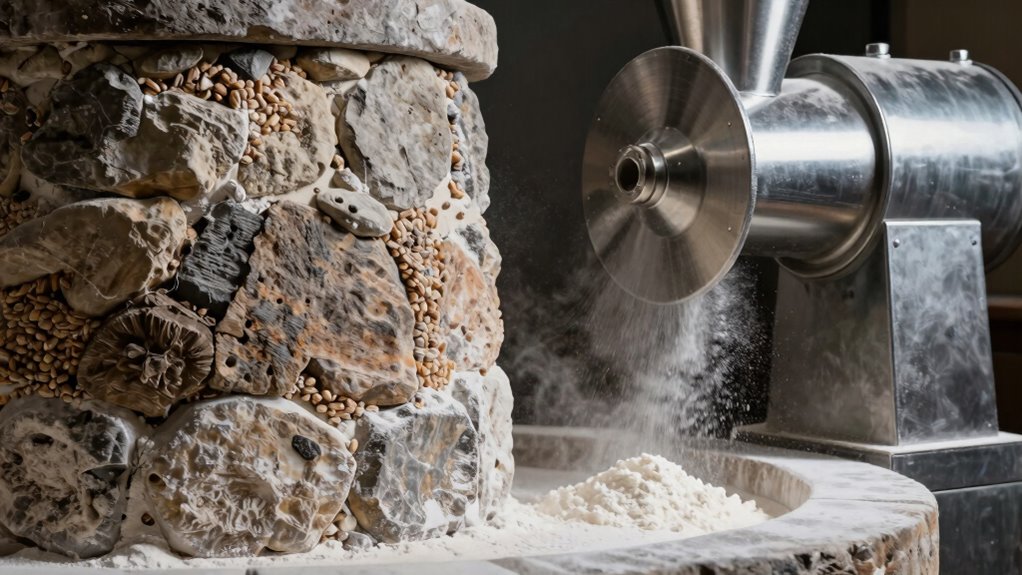
For small-scale and artisanal bakers, choosing the right milling technique can considerably impact the quality and character of their baked goods. Stone milling often offers a slower milling speed, allowing for a gentler process that preserves the grain’s natural texture and nutrients. This results in flour with a coarser grain texture, ideal for traditional, rustic bread. Steel milling, on the other hand, is faster and more efficient but can produce a finer, more uniform flour. If you prioritize preserving the grain’s natural qualities and enjoy a more hands-on approach, stone milling suits your needs. However, if you require higher milling speeds to keep up with demand, steel milling could be more suitable. Ultimately, your choice depends on your baking style and desired flour characteristics.
Key Factors to Consider When Choosing a Flour Milling Method
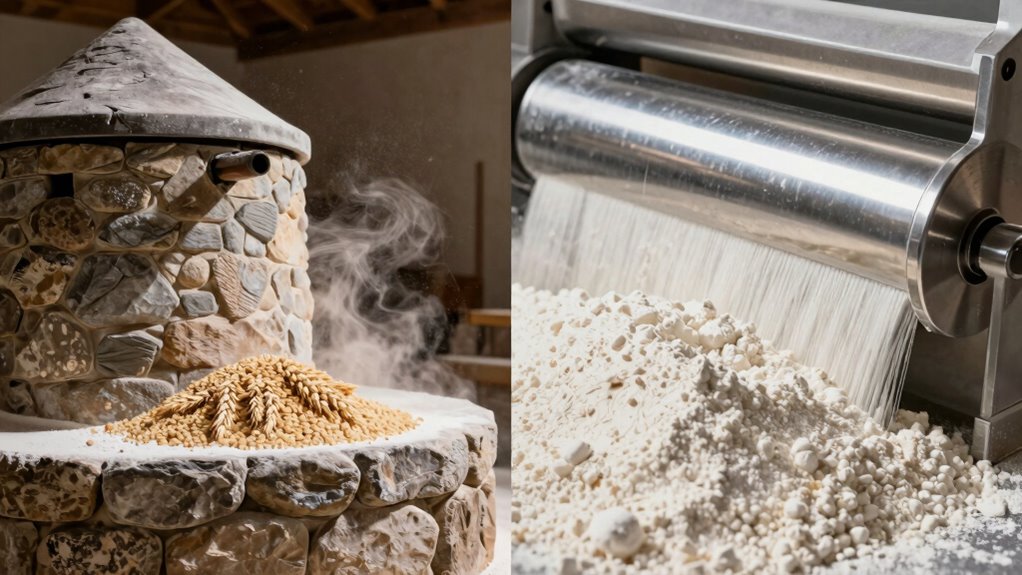
When selecting a flour milling method, you need to evaluate several key factors to guarantee it aligns with your baking goals and operational needs. First, consider the grain variety; some grains respond better to stone milling, preserving nutrients and flavor, while others work well with steel milling for finer textures. Second, examine your available milling equipment—stone mills are typically slower but gentler, ideal for artisanal flour, whereas steel mills offer higher efficiency for larger-scale production. Third, think about your desired flour characteristics, such as grind size and consistency, which directly impact baking results. By analyzing these factors, you can choose the most suitable method that balances your flour quality with your production capacity.
Final Thoughts: Picking the Right Milling Method for Your Needs
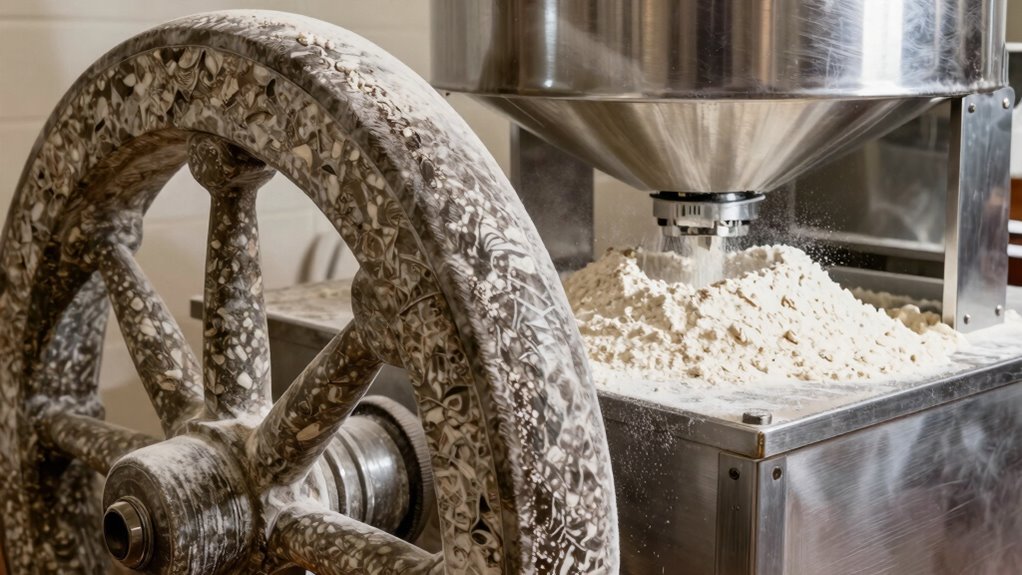
Choosing the right milling method depends on your specific goals and operational needs. If you prioritize a finer, consistent grain size, steel milling might be your best choice due to its ability to produce uniform flour efficiently. However, consider energy consumption, as stone milling often requires more energy but can preserve certain nutrients and flavors. Think about your production scale—large operations may favor steel mills for speed and consistency, while small or artisanal producers might prefer stone milling for its traditional qualities. Ultimately, weigh your priorities: do you need maximum efficiency or a specific grain texture? By understanding how grain size and energy consumption impact your process, you can select the milling method that best aligns with your desired flour quality and business goals.
Frequently Asked Questions
How Does Milling Temperature Affect Flour Quality?
Milling temperature directly impacts flour quality because higher temperatures can cause protein denaturation and starch damage, resulting in weaker gluten structure and lower nutritional value. You’ll notice that controlling milling temperature preserves enzyme activity and retains more nutrients, leading to better dough handling and enhanced flavor. Keep the temperature low during milling to maintain ideal flour quality, ensuring your baked goods turn out light, airy, and full of flavor.
Can Stone and Steel Mills Produce Gluten-Free Flour?
Yes, you can produce gluten-free flour with both stone and steel mills. These ancient techniques, combined with modern technology, allow you to mill grains like rice, corn, or sorghum that naturally lack gluten. By choosing the right grains and equipment, you guarantee the flour remains gluten-free, providing options for those with sensitivities. Whether stone or steel, your mill can adapt to meet gluten-free needs, blending tradition with innovation.
What Impact Does Milling Speed Have on Flour Nutrition?
Milling speed directly impacts flour nutrition by affecting nutrient preservation. When you increase milling speed, heat and friction rise, which can break down heat-sensitive nutrients like vitamins and antioxidants, reducing overall flour nutrition. Slower milling preserves more nutrients by minimizing heat buildup. So, if you want more nutritious flour, choosing a slower milling process helps retain essential vitamins, minerals, and antioxidants, ensuring you get better health benefits from your flour.
Are There Environmental Differences Between Stone and Steel Milling?
Think of stone and steel milling as two artists with different brushes. Stone milling often uses less energy, making it gentler on the environment, while steel milling might consume more energy but is more efficient. Noise pollution varies too—stone mills can be louder, disrupting nearby areas. Your choice impacts not just flour but the planet’s health, reflecting how technology shapes our world.
How Do Milling Methods Influence Allergen Cross-Contamination?
You should know that milling methods considerably influence allergen cross-contamination. Stone milling often preserves grain purity, reducing contamination risks because it’s a more gentle process. Steel milling, on the other hand, involves machinery that might introduce allergens from previous runs or other grains. To minimize cross-contamination, make certain your mill maintains strict cleaning protocols and uses dedicated equipment, especially if you’re dealing with allergen-sensitive products.
Conclusion
Choosing between stone and steel milling is like picking the right brush for a masterpiece—you want what best brings out your flour’s true character. Consider your priorities: flavor, nutrition, cost, or tradition. Both methods have their charm, but the right choice depends on your baking dreams. Whichever route you take, remember that your flour is the foundation of your craft—so choose wisely and let your baking flourish like a well-tuned orchestra.