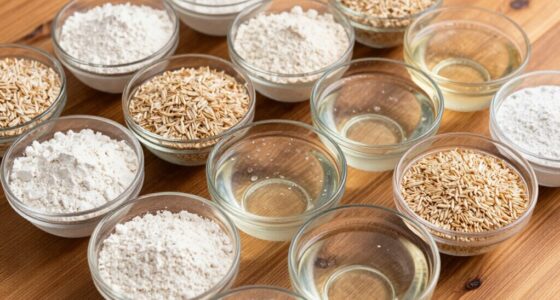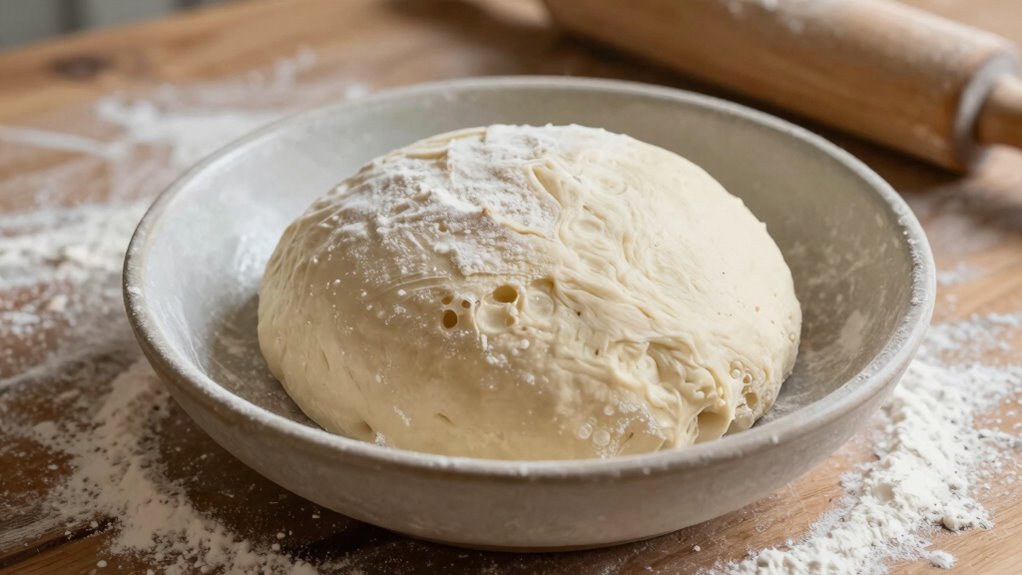

Rushing bread dough isn’t about muscle — it’s about giving it enough time for fermentation to develop flavor and structure. Proper resting and proofing allow yeast to produce gases, gluten to relax and strengthen, and flavors to blossom. Pushing for quick results often leads to dense, bland bread. Patience guarantees the dough’s full potential is reached. Keep going to discover how taking your time can transform your baking results into something truly special.

Get kitchen staples and gadgets delivered free — and shop member deals
- Fast, free delivery on millions of items
- Access to Prime Big Deal Days deals on October 6–7
- Prime Video, Amazon Music and more included
Key Takeaways
- Fermentation develops flavor compounds and enhances dough complexity beyond mere physical effort.
- Proper gluten development occurs during resting and proofing, requiring time for optimal structure.
- Yeast activity needs time to produce enough carbon dioxide for a good rise, which muscle alone can’t achieve quickly.
- Resting allows gluten networks to relax and strengthen, improving dough elasticity and final bread texture.
- Rushing the process can result in dense, flavorless bread, while patience ensures airy, flavorful loaves.
As an affiliate, we earn on qualifying purchases.
Why Rushing Your Bread Hurts More Than It Helps
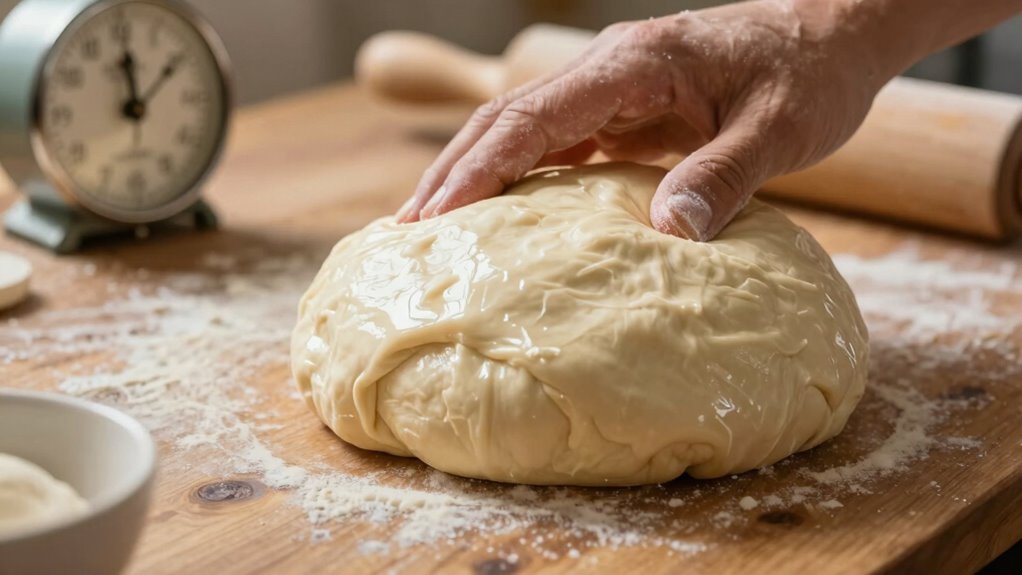
Have you ever rushed your bread dough only to end up with a dense or uneven loaf? Quick fixes might seem tempting, like cranking up the oven or skipping resting periods, in pursuit of sudden success. However, rushing the process often backfires. Bread dough needs time for fermentation and proper proofing to develop flavor and structure. When you hurry, you miss out on critical gluten development and gas expansion, which results in a heavy, dense crumb. Proper fermentation allows yeast to produce flavor compounds and build the gluten network, essential for ideal texture. Additionally, patience during proofing allows for the development of gas retention, which is vital for a light and airy loaf. Developing gluten structure through adequate resting times is key to achieving the desired loaf quality. Patience also enhances dough strength, making it easier to shape and handle. While it’s tempting to cut corners for immediate results, patience truly pays off in bread baking. Giving your dough adequate time guarantees a lighter, more flavorful loaf. Remember, good bread isn’t about shortcuts; it’s about respecting the natural processes that create perfect texture and taste.
As an affiliate, we earn on qualifying purchases.
Busting Myths About Kneading and Fermentation
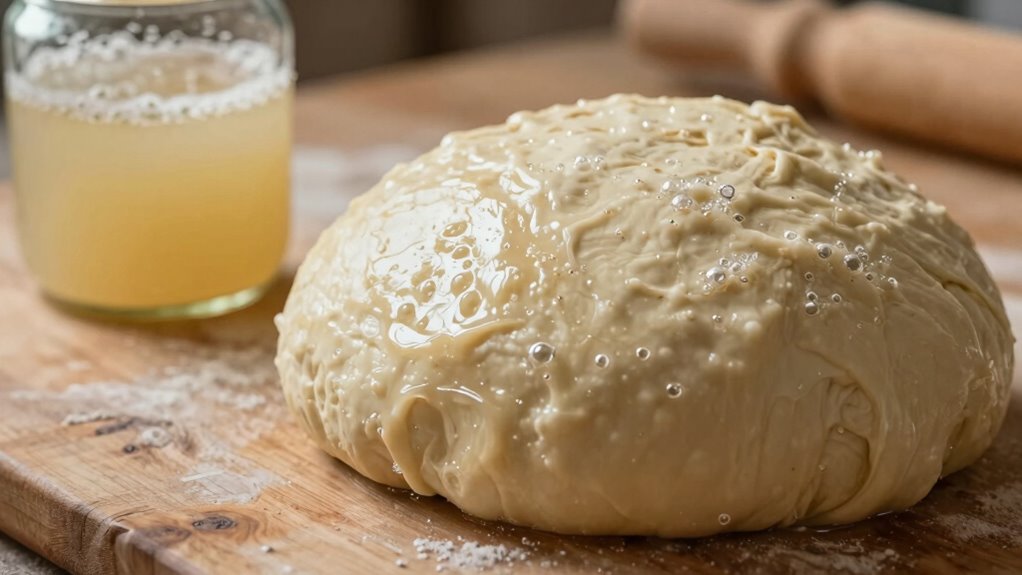
Many common beliefs about kneading and fermentation aren’t backed by science, and following them can hinder your bread’s quality. For example, some kneading myths suggest you must knead vigorously for a long time, but gentle, proper kneading often achieves the same gluten development. Additionally, many think fermentation must happen quickly to produce good bread, but fermentation facts show that longer, slower rises develop better flavor and texture. Rushing these processes can result in dense bread or bland taste. Understanding these myths and facts helps you trust in the natural processes, allowing your dough to develop fully. Patience with fermentation and gentle kneading are key. Proper fermentation, which involves allowing the dough to rise slowly over time, is essential for developing complex flavors. This slow fermentation also promotes yeast activity, leading to better gas production and dough structure. It is also important to note that temperature control plays a critical role in fermentation success. It’s important to recognize that timing and temperature significantly influence fermentation outcomes. Once you know the truth, you can improve your bread without unnecessary effort or confusion. Embracing the importance of authenticity in process ensures a better final product and a more satisfying baking experience.
As an affiliate, we earn on qualifying purchases.
The Science Behind Yeast Fermentation and Gluten Development

Understanding how yeast fermentation and gluten development work together is essential for making great bread. Yeast produces carbon dioxide through enzyme activity, which causes the dough to rise. As fermentation progresses, enzymes break down starches into simpler sugars, fueling yeast activity. Meanwhile, gluten development forms a strong gluten network that traps the gas bubbles, giving bread its structure. Here’s what you should know:
Yeast fermentation and gluten development work together to create light, structured bread.
- Enzyme activity transforms starches into sugars, feeding yeast.
- Yeast fermentation releases carbon dioxide, leavening the dough.
- Gluten proteins cross-link, creating a resilient gluten network.
- Proper timing allows gluten to develop fully, improving texture and rise.
- Young tennis prodigies and other talents demonstrate the importance of patience and timing in skill development.
- The development of a strong gluten network is crucial for achieving the ideal bread texture and ensuring the dough can hold the gases produced during fermentation. Additionally, understanding the science of fermentation can help bakers optimize proofing times for the best results. Recognizing the role of enzyme activity in breaking down starches can also improve fermentation efficiency and bread quality.
- Allowing enough fermentation time ensures that flavors develop and gluten structures are properly formed, leading to a better overall loaf.
Balancing fermentation time and gluten formation is key to achieving the perfect bread.
As an affiliate, we earn on qualifying purchases.
How to Rest and Proof Your Dough for Perfect Bread

Resting and proofing your dough are essential steps that allow fermentation to develop flavor and structure. During this time, the dough’s elasticity improves, making it easier to shape and achieving a better crumb. Proper fermentation timing guarantees the yeast produces enough carbon dioxide to give your bread rise and airy texture. To rest your dough, cover it with a damp cloth or plastic wrap, preventing it from drying out, and let it sit in a warm, draft-free spot. Proofing should be done until the dough has doubled in size and feels soft yet resilient. This process allows the gluten network to relax and strengthen, resulting in a well-structured loaf. Patience during this stage is key to revealing the full potential of your bread’s texture and flavor, as temperature control plays a crucial role in fermentation efficiency. Additionally, understanding the science behind fermentation can help you optimize your timing and achieve consistent results. Maintaining the proper fermentation environment ensures your dough develops optimal flavor and texture, and paying attention to yeast activity can help you determine the perfect proofing time.
Tips to Balance Patience and Practice for Delicious Results

Balancing patience and practice is key to consistently making delicious bread. To improve, try these tips:
- Experiment with ingredient substitution carefully—small changes can enhance flavor without disrupting fermentation.
- Adjust oven temperature gradually; higher heat can create a crust, but too hot might burn the bread.
- Keep a baking journal to track what works best, noting proofing times and oven settings.
- Practice patience with rising times; rushing the process can result in dense loaves.
- Incorporate fermentation techniques by researching and applying specific methods proven to improve bread quality.
- Remember that understanding creative storytelling can inspire new bread recipes or presentation ideas, elevating your baking experience.
- Be aware that cleaning and maintenance of your kitchen equipment, including appliances like electric road sweepers, often require regular attention, which can influence the cleanliness of your kitchen environment, indirectly affecting your baking results.
Frequently Asked Questions
How Does Temperature Affect Dough Fermentation Time?
Temperature greatly impacts dough fermentation time because it influences yeast activity. When fermentation temperature is warm, yeast becomes more active, speeding up fermentation and reducing rising time. Conversely, cooler temperatures slow yeast activity, extending fermentation. You should keep the dough at an ideal temperature to balance fermentation speed and flavor development, ensuring the yeast activity is just right for perfect dough rise without overproofing.
Can Over-Proofing Ruin My Bread?
Yes, over-proofing can ruin your bread. When you over-proof, yeast activity continues too long, causing the dough to over-expand and weaken gluten development. This results in a bread with poor structure, a dense interior, and a flat crumb. You might also notice a sour or off flavor. To prevent this, keep an eye on the dough’s size and avoid letting it double in size for too long.
What Signs Indicate My Dough Has Fermented Enough?
To know your dough has fermented enough, look for clear fermentation indicators like a noticeable rise and a bubbly surface. The dough should feel airy and slightly tacky, with a gentle spring when pressed. These signs indicate dough readiness, meaning it’s properly fermented and ready for the next step. Trust your senses—smell and touch are your best guides to guarantee perfect fermentation without overdoing it.
Does Using Different Flours Change Resting Times?
Yes, using different flours changes resting times because of varying gluten development and hydration levels. Whole grain or high-protein flours often require longer resting to fully hydrate and develop gluten, ensuring better structure and elasticity. Conversely, lighter flours like cake or pastry flour need less time. Adjust your resting periods based on flour type, and watch for signs of proper gluten development, such as smooth, elastic dough.
How Do I Know When My Dough Is Properly Proofed?
You’ll know your dough is properly proofed when it has doubled in size and feels light and airy. Gently poke it with your finger; if the indentation springs back slowly, yeast activity is just right. Proper proofing allows gluten development and yeast activity to reach their peak, ensuring a well-risen, chewy loaf. Timing varies, so keep an eye on the dough’s size and texture for perfect proofing.
Conclusion
Think of your bread dough like a garden that needs time to bloom. Rushing the process is like trying to force flowers open—they might never fully blossom. When you give your dough patience, it develops strength and flavor naturally. Just like waiting for the right moment to harvest a ripe fruit, patience in bread-making rewards you with a loaf that’s airy, flavorful, and truly satisfying. Trust the process, and your bread will thank you.
NFL season / tailgating Picks
team gear
As an affiliate, we earn on qualifying purchases.