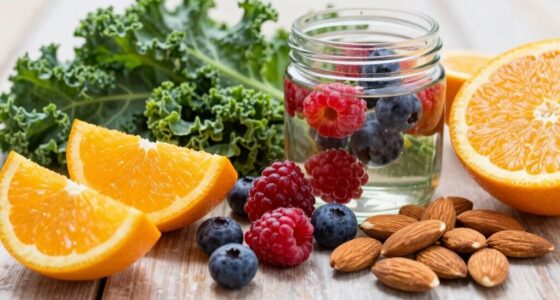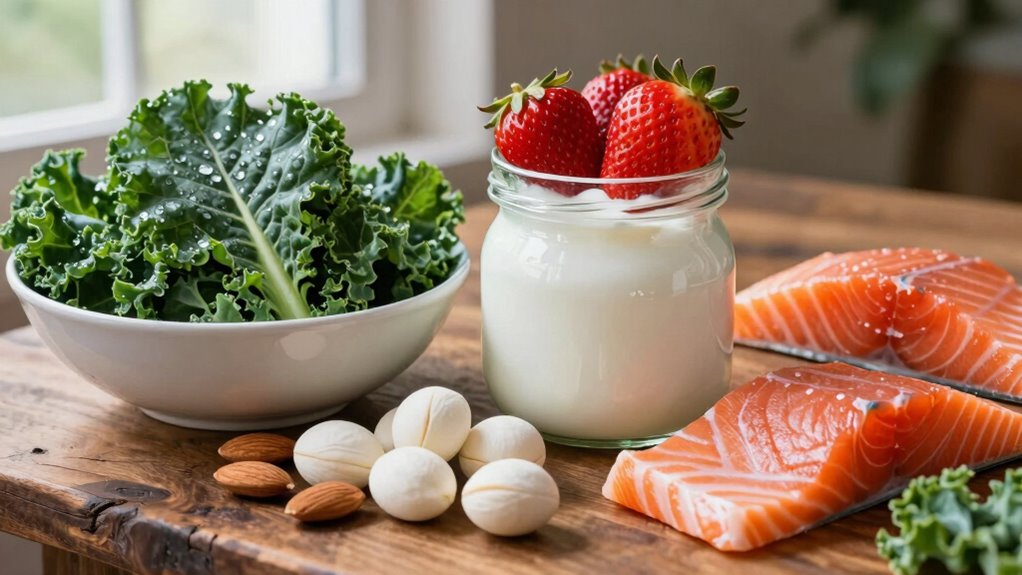

You can boost your calcium intake beyond dairy by including plant-based foods like leafy greens such as kale, collard greens, and bok choy, as well as beans, nuts, and seeds like almonds and chia seeds. Fortified plant milks and orange juice are convenient options that provide substantial calcium. Incorporating these into your diet makes it easy to meet your needs naturally, and if you stay tuned, you’ll discover even more ways to keep your bones healthy without dairy.
Key Takeaways
- Leafy greens like kale and collard greens are rich plant-based calcium sources supporting bone health.
- Fortified plant-based milks and orange juice provide calcium comparable to or exceeding dairy options.
- Beans, nuts, and seeds offer calcium along with additional nutrients and healthy fats.
- Incorporating a variety of calcium-rich foods and fortified beverages ensures adequate daily intake.
- These alternatives are ideal for those avoiding dairy or with lactose intolerance, making calcium intake more versatile.
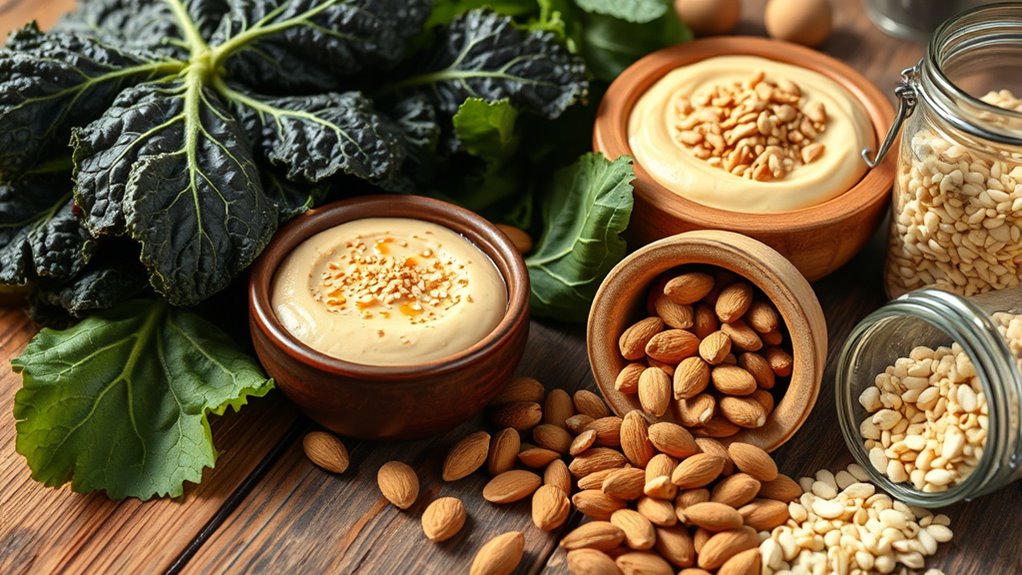
Calcium is indispensable for strong bones and overall health, but you don’t have to rely solely on dairy products to meet your needs. There are plenty of plant-based sources that can help you boost your calcium intake naturally. Leafy greens like kale, collard greens, and bok choy are excellent options. They not only provide calcium but also bring other crucial nutrients to the table, such as vitamin K and magnesium, which support bone health. Beans and lentils are another good source; for example, white beans and chickpeas contain significant amounts of calcium. Additionally, some nuts and seeds, like almonds and chia seeds, contribute to your daily calcium needs.
Fortified beverages are a convenient way to increase your calcium intake, especially if you’re not a big fan of eating leafy greens or beans. Many plant-based milks, such as almond, soy, and rice milk, are fortified with calcium to match or even surpass the levels found in cow’s milk. These drinks are widely available and can be used in cereals, smoothies, or simply enjoyed on their own. Fortified orange juice is another popular choice, offering a tasty way to boost calcium without adding extra calories or sugar. Always check labels to verify the beverage is fortified and provides a substantial amount of calcium per serving.
Incorporating these plant-based sources and fortified beverages into your diet is straightforward and versatile. You can add leafy greens to salads, blend fortified plant milks into smoothies, or snack on nuts and seeds throughout the day. Fortified beverages are particularly helpful if you have lactose intolerance or prefer to avoid dairy altogether. They’re easy to incorporate into your daily routine and can be used as a quick, reliable way to meet your calcium needs. Unplanned weather changes can sometimes create humorous moments during outdoor meals or picnics, adding a lighthearted touch to your calcium-rich eating habits.

PLANTSTRONG MILK – Whole Plant-Based Milk, Fortified with Calcium, B12 & D3, No Gums or Oils, Non-GMO Project Verified, Gluten Free, Vegan (Oat)
MILK ALTERNATIVE: Are you looking for the perfect dairy-free, plant-based milk alternative? Look no further! Our unsweetened 32oz…
As an affiliate, we earn on qualifying purchases.
As an affiliate, we earn on qualifying purchases.
Frequently Asked Questions
Can Non-Dairy Sources Provide Enough Calcium for Adults?
Yes, non-dairy sources can provide enough calcium for adults if you choose plant-based calcium-rich foods like leafy greens, fortified plant milks, and tofu. Keep in mind, absorption differences matter—some plant sources contain oxalates or phytates that hinder calcium absorption. To maximize intake, combine these foods with vitamin D-rich options and monitor your overall calcium levels, ensuring you’re meeting your daily needs without relying solely on dairy.
Are Plant-Based Calcium Sources as Effective as Dairy?
Plant-based calcium sources can be quite effective, but absorption varies. You might find that calcium bioavailability in leafy greens like kale and broccoli is higher than in some other plants. To maximize plant-based absorption, include foods rich in vitamin D and reduce oxalates that hinder calcium absorption. While dairy often has high bioavailability, diversifying your diet with well-chosen plant sources can meet your calcium needs effectively.
How Much Calcium Do I Need Daily if I Don’t Consume Dairy?
You need about 1,000 mg of calcium daily if you don’t consume dairy. To optimize calcium absorption, focus on foods with a good dietary calcium ratio, like leafy greens, fortified plant milks, and almonds. Keep in mind that high oxalate foods can hinder absorption, so balance your diet accordingly. Consuming vitamin D-rich foods or supplements also helps your body absorb calcium better from non-dairy sources.
Are Calcium Supplements Necessary if I Include These Foods?
Did you know that about 30% of calcium absorption happens from dietary sources? If you eat enough fortified foods like plant-based milks, leafy greens, and nuts, you might not need supplements. These foods can provide ample calcium, but absorption varies. So, if your diet includes diverse, calcium-rich options, supplements are likely unnecessary—just guarantee you’re meeting your daily calcium needs through your choices.
Do Cooking Methods Affect Calcium Content in Foods?
Cooking techniques can impact calcium retention in foods. For example, boiling may cause some calcium to leach into the water, reducing the calcium content in your food. Steaming or sautéing, on the other hand, help preserve more calcium. To maximize calcium intake, choose cooking methods that minimize nutrient loss, like steaming, and avoid overcooking. This way, you guarantee you’re getting the most calcium from your meals.

Cal Organic Organic Collard Greens, 1 EA
As an affiliate, we earn on qualifying purchases.
As an affiliate, we earn on qualifying purchases.
Conclusion
So, next time you think calcium only lives in dairy, remember the hidden treasures waiting in your pantry—leafy greens, nuts, and seeds. Imagine your calcium intake as a vibrant garden, flourishing with variety and color. By exploring these foods, you’re planting seeds of strength and resilience, building a sturdy foundation that supports your bones like a fortress. Embrace these delicious options and watch your health blossom into a thriving, unstoppable force.

Yupik Organic Black Chia Seeds, 2.2 lb (35.2 oz), Gluten-Free, GMO-Free, Kosher, Vegan, Raw Plant-Based Superfood, Rich in Fiber, Source of Omega-3, Gels Easily, Perfect for Smoothies & Chia Pudding
Organic black chia seeds
As an affiliate, we earn on qualifying purchases.
As an affiliate, we earn on qualifying purchases.

Simply Orange Juice with Calcium Bottle, 46 fl oz
Pure-squeezed and pasteurized — We never use concentrated orange juice
As an affiliate, we earn on qualifying purchases.
As an affiliate, we earn on qualifying purchases.