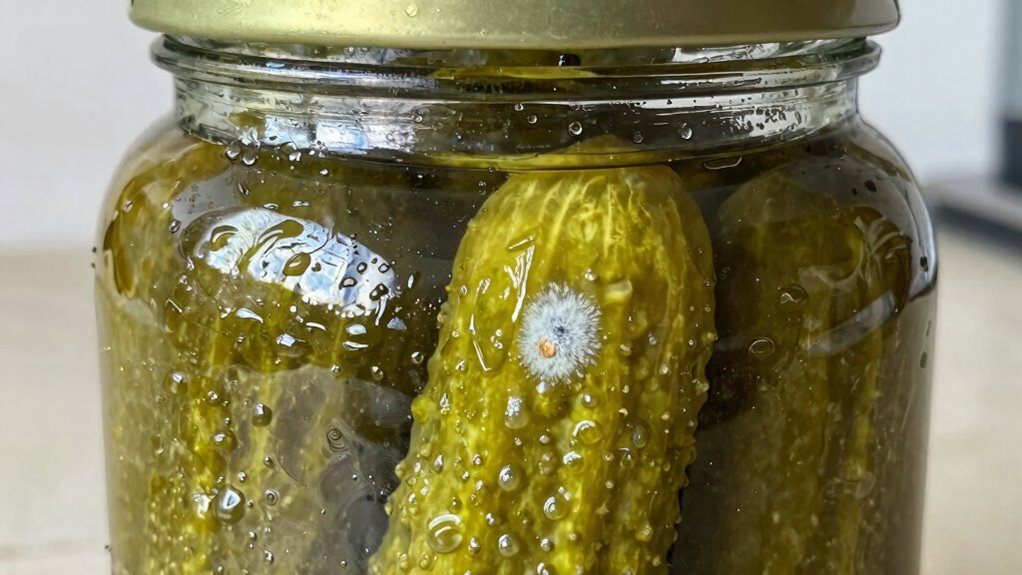
Mold on pickles can be risky, especially if it’s widespread or inside the jar, since it signals possible contamination or spoilage. While small surface mold on hard foods might sometimes be scraped off, pickles are porous, making salvage unsafe and increasing health risks. If you notice mold, it’s best to discard the jar to avoid potential illness. To learn how to protect your pickle stash, keep exploring safer storage tips and best practices.

Get kitchen staples and gadgets delivered free with Prime
- Fast, free delivery on millions of items
- Prime Video, Amazon Music and more included
- Member-only deals all year
Key Takeaways
- Mold on pickles may indicate contamination; discard the jar if mold is widespread or inside.
- Small surface mold on pickles is unsafe to remove; it’s better to discard the entire jar.
- Proper storage, clean utensils, and regular inspection help prevent mold growth.
- Mold can produce toxins and bacteria, risking food poisoning if consumed.
- When in doubt, discard moldy pickles to ensure safety and avoid health risks.

Mold on pickles can be alarming, but understanding when it’s safe to overlook and when to discard the jar is essential. When you spot mold, your first instinct might be to toss out the entire jar immediately, but that’s not always necessary. Knowing the signs of unsafe mold and practicing good food safety helps prevent unnecessary waste while protecting your health. Mold prevention starts with proper storage and handling, ensuring your pickles stay safe for longer. Always keep the jar tightly sealed and store it in a cool, dark place. Using clean utensils each time you remove pickles minimizes introducing new bacteria or mold spores, which can speed up spoilage. If you notice mold on the surface or around the lid, it’s often a sign that the seal has been compromised, and the entire jar should be discarded to avoid any risk of foodborne illness. Proper temperature control also plays a critical role in preventing mold growth on pickles and other preserved foods. Additionally, maintaining consistent storage conditions helps inhibit microbial growth and extends shelf life. Proper acid levels in the brine are also crucial in preventing mold, as they create an environment less conducive to microbial development. Regularly inspecting your pickles for early signs of spoilage can help catch issues before they become serious.
However, if you see mold inside the jar but it’s limited to a small spot or the surface, you might be tempted to scrape it away and continue eating. While some foods like hard cheeses or firm vegetables can sometimes be salvaged by removing the mold, pickles are more delicate. The porous nature of pickles and their brine environment make it easier for mold to spread beyond what’s visible. In most cases, mold on pickles indicates that bacteria or other harmful microbes may be present, so it’s safest to discard the entire jar. Even if the mold appears to be confined, it’s difficult to determine if microscopic spores have penetrated deeper into the pickles or the brine. Proper food safety protocols emphasize erring on the side of caution when it comes to moldy preserved foods. Removing mold from soft or porous foods is generally not recommended because it doesn’t eliminate the risk of unseen contamination.
Practicing proper food safety means not taking unnecessary risks. Mold prevention is your best strategy—regularly inspecting your pickles, keeping jars sealed, and storing them properly. If you’re ever unsure whether mold is dangerous, it’s better to err on the side of caution and throw the jar out. Consuming moldy pickles can expose you to mycotoxins or bacteria that cause food poisoning, symptoms like nausea, vomiting, or diarrhea. Remember, mold isn’t just a surface issue; it can infiltrate the entire jar, making removal ineffective. When in doubt, discard the suspect pickles and clean your storage area to prevent future mold issues. Proper food safety measures include thorough cleaning of storage containers and proper handling techniques to reduce contamination. Additionally, it’s helpful to understand microbial growth and how environmental factors influence it. Prioritizing food safety ensures you enjoy your pickles without risking your health, and practicing mold prevention helps keep your pantry safe and mold-free.
pickles storage jars with airtight seal
As an affiliate, we earn on qualifying purchases.
As an affiliate, we earn on qualifying purchases.
Frequently Asked Questions
Can Mold on Pickles Cause Allergic Reactions?
Yes, mold growth on pickles can cause allergy symptoms. If you notice mold, you might experience sneezing, runny nose, or itchy eyes. Mold releases spores that can trigger allergic reactions, especially if you’re sensitive or allergic to molds. To protect yourself, avoid eating moldy pickles and discard them immediately. If you develop allergy symptoms after exposure, consider consulting a healthcare professional for proper treatment and to prevent further reactions.
How Long Can Pickles Stay Safe After Mold Appears?
Like a knight in shining armor, you should act quickly when mold appears on pickles. Generally, pickles are safe for about 1 to 2 weeks after mold becomes visible if kept refrigerated, but it’s best to discard them after that. Mold visibility indicates spoilage, and extended storage can lead to bacterial growth. When in doubt, it’s safer to toss them to avoid health risks.
Is It Safe to Remove Mold From the Surface?
You should not remove mold from the surface of pickles, as surface contamination can penetrate deeper, risking your health. Mold removal techniques won’t guarantee safety, and scraping mold off doesn’t eliminate the danger. Instead, discard the entire jar to avoid potential health issues. Mold spores can hide beneath the surface, making it unsafe to try salvaging pickles. When in doubt, it’s best to throw them out and prevent any health risks.
Does the Type of Mold Affect Health Risks?
Think of mold species on pickles as different villains, each with its own threat level. Some molds are harmless, like distant relatives, while others act as spoilage indicators or health risks. The type of mold affects your safety, so you must identify it before deciding to remove or discard. If unsure, it’s safest to discard the pickle, as certain molds can produce toxins that threaten your health.
Are Homemade Pickles More Prone to Mold?
Homemade pickles are more prone to mold because of variations in fermentation process and storage conditions. If you don’t keep them submerged and stored in a cool, dark place, mold can develop more easily. Properly sterilize jars, monitor fermentation times, and guarantee airtight seals to reduce mold risks. Regularly check your pickles and discard any with visible mold or off smells to keep your homemade treats safe and delicious.
food-grade pickling jars with lids
As an affiliate, we earn on qualifying purchases.
As an affiliate, we earn on qualifying purchases.
Conclusion
If you spot mold on your pickles, don’t ignore it—trust your instincts and toss them out. It’s easy to think a little mold isn’t a big deal, but consuming it can lead to health issues you definitely don’t want. Remember, your safety matters most. When in doubt, discard and start fresh. Protect your loved ones by choosing safe, mold-free foods. Your health is worth more than a jar of pickles—so always play it safe.
As an affiliate, we earn on qualifying purchases.
mold-resistant food storage containers
As an affiliate, we earn on qualifying purchases.
As an affiliate, we earn on qualifying purchases.
NFL season / tailgating Picks
team gear
As an affiliate, we earn on qualifying purchases.