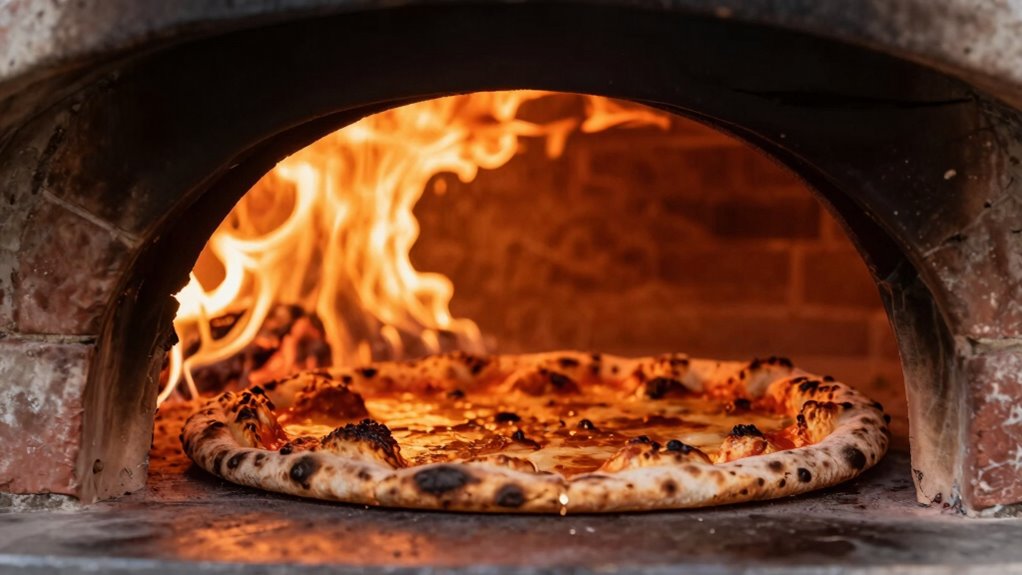

Baking at 800°F dramatically changes your pizza crust by speeding up heat transfer, which leads to faster browning and develops authentic textures and flavors. The intense heat causes rapid moisture evaporation, creating a crispy, charred crust while helping gelatinized starches reinforce its structure. This high temperature also promotes Maillard reactions, enhancing flavor complexity. If you’re curious about mastering high-heat pizza baking, there’s more to explore on how to achieve these results safely and effectively.

Get kitchen staples and gadgets delivered free — and shop member deals
- Fast, free delivery on millions of items
- Access to Prime Big Deal Days deals on October 6–7
- Prime Video, Amazon Music and more included
Key Takeaways
- 800°F promotes rapid Maillard reactions, creating a distinctive charred and flavorful crust.
- High temperatures cause quick moisture evaporation, resulting in a crispy, well-developed crust.
- Intense heat accelerates starch gelatinization, strengthening the crust’s structure and texture.
- At 800°F, heat transfers more efficiently, leading to even browning and consistent crust development.
- Precise oven temperature control at 800°F ensures optimal crust color, crunch, and flavor.
As an affiliate, we earn on qualifying purchases.
How High Temperatures Help Create the Perfect Pizza Crust
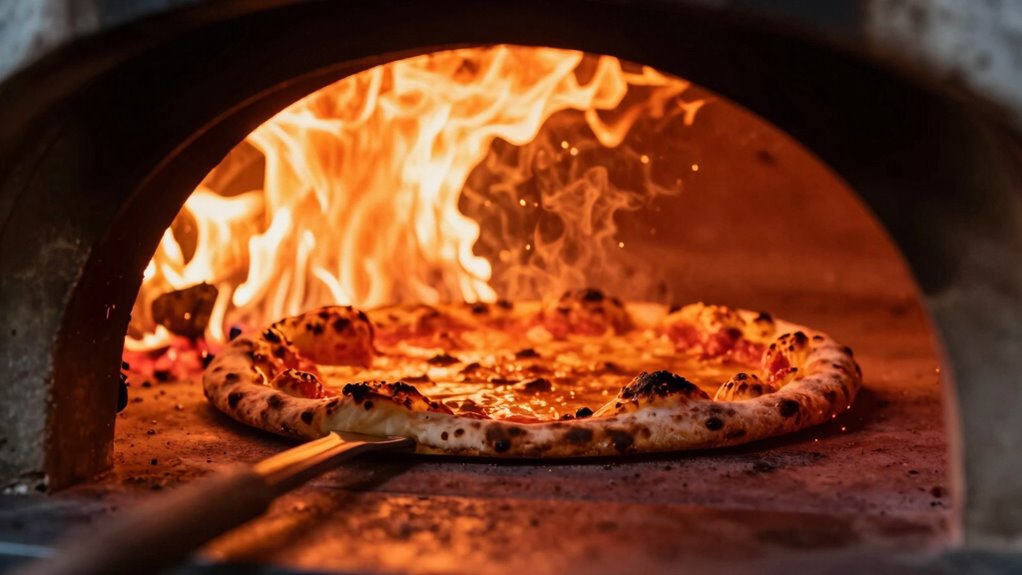
High temperatures are essential for achieving that light, crisp, and chewy pizza crust you crave. When your oven heats up to 800°F, the dough’s hydration level plays a crucial role in how well it transforms. Properly hydrated dough creates steam during baking, helping develop a tender interior and a sturdy crust. Additionally, oven insulation ensures consistent heat transfer, allowing the high temperature to penetrate the dough evenly. Without good insulation, heat escapes, and the crust may not develop its characteristic crispness. High heat quickly sets the outer layer, creating a beautiful browning and a satisfying crunch. Efficient heat transfer also ensures the oven maintains a stable temperature, which is vital for consistent baking results. To maximize these effects, selecting the right insulation materials for your oven can make a significant difference in achieving professional-quality results every time. Using high-quality thermal insulation can help retain heat more effectively, leading to more uniform cooking.
As an affiliate, we earn on qualifying purchases.
What Happens at 800°F in Your Oven: The Science Explained
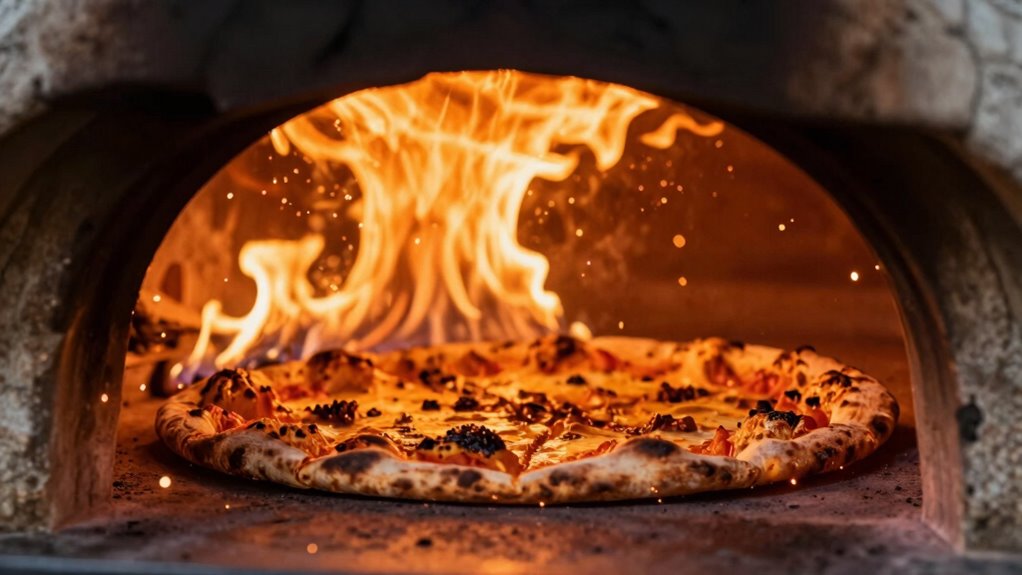
When your oven reaches 800°F, a series of rapid chemical and physical changes transform the dough into a perfectly baked pizza crust. At this temperature, the heat transfer is intense, causing quick evaporation of moisture and triggering Maillard reactions that develop flavor and color. The temperature impact accelerates caramelization and crust browning, giving your pizza its distinctive char and crunch.
You’ll notice:
- Rapid dehydration, creating a crispy texture
- Maillard reactions enhancing flavor and browning
- Starch gelatinization, strengthening the crust’s structure
These processes happen almost instantly at 800°F, making your pizza unique. The high temperature ensures the heat transfer is efficient, shaping the crust’s texture and appearance in a matter of minutes.
thermal insulation for pizza oven
As an affiliate, we earn on qualifying purchases.
As an affiliate, we earn on qualifying purchases.
How to Achieve a Crispy, Authentic Pizza Crust at 800°F
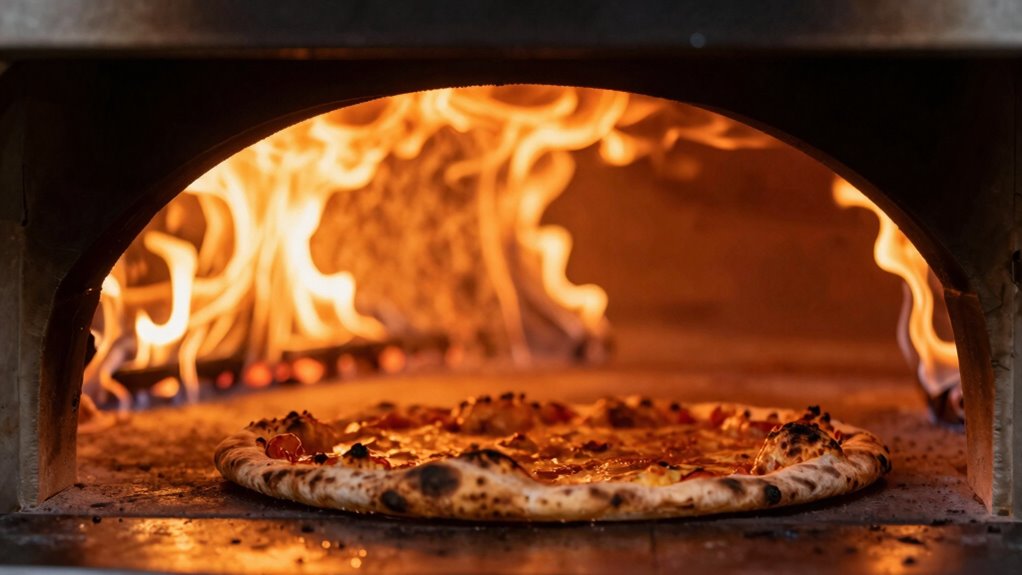
Reaching 800°F is essential for creating a crispy, authentic pizza crust, but achieving this temperature consistently requires careful preparation. Start with proper dough hydration—using enough water guarantees the crust develops the right texture and can withstand high heat without burning. Knead the dough thoroughly to develop gluten, which helps it hold up at extreme temperatures. Preheat your oven or pizza stone well in advance, ensuring it hits and maintains 800°F. When baking, avoid overloading with cheese, as excessive cheese melting can make the crust soggy. Instead, use a thin layer of cheese to promote even melting and crispness without compromising the crust’s texture. Additionally, proper airflow around the pizza helps maintain an even temperature, preventing hot spots that could burn the crust. Achieving consistent high heat also relies on understanding thermal conductivity to ensure even heat transfer through the oven or stone. Being mindful of oven insulation can help maintain that high temperature more efficiently. Proper temperature regulation is also crucial to prevent the oven from fluctuating and affecting the final crust quality. Furthermore, incorporating thermal mass can help stabilize oven temperatures during the baking process. With these steps, you’ll craft a crust that’s both crispy and authentic, perfectly suited for high-temperature baking.
professional pizza oven thermometer
As an affiliate, we earn on qualifying purchases.
As an affiliate, we earn on qualifying purchases.
Troubleshooting Common Problems When Baking at 800°F
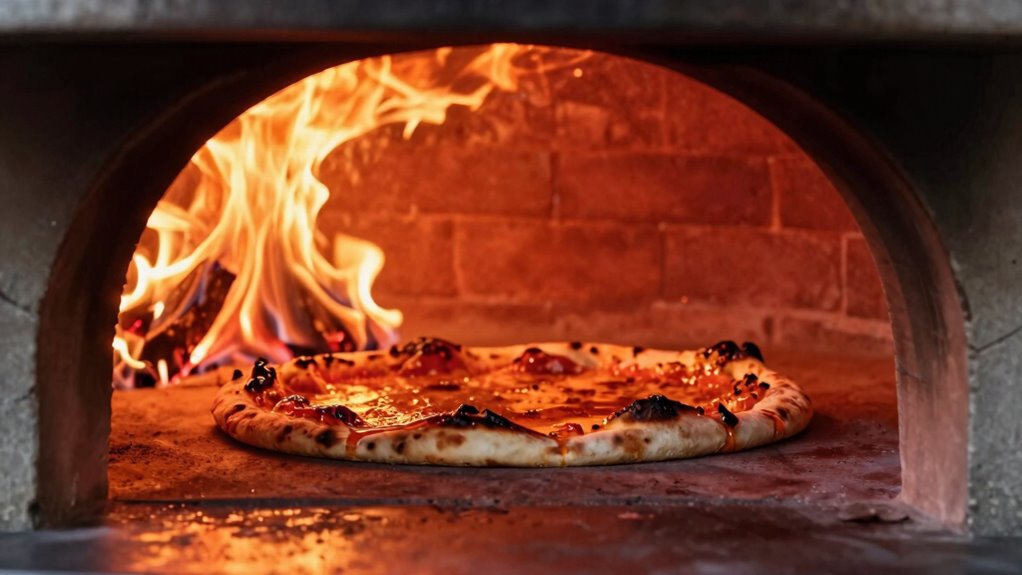
When baking at 800°F, you might notice uneven cooking or spots that burn too quickly. These issues often stem from hot spots or inconsistent heat distribution in your oven. Addressing these problems can help you achieve perfectly cooked, evenly browned pizzas every time. Using a thermal sensor can also help monitor temperature variations and improve your baking results. Additionally, ensuring your oven has proper ventilation can prevent heat buildup and promote more even heat circulation. Incorporating connected equipment that can monitor and adjust temperature settings may further enhance your baking consistency. Proper oven calibration is also essential for maintaining accurate temperature control.
Uneven Cooking Patterns
Have you noticed your pizza baking unevenly at 800°F? This often results from uneven heat distribution or inconsistent dough preparation. To fix this, focus on your dough elasticity and ingredient ratios, which directly impact how evenly your crust cooks. You can try:
- Ensuring your dough is properly kneaded for uniform elasticity
- Adjusting ingredient ratios to prevent thick spots
- Rotating your pizza midway through baking for consistent heat exposure
- Monitoring oven temperature accuracy to ensure consistent heat levels
These tweaks help your dough respond better to high heat, promoting even cooking. Remember, uneven baking isn’t just about oven temp; it’s about how your dough handles that heat. Achieving a balanced dough and careful handling prevents hot spots and ensures every slice is perfectly cooked.
Excessive Crust Charring
Excessive crust charring often occurs because the oven’s intense heat causes the outer layer of the pizza to burn before the interior is fully cooked. When dough fermentation isn’t properly balanced, the crust can become overly fragile and prone to burning at high temperatures. To prevent charring, monitor your dough fermentation process closely—fewer fermentation days can produce a softer crust that withstands high heat better. Additionally, cheese melting quickly can contribute to uneven charring if the toppings trap moisture or heat unevenly. Using a pizza peel to rotate your pizza ensures even exposure to heat, avoiding hotspots that cause charring. Adjusting baking time and ensuring proper dough fermentation helps you achieve a perfectly cooked crust without excessive charring, even at 800°F. Understanding oven heat distribution can further optimize your baking results and prevent hotspots that lead to uneven charring. Proper temperature control is essential for consistent results and preventing the crust from burning too quickly. Paying attention to baking techniques can also help you master high-temperature pizza baking and reduce charring issues. Additionally, being aware of net worth estimates for different equipment can help you invest in the right tools for better heat management during baking.
Tools and Techniques for Safe, Effective High-Heat Pizza Baking
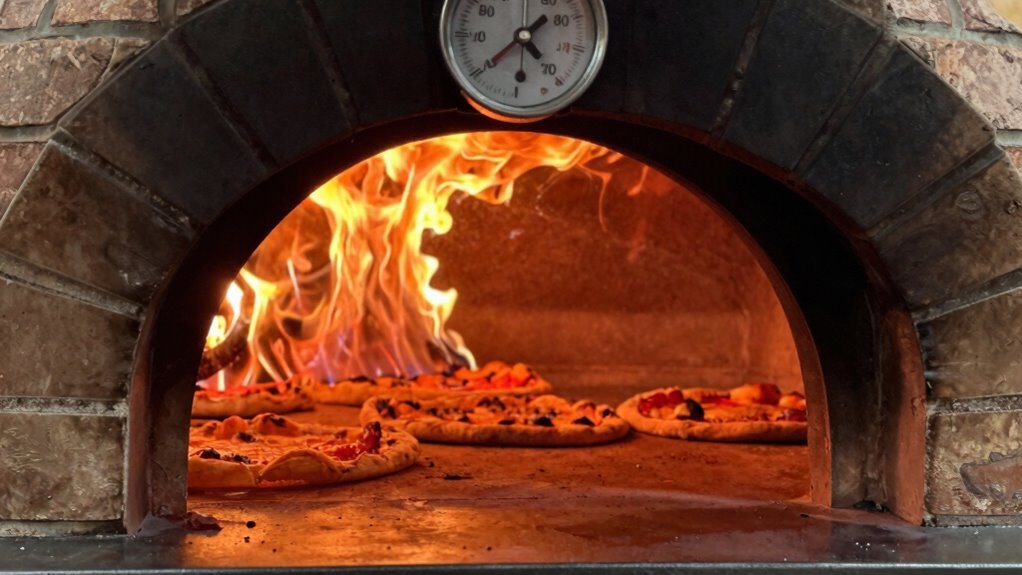
Achieving the perfect high-heat environment for pizza baking requires the right tools and techniques to guarantee safety and ideal results. To do this, invest in a high-quality infrared thermometer to monitor oven temperature precisely. Use proper oven mitts and tools to handle hot surfaces safely, preventing burns. Consider making ingredient substitutions like moisture-absorbing toppings to reduce excess steam, which can affect oven safety and crust quality. When working with high heat, ensure proper ventilation to avoid smoke buildup. Additionally, preheat your oven fully to reach consistent temperatures around 800°F. Understanding the limitations of nanomaterials can also influence the design of safer, more efficient high-heat ovens. Being aware of heat transfer principles helps optimize cooking techniques and equipment use. Remember, maintaining oven safety isn’t just about equipment—it’s about understanding your oven’s limits and using techniques like rotating your pizza for even cooking. These steps help you master safe, effective high-heat pizza baking.
Tips for Recreating 800°F Pizza Oven Results at Home
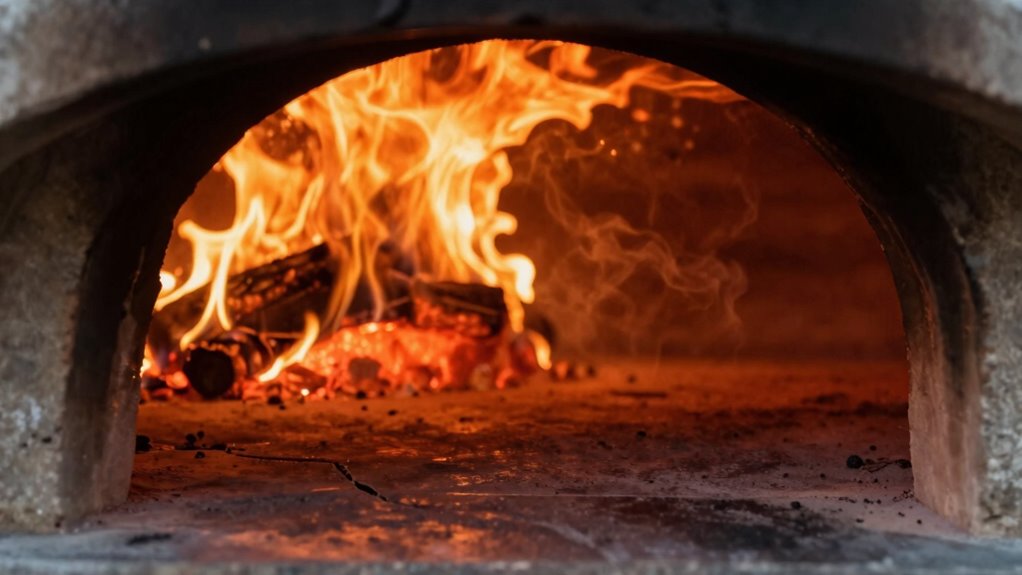
Recreating the intense heat of an 800°F pizza oven at home is challenging but achievable with the right strategies. Start by investing in a quality pizza stone, which absorbs and radiates heat, mimicking a commercial oven’s environment. Ensure your oven is properly calibrated; set it to its highest temperature and use an oven thermometer to verify accuracy. Preheat the pizza stone for at least an hour to maximize heat retention. Position the stone on the middle or lower rack for even heat distribution. Avoid opening the oven too often, as it causes temperature drops. Using these tips, you’ll get closer to those high-temperature results, producing a crust with authentic char and crispiness similar to professional pizza ovens. Understanding oven heat transfer is key to mastering high-temperature baking at home.
Frequently Asked Questions
How Does Oven Temperature Affect Pizza Dough Fermentation?
You might not realize it, but oven temperature doesn’t directly affect dough fermentation. Instead, high temperatures can quickly kill yeast activity if you’re baking immediately after fermentation. To get the best dough fermentation, let your dough rise at room temperature, allowing yeast to develop flavors and gluten. Once fermented, baking at high temperatures like 800°F accelerates crust formation, but it’s vital your dough has properly fermented beforehand for perfect texture and taste.
What Types of Wood or Fuel Best Support High-Temperature Pizza Ovens?
Imagine you’re a medieval blacksmith, but today, you need the best fuel sources for your high-temp pizza oven. Hardwoods like oak, maple, and hickory are ideal because they burn hot and produce minimal smoke, supporting the 800°F temperatures needed. Softwoods like pine ignite quickly but create more creosote. Choose dense, seasoned wood types to sustain consistent heat, ensuring perfect crusts every time.
Can Home Ovens Safely Reach and Sustain 800°F?
Home ovens can’t safely reach or sustain 800°F without modifications. To try, you’d need to make significant changes like installing a pizza oven attachment or using specialized insulation. But always prioritize safety precautions—consult professionals before attempting modifications, as high heat can damage your oven or cause hazards. Remember, maintaining safety is key, so stick to recommended temperatures unless you’re experienced with oven modifications.
How Does Humidity Influence Pizza Crust Formation at High Temperatures?
Humidity impact plays a significant role in crust formation at high temperatures. When humidity is high, it adds moisture to the dough, making the crust softer and less crisp. Conversely, low humidity helps the crust dry out quickly, resulting in a crispier texture. You’ll notice that controlling the environment’s humidity can help you achieve the perfect crust, as it influences crust moisture and final texture at those intense oven temperatures.
What Are the Energy Considerations for Baking at 800°F?
Imagine the fiery glow of your oven at 800°F, like a mini sun ready to craft perfect pizza. Baking at this high temperature demands significant energy, meaning you’ll burn through fuel quickly. To maximize energy efficiency, keep your oven well-insulated and preheated, reducing unnecessary fuel consumption. This way, you enjoy the intense heat needed for a crispy crust while managing your energy costs effectively.
Conclusion
Baking at 800°F might seem intense, but it’s the secret to a crust that’s crispy, airy, and bursting with flavor. With the right tools and techniques, you can recreate that authentic pizzeria feel right at home—no need for a commercial oven. Imagine pulling a perfectly blistered, golden crust out of your oven, just like a pro. Trust the process, and soon you’ll be savoring pizza that’s truly next-level.
NFL season / tailgating Picks
team gear
As an affiliate, we earn on qualifying purchases.