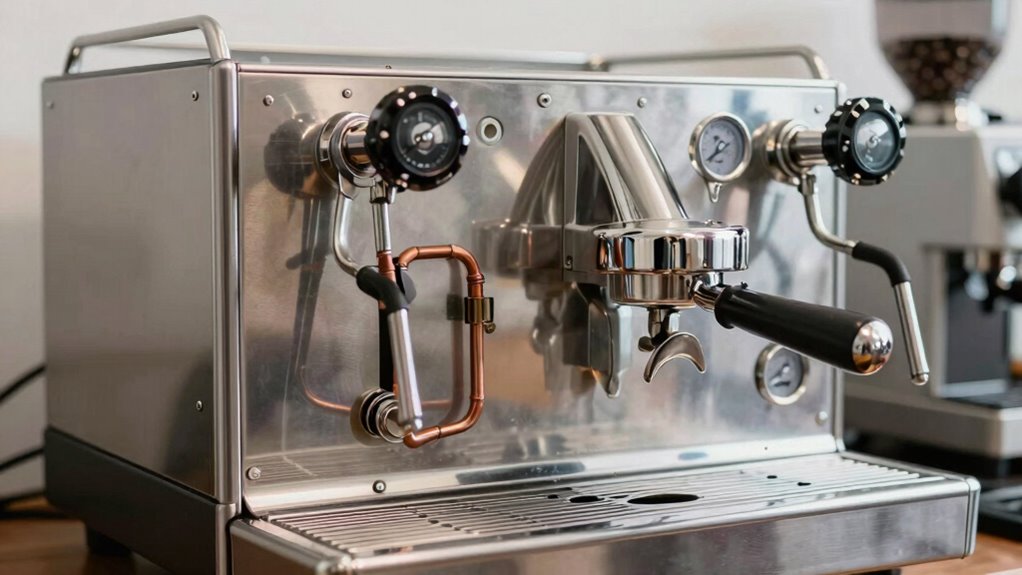

If you’re exploring espresso machines, understanding the main types helps you choose the right one. Single boilers heat water for both brewing and steaming but require switching modes, which can slow you down. HX machines use a single boiler with a heat exchange system, offering faster operation and the ability to brew and steam almost simultaneously. Dual boilers have separate chambers, providing the best stability and speed but at a higher cost. Keep going to learn more about each type.

Get kitchen staples and gadgets delivered free — and shop member deals
- Fast, free delivery on millions of items
- Access to Prime Big Deal Days deals on October 6–7
- Prime Video, Amazon Music and more included
Key Takeaways
- Single boiler machines heat water in one chamber, requiring switching modes for brewing and steaming.
- HX machines use a heat exchange system with a single boiler to allow quick transitions between brewing and steaming.
- Dual boiler machines have separate chambers for brewing and steaming, enabling simultaneous operation and precise temperature control.
- Cost, maintenance, and workflow efficiency vary, with single boilers being most affordable and dual boilers offering best performance.
- Choice depends on user skill level, usage frequency, desired consistency, and budget.
As an affiliate, we earn on qualifying purchases.
What Are the Main Types of Espresso Machines?
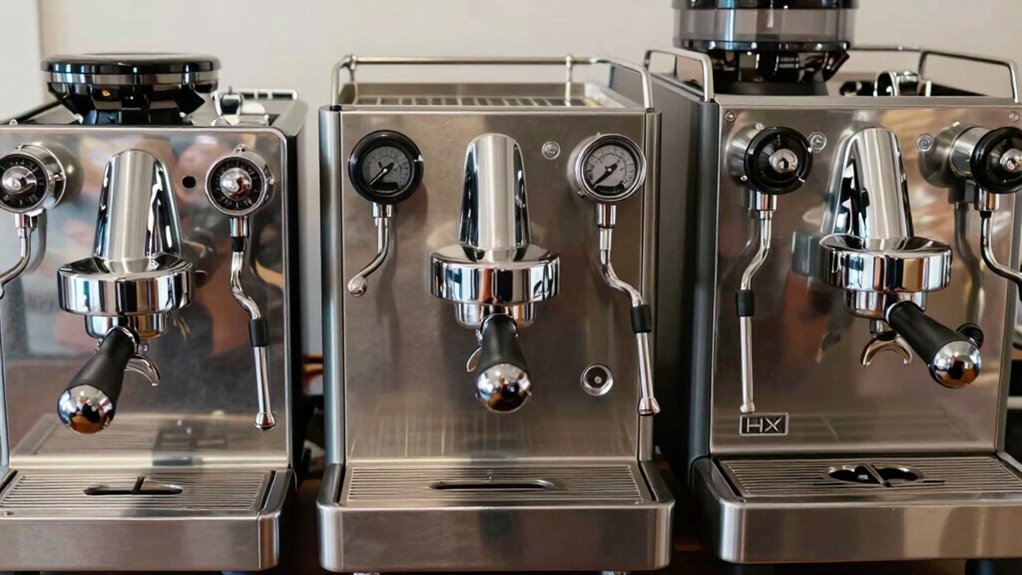
There are several main types of espresso machines, each designed to suit different brewing needs and preferences. Your choice depends largely on brew pressure capabilities and machine size. For example, semi-automatic machines offer good control over brew pressure, allowing you to fine-tune your shot, but they tend to be larger and require more user involvement. Compact machines, like some pod-based models, prioritize small size and convenience but often have limited brew pressure control. Conversely, commercial-style espresso machines are bigger and built to deliver consistent high brew pressure, ideal for frequent use. Understanding how these factors influence performance will help you pick the right machine for your space and brewing style, ensuring you get the perfect espresso shot every time. Additionally, the mechanics of French press coffee can influence brewing times and extraction quality, which is important to consider when choosing equipment. Recognizing the machine type is essential for optimizing your brewing experience and achieving the desired flavor profile. Moreover, considering the technology used in different machines can further enhance your brewing results and ease of operation.
As an affiliate, we earn on qualifying purchases.
How Does Each Espresso Machine Type Work?
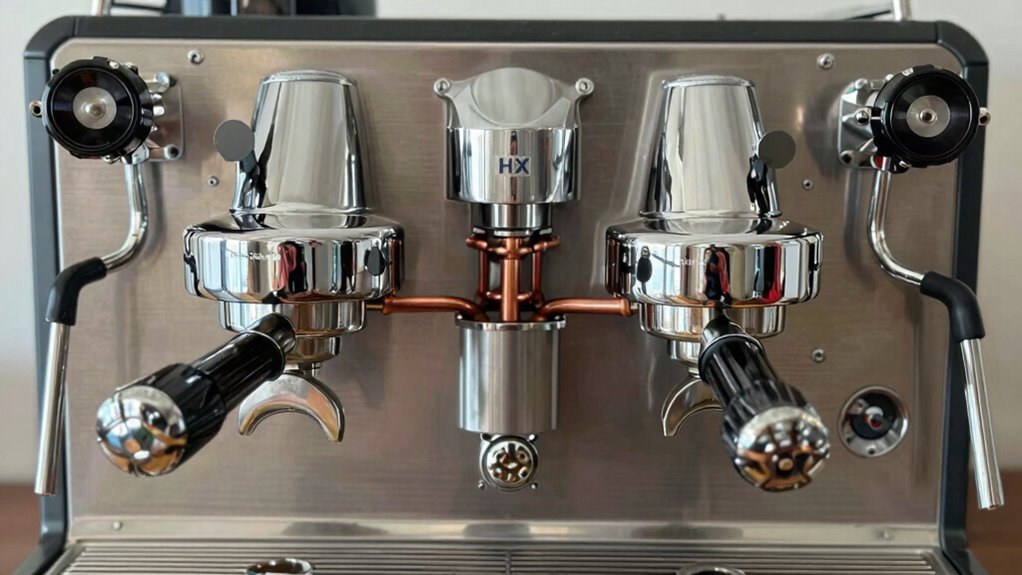
Understanding how each espresso machine type works starts with examining their boiler setup and how they manage temperature. You’ll find that different machines use various methods to heat and control water, impacting shot quality and consistency. By exploring these mechanisms, you’ll see how they influence your brewing experience. Additionally, the choice of boiler configuration affects how quickly the machine heats and how well it maintains temperature stability during extraction. For example, the temperature stability of the boiler plays a crucial role in achieving consistent espresso shots. Moreover, the heat exchange process in HX machines allows for efficient brewing and steaming without needing separate boilers.
Boiler Configuration and Operation
How do different boiler configurations shape the way espresso machines operate? Your machine’s boiler setup determines how water circulates and how quickly you can brew. Single boilers heat water for both brewing and steaming, so they switch modes, which can cause delays. Heat exchange (HX) machines use a single boiler with a water circuit that allows water to circulate for brewing, while maintaining steam temperature separately. Dual boilers have two dedicated chambers, one for brewing and one for steaming, enabling simultaneous operation. Each design incorporates safety features like pressure relief valves to prevent over-pressurization. These configurations influence how efficiently your machine manages water circulation, temperature stability, and safety, ensuring consistent performance tailored to your brewing needs.
Temperature Management Methods
Ever wonder how different espresso machines keep their water at the right temperature? Each type uses a unique method to maintain ideal brew temperature and provide consistent steam for your wand. Single boilers heat water and steam in one chamber, so you must wait to switch between brewing and steaming. HX machines heat water on demand, passing it through a heated coil, allowing quick transitions. Dual boilers have separate chambers for brew and steam, offering precise control for both simultaneously. Additionally, temperature stability is crucial for achieving optimal extraction and foam quality. Here’s a quick comparison:
| Machine Type | Temperature Control | Best For |
|---|---|---|
| Single Boiler | Single thermostat | Basic brewing |
| HX | On-demand heating | Quick, versatile use |
| Dual Boiler | Separate temp control | Consistent brew & steam |
This setup helps you achieve perfect brew temperature and smooth steam wand performance every time.
As an affiliate, we earn on qualifying purchases.
What Are the Benefits and Drawbacks of Each Type?
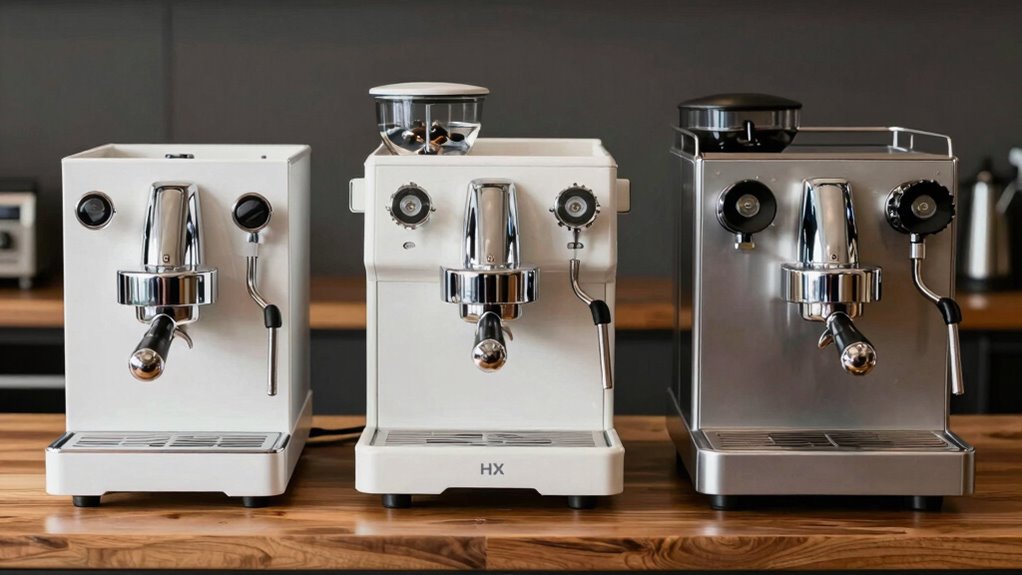
When choosing an espresso machine, you need to consider the costs and how much effort is involved in maintenance, as these vary widely between types. Performance and brew speed also differ, affecting how quickly you can get your perfect shot. Understanding these benefits and drawbacks helps you pick the right machine for your needs. Additionally, understanding ventilation considerations can help ensure safe and efficient operation of your espresso setup. Proper ventilation can also prevent buildup of moisture and heat, which is especially important for machine placement and overall safety.
Cost and Maintenance Differences
Choosing the right espresso machine depends heavily on your budget and willingness to handle maintenance. Single boiler machines generally have a lower initial investment, making them ideal if you’re just starting out or want a budget-friendly option. However, they might incur higher ongoing expenses because you’ll need to switch between brewing and steaming, which can slow your workflow. Heat exchange (HX) machines tend to cost more upfront but offer more convenience, reducing the need for frequent maintenance and switching tasks. Efficient workflow can be achieved with HX machines due to their ability to brew and steam simultaneously. Proper temperature stability is another advantage that makes HX machines popular among home baristas. Dual boiler machines have the highest initial investment, but their durability and efficiency can lower ongoing expenses over time. While they require more initial money, they often need less maintenance and provide consistent performance, making them a worthwhile investment for dedicated home baristas. Regular preventive maintenance can extend the lifespan of each type, ensuring you get the most value from your investment.
Performance and Brew Speed
Different types of espresso machines offer distinct advantages and challenges when it comes to performance and brew speed. Single boilers excel at consistent pressure stability, allowing you to produce quality espresso but often requiring time to heat between shots. This can slow down your brewing process, especially if you need multiple shots quickly. Heat exchange (HX) machines improve speed by maintaining hot water for brewing while heating steam separately, enabling faster shot times without sacrificing pressure stability. Dual boiler machines provide the best performance, offering simultaneous brewing and steaming with precise temperature control, resulting in quicker brew times and consistent grind size adjustments. However, they tend to be more complex and costly. Your choice depends on balancing desired brew speed with the level of performance you need.
best commercial espresso machine
As an affiliate, we earn on qualifying purchases.
As an affiliate, we earn on qualifying purchases.
Which Espresso Machine Is Best for Your Needs?
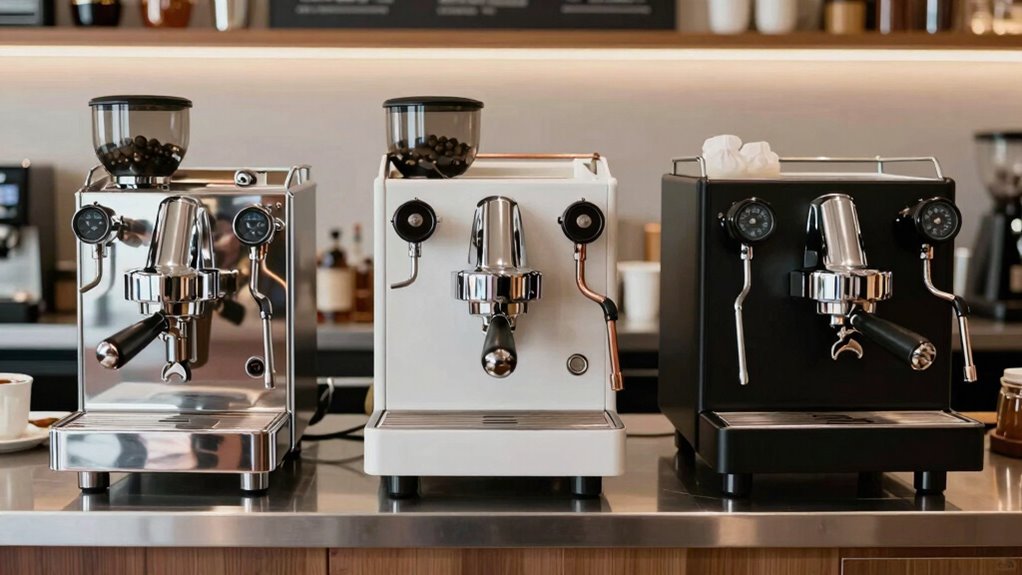
Finding the right espresso machine depends on your specific preferences and daily routines. Consider the user interface—if you prefer simple controls or advanced customization, choose accordingly. A straightforward interface might suit daily users who want quick, consistent results, while an advanced panel benefits enthusiasts who enjoy fine-tuning. Also, check warranty coverage; a longer or extensive warranty can save you money and hassle if issues arise. Think about how often you’ll use the machine and your skill level. If you’re new, a machine with intuitive controls is ideal. For experienced baristas, features like programmable settings or dual boilers might be worth the investment. Incorporating modern tech into your espresso setup can enhance your brewing precision and troubleshooting efficiency. Additionally, understanding the types of espresso machines available can help you select the best fit for your needs and skill level. Considering maintenance requirements is also important to ensure your machine stays in optimal condition over time, especially since different espresso machine types have varying upkeep needs. Moreover, selecting a machine with easy cleaning features can simplify routine maintenance and prolong its lifespan.
How Do Performance and Cost Compare Among Single, HX, and Dual Boilers?
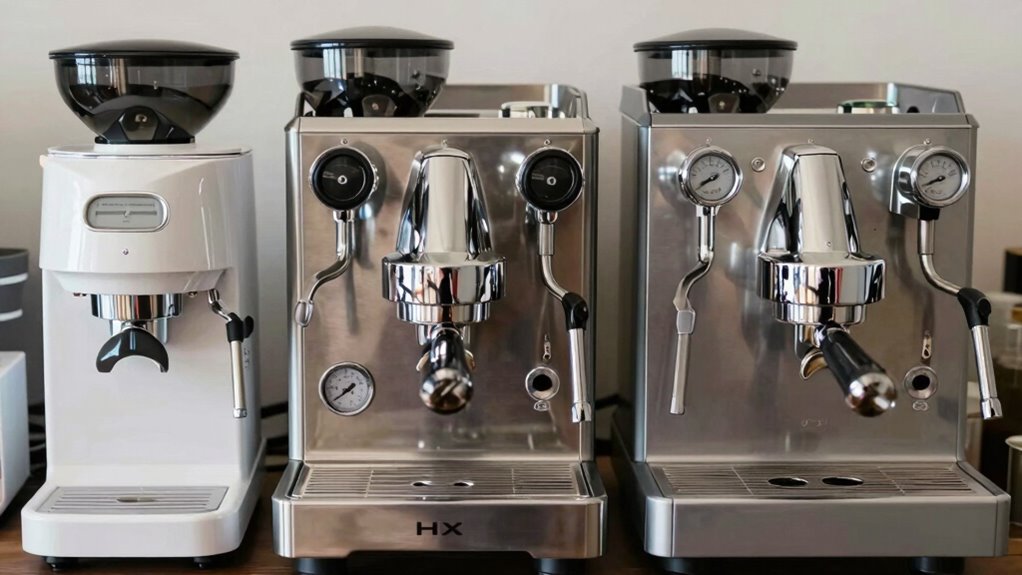
How do performance and cost differ among single, HX, and dual boiler espresso machines? In a performance comparison, dual boilers excel by providing simultaneous brewing and steaming, offering consistent results. HX machines heat water in a single boiler but use a heat exchange system, making them faster than single boilers but slightly less stable. Single boiler machines are usually the most affordable but require waiting between brewing and steaming. From a cost analysis perspective, single boilers are budget-friendly, HX models sit in the mid-range, and dual boilers tend to be the most expensive due to their advanced design. Your choice depends on your priorities: if you want speed and consistency, dual boilers are ideal; for affordability, single boilers work well.
Is a Single Boiler or a Dual Boiler Better for Consistent Brewing?
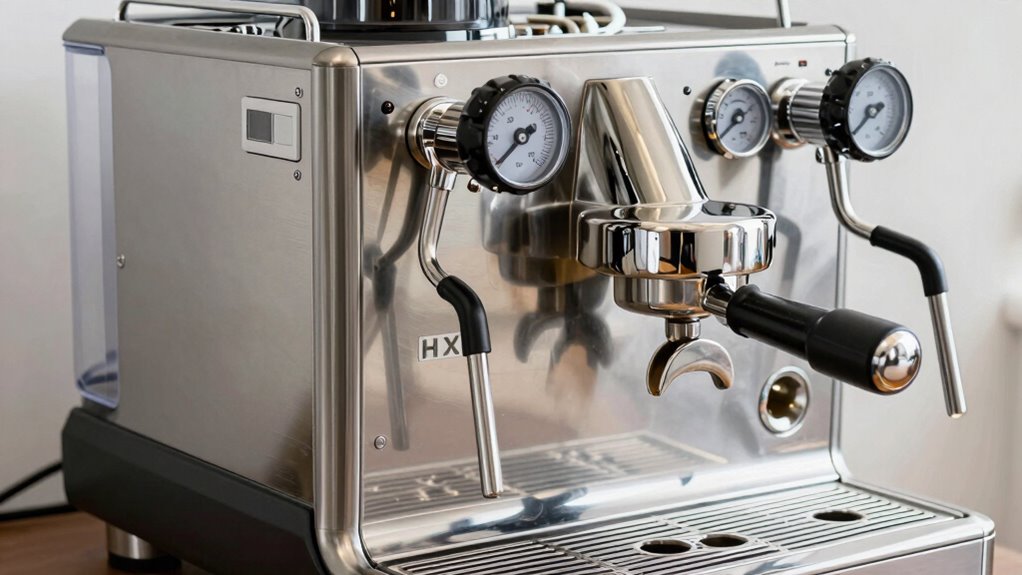
When it comes to consistent brewing, dual boiler espresso machines generally outperform single boiler models. With separate boilers for brewing and steaming, you get better brew temperature stability, ensuring each shot maintains the ideal temperature. This consistency helps you achieve better flavor extraction and reduces the chance of temperature fluctuations that can ruin your espresso. Additionally, because dual boilers are designed for continuous operation, they often have a longer machine lifespan, as each boiler handles a specific task, reducing wear and tear. Temperature stability is a crucial factor in espresso quality, and dual boiler systems excel in maintaining it during simultaneous brewing and steaming. Single boilers, while more affordable and space-saving, tend to struggle with maintaining stable temperatures during simultaneous brewing and steaming. If you prioritize consistency and durability, a dual boiler offers a clear advantage over a single boiler.
How to Choose the Right Espresso Machine for Your Budget and Skills?
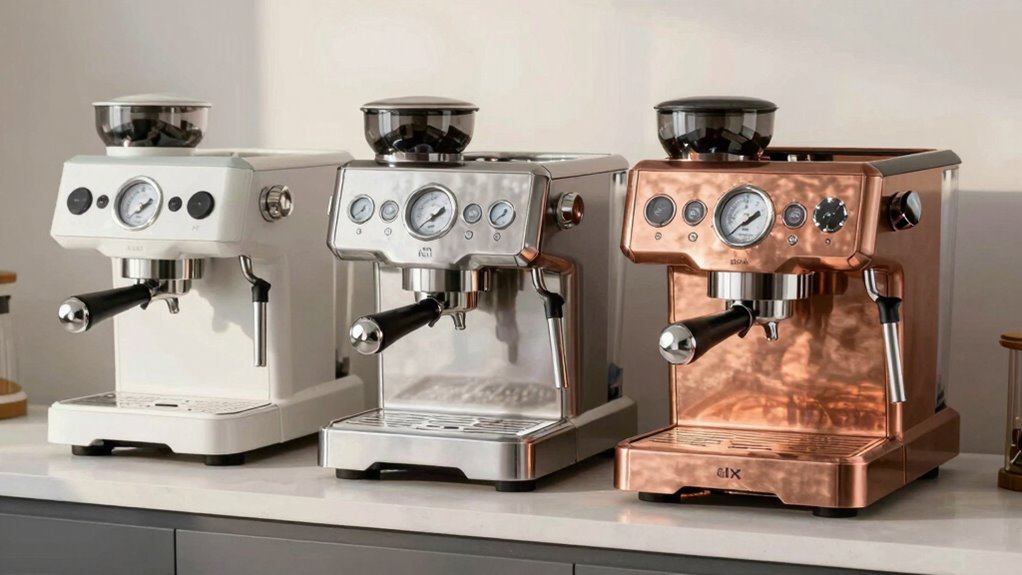
Choosing the right espresso machine depends on your budget and skill level, so it’s important to assess both before making a decision. If you’re new to brewing techniques, start with a simple machine that requires minimal maintenance routines. More advanced users may prefer models with precise temperature controls and multiple boiler options.
| Budget Level | Suitable Machine Types | Recommended Features |
|---|---|---|
| Budget | Single boiler, manual machines | Easy to operate, low maintenance |
| Higher Budget | HX or dual boiler machines | Better brewing control, consistent results |
Consider how much time you want to dedicate to learning and maintenance routines, and choose a machine that matches your skills and commitment. This ensures enjoyable espresso brewing without frustration.
Frequently Asked Questions
Can I Switch Between Brewing and Steaming With a Single Boiler Machine?
With a single boiler machine, switching between brewing and steaming isn’t seamless because of single boiler limitations. You typically have to wait for the boiler to heat up or cool down when switching tasks, making boiler switching feasibility limited. While some machines have preheat or temperature controls, you’ll find it less convenient than dual boiler setups, which allow you to brew and steam simultaneously without delays.
How Long Does It Take to Heat up Each Type of Espresso Machine?
You’ll find that single boiler machines heat up fairly quickly, usually within 5 to 10 minutes, offering speedy service. Dual boilers take longer, around 15 to 20 minutes, but provide superior temperature stability. HX machines heat rapidly, often in 10 minutes, balancing energy consumption and consistent brewing. Patience pays off; faster heating means less downtime, but longer warm-up guarantees steadier shots and steaming, making your coffee experience more reliable.
Are HX Machines Suitable for High-Volume Commercial Use?
Yes, HX machines are suitable for high-volume commercial use because they offer excellent commercial capacity and strong machine durability. You’ll find these machines efficiently handle frequent brewing demands, making them ideal for busy cafes. Their design allows rapid temperature recovery, ensuring consistent quality. With proper maintenance, an HX machine can withstand heavy daily use, providing reliable performance and longevity for your commercial setting.
What Maintenance Is Required for Dual Boiler Espresso Machines?
Your dual boiler espresso machine needs regular maintenance to keep it performing like a finely tuned race car. You should perform descaling procedures to prevent mineral buildup and guarantee peak temperature stability. Additionally, check boiler insulation to prevent heat loss and maintain efficiency. Regularly cleaning group heads, replacing seals, and inspecting safety valves also help avoid costly repairs. With proper maintenance, your machine will serve up perfect espresso shot after shot.
Do Different Boiler Types Impact the Flavor of Espresso?
Different boiler types can impact your espresso’s flavor because boiler material and water temperature stability matter. A dual boiler allows precise control of water temperature, ensuring consistent extraction and better flavor. Single boilers may fluctuate, affecting taste. The boiler material, like stainless steel or copper, also influences mineral interactions and heat retention. So, choosing the right boiler type helps you achieve richer, more balanced espresso shots every time.
Conclusion
Choosing the right espresso machine depends on your brewing needs and budget. Did you know that dual boiler machines can reach ideal brewing temperatures faster and maintain consistency better? If you’re serious about espresso quality, investing in the right type can substantially improve your results. Remember, 60% of home baristas find that upgrading their machine enhances flavor and efficiency. Make an informed choice, and enjoy perfect espresso shots every time!
Fall Picks
fall essentials
As an affiliate, we earn on qualifying purchases.