If you’re swapping bananas for plantains or vice versa, you might end up with the wrong texture or missing out on the right nutritional benefits. Bananas are soft, sweet, and often eaten raw, while plantains are starchy and need cooking to be tasty. Using them interchangeably can ruin a dish or reduce health benefits. Keep in mind their differences, and you’ll improve your cooking and nutrition — there’s more to discover if you keep exploring.
Key Takeaways
- Use bananas raw for snacking and smoothies; cook plantains before eating to develop flavor and texture.
- Recognize that green plantains are starchy and need frying or boiling, unlike ripe bananas which are sweet and ready to eat.
- Avoid substituting raw bananas in recipes that require cooked plantains, as texture and taste will be affected.
- Choose baking or boiling for plantains to preserve nutrients; frying adds calories and fat, unlike raw bananas.
- Properly identifying each fruit ensures correct culinary use and maximizes their nutritional benefits.
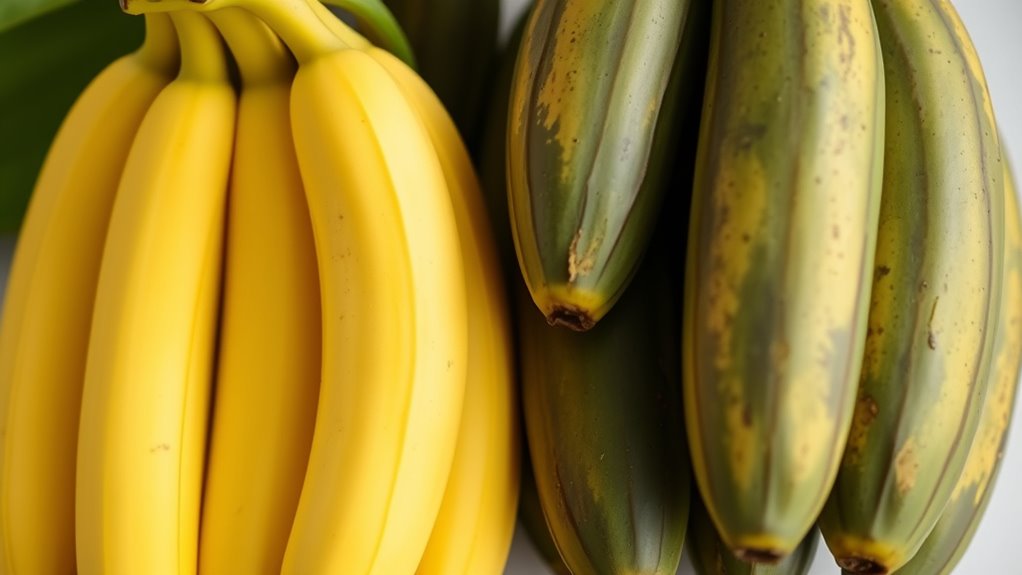
While plantains and bananas may look similar, they serve very different culinary purposes and nutritional profiles. If you’re used to grabbing a banana for a quick snack, you might not realize that plantains aren’t just a larger, less sweet alternative. Knowing the differences in cooking methods and nutritional content can help you use each correctly in your recipes and make healthier choices.
Plantains and bananas differ in culinary uses and nutrition—know when to cook or eat them raw for healthier, tastier dishes.
When it comes to cooking methods, bananas are mostly enjoyed raw. Their soft texture and natural sweetness make them perfect for snacking, blending into smoothies, or adding to cereals. You can also bake or fry ripe bananas, but they don’t need much preparation. In contrast, plantains require cooking to become tender and flavorful. They can be boiled, fried, baked, or grilled, and each method brings out different textures and tastes. Green plantains, which are starchy and less sweet, are often fried into chips or boiled for savory dishes. Ripe plantains, which are yellow or black, become sweet and are excellent when baked or fried as a side dish or snack. Using the right cooking method is vital because raw plantains are tough and starchy, unlike bananas that are soft and sweet when ripe.
Nutritional differences between plantains and bananas are also significant. Bananas are high in sugars, providing quick energy, and they’re rich in potassium, vitamin C, and dietary fiber. They’re a convenient, nutrient-dense snack that’s easy to incorporate into your diet. Plantains, however, are generally starchier and contain less sugar, making them a more filling carbohydrate source. They offer similar potassium levels but also provide important vitamins like vitamin A and vitamin B6. Because plantains are often cooked, their nutritional profile can change based on preparation. Frying, for example, adds extra calories and fat, which can diminish their health benefits. Boiling or baking keeps more of their nutrients intact and makes them a healthier option.
Understanding these differences helps you avoid common mistakes, like using bananas in recipes that call for cooked plantains or vice versa. If you want a sweet, raw snack, bananas are your go-to. If you’re preparing a savory dish or want a hearty side, plantains are the better choice. Recognizing how cooking methods influence texture and flavor ensures you get the most out of each fruit. Also, being aware of their nutritional differences helps you make smarter choices, whether you’re aiming for quick energy or a more substantial, nutrient-rich meal. Using each correctly not only improves your dishes but also helps you enjoy the unique qualities that each fruit offers.

CAROTE Nonstick Frying Pan Skillet,Non Stick Granite Fry Pan Egg Pan Omelet Pans, Stone Cookware Chef's Pan, PFOA Free,Induction Compatible(Classic Granite, 8-Inch)
Eco-friendly Classic Granite – Non-stick Granite Material, PFOS,PFOA free, our cookware ensures your daily cooking is always safer…
As an affiliate, we earn on qualifying purchases.
As an affiliate, we earn on qualifying purchases.
Frequently Asked Questions
Are Plantains Healthier Than Bananas?
You’ll find that plantains are generally healthier than bananas if you’re looking for more complex carbs and fiber, which support digestion and sustained energy. Nutritional comparisons show plantains have higher starch content, offering more vitamins like A and C, along with essential minerals. Their health benefits include aiding digestion and maintaining blood sugar levels. However, bananas are lower in calories and sugar, making them a good option for quick energy and weight control.
Can Plantains Be Eaten Raw Like Bananas?
You can eat plantains raw, but they taste quite different from bananas. Imagine biting into a firm, starchy fruit with a mild, earthy flavor—this is what raw plantains offer. While bananas are sweet and soft, plantains require cooking to soften and develop their flavor. For raw consumption, opt for ripe plantains, which are sweeter and more palatable, but keep in mind their texture and flavor differences from bananas.
What Are the Best Cooking Methods for Plantains?
You should try sautéing, frying, boiling, or baking plantains for the best results. These cooking techniques bring out their natural sweetness and soft texture. Pair them with flavors like garlic, cinnamon, or lime for delicious dishes. For a savory twist, fry or bake green plantains and serve with beans or meats. Experiment with these methods to enjoy plantains in both sweet and savory meals, enhancing their versatility.
How Do I Tell Apart Ripe From Unripe Plantains?
To tell apart ripe from unripe plantains, look for ripeness indicators like color changes. Unripe plantains are green and firm, while ripe ones turn yellow or black and feel softer. The skin’s color gives you a clear sign of ripeness; as they ripen, their color shifts from green to yellow and then black. Gently press; ripe plantains are slightly soft, but unripe ones remain firm.
Are There Any Allergy Concerns With Plantains or Bananas?
You might experience allergy symptoms like itching, swelling, or hives from plantains or bananas due to cross reactivity, especially if you’re allergic to latex or other fruits. While rare, some people are sensitive to both. If you notice reactions, see a doctor. It is crucial to be cautious, as allergy concerns can vary, and testing can help determine your specific sensitivities.

Nongshim Banana Kick Puff Snack – Crispy Corn Puff with Banana Flavor, Soft and Sweet Fruit Snack for All Ages, K-Pop Favorite Korean Treat, 1.58 oz (Pack of 20)
Light and Crispy Corn Puff Snack: Crispy at first bite, Banana Kick surprises you with a smooth melt-in-your-mouth…
As an affiliate, we earn on qualifying purchases.
As an affiliate, we earn on qualifying purchases.
Conclusion
So, next time you reach for a fruit, remember to choose wisely. Recognize the difference between plantains and bananas—whether you’re cooking, eating raw, or snacking. Appreciate the texture, flavor, and purpose each offers. Use plantains for hearty dishes, bananas for quick energy. By understanding their unique qualities, you’ll make smarter choices, enjoy better meals, and truly appreciate each fruit’s role. It’s time to stop guessing and start choosing with confidence.

IMUSA USA Wood Plantain Slicer "Mariquitera", 13.8 x 4 x 1 inches
Made of Wood
As an affiliate, we earn on qualifying purchases.
As an affiliate, we earn on qualifying purchases.

What are those big green bananas?: A Plantain Cookbook
As an affiliate, we earn on qualifying purchases.
As an affiliate, we earn on qualifying purchases.