
Raw and ripe jackfruit are completely different ingredients. Raw jackfruit is firm, fibrous, and neutral in flavor, making it perfect for savory dishes like vegan pulled pork or curries. Ripe jackfruit is soft, sweet, and fragrant, ideal for desserts and snacks. They also differ nutritionally; raw offers fiber and protein, while ripe provides natural sugars and antioxidants. Knowing these differences helps you choose the right type for your recipes and tastes—exploring each’s unique qualities.

Get kitchen staples and gadgets delivered free — and shop member deals
- Fast, free delivery on millions of items
- Access to Prime Big Deal Days deals on October 6–7
- Prime Video, Amazon Music and more included
Key Takeaways
- Raw jackfruit is firm, savory, and used as a meat substitute, while ripe jackfruit is soft, sweet, and used in desserts.
- Raw jackfruit is nutrient-rich with fiber and protein, whereas ripe jackfruit contains natural sugars and antioxidants.
- Raw jackfruit absorbs flavors well and is ideal for savory dishes like curries and vegan pulled pork; ripe jackfruit enhances sweet recipes.
- Cooking methods differ: raw jackfruit requires thorough preparation to maximize its savory potential, while ripe jackfruit can be eaten directly or used in baked goods.
- Their distinct textures and flavors make each suitable for specific culinary applications, highlighting their fundamental differences.
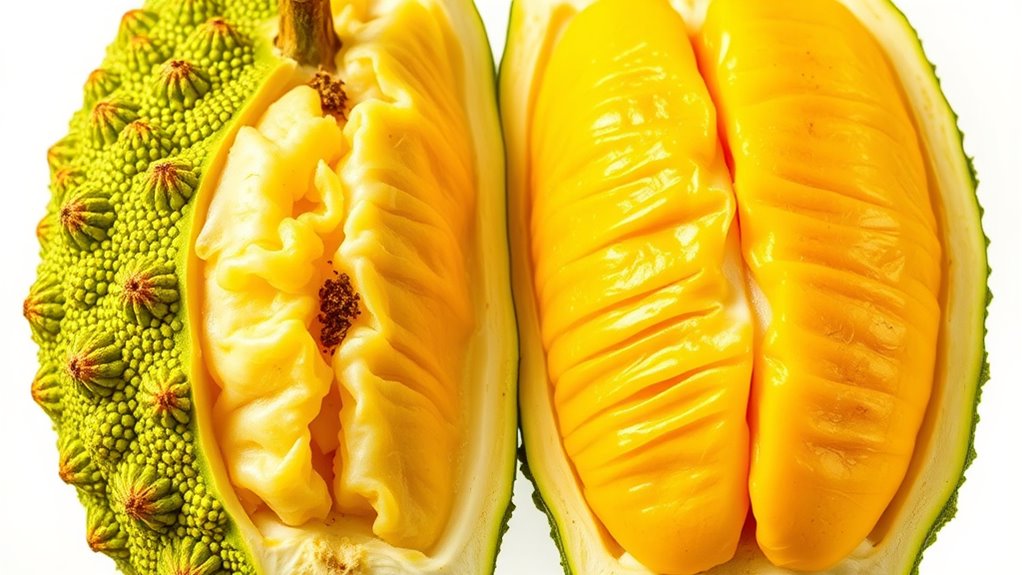
Have you ever wondered how raw and ripe jackfruit differ in flavor and texture? These two forms of the fruit are quite distinct, and understanding their differences can help you decide how to incorporate them into your meals. One of the best ways to appreciate their unique qualities is by looking at their nutritional comparison and culinary uses, which vary considerably between raw and ripe jackfruit.
Raw jackfruit is often praised for its impressive nutritional profile. It’s low in calories but high in fiber, making it a filling and healthful addition to your diet. It provides a good amount of protein compared to other fruits, along with essential vitamins and minerals like vitamin C, potassium, and magnesium. Its nutritional benefits make it especially popular among vegetarians and vegans, as it can serve as a meat substitute when cooked properly. When it comes to culinary uses, raw jackfruit is incredibly versatile. Its firm, fibrous texture allows it to mimic shredded meat, making it ideal for savory dishes like vegan pulled pork, tacos, or curries. You can find it canned or fresh, and it absorbs flavors well, making it adaptable to a variety of spices and seasoning blends. Additionally, proper preparation is key to unlocking its full potential in recipes.
In contrast, ripe jackfruit is sweet, fragrant, and soft, with a texture reminiscent of ripe mango or banana. Its flavor is rich, sweet, and tropical, often described as a combination of banana, pineapple, and bubblegum. Nutritionally, ripe jackfruit is higher in natural sugars, which provide quick energy, but it’s also a good source of dietary fiber, vitamin C, and antioxidants. While it’s lower in protein than raw jackfruit, it still offers a healthy dose of nutrients in a more indulgent package. Culinary uses for ripe jackfruit revolve around desserts and sweet snacks. You might enjoy it on its own, as a topping for yogurt, or in smoothies. Ripe jackfruit also works well in baked goods like cakes and pastries, where its natural sweetness enhances the flavor. Its aromatic, fruity scent makes it a popular ingredient in tropical fruit salads or jams.
Additionally, understanding the different health benefits of each form can help you choose the best option for your dietary needs. Whether you’re after the savory, meat-like qualities of raw jackfruit or the sweet, dessert-ready appeal of ripe jackfruit, knowing their nutritional and culinary distinctions ensures you use each form to its best advantage. Their contrasting flavors and textures can elevate a wide array of dishes, making jackfruit a truly remarkable fruit that caters to both savory and sweet cravings.
canned raw jackfruit for vegan pulled pork
As an affiliate, we earn on qualifying purchases.
As an affiliate, we earn on qualifying purchases.
Frequently Asked Questions
Can Jackfruit Be Used as a Meat Substitute in Recipes?
Yes, you can use jackfruit as a meat alternative in recipes. Its texture mimics shredded meat, making it a popular plant-based protein choice. When prepared unripe, the neutral flavor allows it to absorb spices and sauces well. You’ll find it works great in dishes like tacos, sandwiches, and curries. Jackfruit offers a versatile, healthy plant-based protein option that can satisfy your craving for a hearty, meatless meal.
How Do You Properly Store Raw and Ripe Jackfruit?
Think of raw and ripe jackfruit as potential seeds of culinary creativity—you need proper storage to preserve their essence. For fresh preservation, wrap raw jackfruit tightly and keep it in the refrigerator for up to a week, using airtight containers or plastic wrap. Ripe jackfruit should be stored in an airtight container in the fridge for 2-3 days. For longer storage, freeze both, ensuring they’re well-sealed to maintain quality and flavor.
Are There Any Health Risks Associated With Eating Jackfruit?
You should be aware that eating jackfruit can cause allergic reactions in some people, especially if you’re allergic to birch pollen or latex. Additionally, consuming large amounts might lead to digestive issues like bloating or gas due to its high fiber content. To stay safe, start with small portions and monitor how your body reacts. If you experience symptoms, consult a healthcare professional promptly.
What Are the Best Ways to Prepare Unripe Jackfruit?
Did you know that unripe jackfruit is 86% water, making it perfect for savory dishes? To prepare it, start by peeling and removing the core, then boil or pressure cook until tender. Use shredding as a cooking technique to mimic pulled meat. To enhance flavor, marinate with spices or cook it in broths. These methods guarantee your unripe jackfruit absorbs flavors and becomes deliciously satisfying.
How Does Jackfruit’s Nutritional Content Change From Raw to Ripe?
You’ll notice that as jackfruit ripens, its nutritional content shifts, especially in vitamin levels. Ripe jackfruit has higher sugar content and more vitamin A and C, boosting your immune system and eye health. Conversely, raw jackfruit offers more fiber and protein, making it better for digestion and sustained energy. These nutritional differences mean you can choose ripe or raw based on your health goals and recipes.
As an affiliate, we earn on qualifying purchases.
Conclusion
Whether you’re exploring the firm, savory notes of raw jackfruit or savoring the sweet, tender flesh of ripe jackfruit, you’re embracing two sides of the same coin. Think of them as two chapters in a story—each offering a unique flavor and purpose. By understanding their differences, you can access a world of culinary possibilities. So, next time you cook, remember: choosing the right stage of jackfruit is like selecting the perfect brushstroke for your masterpiece.
As an affiliate, we earn on qualifying purchases.
As an affiliate, we earn on qualifying purchases.
NFL season / tailgating Picks
team gear
As an affiliate, we earn on qualifying purchases.