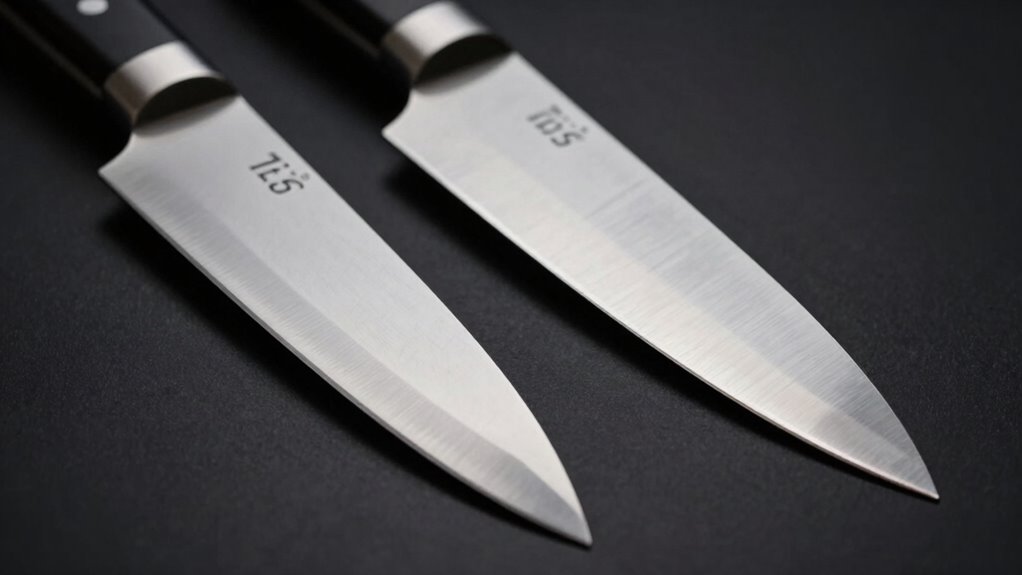

Choosing between a 15° and 20° knife angle changes how your blade performs. A 15° angle makes your knife sharper and better for precise cuts, but it dulls faster and needs more maintenance. A 20° angle offers more durability and strength, ideal for tougher tasks and longer use. The right choice depends on your tasks and knife material. Keep exploring, and you’ll discover how to make the best choice for your kitchen needs.

Get kitchen staples and gadgets delivered free — and shop member deals
- Fast, free delivery on millions of items
- Access to Prime Big Deal Days deals on October 6–7
- Prime Video, Amazon Music and more included
Key Takeaways
- A 15° knife angle creates a sharper, more precise edge ideal for delicate tasks but dulls faster.
- A 20° angle offers increased durability and resistance, suitable for tougher materials and heavy-duty use.
- Sharper angles (15°) improve slicing and precision; wider angles (20°) support blade strength and longevity.
- Material hardness influences the optimal angle choice, with harder steels favoring 15° and softer steels 20°.
- Proper angle selection enhances cutting efficiency, edge maintenance, and overall blade performance based on intended tasks.
Japanese chef knife 15 degree angle
As an affiliate, we earn on qualifying purchases.
As an affiliate, we earn on qualifying purchases.
What Does Knife Angle Mean and Why Is It Important?
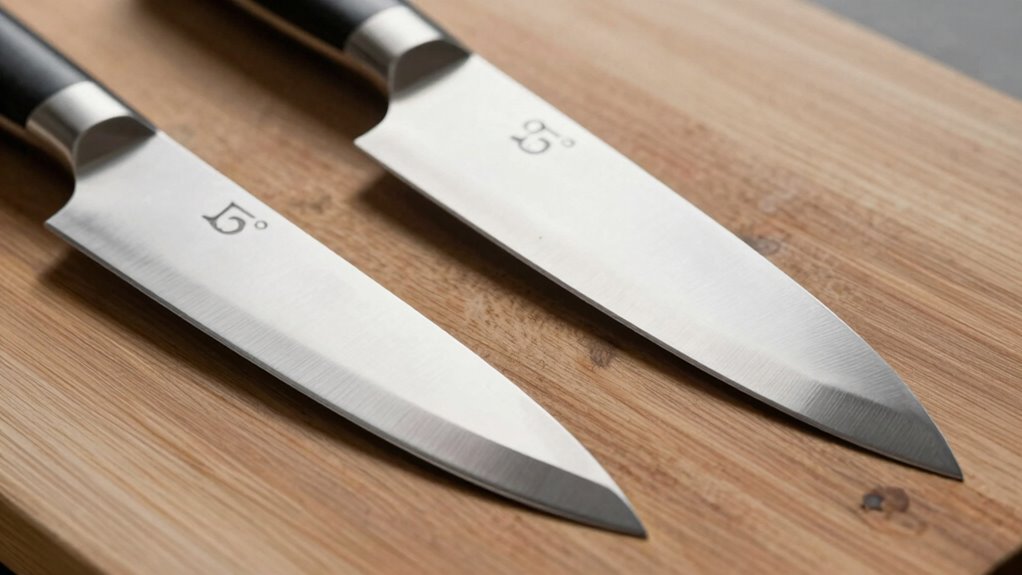
Understanding what knife angle means is essential because it directly affects how well your knife cuts and performs. Knife angle refers to the bevel angle of the blade, which influences its blade geometry. A sharper angle results in a thinner edge, enhancing precision but potentially reducing durability. Conversely, a wider angle creates a sturdier edge, better suited for tougher tasks. This angle impacts your knife’s cutting efficiency, determining how smoothly and easily it slices through ingredients. By choosing the right knife angle for your needs, you maximize blade performance and longevity. Recognizing how blade geometry relates to the angle helps you select knives that deliver ideal cuts while maintaining durability over time. Proper understanding of knife angle ultimately improves your overall cooking experience.
20 degree kitchen knife sharpening stone
As an affiliate, we earn on qualifying purchases.
As an affiliate, we earn on qualifying purchases.
Comparing 15° vs. 20° Blade Angles: Which Is Better?

A 15° blade angle typically offers a sharper cut but may wear down faster, reducing edge durability. In contrast, a 20° angle tends to be more durable, though it might compromise some cutting precision. Consider which balance suits your needs best when choosing between these angles. Additionally, selecting the appropriate tip size for your airless paint sprayer can influence the quality and efficiency of your work.
Edge Durability Differences
Choosing between a 15° and a 20° blade angle substantially impacts your knife’s edge durability, especially with regular use. A sharper angle (15°) offers a finer edge, but it tends to dull faster due to increased vulnerability. Conversely, a 20° angle provides a sturdier edge, resisting dulling longer. Blade material plays an essential role; harder steels hold edges better at sharper angles, while softer steels benefit from a steeper angle. Handle ergonomics also influence durability—comfortable grips reduce slipping and uneven pressure, preserving the edge. Here’s a comparison:
| Aspect | 15° Blade Angle | 20° Blade Angle | Best For |
|---|---|---|---|
| Edge Durability | Dulls faster, prone to chips | More resistant to dulling | Heavy use, durability focus |
| Blade Material | Hard steels excel here | Softer steels perform well | Versatile, everyday tasks |
| Handle Ergonomics | Improves control and precision | Enhances grip stability | Extended use, safety |
Additionally, understanding edge geometry is crucial for optimizing performance and longevity in various tasks.
Cutting Precision Impact
When it comes to cutting precision, the blade angle plays a essential role in how clean and accurate your cuts will be. A 15° blade generally offers sharper, finer cuts, making it ideal for delicate tasks or thin materials like paper or fabric. Conversely, a 20° blade provides a slightly thicker edge, which can be more forgiving on tougher materials such as wood or plastic. Your material composition influences which angle performs best; softer materials benefit from a sharper 15°, while harder materials may require the durability of a 20°. Handle ergonomics also impact precision— a comfortable grip helps maintain control, ensuring cleaner cuts regardless of the angle. Ultimately, choosing between 15° and 20° depends on your material and comfort, directly impacting your cutting accuracy.
high durability chef knife 20 degree
As an affiliate, we earn on qualifying purchases.
As an affiliate, we earn on qualifying purchases.
How Knife Angle Affects Sharpness and Cutting Power
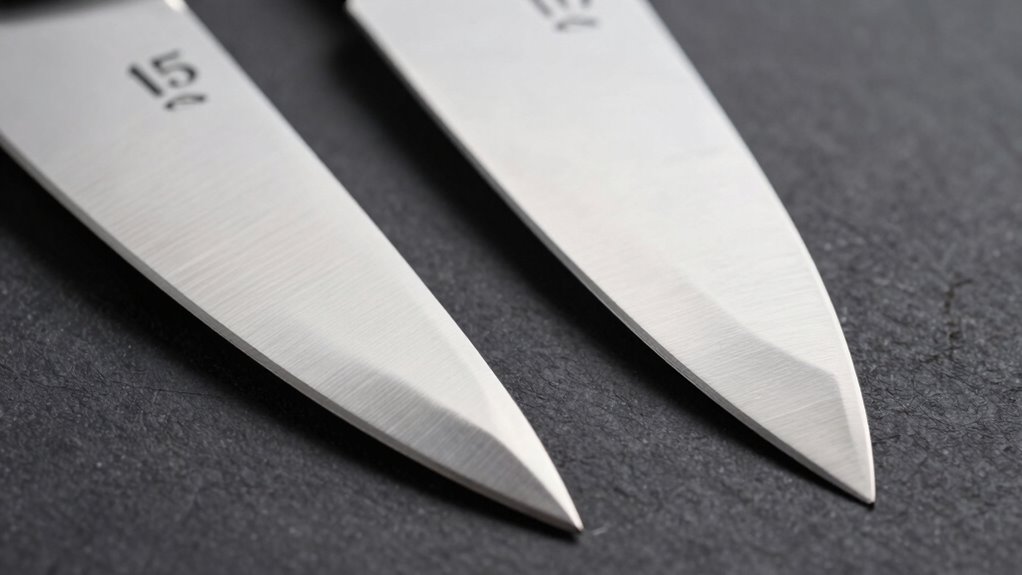
The angle at which a knife is sharpened directly influences both its sharpness and cutting power. A sharper angle, like 15°, creates a finer edge, improving precision and slicing ability. However, it may compromise handle ergonomics and material durability, making the edge more fragile. Conversely, a 20° angle offers a stronger edge, suitable for tougher tasks, but might slightly reduce sharpness. When choosing your knife, consider how the angle impacts performance and longevity. The table below summarizes how different angles affect these factors:
| Angle | Sharpness | Cutting Power |
|---|---|---|
| 15° | Higher, precise cuts | Slightly less durable, fragile |
| 20° | Slightly less sharp, durable | Better for heavy-duty use |
Additionally, understanding the manufacturing and maintenance considerations, such as blade durability, can help in selecting the most appropriate angle for your needs.
precision slicing knife 15 degree
As an affiliate, we earn on qualifying purchases.
As an affiliate, we earn on qualifying purchases.
How Blade Angles Influence Durability and Edge Holding
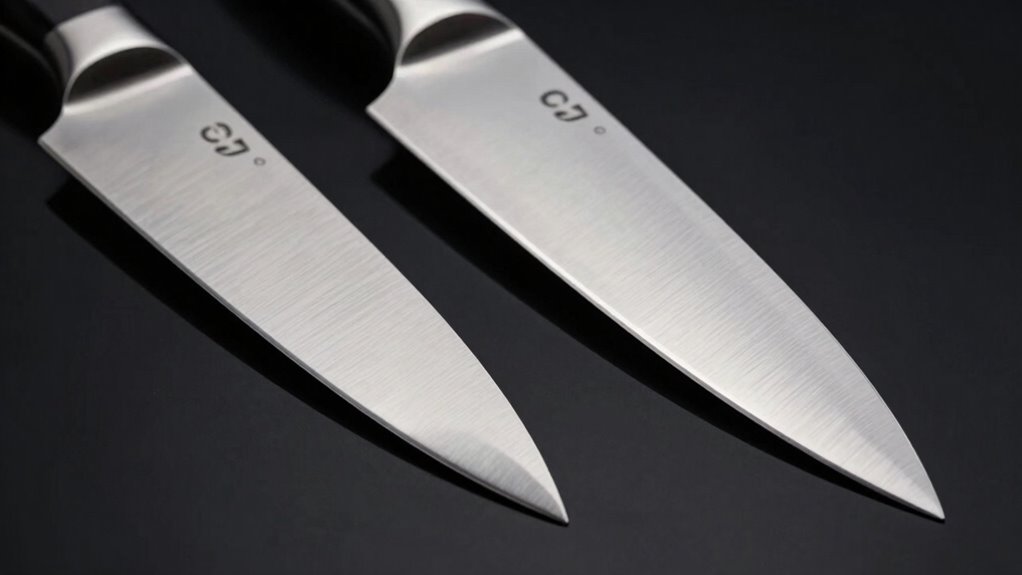
Your knife’s blade angle directly affects its strength and how well it holds an edge over time. A more obtuse angle offers better durability and resistance to wear, while a sharper angle may need more frequent sharpening. Understanding these trade-offs helps you choose the right angle for easier maintenance and longer-lasting performance. For example, certain blade angles are preferred for specific tasks, such as cooking or outdoor activities, to optimize performance and longevity. Additionally, blade geometry can influence cutting precision and overall handling, which are important considerations for both professional chefs and home cooks. Recognizing how different angle types interact with various materials can further refine your choice for specialized tasks, especially considering factors like the material hardness of the objects being cut. Being aware of edge retention qualities can also help in selecting the ideal blade for your needs, ensuring consistent performance over time.
Edge Strength and Sharpness
Blade angles directly impact both edge strength and sharpness, shaping how well a knife performs in different tasks. A steeper angle, like 20°, creates a robust edge with better durability, while a shallower angle, such as 15°, enhances cutting efficiency and precision. Your choice of blade geometry influences how long the edge stays sharp and how much force is needed during slicing. Here’s a quick comparison:
| Aspect | 15° Angle | 20° Angle |
|---|---|---|
| Edge Strength | Less durable, prone to dulling | Stronger, resists chipping |
| Cutting Efficiency | Higher, smoother cuts | Slightly less precise |
| Ideal for | Fine slicing, detail work | Heavy-duty tasks |
Understanding this helps you choose the right angle for your specific needs.
Blade Wear Resistance
Since blade angles directly affect how well a knife resists wear, choosing the right angle can markedly extend its lifespan. A sharper angle, like 20°, may cut more easily but tends to dull faster, especially if the blade material isn’t highly durable. Conversely, a 15° angle offers better wear resistance, holding its edge longer under regular use. Blade material plays a vital role—harder steels resist wear better, regardless of angle. Handle ergonomics also matter; a comfortable grip allows you to apply consistent pressure, reducing uneven wear. By selecting an angle suited to your blade material and grip style, you optimize wear resistance and prolong sharpness, ensuring your knife stays effective longer without needing frequent replacements.
Maintenance and Sharpening
Blade angles play a crucial role in maintenance and sharpening, directly affecting how easily you can restore and preserve the edge. A sharper angle, like 15°, tends to require more frequent honing but produces a finer edge that’s easier to sharpen. Conversely, a 20° angle offers better durability, making it more forgiving during regular use. The blade material also impacts upkeep; harder steels hold edges longer but may need specialized sharpening tools, while softer steels are easier to sharpen but dull faster. Handle ergonomics influence control during sharpening, helping you maintain consistent angles. Proper maintenance involves choosing the right angle based on your blade’s intended use, blade material, and handle comfort. Regular honing and correct sharpening techniques keep your knife performing at its best over time.
What’s the Best Knife Angle for Different Types of Kitchen Knives?
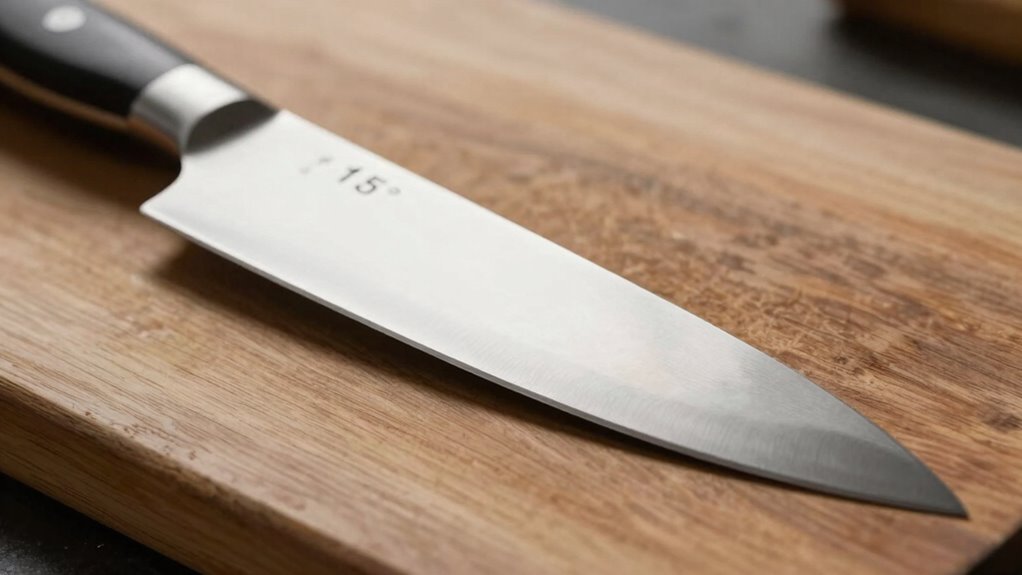
Choosing the right knife angle is essential for ideal cutting performance and blade longevity. For delicate tasks with softer blade materials, like Victorinox or ceramic knives, a 15° angle offers sharper edges, but they may dull faster. Harder steels, such as high-carbon or stainless steel, benefit from a 20° angle, providing durability and edge retention. Handle ergonomics also influence the ideal angle; a comfortable grip allows precise control at different angles. For slicing vegetables and fruits, a shallower angle enhances sharpness, while heavier-duty tasks like chopping or cutting dense meats may require a steeper angle for strength. Understanding your knife’s blade material and handle design helps determine the best angle, ensuring optimal performance and longer-lasting edges. Additionally, blade geometry plays a crucial role in how well a knife performs at different angles, affecting both cutting efficiency and safety. Proper sharpening techniques tailored to the blade angle can significantly extend the lifespan of your knives.
How to Choose the Right Knife Angle for Your Cooking Style
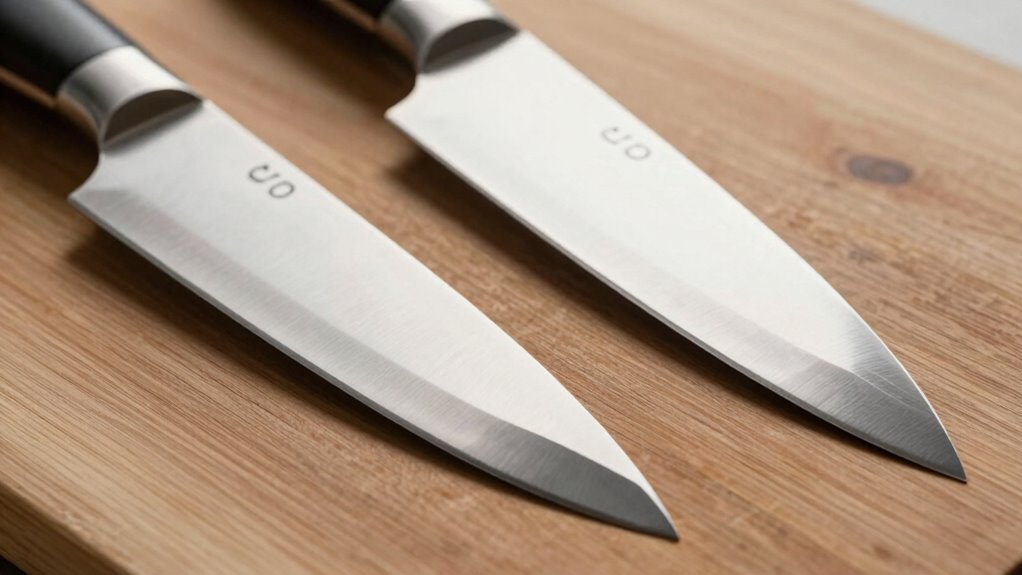
Your cooking style greatly influences the ideal knife angle to use, as different techniques demand varying levels of sharpness and durability. If you prefer precise slicing with delicate cuts, a sharper 15° angle suits you best. For heavy-duty chopping or tougher ingredients, a 20° angle provides more durability. Consider how your grip and storage solutions can support your chosen angle—an ergonomic grip helps maintain control, especially with sharper blades.
| Cooking Style | Recommended Angle | Focus |
|---|---|---|
| Fine slicing and garnishes | 15° | Precision and sharpness |
| General use | 20° | Durability and versatility |
| Heavy-duty chopping | 20° or more | Strength and longevity |
| Regular maintenance | Adjust based on use | Proper storage and care |
Tips for Sharpening and Maintaining Knives With Different Angles
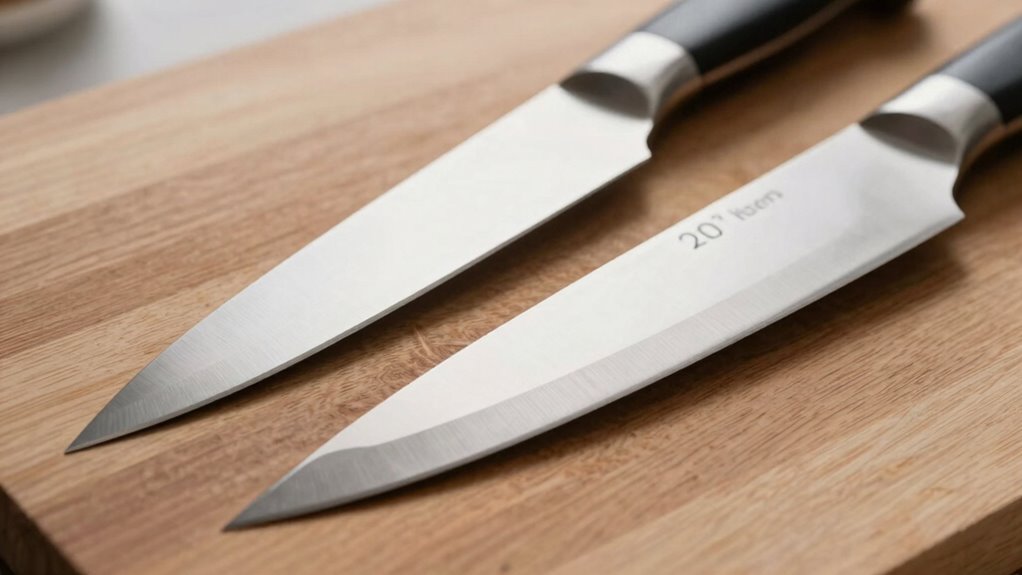
Maintaining the correct angle during sharpening is essential to preserve your knife’s performance and longevity. Start by considering your blade material; harder steels often require a slightly steeper angle for ideal sharpness, while softer blades can tolerate a wider angle. Use a sharpening stone or tool suited for your knife’s angle—whether 15° or 20°—and keep your strokes consistent. Pay attention to handle ergonomics, ensuring a comfortable grip to control your movements precisely. Regularly hone your knife to maintain its edge between sharpenings, and avoid excessive force, which can damage the blade. Properly cleaning and drying your knife after use also helps sustain the edge. Additionally, understanding blade geometry can help you choose the right sharpening approach for your knife’s specific angle. Following these tips ensures your knives stay sharp and effective, regardless of their specific angle.
Common Myths About Knife Angles Debunked

Many people believe that there’s a single perfect angle for all knives, but this is a common myth. Myth correction reveals that different knives and tasks require varying angles for ideal performance. The idea that 20° is always better than 15°, or vice versa, is an angle misconception. Your choice should depend on the knife’s purpose, material, and your cutting style. For example, thinner angles like 15° may deliver sharper cuts but can be less durable, while 20° angles offer more strength for heavy-duty tasks. Believing there’s a one-size-fits-all angle limits your knife’s potential. Understanding these myth corrections helps you make smarter decisions, ensuring your knives stay sharp longer and perform better for specific tasks.
Final Tips for Picking the Best Knife Angle for Your Kitchen
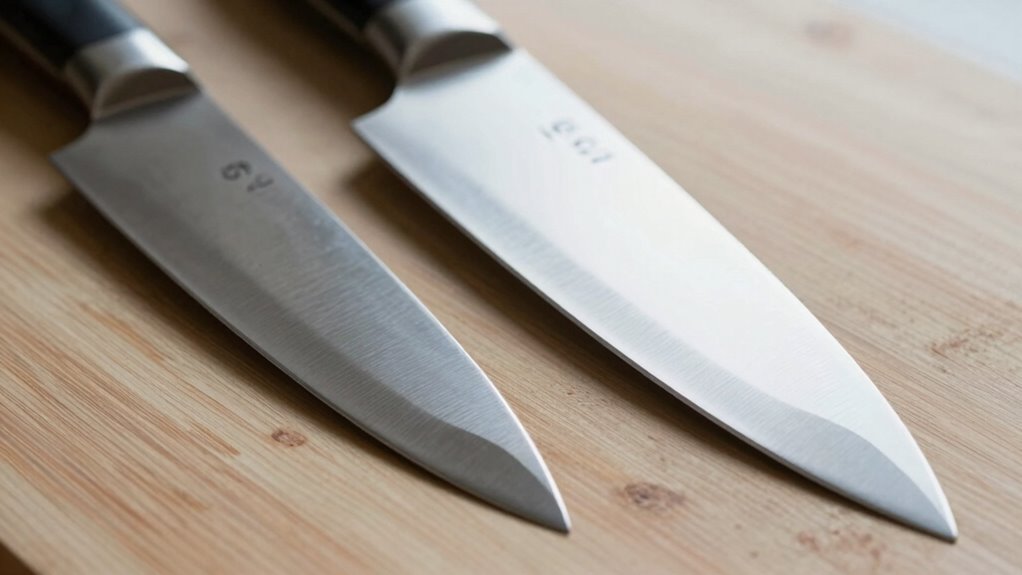
Choosing the right knife angle for your kitchen involves considering the specific tasks you’ll perform most often. Your choice affects sharpness, durability, and ease of use. To make the best decision, think about the metal hardness—softer metals may benefit from a steeper angle like 20°, while harder steels can hold a sharp edge at 15°. Handle ergonomics also matter; a comfortable grip guarantees control and reduces fatigue during extended chopping. Additionally, understanding outdoor wisdom can help you select knives that perform well in various settings, including outdoor cooking or camping scenarios.
Frequently Asked Questions
Can I Change the Knife Angle After Purchase?
Yes, you can change the knife angle after purchase. Adjusting the angle may affect blade durability and sharpening frequency, so be careful. To do this, you’ll need to reprofile or sharpen the edge to match your desired angle. Keep in mind, changing the angle can make your knife more or less durable and may require more frequent sharpening. Always follow proper techniques to maintain the best performance.
Do Professional Chefs Prefer 15° or 20° Angles?
Professional chefs generally prefer a 15° angle because it enhances culinary presentation by allowing for sharper, more precise cuts. This angle also improves knife aesthetics, giving the blade a sleek, professional look. You’ll find that a 15° edge helps you achieve cleaner, more consistent slices, elevating your dishes’ visual appeal and overall quality. While 20° offers durability, the 15° provides the finesse chefs aim for in first-rate culinary work.
How Does Knife Angle Affect Safety During Use?
Using a sharper knife is like walking a tightrope—you need control to stay safe. A 15° angle offers better cutting precision but can be less safe because the sharper edge might chip or dull faster, affecting blade durability. Conversely, a 20° angle provides a sturdier edge, reducing risks of accidents and maintaining safety during use. Choose the right angle to balance safety, blade durability, and cutting performance.
Is a Sharper Angle Easier to Maintain?
A sharper angle, like 15°, isn’t necessarily easier to maintain because it tends to have less edge durability, requiring more frequent sharpening. If you prefer easier maintenance, a slightly blunter angle, such as 20°, offers better edge durability, making it easier to maintain over time. So, while a sharper angle slices more precisely, it demands more effort and frequent maintenance, whereas a less sharp angle balances sharpness with maintenance ease.
Do Different Materials Require Specific Angles?
Did you know that over 60% of chefs customize their knife angles based on material? Different materials do call for specific angles to optimize blade durability and cutting precision. Softer materials, like vegetables, often need a sharper 15° angle, while harder materials, like bones, benefit from a sturdier 20° angle. Adjusting your knife angle ensures you maintain sharpness longer and achieve cleaner cuts, making your work more efficient.
Conclusion
Choosing the right knife angle is like tuning an instrument — it determines the perfect harmony between sharpness and durability. Whether you prefer a razor-thin 15° or a sturdier 20°, understanding these differences helps you craft culinary symphonies with ease. So, pick your angle wisely, sharpen with care, and let your knives sing through every chop and slice, turning simple ingredients into culinary masterpieces. Your kitchen’s melody starts with the perfect edge.
Fall Picks
fall essentials
As an affiliate, we earn on qualifying purchases.