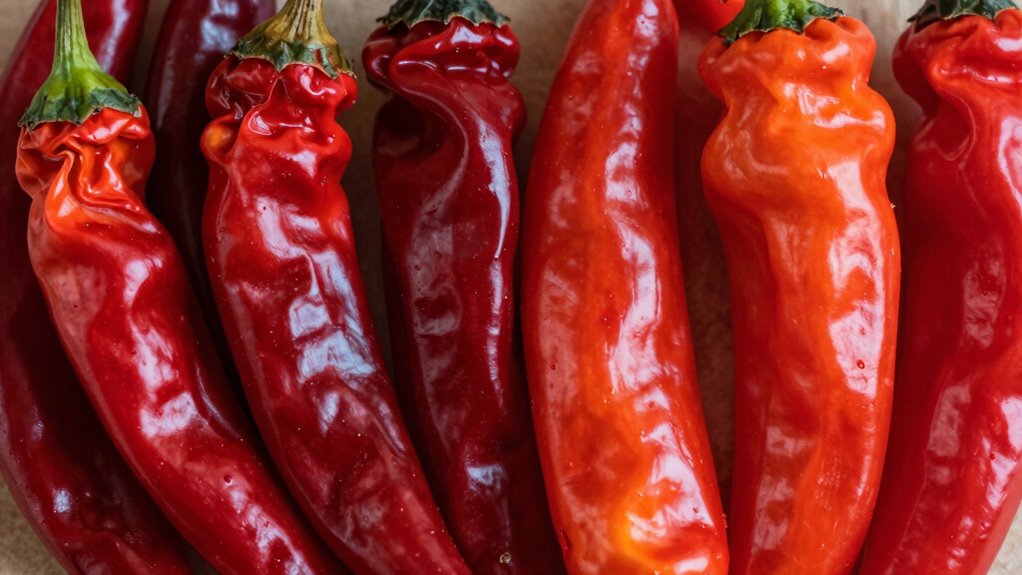

If you’re choosing between Guntur and Kashmiri chilies, you’ll notice that Guntur peppers pack a fiery punch, adding intense heat and bold flavor to your dishes. In contrast, Kashmiri chilies are prized for their vibrant color and mild warmth, perfect for creating visually appealing, less spicy meals. Understanding their different roles can help you decide which to use for your flavor or presentation needs; exploring further will reveal even more culinary possibilities.
Key Takeaways
- Guntur chili offers intense heat and bold flavor, while Kashmiri chili provides vibrant color with mild warmth.
- Guntur chili is used for fiery dishes and spice blends, whereas Kashmiri chili enhances visual appeal with rich red hue.
- Guntur chili contains higher capsaicin, contributing to health benefits and a stronger spicy profile; Kashmiri chili has milder heat.
- Guntur chili is typically used fresh or ground in small quantities for heat; Kashmiri chili is often powdered for color and flavor.
- The choice depends on whether the dish needs fiery heat (Guntur) or vibrant color (Kashmiri).

When comparing Guntur chili and Kashmiri chili, it’s important to recognize how their distinct flavors, heat levels, and culinary uses set them apart. Guntur chili, known for its fiery spiciness, is a staple in Indian kitchens, especially in South Indian and Andhra Pradesh cuisine. Its bold heat enhances curries, pickles, and spice blends, making it a go-to for adding intense heat. Kashmiri chili, on the other hand, is prized for its vibrant red color and mild warmth. It’s often used to impart a rich hue to dishes like Rogan Josh and other Kashmiri curries without overwhelming heat. When considering culinary applications, Guntur chili is your choice for dishes that require a punch of heat and depth of flavor, while Kashmiri chili excels in adding color and a gentle warmth, making dishes visually appealing and balanced.
Nutritional differences also play a role in how you might choose between the two. Guntur chili tends to have a higher capsaicin content, which not only contributes to its heat but also offers potential health benefits such as boosting metabolism and providing anti-inflammatory effects. Its nutritional profile includes vitamins A and C, along with antioxidants that support immune health. Kashmiri chili, although milder, still provides these nutrients but in lesser amounts. Its primary nutritional advantage is its ability to add color and flavor without excessive heat, making it suitable for those sensitive to spice or seeking to control their capsaicin intake.
When you prepare dishes with Guntur chili, you’re likely to use it in smaller quantities because of its intense heat, and it can also be ground into powders or used fresh to intensify flavor. Kashmiri chili, often used in powdered form, blends well into spice mixes and marinades, providing a visual appeal that can elevate the presentation of your dishes. Both chilies offer unique culinary applications: Guntur chili can be your secret weapon for fiery, robust flavors, whereas Kashmiri chili helps create vibrant, color-rich dishes with a milder heat profile.

New Super Herbal Guntur Chili Powder, Premium Indian Spice, 3.5 oz (100g)
PREMIUM QUALITY: Authentic Guntur chili powder from India, known for its rich flavor and vibrant red color, perfect…
As an affiliate, we earn on qualifying purchases.
As an affiliate, we earn on qualifying purchases.
Frequently Asked Questions
How Do Guntur and Kashmiri Chilies Compare in Nutritional Content?
You’ll find that Guntur and Kashmiri chilies differ in nutritional antioxidants and dietary fiber. Guntur chilies pack a punch with higher antioxidant levels, which boost your immune system, while Kashmiri chilies are milder but still provide dietary fiber that aids digestion. Both add unique nutritional benefits, but Guntur’s spiciness offers a more concentrated dose of antioxidants, whereas Kashmiri chilies contribute more to your fiber intake.
What Are the Best Culinary Uses for Each Chili Type?
Like a painter choosing vibrant hues, you’ll find Guntur chilies perfect for fiery curries and spicy marinades, where their intense heat elevates flavor pairings. Kashmiri chilies, with their rich red color, shine in dishes like Kashmiri pulavs and kebabs, adding depth and visual appeal. Use Guntur for bold, heated pairing recipes, and Kashmiri to impart color and a mild, smoky flavor. Both enhance your culinary canvas beautifully.
Are There Any Health Risks Associated With Consuming These Chilies?
You should be aware that consuming Guntur or Kashmiri chilies can pose health risks if you have a spice allergy or capsaicin sensitivity. You might experience allergic reactions like itching or swelling, or digestive issues. If you’re sensitive to capsaicin, eating these chilies could cause burning sensations or stomach discomfort. Always start with small amounts and consult a healthcare professional if you notice adverse effects.
How Do Cultivation Practices Differ Between Guntur and Kashmiri Chilies?
Think of cultivating chilies like tending a garden of different personalities. Guntur chilies thrive with intensive irrigation techniques and proactive pest management, adapting to hot, dry conditions. Kashmiri chilies, on the other hand, flourish with moderate watering and natural pest control, suited to cooler, mountainous regions. Your approach must match each chili’s unique needs, ensuring healthy growth and ideal flavor or color.
Can These Chilies Be Used as Natural Food Colorants?
You can definitely use Kashmiri chilies as natural food colorants because of their vibrant red hue, making them great for culinary applications like curries and spice blends. Guntur chilies, with their heat, have limited natural dye potential but can still add color if processed properly. Both chilies offer unique options for natural dyes, enhancing dishes without artificial additives, and their versatility makes them valuable in diverse culinary uses.

Rani Kashmiri Chilli Powder (Deggi Mirch, Low Heat) Ground Indian Spice 85g PET Jar ~ All Natural | Salt-Free | Vegan | Kosher | Gluten Friendly | Perfect for Deviled Eggs & Other Low Heat Dishes
You'll LOVE our Kashmiri Chilli Powder (Deggi Mirch, low heat) Ground by Rani Brand–Here's Why:
As an affiliate, we earn on qualifying purchases.
As an affiliate, we earn on qualifying purchases.
Conclusion
Ultimately, choosing between Guntur chili and Kashmiri chili is like selecting a brushstroke for a masterpiece—each adds its unique touch. Guntur brings fiery intensity, igniting your dishes with a bold spark, while Kashmiri offers a vibrant splash of color, elevating visual appeal. Your decision depends on whether you crave the heat that fuels passion or the hue that paints your culinary canvas. Either way, both peppers are essential threads in the rich tapestry of flavor and color.

Rani Curry Powder Mild (10-Spice Authentic Indian Blend) 3oz (85g) PET Jar ~ All Natural | Salt-Free | NO Chili or Peppers | Vegan | No Colors | Gluten Friendly | NON-GMO | Kosher | Indian Origin
You'll LOVE our Mild Curry Powder by Rani Brand Here's Why:
As an affiliate, we earn on qualifying purchases.
As an affiliate, we earn on qualifying purchases.

Mezzetta Hot Chili Peppers | Gluten Free, Kosher, Keto | 16 Fluid Ounce Jar (Pack of 6)
HEAT IT UP: Spice up your favorite south of the border recipes with fresh crunchy Chili Peppers from…
As an affiliate, we earn on qualifying purchases.
As an affiliate, we earn on qualifying purchases.