Raw mangoes, the seasonal sour that transforms summer cooking, offer vibrant tang and versatility to dishes. By picking the right varieties like Alphonso or Totapuri at the perfect stage—firm and green—you guarantee they add the ideal tartness to your chutneys, pickles, and salads. Proper harvesting and handling preserve their fresh flavor, while careful selection boosts your culinary creations. Stay with us, as you’ll discover more secrets to choosing and using raw mangoes to elevate your summer recipes.
Key Takeaways
- Raw mangoes add a distinct tangy flavor that enhances summer recipes like chutneys, pickles, and salads.
- Proper harvesting ensures mangoes maintain their sourness and firm texture, ideal for summer cooking.
- Different varieties, such as Totapuri and Kesar, offer unique tartness suited for specific dishes.
- Handling and storage methods preserve the raw mango’s sourness and freshness for extended use.
- Selecting the right stage of ripeness ensures raw mangoes contribute the perfect tang to summer culinary creations.
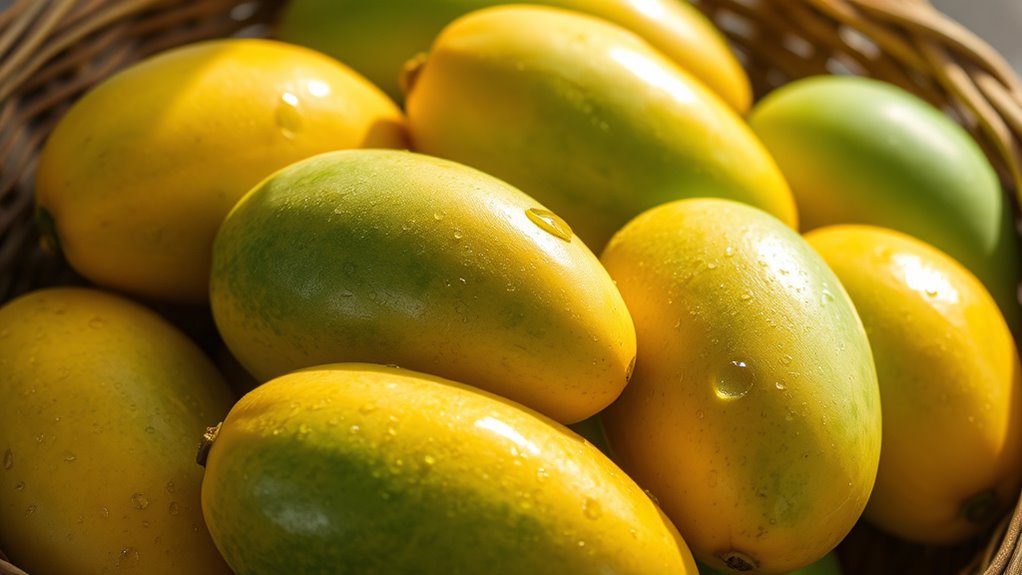
Raw mangoes are a versatile fruit enjoyed in many cuisines for their tangy flavor and invigorating taste. When you think about raw mangoes, you might immediately picture the vibrant green fruit that signals summer’s arrival. But not all raw mangoes are the same; there are many mango varieties, each with unique textures, flavors, and uses. Some popular varieties include Alphonso, Kesar, Dasheri, Langra, and Totapuri. Alphonso, known for its rich, sweet-tart flavor, is often preferred for eating fresh or making chutneys, while Totapuri, with its tartness and firm flesh, is ideal for pickles and salads. Recognizing the differences between these mango varieties helps you select the perfect mango for your culinary needs.
Harvesting techniques play a crucial role in guaranteeing you get the best quality raw mangoes. Typically, mangoes are harvested when they reach full size but are still firm and green, just before they ripen fully. Skilled farmers monitor the fruit’s maturity by observing color changes, size, and firmness. They often use a combination of visual cues and gentle testing, such as a slight squeeze to check firmness. Sometimes, the mango is plucked carefully to avoid damaging the fruit or the tree, especially since ripe mangoes can be delicate. The timing of harvesting is vital; if picked too early, the mango may lack flavor, and if too late, it could overripen or develop blemishes. Proper harvesting techniques guarantee that the mangoes retain their tangy sharpness and firm texture, perfect for making pickles, chutneys, or salads. Additionally, understanding the best harvesting practices ensures the mangoes are picked at the optimal stage for flavor and texture.
Once harvested, raw mangoes require proper handling and storage to preserve their flavor and texture. You can keep them at room temperature if you plan to use them within a few days, or refrigerate them for longer storage. When you choose mango varieties, consider how you’ll be using them; for example, firmer mangoes are better suited for slicing into salads or making pickles, whereas slightly softer ones are ideal for chutneys and jams. The key is to pick mangoes that are free from bruises or blemishes, as these can affect their shelf life and taste. Additionally, understanding proper storage techniques is essential to prevent spoilage and maintain optimal flavor.
Understanding the different mango varieties and harvesting techniques allows you to make informed choices, ensuring your raw mangoes are fresh, flavorful, and perfect for your summer recipes. Whether you’re making tangy chutneys, spicy pickles, or invigorating salads, selecting the right mango and harvesting it correctly makes all the difference. So next time you shop for raw mangoes, pay close attention to the variety and how they’re harvested—your taste buds will thank you.

TAZAH Sweet Raw Mango Chutney, 12.7 oz (360g) Squeeze Bottle – Sweet, Tangy & Spiced Indian Mango Chutney – Vegan – No Artificial Preservatives – Product of India
SWEET, TANGY & SPICED MANGO CHUTNEY – A bold Indian-style chutney with a sweet finish, tangy bite, and…
As an affiliate, we earn on qualifying purchases.
As an affiliate, we earn on qualifying purchases.
Frequently Asked Questions
How Long Can Raw Mangoes Be Stored Before Spoilage?
You can store raw mangoes for about 1 to 2 weeks if kept in a cool, dry place or refrigerated. To prevent spoilage, make certain they’re kept away from moisture and direct sunlight. Check them regularly for signs of ripening or soft spots. Proper storage duration helps you enjoy their tart flavor longer while spoilage prevention keeps them fresh and safe to use in your summer dishes.
Are There Health Benefits Associated With Consuming Raw Mango?
Yes, consuming raw mango offers several health benefits. You get valuable nutrition benefits like vitamins A, C, and E, which boost your immune system. Raw mango also promotes digestive health by stimulating enzymes that aid digestion. Plus, its antioxidants help fight free radicals. Incorporating raw mango into your diet not only adds flavor but also supports your overall well-being, making it a smart choice during summer.
Can Raw Mango Be Used in Desserts or Only Savory Dishes?
You can definitely use raw mango in desserts, not just savory dishes. Raw mango adds a tangy twist to sweet mango recipes like sorbets, puddings, and chutneys. Its tart flavor balances sweetness beautifully, making your raw mango desserts unique and invigorating. Experiment with combining raw mango with sugar, jaggery, or coconut for delicious treats that stand out in your summer menu. So go ahead, explore both savory and sweet possibilities!
Which Varieties of Raw Mango Are Most Popular Worldwide?
Imagine biting into a tangy, juicy raw mango—it’s no wonder the Alphonso, Kesar, and Dasheri varieties are favorites worldwide. These mango varieties, with their seasonal availability, burst with flavor and are celebrated across different regions. Alphonso from India’s west coast is prized for its rich sweetness, while Kesar from Gujarat offers a distinct aroma. Their vibrant colors and unique flavors make them the top choices for mango lovers everywhere.
How Do You Select Ripe yet Firm Raw Mangoes at the Market?
When selecting raw mangoes at the market, you want to focus on mango ripeness and market selection. Look for mangoes that are firm to the touch but give slightly under gentle pressure, indicating they’re ripe yet firm. Check for smooth skin without wrinkles or blemishes. A fresh, fruity aroma near the stem also signals good mango ripeness. Trust your touch and smell to pick the best mangoes for your needs.
Totapuri raw mango for pickles
As an affiliate, we earn on qualifying purchases.
As an affiliate, we earn on qualifying purchases.
Conclusion
As summer winds down, you realize raw mango’s tangy magic has only just begun. Its versatile zest transforms dishes in ways you never expected, leaving you craving more. But wait—there’s a secret ingredient that takes these flavors to a whole new level. Are you ready to discover what makes every summer bite unforgettable? Stay tuned, because this season’s raw mango adventure is far from over—you haven’t seen the last of its sour charm.

RAW Smell-Proof Jar & Cozy w/Lock (10oz), Black, 10 Ounce
As an affiliate, we earn on qualifying purchases.
As an affiliate, we earn on qualifying purchases.

Natural Mango Fruit Powder – 1 lb – Non-GMO, Vegan, Gluten Free, Kosher, Vegan, Paleo, Raw – Green Nectar (16 Oz – 1 Pack)
ALL NATURAL: No additives, no preservatives, no artificial colors, no flavors or fragrances. Non-GMO, Vegan. Gluten Free. Kosher…
As an affiliate, we earn on qualifying purchases.
As an affiliate, we earn on qualifying purchases.