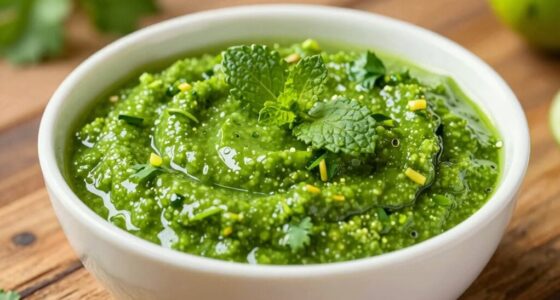
Chutney turns dark over time mainly due to oxidation and natural chemical reactions, which are sped up by exposure to air, light, and metal containers. Using airtight glass or plastic containers, refrigerating, and adding ingredients like lemon juice or turmeric can help maintain its bright color. Proper storage in a cool, dark place slows the darkening process. Keep going to discover more tips on preserving your chutney’s vibrant look and freshness.
Key Takeaways
- Oxidation from exposure to air causes chutney to darken over time.
- Using airtight, dark containers slows oxidation and preserves color longer.
- Adding natural antioxidants like lemon juice or vinegar helps maintain brightness.
- Store chutney in cool, dark places to reduce chemical reactions that lead to darkening.
- Using fresh ingredients and proper preservation techniques prevents color degradation.
Why Does Chutney Turn Dark Over Time?

When chutney sits for a while, it naturally begins to darken due to chemical reactions. Fruit acidity plays a key role in this process by influencing how enzymes and oxidation reactions occur. Acidic fruits help slow down browning, but as the chutney ages, its pH levels may shift, accelerating darkening. The container material also impacts this reaction—metal containers can catalyze oxidation, leading to faster discoloration, while glass or plastic helps preserve its color longer. Proper storage in non-reactive containers minimizes exposure to elements that trigger browning. Additionally, Color stability is affected by storage temperature, with cooler environments helping to maintain vibrant hues. Keeping the acidity balanced and choosing the right container material are essential steps to slow down the darkening process. These factors work together to maintain your chutney’s vibrant appearance over time, and understanding how oxidation influences color changes can help you better preserve its freshness. Furthermore, using antioxidants such as lemon juice can help reduce oxidation and keep the chutney looking bright longer. Additionally, controlling storage conditions can significantly extend the bright, appealing color of your chutney over time.
How Does Oxidation Cause Darkening in Chutney?

Oxidation is a key process that causes chutney to darken over time. When exposed to air, the oxidation process triggers chemical changes in the ingredients, especially those rich in phenolic compounds. Enzyme activity, particularly polyphenol oxidase, accelerates this reaction, turning fresh colors into duller, darker shades. As enzymes interact with oxygen, they catalyze the formation of melanin-like compounds, which give chutney its unwanted dark hue. To minimize this, you can reduce oxygen exposure by storing chutney in airtight containers or adding acidifiers like lemon juice. Additionally, keeping ingredients cold slows down enzyme activity, helping preserve the chutney’s vibrant color longer. proper storage techniques can further prevent oxidation and maintain the chutney’s appealing appearance. Being aware of oxidation processes can also guide you in choosing ingredients and preparation methods that resist discoloration. The use of antioxidants or natural preservatives can also be effective in preventing discoloration, providing additional means to keep your chutney bright and fresh.
Which Ingredients and Preservatives Help Keep Chutney Bright?

To keep your chutney looking vibrant and fresh, incorporating certain ingredients and preservatives can make a significant difference. Natural colorants like turmeric, tamarind extract, or beetroot juice help maintain bright hues without artificial dyes. Additionally, antioxidant ingredients such as lemon juice, vinegar, or vitamin C tablets protect against oxidation, which causes darkening. These antioxidants slow down the chemical reactions that lead to color loss, keeping your chutney appealing longer. Using fresh ingredients and proper preservation methods enhances their effectiveness. Avoiding exposure to heat, air, and sunlight also helps preserve color. Incorporating antioxidant-rich ingredients can further help prevent discoloration and extend shelf life. Gold IRA markets offer insights into secure investment strategies that focus on preservation and stability, similar to how choosing the right ingredients preserves your chutney’s appearance. Incorporating food safety practices can further ensure the longevity and vibrancy of your chutney. For optimal results, maintaining proper storage conditions and understanding oxidation processes can significantly extend the vibrant look of your chutney. By combining natural colorants with antioxidant ingredients, you can enjoy a bright, appetizing chutney that stays vibrant without relying on artificial preservatives.
How Should You Store Chutney to Maintain Its Color?

Proper storage plays a key role in keeping your chutney’s vibrant color intact over time. To prevent darkening, always use airtight containers to minimize exposure to air and light, which can cause oxidation. Store your chutney in a cool, dark place, away from direct sunlight and heat sources, as heat accelerates color loss. Choose glass jars or plastic containers with tight-fitting lids to guarantee freshness and prevent contamination. Additionally, label your containers with the date to monitor freshness and avoid prolonged storage. Keeping your chutney in cool storage helps preserve its bright hue, flavor, and texture longer. Proper storage also involves understanding oxidation processes, which can lead to color changes in your chutney. Maintaining an appropriate storage environment—with controlled temperature and humidity—further supports the retention of vibrant color. Temperature control plays a crucial role in slowing down chemical reactions that cause discoloration. By following these simple storage tips, you’ll maintain the appealing color of your chutney and enjoy its vibrant appearance for weeks, especially when you consider proper storage techniques to optimize freshness.
How Can You Extend the Freshness and Vibrancy of Your Chutney?

To keep your chutney fresh and vibrant for as long as possible, focus on selecting high-quality ingredients and preparing it in clean, sanitized containers. Proper container sterilization prevents bacteria and mold growth, extending freshness. Incorporate fruit acidity by adding lemon juice or vinegar, which helps preserve color and flavor. Store chutney in the refrigerator and avoid exposure to air, light, and heat. Utilizing temperature monitoring techniques such as temperature monitoring can further optimize storage conditions and prolong its shelf life. Additionally, understanding food preservation methods can help you choose the best practices to maintain chutney quality over time, especially through techniques like vacuum sealing or controlled atmosphere storage. Using the right storage conditions is essential to prevent darkening and spoilage over time.
Frequently Asked Questions
Can Adding Lemon Juice Prevent Chutney From Darkening?
Yes, adding lemon juice can prevent chutney from darkening because its acidity helps preserve the bright color. Lemon acidity slows down oxidation, which causes the darkening. To maintain color preservation, squeeze fresh lemon juice into your chutney before storing. This simple step keeps the chutney looking fresh and vibrant, ensuring it stays appealing longer. Just be careful not to add too much, which might alter the flavor.
Does the Type of Container Affect Chutney’s Color Retention?
Surprisingly, the container type does matter for chutney’s color retention. You’d think any jar would do, but glass or ceramic containers are better than metal or plastic, which can cause discoloration over time. Proper storage methods—keeping chutney in airtight, cool, dark places—also help maintain its vibrant hue. So, choose your container wisely and store it properly to keep your chutney colorful and delicious longer.
Are There Natural Ingredients That Keep Chutney Looking Fresh Longer?
You can keep your chutney looking fresh longer by adding herbs preservation techniques like basil or mint, which contain natural antioxidants. Using vinegar alternatives such as lemon juice or apple cider vinegar helps preserve color and flavor without darkening. These natural ingredients aid in maintaining vibrant hues and extend shelf life, ensuring your chutney stays appealing and delicious. Remember to store it in airtight containers to maximize freshness.
How Does Temperature Influence Chutney’s Color Stability?
Temperature influences chutney’s color stability like a delicate dance that shifts with the weather. You’ll find that higher temperatures accelerate oxidation reactions, making your chutney darken faster, while cooler temps slow these processes down. To keep your chutney vibrant, store it in a cool, consistent environment. Avoid temperature fluctuations, as they’re particularly sensitive to temperature changes, which can trigger oxidation and cause color loss over time.
Is It Safe to Consume Darkened Chutney?
Yes, darkened chutney is generally safe to eat, but it may have lost some flavor and freshness. To keep it safe and tasty, follow proper storage tips like refrigerating it promptly and using airtight containers. This helps preserve its flavor and prevents further spoilage. Always check for off smells or mold before consuming, and if it looks or smells unusual, discard it to stay safe.
Conclusion
Think of your chutney as a vibrant sunset — its colors shining brightest when cared for properly. By understanding oxidation and choosing the right ingredients, you become the guardian of its fiery spirit. Proper storage and preservation keep that sunset alive, not fading into dusk. With a little attention, you’re nurturing a jar of sunshine, ensuring each spoonful continues to brighten your dishes and your day, just like a sunset that promises tomorrow’s promise.