Coconut milk brands vary in stability because of differences in processing, ingredients, and added stabilizers. Some brands use traditional methods that preserve natural fats and proteins, which help prevent splitting. Others include stabilizers or thickeners that keep the emulsion intact during heating. High-quality, minimally processed coconut milk tends to stay smooth in curries, especially when cooked gently. To learn how to choose the best options and avoid curdling, keep exploring these factors.
Key Takeaways
- High heat and rapid boiling destabilize the emulsion, causing fats and water to separate, leading to splitting.
- Use of stabilizers and minimal additives in certain brands helps maintain coconut milk’s stability during cooking.
- Traditional processing methods preserve natural fats and proteins, reducing the risk of curdling in curries.
- Poor-quality or ultra-processed coconut milk often contains preservatives that interfere with emulsion stability.
- Proper cooking techniques, like gentle simmering and slow temperature increase, prevent splitting and curdling.
Why Does Coconut Milk Sometimes Split When Heated?

Coconut milk sometimes splits when heated because the fats and water separate as the temperature rises. This separation occurs because the fats, which provide the rich texture and flavor, can become unstable under high heat. Understanding coconut milk nutrition reveals it’s rich in healthy fats, vitamins, and minerals, making it a popular ingredient worldwide. Its cultural uses span Asia, the Caribbean, and Africa, where it’s essential in curries, stews, and desserts. When overheated or boiled too aggressively, the fats can coagulate and cause the milk to curdle or split, disrupting the smooth consistency. To avoid this, gentle simmering helps maintain the coconut milk’s stability, preserving both its nutritional benefits and its culinary versatility in traditional dishes. Additionally, knowing how to control temperature and process can help maintain the integrity of the fats’ emulsification, which relies on proper emulsion stability during cooking.
What Causes Coconut Milk to Curdle During Cooking?

When coconut milk is heated too quickly or at high temperatures, it can curdle and develop a lumpy texture. This happens because the proteins and fats in the milk denature, disrupting the smooth coconut flavor you expect. To prevent curdling, add coconut milk gradually and keep the heat low. The shelf life of coconut milk also influences its stability; older or expired versions are more prone to splitting. Additionally, essential oils such as eucalyptus or peppermint are sometimes added to coconut milk in recipes for flavor or health benefits, which can also affect its stability if not used carefully. Proper storage techniques can significantly extend shelf life and help maintain the milk’s quality. Here’s a quick comparison:
| Freshness | Temperature | Result | Tips |
|---|---|---|---|
| Fresh | Low to Medium | Smooth, creamy | Stir continuously, avoid boiling |
| Old/Expired | High | Curdling, lumps | Use fresh coconut milk for better results |
| Properly stored | Medium | Stable, flavorful | Store in airtight containers, check shelf life |
| Improper storage | Any | Increased split risk | Keep refrigerated, consume before expiry |
Choosing fresh coconut milk and controlling temperature helps preserve its coconut flavor and prevents curdling.
How Do Different Coconut Milk Brands Vary in Composition?

Have you ever noticed that different coconut milk brands vary in texture and flavor? These differences stem from variations in their composition. Some brands use more coconut solids, giving a richer, creamier texture and stronger coconut flavor profiles. Others dilute their product with added water or thickeners, resulting in a lighter consistency and milder taste. Packaging differences also influence composition; cans with thicker lining or aseptic cartons can affect the final product’s stability and flavor. The type of coconut used, processing methods, and whether stabilizers or preservatives are added all impact how each brand performs in cooking. Additionally, the craftsmanship involved in manufacturing and the adherence to traditional techniques can alter the final quality and consistency, making some brands more suitable for specific culinary uses. Variations in product formulation and ingredient quality can also influence how well the coconut milk integrates in your dish. Moreover, understanding the regulatory standards that govern production can help in selecting higher-quality products with consistent composition. Some brands also incorporate additives and stabilizers to improve shelf life and texture, which can alter the final culinary results. These factors can lead to texture differences that affect the final outcome of your dish, emphasizing the importance of choosing the right brand. This awareness ensures you get the desired flavor and texture in your curry, preventing issues like splitting or flavor mismatches.
Can Additives and Stabilizers Keep Coconut Milk From Splitting?

Additives and stabilizers can help prevent coconut milk from splitting when heated or mixed with acidic ingredients. They work by maintaining the emulsion and ensuring the liquid stays smooth. Understanding how these substances impact the texture and flavor can help you choose the best product for your curry. Selecting appropriate ingredients can also support overall family well-being by reducing the need for added preservatives. Additionally, the presence of stabilizers can influence the product’s shelf life, ensuring freshness over time. Employing these additives thoughtfully can enhance cybersecurity measures by safeguarding the integrity of food data and labels, reflecting a broader commitment to secure and trustworthy food sourcing.
Role of Stabilizers
Ever wondered how to keep coconut milk from curdling or splitting in your curry? Stabilizers play a key role here by supporting stabilizer functions like maintaining emulsification stability. These additives help keep the oil and water components evenly mixed, preventing separation during cooking. Stabilizers achieve this by forming a protective barrier around fat droplets, reducing their tendency to coalesce and split apart. They also improve the visual appeal and texture of the coconut milk, ensuring it stays smooth and consistent in your dish. Without stabilizers, heat or acidity can cause the coconut milk to break down, leading to curdling. By adding stabilizers, manufacturers enhance the product’s resilience to cooking conditions, giving you a more reliable, creamy consistency every time.
Impact of Additives
Stabilizers are a common type of additive used to protect coconut milk during cooking, but other additives can also influence its stability. Natural flavorings may contain emulsifiers that help keep the fats dispersed, reducing splitting. Additionally, packaging materials can play a role; some containers include additives that prevent separation or protect the milk from oxygen exposure, which could cause instability. While stabilizers often focus on preventing splitting, additives like natural flavorings can enhance taste without compromising consistency. However, excessive or poorly chosen additives might alter the milk’s behavior in heat, making it more prone to separation. Understanding how these additives work helps you select coconut milk brands that stay smooth and cohesive in your curries, ensuring a better cooking experience. Proper selection and storage of coconut milk can also improve its stability during cooking.
How Do Temperature and Cooking Methods Affect Coconut Milk?

Heating coconut milk too quickly or at high temperatures can cause it to split, affecting its creamy texture. Using gentle heat helps preserve its smoothness and flavor. The way you cook your curry also influences how well the coconut milk blends and thickens. Incorporating smart appliances that monitor temperature precisely can further prevent splitting and enhance your cooking process. Additionally, understanding thermal stability of coconut milk can guide you in selecting optimal cooking techniques to maintain its consistency. Being aware of heat transfer principles can help you control temperature more effectively during cooking. Employing smart kitchen technology, such as connected thermometers, allows for more precise temperature management, reducing the risk of splitting. Recognizing how thermal properties influence coconut milk can also lead to better results in your culinary experiments.
Temperature’s Impact on Separation
Temperature plays a crucial role in how coconut milk behaves during cooking, especially regarding separation. When you heat coconut milk too quickly or at high temperatures, the emulsification stability decreases, causing the fats and liquids to separate more easily. Maintaining precise temperature control helps keep the mixture smooth and cohesive. Gentle, steady heat encourages the fats to stay integrated, preventing splitting. If the temperature rises too rapidly, the fat molecules can coagulate and rise to the surface, leading to curdling or separation. By monitoring temperature carefully, you preserve the coconut milk’s creamy texture and prevent undesirable separation. Proper temperature management is especially important when working with natural or unprocessed coconut milk, which tends to be more sensitive to heat changes. This control is essential, especially when simmering curries for extended periods, ensuring your dish remains rich and well-blended. Additionally, understanding the role of heat in emulsification can help you achieve a consistent, flavorful curry. Being aware of the science behind separation can further improve your cooking technique and prevent unwanted splitting.
Cooking Techniques Influence Texture
The way you cook coconut milk considerably impacts its final texture in curries. Using proper emulsification techniques helps keep the milk smooth and prevents splitting. Gentle simmering encourages even heat distribution, which maintains creaminess and avoids curdling. High temperatures or aggressive stirring can cause the fats to separate, resulting in a grainy or oily texture. Incorporating techniques like blending or whisking can improve emulsification, creating a uniform consistency. Additionally, cooking methods influence flavor enhancement—slow, low heat preserves delicate coconut notes and integrates flavors better. By controlling your cooking temperature and employing effective emulsification techniques, you guarantee the coconut milk retains a rich, silky texture that enhances your curry’s overall quality. Understanding emulsification is key to mastering perfect coconut milk textures. Proper temperature control plays a crucial role in preventing separation and ensuring a smooth result.
Which Coconut Milk Brands Are Less Likely to Split?

When choosing coconut milk for your curries, some brands are more reliable because they’re less likely to split during cooking. These brands often contain higher levels of coconut milk antioxidants, which help maintain emulsion and prevent separation. Look for products labeled as “full-fat” or “premium” and check the ingredient list for minimal additives, as these factors contribute to better flavor stability over time. Brands that carefully process their coconut milk to preserve natural fats and proteins tend to resist curdling. Popular options known for their consistency include Thai Kitchen, Aroy-D, and Thai Organic. They’re less prone to splitting because of their quality control and ingredient integrity. Choosing these brands ensures a smoother, more stable curry experience with fewer surprises during cooking.
How Can You Prevent Coconut Milk From Curdling When Cooking?

Choosing a high-quality coconut milk, like Thai Kitchen or Aroy-D, helps reduce the chances of curdling during cooking. These brands maintain a stable coconut flavor and have a longer shelf life, which means they’re less likely to split when heated. To prevent curdling, add the coconut milk gradually and at a lower temperature, stirring continuously. Avoid boiling it rapidly, as high heat can cause proteins to separate. Incorporate acidity, like lime juice or vinegar, slowly if needed, since sudden acidity can trigger curdling. Using full-fat coconut milk offers better stability than light versions. Proper storage also matters; keep your coconut milk chilled and use it before the expiration date to maintain its consistency and prevent unwanted separation during cooking.
What to Do If Your Coconut Milk Curdles in Your Curry?
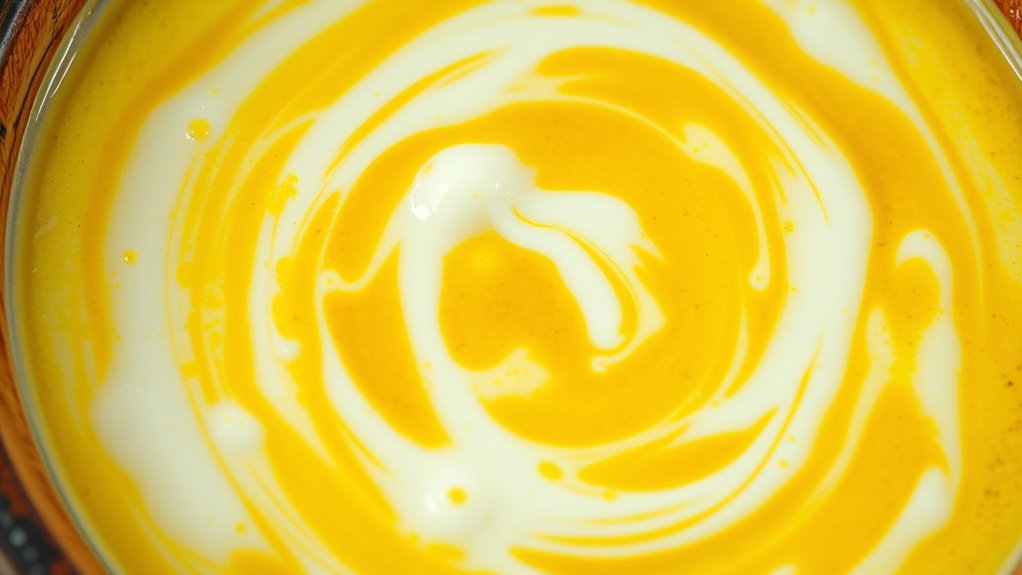
If your coconut milk curdles in your curry, don’t panic. It’s a common issue, but you can often fix it. First, lower the heat immediately; high temperatures can cause separation, affecting the coconut flavor and shelf stability. Then, try stirring in a small splash of warm coconut milk, which can help re-emulsify the mixture. Using a gentle touch can restore a smooth, creamy texture. You can also add a teaspoon of cornstarch mixed with cold water to stabilize the sauce. Remember, curdling doesn’t mean your dish is ruined—just a sign to adjust your cooking technique. Keep calm and focus on these simple fixes to maintain that rich, luscious curry you crave. Your coconut flavor remains intact, and your curry will be delicious again.
How to Choose the Best Coconut Milk for Smooth, Stable Curries?

When selecting coconut milk for your curries, consider the fat content to make certain a rich yet balanced flavor. Check for minimal additives and preservatives to keep your dish natural and stable. Also, pay attention to processing methods, as they influence the milk’s texture and how well it blends into your curry.
Fat Content Balance
The fat content in coconut milk directly impacts the creaminess and stability of your curry. Choosing the right balance of fat composition guarantees your dish isn’t too watery or overly greasy. Higher fat content creates a richer, velvety texture, while lower fat options may result in a thinner sauce. Pay attention to emulsifier effects, as they help maintain the mixture’s consistency and prevent splitting. Look for coconut milk with balanced fat levels that suit your desired texture. When selecting, consider:
- Achieving a luscious, smooth curry that coats every ingredient
- Preventing separation and splitting during cooking
- Creating an inviting, indulgent flavor that elevates your dish
Balancing fat content is key to a perfectly stable, mouthwatering curry.
Additives and Preservatives
Choosing the right coconut milk involves more than just considering fat content; additives and preservatives play a significant role in ensuring your curry stays smooth and stable throughout cooking. Some brands add stabilizers or emulsifiers that prevent splitting, which enhances flavor by maintaining a consistent, creamy texture. Look for options with minimal or natural additives, as these typically provide better flavor enhancement without unwanted aftertastes. Packaging considerations matter too—canned coconut milk with BPA-free lining or tetra packs may have fewer preservatives, though they still might contain stabilizers. Reading labels helps you avoid unnecessary chemicals, ensuring your curry remains rich and cohesive. By selecting coconut milk with thoughtful additives, you improve both the stability and flavor of your dish, making every curry delicious and visually appealing.
Processing Methods
Processing methods profoundly impact the texture and stability of coconut milk in curries. They determine whether your curry stays smooth and creamy or separates into oil and liquid. When choosing coconut milk, consider how it’s processed: traditional methods like cold-pressing preserve the coconut flavor and extend shelf life, ensuring rich, authentic taste. Conversely, ultra-processed options may contain stabilizers that affect texture and shelf stability.
Look for brands that use minimal processing to enjoy a pure, vibrant coconut flavor and maintain consistency.
- Feel the difference in richness and aroma when coconut milk is carefully processed.
- Savor the stability that prevents splitting during simmering.
- Trust brands that prioritize quality for a perfect, silky curry every time.
How to Read Labels and Pick Coconut Milk That Won’t Split?

To prevent coconut milk from splitting in your curries, it is essential to read labels carefully and select the right type. Check for coconut flavor; a stronger, natural flavor often indicates minimal additives that can cause curdling. Look for brands that specify high-quality packaging materials, such as aseptic cartons or BPA-free cans, which help preserve the coconut’s stability. Avoid products with thickening agents or preservatives that may interfere with smooth blending. Also, verify if the label lists only coconut extract and water, ensuring minimal processing. Clear labeling and ingredient transparency help you choose coconut milk less likely to split when heated. By paying attention to these details, you can enjoy rich, creamy curries without the unwelcome separation.
Frequently Asked Questions
Does the Fat Content Affect Coconut Milk’s Tendency to Split?
Yes, the fat content affects coconut milk’s tendency to split. Higher fat content improves emulsion stability, helping the milk stay uniform in your curry. When the fat level is low, the emulsion becomes less stable, making it more prone to separation or splitting during cooking. To prevent this, choose coconut milk with a higher fat percentage, and avoid rapid heating or vigorous stirring, which can also disrupt emulsion stability.
Can Refrigeration Influence Coconut Milk’s Stability During Cooking?
Refrigeration can influence coconut milk’s stability during cooking by causing temperature fluctuations that lead to separation. If you store it in airtight storage containers, it helps maintain consistency. When you refrigerate coconut milk, the fats solidify, which might cause splitting when heated. To prevent this, gently warm it before adding to dishes, and avoid sudden temperature changes that can make the milk curdle or split.
Are Homemade Coconut Milks More or Less Likely to Split Than Store-Bought?
Homemade coconut milk is more likely to split than store-bought because homemade stability varies with ingredients and technique, while store-bought offers consistent, processed stability. You might find that homemade tends to separate due to natural fats and water, whereas store-bought products are designed for uniform consistency. If you want less splitting, choose high-quality canned coconut milk or blend homemade milk thoroughly, but expect some separation over time.
How Does the Type of Coconut (Fresh vs. Dried) Impact Split Risk?
Using fresh coconut tends to reduce the risk of splitting in curries because it has higher coconut maturity, which results in creamier, more stable milk. Dried coconut requires processing methods that can alter fat content and emulsion stability, making it more prone to splitting. When you choose fresh coconut, you’re getting a milk with natural fats and proteins that better withstand heat and agitation, helping your curry stay smooth.
Does the pH Level of Ingredients Affect Coconut Milk Curdling?
If you add lemon juice to coconut milk, you’ll notice it curdles because acidic pH levels disrupt ingredient interactions. When ingredients with low pH, like vinegar or citrus, mix with coconut milk, the acidity causes proteins to coagulate, leading to curdling. Understanding pH levels helps you avoid unwanted separation, ensuring your curry stays smooth and creamy instead of splitting.
Conclusion
Just like choosing the right ingredients makes a perfect curry, selecting the right coconut milk prevents splitting. I once thought all coconut milks were the same—until I learned about stabilizers and proper heating. Now, I treat my coconut milk like a delicate dance partner, guiding it gently through cooking. With the right knowledge, your curries will stay smooth and luscious, turning every meal into a flavorful masterpiece you’ll be proud to serve.