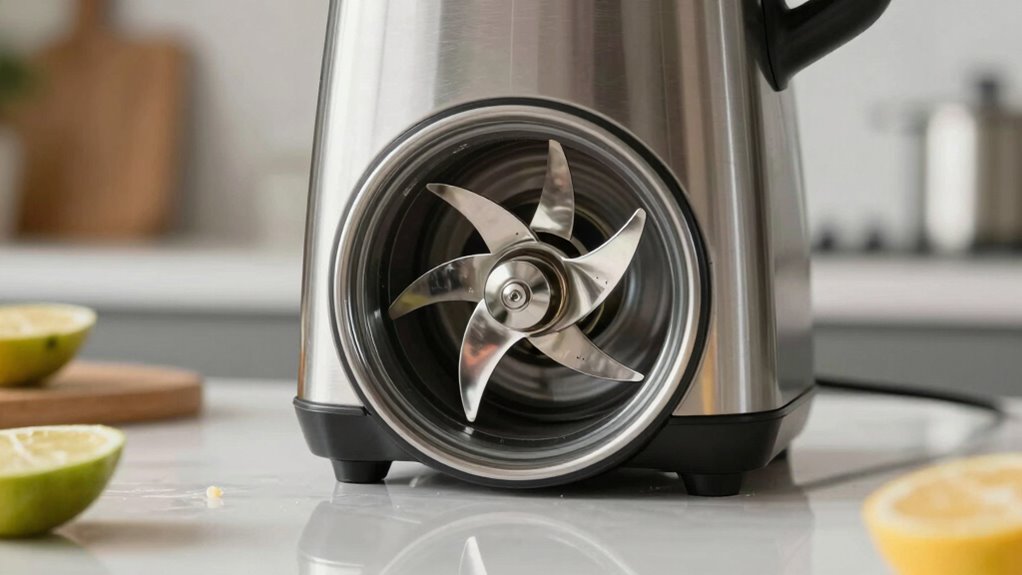

You should replace blender blades every 1 to 3 years, depending on how often you use your blender, the model, and how well you maintain it. Heavy daily use or lower-quality blades tend to wear out faster, showing signs like dullness, rust, or difficulty blending. Regular inspections and proper cleaning can extend lifespan, but eventually, worn or damaged blades need replacing for safety and best performance. Discover tips to keep your blades sharp and when to replace them.
Key Takeaways
- Replace blades when they become dull, causing uneven blending or difficulty chopping tough ingredients.
- Inspect blades regularly for visible damage like chips, rust, corrosion, or misalignment.
- Signs such as increased noise or wobbling during operation indicate it’s time for replacement.
- Heavy daily use accelerates wear, requiring more frequent blade replacements compared to occasional use.
- Generally, blades last between 1 to 3 years, but durability varies based on materials, model quality, and maintenance.
Why Do Blender Blades Wear Out, and How Can You Tell?

Blender blades wear out over time because constant use causes the metal to weaken and become dull. The type of blade material plays a significant role in how long your blades last. For example, stainless steel blades tend to be durable, but even they can dull after extensive use. Customer reviews often mention how quickly blades can degrade, especially if they’re made from lower-quality materials. Dull blades struggle to blend ingredients smoothly and may leave chunks or uneven textures. You might notice decreased efficiency, louder noise, or difficulty chopping tougher items. Regularly inspecting your blades and paying attention to customer feedback can help you determine when they’re nearing the end of their lifespan. Additionally, understanding the impact of blade technology can guide you in choosing more durable options. Proper blade maintenance can also extend their usability, saving you from frequent replacements. Furthermore, selecting blades with advanced corrosion resistance can further enhance their longevity and performance. To get the most out of your blades, it’s also important to consider the quality of the blade manufacturing process, which can significantly influence durability. Incorporating blade sharpening techniques periodically can help restore their cutting edge and prolong their lifespan.
How Do You Know When It’s Time to Replace Your Blender Blades?
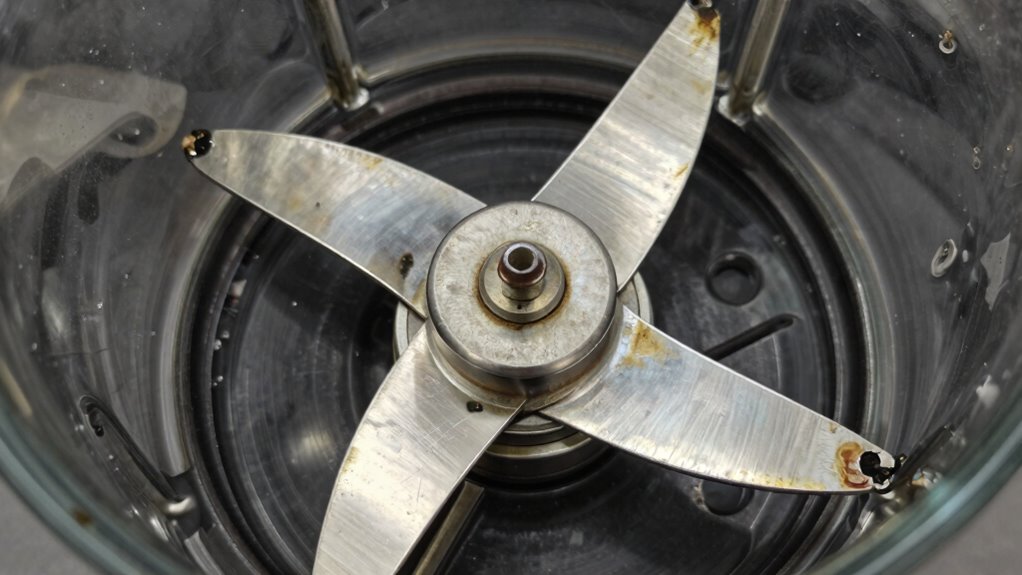
You’ll know it’s time to replace your blender blades when they no longer cut through ingredients effectively. Look for a decline in sharpness or any visible damage on the blades. If you notice either, it’s a clear sign you should consider swapping them out. Regularly inspecting blade sharpness and damage helps maintain optimal blending performance. Additionally, compromised blades can affect the quality of your blended recipes and may pose safety risks. Understanding European cloud innovation can also inform how you choose durable, high-quality replacements for your kitchen tools, ensuring they meet modern standards of material durability. Being aware of vacuum cleaner features can inspire you to select more reliable, long-lasting blades for your blender.
Blade Sharpness Decline
Ever wonder how to tell if your blender blades are losing their edge? The key clue is a decline in blending performance, even with fresh ingredients. Over time, the blade material—whether stainless steel or another alloy—becomes dull, reducing cutting efficiency. You might notice ingredients aren’t as smooth or that blending takes longer. Sharpening techniques can sometimes restore the blade’s sharpness, but this depends on the blade material. If sharpening no longer improves performance, it’s a sign the blades have worn out. Dull blades strain your motor and compromise your results. Regularly inspecting blade material wear can help you determine the optimal time for replacement. Keep an eye on how well your blender handles tough items, and don’t hesitate to replace blades when sharpening no longer makes a difference. Proper blade maintenance ensures safe and efficient operation every time, and understanding blade lifespan can guide you in scheduling replacements before performance declines significantly. Additionally, understanding the quality of the blades can help you choose durable replacements that last longer. Factors like blade design and material quality play a significant role in the longevity of your blender blades.
Visible Blade Damage
Visible damage to your blender blades is a clear sign it’s time for a replacement. Look for signs like blade corrosion, which appears as rust or discoloration, indicating weakening metal. Misaligned blades can cause uneven blending and reduce efficiency. Check for bent or chipped blades that may compromise performance or safety. Here’s a quick guide:
| Damage Type | What to Look For | Impact |
|---|---|---|
| Blade corrosion | Rust, discoloration | Weakens blades, reduces lifespan |
| Blade misalignment | Uneven blending, wobbling | Affects performance, safety concerns |
| Bent or chipped blades | Visible deformation or chips | Compromises safety and effectiveness |
| Visible cracks | Fractures or splits | Risk of blade breakage |
| Loose blades | Wobbling or rattling | Indicates need for replacement |
Regular inspection helps help guarantee safe, effective blending. Additionally, routine maintenance can extend the lifespan of your blades and ensure optimal performance. Being attentive to blade condition is essential for maintaining blender efficiency, which can prevent unexpected breakage and improve overall safety.
How Often Should You Replace Blender Blades Based on Usage and Model?
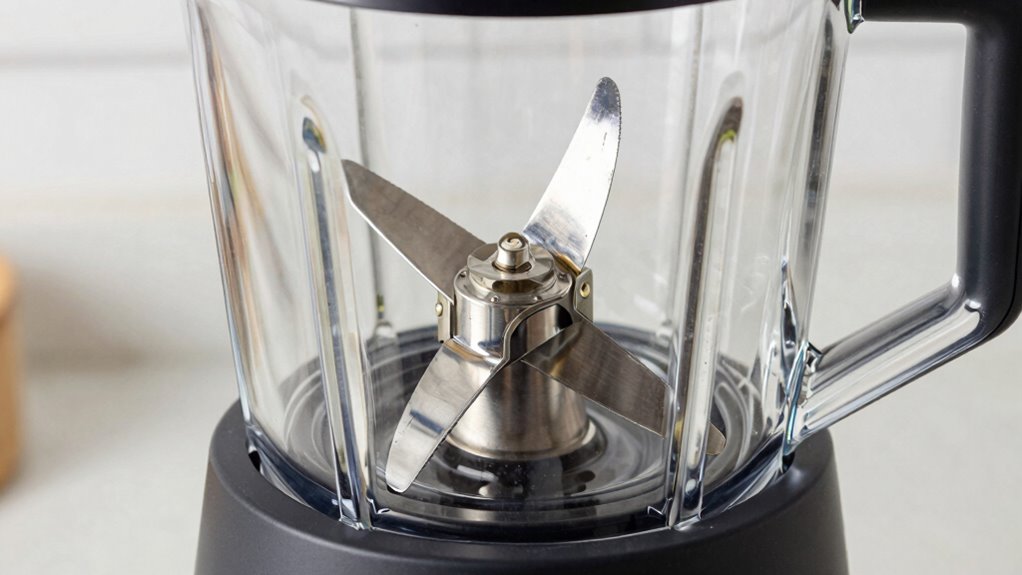
How often you need to replace your blender blades depends on how often you use it and the specific model you have. Frequent use can wear down blades more quickly, especially on less durable models. Understanding your blender’s design helps you determine the right replacement schedule to keep it running smoothly. Regular inspection of toilet maintenance and the condition of the blades can help prevent unexpected failures.
Usage Frequency Impact
The frequency with which you should replace blender blades largely depends on how often you use your appliance and the specific model you own. Heavy daily use can lead to quicker dulling or wear, especially if the blender material isn’t durable. Cheaper blade manufacturing may result in faster degradation, requiring more frequent replacements. For light, occasional use, blades can last longer, sometimes years. Additionally, considering Free Floating techniques in blender design can influence durability and longevity.
Model and Blade Durability
Choosing the right blender model markedly affects how often you’ll need to replace the blades. Different model variations come with varying blade designs and durability levels. Blade material plays a pivotal role—stainless steel blades tend to last longer than plastic or less durable metals, especially with frequent use. Some models feature reinforced blades designed for heavy-duty tasks, extending their lifespan. Conversely, budget models or those with thinner blades may require replacements sooner. Consider your usage habits and the type of ingredients you blend regularly. If you often blend tough ingredients or large quantities, investing in a model with robust, high-quality blades can save you money and hassle in the long run. Regularly inspect your blades, but choosing durable models reduces the need for frequent replacements. Additionally, understanding model and blade durability can help you select a blender that offers longevity and reliable performance over time. For optimal performance, it’s also important to consider blade maintenance practices that can prolong their lifespan.
What Are the Best Ways to Maintain Your Blender Blades and Extend Their Lifespan?

To keep your blender blades sharp and functioning well, regular maintenance is essential. Proper cleaning techniques prevent residue buildup and corrosion, extending the blade’s lifespan. Focus on the blade material, as stainless steel blades are more durable and resistant to damage. After each use, rinse the blades immediately to remove food particles. Use a brush or sponge with warm, soapy water to scrub stubborn spots. For deeper cleaning, blend water and a little vinegar or lemon juice to remove odors and mineral deposits. Regular inspection and blade maintenance can help detect wear early and ensure optimal performance. Additionally, understanding the material properties of your blades can guide you in choosing the best cleaning and maintenance practices.
What Factors Make Blender Blades Dull or Break Faster?
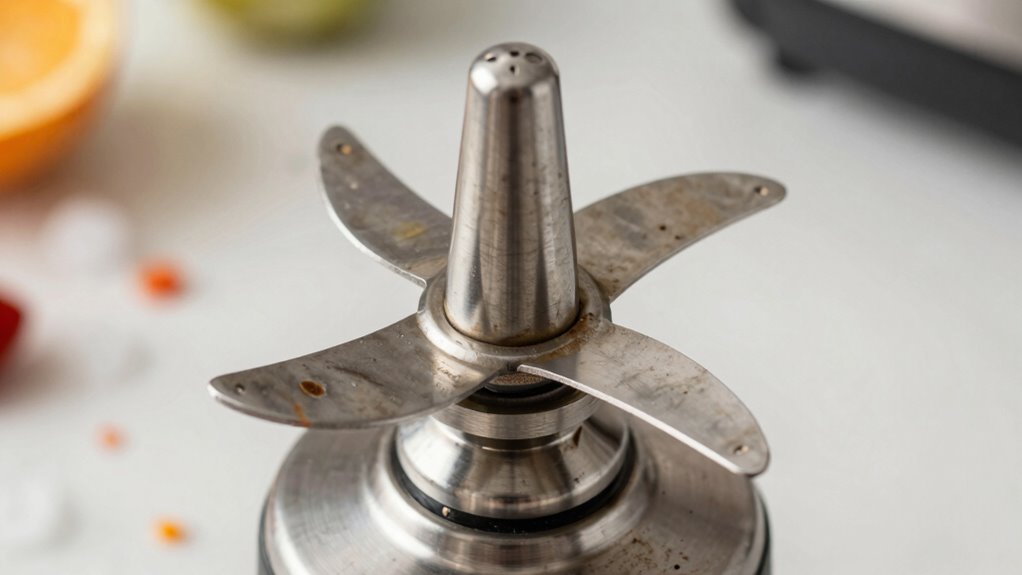
Blender blades can become dull or break faster due to a variety of factors, many of which are within your control. First, the blade material plays a role—cheaper metals tend to dull more quickly. Second, your cleaning routines matter; using abrasive scrubbers or harsh chemicals can damage blades over time. Third, blending hard or frozen ingredients puts extra stress on the blades, increasing wear and tear. To prolong their lifespan, opt for high-quality materials and gentle cleaning methods. Avoid using metal utensils to clean or scrape blades, and always follow the manufacturer’s cleaning instructions. Being mindful of these factors helps prevent premature dulling or breakage, ensuring your blender blades stay sharp and functional longer.
Can You Sharpen or Repair Blender Blades, or Is Replacement Better?
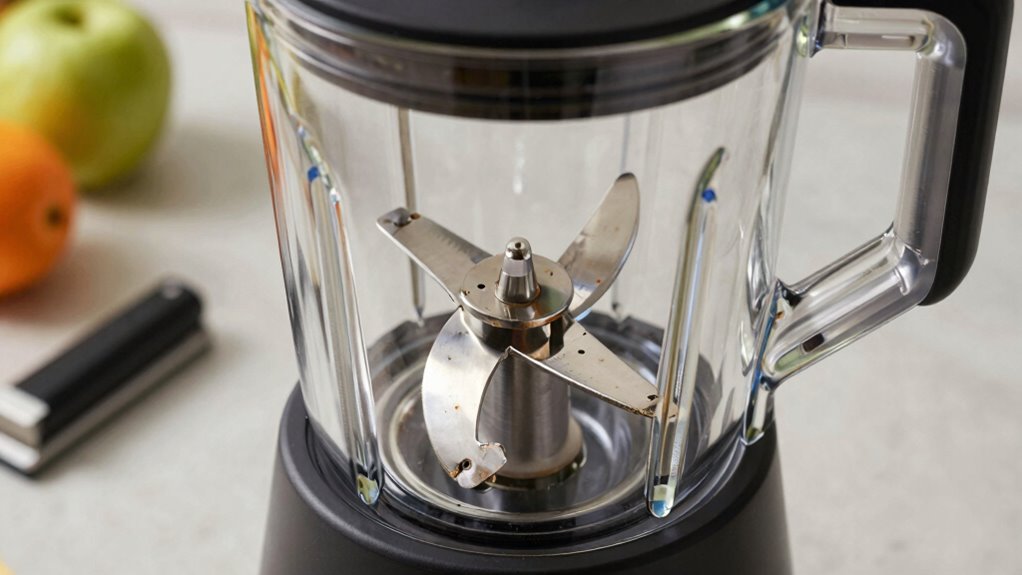
Can you sharpen or repair blender blades? Yes, in some cases, you can restore blades depending on their material and damage. Blade materials like stainless steel are more durable and can sometimes be sharpened using specific repair techniques, such as grinding or honing. However, this process requires precision to avoid damage or misalignment. If blades are chipped, bent, or severely dull, sharpening might not be effective or safe. In such cases, it’s better to replace the blades entirely. Attempting repairs on inferior or cheaper materials can lead to further damage or safety risks. Always weigh the cost and effort of sharpening against replacing the blades, especially if they’re old or heavily worn. When in doubt, replacement often guarantees safety and peak performance.
When Is the Right Time to Replace Your Blender Blades?
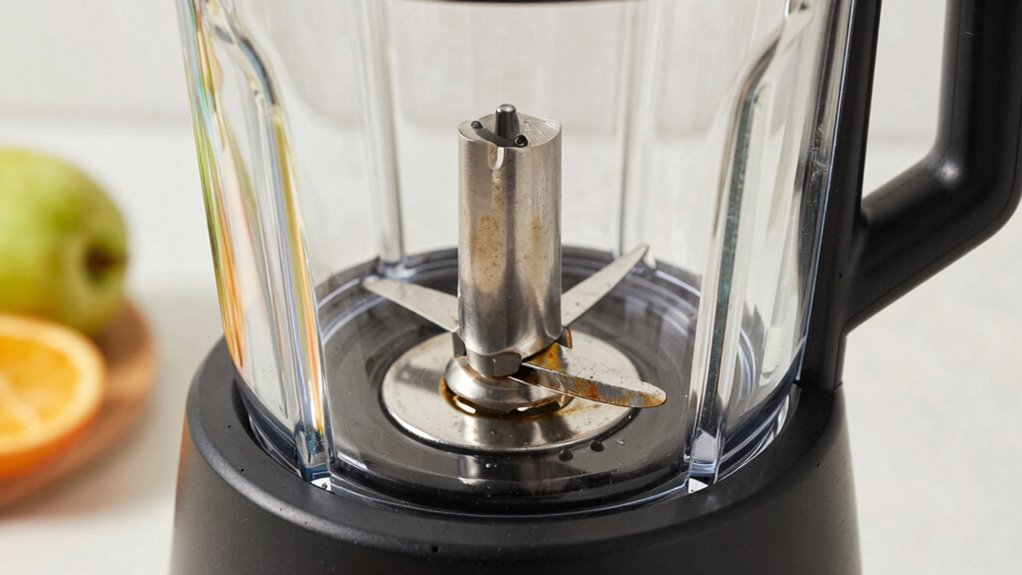
Knowing when to replace your blender blades is essential for maintaining ideal performance and safety. Over time, blade material can wear down, leading to less efficient blending. Increased noise levels can also signal that blades are dull or damaged, affecting both performance and safety. Consider replacing your blades if:
Regularly inspect blades for wear or damage to ensure safe, efficient blending performance.
- You notice the blades are chipped, bent, or corroded.
- The noise levels have substantially increased during operation.
- Blades struggle to blend ingredients smoothly, even after cleaning and sharpening.
Dull or damaged blades made from worn blade material will compromise your blender’s efficiency. Listening to noise levels and inspecting the blades regularly helps you determine the right time for replacement, ensuring your appliance works safely and effectively.
Frequently Asked Questions
Can Using the Wrong Ingredients Damage Blender Blades?
Yes, using the wrong ingredients can damage your blender blades. Ingredients like ice or hard nuts may cause blade corrosion over time, especially if your blades aren’t designed for such use. Additionally, incompatible ingredients can dull or chip the blades, reducing their effectiveness. To protect your blades, guarantee ingredient compatibility and clean them thoroughly after blending tough items, preventing corrosion and maintaining ideal performance.
Do Manufacturer Warranties Cover Blade Replacement?
Think of your blender as a trusted steed; warranty coverage acts like a shield, protecting it from unexpected battles. Most manufacturer warranties include replacement policies for blades if they break or malfunction within the warranty period. It is crucial to review your warranty details, as some cover blade replacement, saving you money and hassle. Remember, understanding your warranty ensures you’re prepared to defend your investment when the unexpected happens.
Are There Safety Risks in Replacing Blender Blades Yourself?
Replacing blender blades yourself can pose safety risks if you’re not careful. You need to guarantee proper blade alignment to prevent leaks or accidents. Always wear safety gloves to protect your hands from sharp edges during removal and installation. If you’re unsure about the process, consider consulting the manufacturer’s instructions or seeking professional help. Taking these precautions minimizes injury risk and ensures your blender remains safe to use.
How Much Does Professional Blade Replacement Typically Cost?
Professional blade replacement usually costs between $50 and $100, depending on your blender’s brand and model. Interestingly, most blades need sharpening or replacement within 1 to 3 years, based on usage and maintenance. Regularly checking your blades’ sharpness and following recommended replacement intervals can save you money long-term. Investing in professional blade sharpening or replacement guarantees maximum blending performance and safety, giving you peace of mind during meal prep.
Can a Blender Operate Safely With Slightly Dull Blades?
You can operate your blender with slightly dull blades, but it might struggle with tougher ingredients. For maximum performance, consider blade sharpening, especially if your blades are made of durable materials like stainless steel. Dull blades can strain the motor and reduce blending quality. Regularly inspecting and sharpening the blades ensures safety and efficiency, preventing unnecessary wear and tear on your blender. If blades become too dull, replacement might be the safest choice.
Conclusion
Think of your blender blades like the tires on a car—they wear down over time, affecting performance. Regularly checking for dullness or damage guarantees your blender works efficiently. Don’t wait until it stalls like a car with a flat tire; replace blades when they show signs of wear. With proper maintenance, your blender can keep chopping like a well-oiled machine, making your kitchen tasks smoother and more enjoyable.