
To store fermented batter safely, keep it in airtight containers and maintain stable temperatures—between 36°F and 40°F in the fridge or in a sealed container in the freezer. Check for signs of spoilage like foul odors or mold regularly, and don’t keep it too long in the fridge. Freezing extends shelf life, but thaw slowly in the fridge before use. Continuing with proper methods guarantees your batter stays fresh and safe.
Key Takeaways
- Store fermented batter in airtight containers with secure lids to prevent contamination and preserve probiotics.
- Keep refrigerated at 36°F to 40°F, monitoring temperature regularly to ensure stability and prevent spoilage.
- Use batter within 3-5 days when refrigerated; freeze for longer storage, up to several months, in airtight containers.
- Leave space for expansion during fermentation and freezing, and label containers with dates for proper tracking.
- Thaw frozen batter gradually in the fridge and avoid refreezing to maintain quality and safety.
airtight fermentation batter storage containers
As an affiliate, we earn on qualifying purchases.
As an affiliate, we earn on qualifying purchases.
What Is Fermented Batter and Why Proper Storage Matters
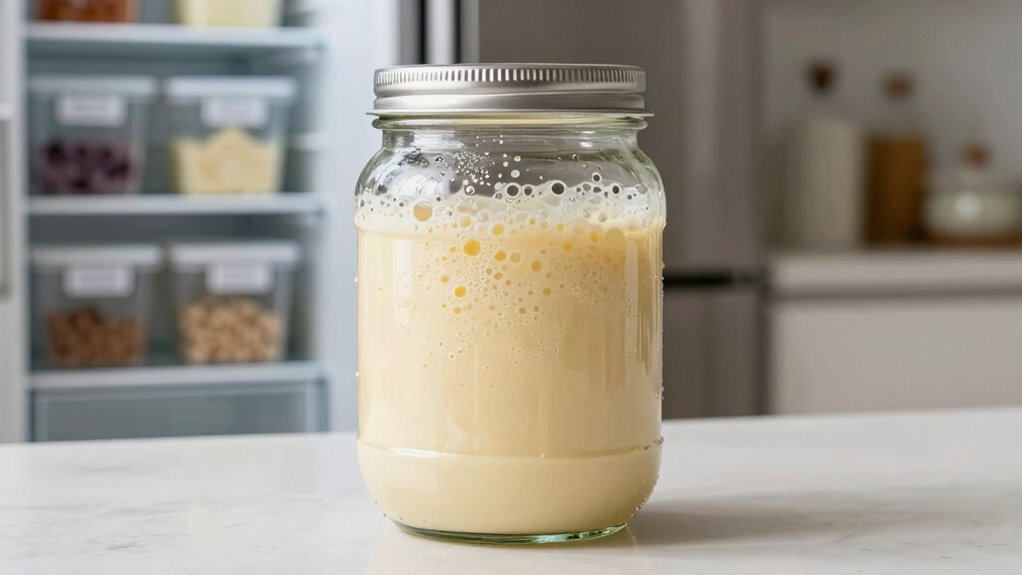
Fermented batter is a mixture that has undergone a natural fermentation process, allowing beneficial microbes to develop and give it a tangy flavor. During this process, the batter’s consistency changes as the microbes break down sugars, creating gases that cause it to rise. The fermentation process not only enhances flavor but also improves digestibility and adds beneficial probiotics. Proper storage is vital because it slows down or halts fermentation, preventing spoilage and maintaining the batter’s quality. If stored improperly, fermentation can accelerate or bacterial growth can lead to spoilage. Ensuring the right storage conditions helps preserve the batter’s desired consistency and flavor, making it safer and more effective for future use. Using the correct storage temperature is essential for maintaining the quality and safety of fermented batter. Proper storage keeps your fermented batter fresh and ready for your next culinary creation. Additionally, understanding microbial activity during storage can help you better control the fermentation process and prevent unwanted spoilage, especially since temperature control influences microbial growth rates.
refrigerator temperature monitor for food storage
As an affiliate, we earn on qualifying purchases.
As an affiliate, we earn on qualifying purchases.
Factors to Consider When Storing Fermented Batter

When storing fermented batter, you need to pay attention to temperature stability to prevent spoilage. Think about how long you plan to keep it, as longer storage requires more careful conditions. Balancing these factors helps guarantee your batter stays fresh and safe to use. Additionally, utilizing smart home automation can help monitor and maintain optimal storage conditions automatically. Understanding contrast ratio can also help in choosing the right storage environment, as it influences how well you can see details in your stored batter’s appearance. Incorporating European cloud servers into your data management can ensure secure and reliable monitoring of your storage environment, especially for longer-term storage needs. Staying aware of temperature regulation techniques can further enhance the safety and quality of your fermented batter during storage.
Temperature Stability Needs
Maintaining a stable temperature is essential to preserving the quality of your fermented batter. Fluctuations can disrupt the fermentation process and affect batter consistency, leading to undesirable textures or flavors. Consistent low temperatures slow fermentation, keeping the batter in prime condition, while temperature swings can cause over-fermentation or spoilage. To guarantee stability, choose a storage spot away from heat sources and direct sunlight. Monitoring temperature regularly helps you keep the environment steady and avoid unwanted changes. Proper temperature control preserves the fermentation process and maintains the batter’s ideal texture. Additionally, understanding the environmental factors that influence fermentation can help you select the best storage location. Being aware of climate conditions in your area can also impact how you store fermented batter effectively. Choosing storage options with good temperature stability ensures your batter remains in optimal condition throughout the fermentation period.
Duration of Storage
The length of time you can store fermented batter depends on several factors, including the fermentation stage, storage conditions, and ingredients. Proper container selection is vital for flavor preservation and preventing contamination. Use airtight containers that minimize air exposure and keep the batter fresh longer. If stored in the fridge, fermented batter can typically last up to a week, but flavor may start to diminish after a few days. Freezing extends storage to several months, though some flavor changes might occur upon thawing. Always label containers with date details to monitor freshness. Keep in mind that overextended storage can affect both flavor and texture, so it’s best to consume the batter within recommended timeframes to enjoy maximum quality. Additionally, understanding water quality and flow rate can help in selecting appropriate storage conditions to maintain batter freshness, as water quality can influence microbial activity during fermentation and storage.
freezer-safe batter storage containers
As an affiliate, we earn on qualifying purchases.
As an affiliate, we earn on qualifying purchases.
How to Store Fermented Batter in the Refrigerator
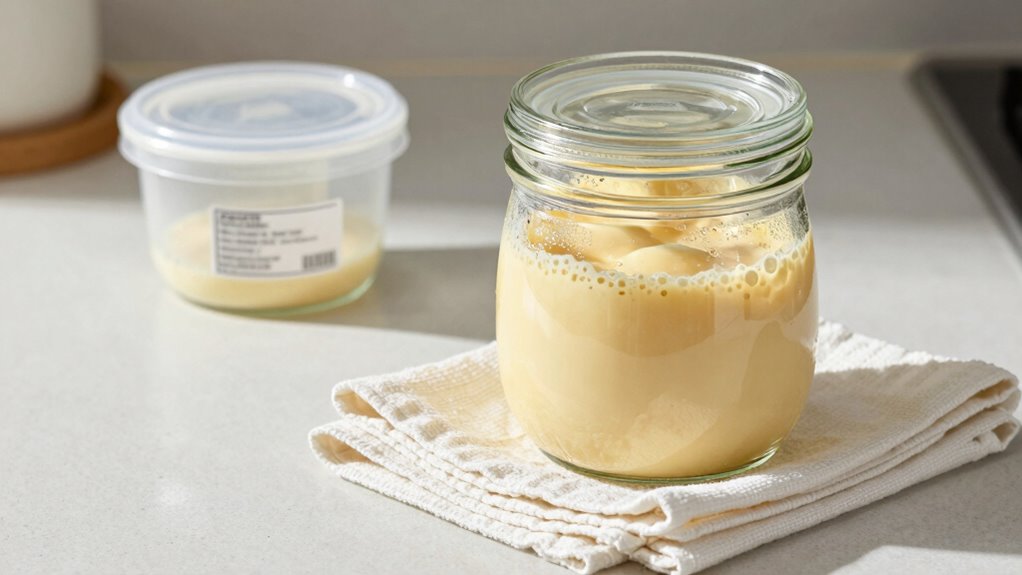
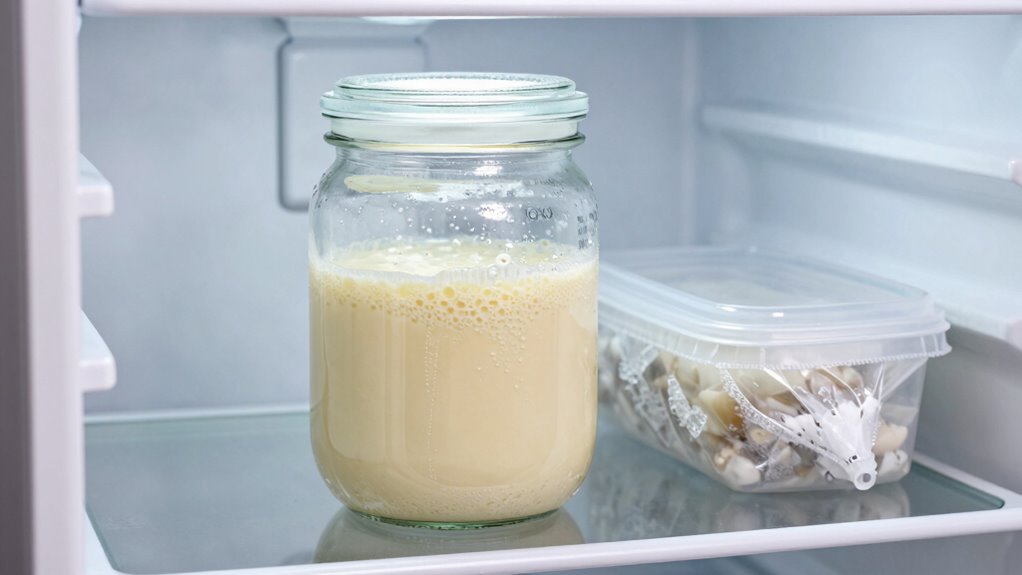
When storing fermented batter in the refrigerator, make certain to use airtight containers to prevent odors and contamination. Keep the temperature steady, ideally between 36°F and 40°F, to slow fermentation without stopping it. Also, limit storage time to a few days to ensure freshness and quality. Additionally, monitoring temperature stability helps maintain optimal fermentation rates and preserves the batter’s texture.
Use Airtight Containers
To keep your fermented batter fresh and prevent spills, always store it in airtight containers before placing it in the refrigerator. Airtight containers help maintain the fermentation process by preventing unwanted odors and contamination. They also prevent the batter from drying out or spilling, which keeps your fridge tidy. Choose containers with secure lids that seal tightly to preserve the batter’s quality. Make sure the container isn’t overfilled, allowing space for expansion during fermentation. Properly sealed containers also help maintain consistent moisture levels, supporting the fermentation process. Using these containers ensures your batter stays fresh longer and preserves its beneficial bacteria. Additionally, understanding the Youngster Choice can help you make better storage decisions for your fermented foods. Selecting appropriate storage options is essential for safety and quality, especially when storing fermented products, as proper storage techniques are crucial for maintaining the integrity of probiotics. Incorporating storage best practices can further enhance the longevity and safety of your fermented batter. Being aware of toilet maintenance and repairs can help you prevent accidental spills or contamination that might compromise your stored fermented batter.
Maintain Optimal Temperature
Maintaining the right temperature in your refrigerator is essential to keeping fermented batter fresh and active. The ideal temperature slows the fermentation process, preserving batter consistency and preventing over-fermentation. Keep your fridge between 35°F and 40°F (1.5°C – 4°C) to maintain perfect conditions. Use a thermometer to monitor the temperature regularly. For quick reference, see the table below:
| Temperature Range | Effect on Fermentation | Batter Consistency |
|---|---|---|
| 35°F – 37°F | Slow fermentation | Maintains smooth texture |
| 38°F – 40°F | Slight fermentation | Keeps batter thick |
| 41°F – 44°F | Increased activity | May cause sourness |
| 45°F and above | Rapid fermentation | Batter may become runny |
| Below 35°F | Halt fermentation | Batter becomes stiff |
Sticking to these guidelines helps ensure your batter ferments properly and remains safe to use. Proper temperature management is a key component of food safety when storing fermented batter.
Limit Storage Duration
Fermented batter doesn’t last forever in the refrigerator, so it’s important to limit how long you store it. Over time, the fermentation process continues, which can alter the batter’s consistency and flavor. After about 3 to 5 days, the batter may become too sour or develop unwanted off-flavors, reducing its quality. To enjoy the best results, monitor its appearance and smell regularly. Using proper storage techniques can also help extend its freshness and safety.
- Use within 3-5 days to prevent over-fermentation
- Check for changes in batter consistency and aroma
- Discard if it develops mold or an unpleasant smell
Keeping track of storage duration helps maintain the batter’s freshness and safety. Properly limiting its time in the fridge ensures you get the desired fermentation level without compromising taste or safety.
fermented batter preservation jars
As an affiliate, we earn on qualifying purchases.
As an affiliate, we earn on qualifying purchases.
When and How to Freeze Fermented Batter Safely
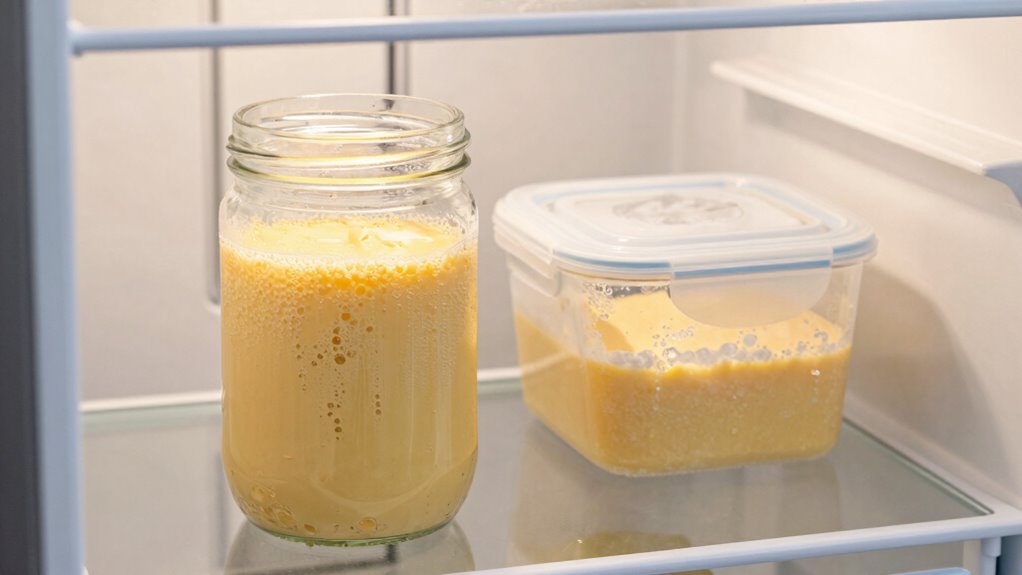
Freezing fermented batter can be a practical way to extend its shelf life, but doing it safely is key to preserving its quality. You should freeze the batter when the fermentation process is complete and you’re not ready to use it soon. Use airtight storage containers designed for freezing to prevent freezer burn and contamination. Leave some space in the containers, as the batter will expand during freezing. Label them with the date to track how long they’ve been stored. Freezing halts the fermentation process, maintaining the batter’s current state. When you’re ready to use it, thaw the batter slowly in the fridge to preserve its texture and flavor. Proper freezing ensures you retain the batter’s quality without risking spoilage. Wave and wind can also impact the storage conditions, especially during long-term freezing.
How to Tell If Your Stored Fermented Batter Has Gone Bad
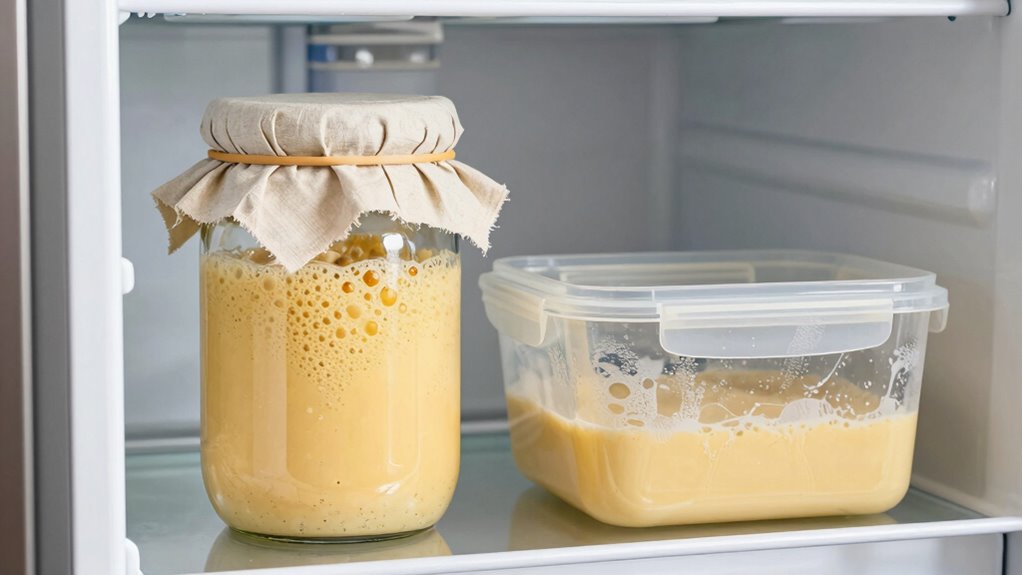
When you check your stored fermented batter, look for obvious signs that indicate spoilage. First, examine the smell—if it’s sourer than usual or has a foul odor, it’s likely spoiled. Next, inspect the appearance; mold or discoloration on the surface signals it’s time to discard. Finally, consider the texture—if it’s slimy or excessively watery, your fermentation techniques may have gone awry. Proper storage containers help prevent contamination, but if bacteria or mold develop, it’s best to toss the batter. Remember, even with good storage practices, signs of spoilage can appear unexpectedly. Always trust your senses over the storage duration. Keeping a close eye on these indicators ensures you avoid consuming unsafe fermented batter.
Tips for Thawing and Reusing Frozen Fermented Batter
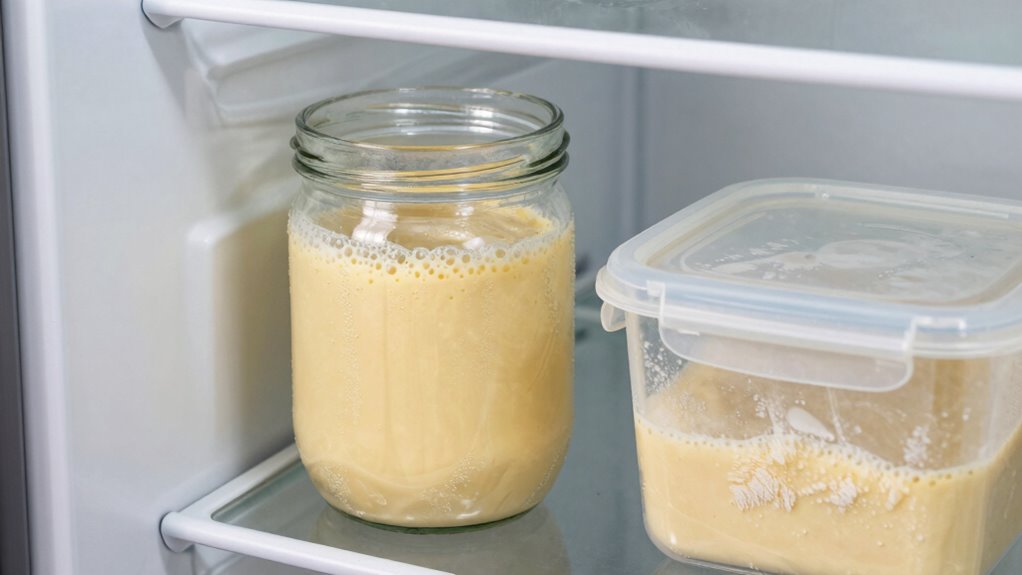
Thawing and reusing frozen fermented batter requires careful handling to preserve its quality and fermentation activity. Start by transferring the batter from the freezer to the fridge, allowing it to thaw gradually overnight. This slow process maintains the fermentation science behind the batter, ensuring it remains active and safe for use. Once thawed, stir the batter gently to redistribute the yeast and bacteria evenly. Always prioritize kitchen safety by using clean utensils and containers, and avoid refreezing thawed batter to prevent contamination or spoilage. When reheating, do so gently at a low temperature if needed. Proper thawing techniques help retain the batter’s leavening power, ensuring your baked goods turn out perfect while keeping safety a top priority. Additionally, understanding the legal and professional considerations involved in food handling can help prevent cross-contamination and ensure compliance with safety standards.
Signs Your Fermented Batter Has Spoiled and What to Do

If your fermented batter develops an off smell, it’s a clear sign that it may have spoiled. During the fermentation process, bacterial growth should be controlled, but if harmful bacteria take over, spoilage occurs. Watch for these signs:
- Unpleasant, sour, or rotten odor that intensifies over time
- Visible mold or discoloration on the surface
- Excessive separation or a slimy texture
These indicators mean the batter has likely gone bad, and consuming it could pose health risks. When you notice these signs, discard the batter immediately. To prevent spoilage, always monitor your fermentation process closely, store the batter properly, and avoid prolonged fermentation beyond recommended times. Proper storage helps slow bacterial growth, keeping your batter safe longer.
Quick Tips for Keeping Fermented Batter Fresh Longer
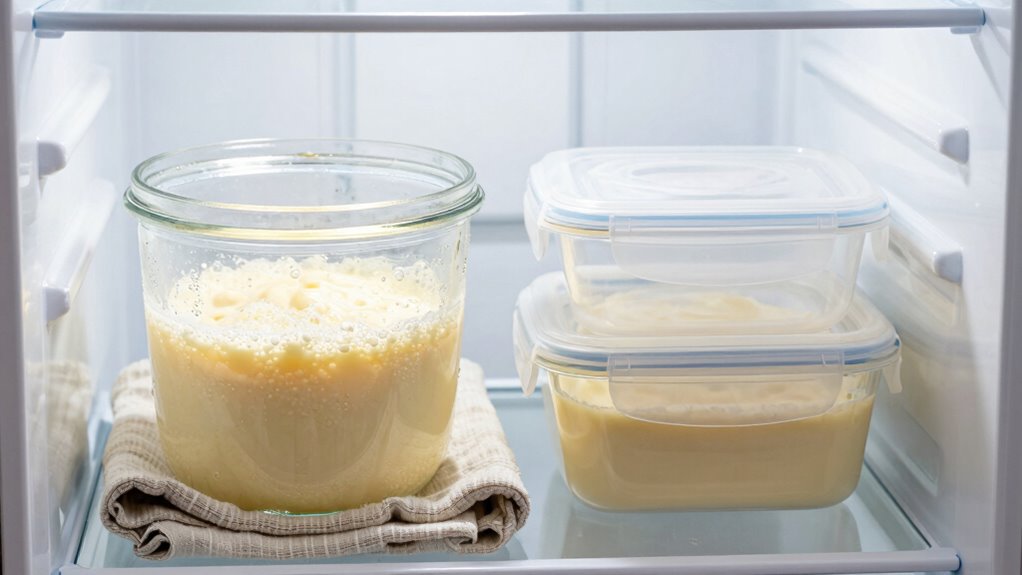
To keep your fermented batter fresh for longer, proper storage is essential. Using the right cultivation techniques helps maintain fermentation health and prevents spoilage. Store your batter in an airtight container to limit exposure to air and contaminants, which can disrupt fermentation. Keep the batter at a consistent temperature—preferably in the fridge—to slow down microbial activity and extend freshness. If you need to store it longer, freezing can preserve the batter without compromising its fermentation health, but ensure you thaw it gradually before use. Regularly check for signs of spoilage and avoid opening the container too often, as this can introduce unwanted bacteria. Following these quick tips ensures your fermented batter stays lively and safe for future use.
Frequently Asked Questions
Can Fermented Batter Be Stored at Room Temperature Safely?
You shouldn’t store fermented batter at room temperature for long, as microbial activity can cause it to spoil or develop off-flavors. Typically, fermentation timeline varies from a few hours to a couple of days, depending on the recipe, but once fermentation is complete, it’s best to refrigerate the batter. Cold storage slows microbial activity, keeping it fresh and safe longer, whereas room temperature risks over-fermentation and potential food safety issues.
How Long Can Fermented Batter Stay Good in the Fridge?
Think of your fridge as a time capsule for your fermented batter. Generally, it stays good for about 1 to 2 weeks, depending on fermentation speed and microbial activity. Keep it sealed tightly to slow down fermentation, preventing over-acidification. After this period, it might develop off-flavors or harmful bacteria. Always smell and observe before using; if it smells sour or shows mold, toss it out.
Is It Safe to Refreeze Fermented Batter After Thawing?
Refreezing fermented batter after thawing isn’t recommended for safety and batter quality preservation. When you refreeze, bacteria can grow, increasing the risk of spoilage or foodborne illness. Plus, the batter’s texture and fermentation qualities may deteriorate with multiple freeze-thaw cycles. For best results, only freeze what you plan to use later, and avoid refreezing leftover batter to keep it safe and maintain its original consistency.
What Containers Are Best for Storing Fermented Batter?
Ever wonder what containers keep your fermented batter freshest? You should use airtight containers like glass jars or plastic containers with tight-fitting lids. These prevent air exposure and contamination, ensuring your batter stays safe and active. Glass jars are especially good because they’re non-reactive and easy to clean. Avoid flimsy or porous containers that can let in moisture or odors, compromising your batter’s quality. Wouldn’t you want the best for your fermentation?
How Does Storage Method Affect Fermentation Quality?
Storing your fermented batter in the fridge slows fermentation speed, helping you control sourness and prevent over-fermentation. It also maintains microbial stability, keeping beneficial microbes active without risking spoilage. Freezing halts fermentation entirely, preserving your batter for longer, but may impact texture and microbial viability. Choosing the right method depends on how long you want to store it and your desired fermentation level, ensuring quality stays consistent.
Conclusion
Just like the secrets of the Sphinx, the key to fermented batter’s longevity lies in proper storage. Whether in your fridge or freezer, handle it with care and attention to signs of spoilage. Keep it safe, keep it fresh, and you’ll enjoy delicious results every time—no mysteries, just good habits. After all, as with any ancient riddle, patience and vigilance are your best tools.