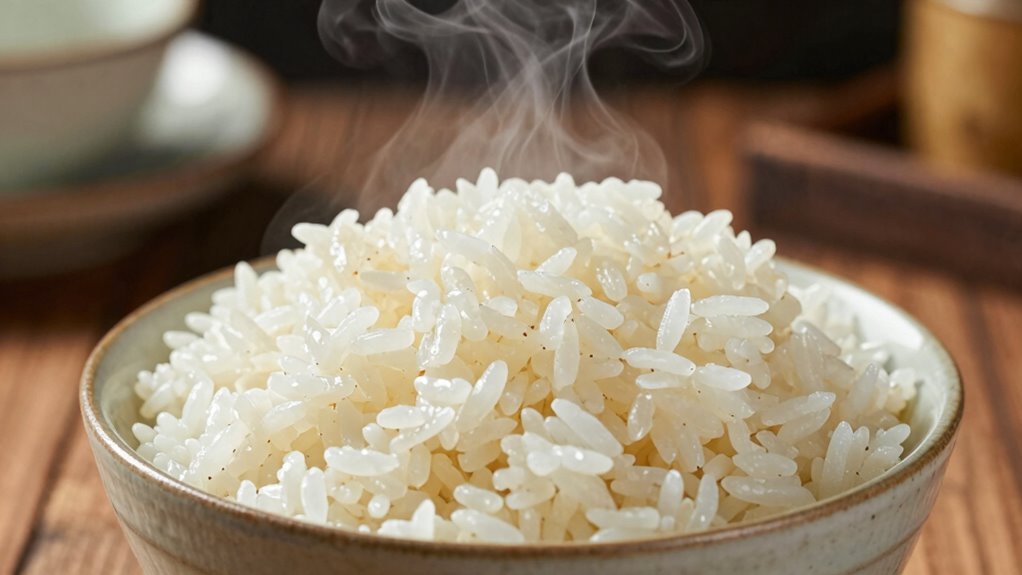

You should never leave cooked rice out at room temperature for more than two hours, as bacteria like Bacillus cereus can grow rapidly and cause food poisoning even if it looks and smells fine. To stay safe, quickly cool the rice using shallow containers and refrigerate it within that timeframe. Proper storage and reheating are key to avoiding health risks. If you want to learn more about keeping your rice fresh and safe, keep going.
Key Takeaways
- Cooked rice should not stay at room temperature for more than 2 hours to prevent bacteria growth.
- Bacteria like Bacillus cereus can survive cooking and multiply rapidly if rice is left out too long.
- Promptly refrigerate cooked rice in shallow, airtight containers within 2 hours of cooking.
- Reheat rice thoroughly to at least 165°F before serving to reduce bacterial risk.
- Consuming rice stored improperly beyond 3-4 days increases food poisoning risk.

DDMOMMY 20-30 Lbs Rice Storage Container,Collapsible Food Storage Containers with Rolling Wheel Airtight Locking Lid,Flour Storage Container with Cup and Scoop,Suitable for Food,Rice,Pet Food,Flour
Space Save & Extra-large Size: This rice container can hold 20-30 lbs of rice or 20-23 lbs of…
As an affiliate, we earn on qualifying purchases.
As an affiliate, we earn on qualifying purchases.
How Long Can Cooked Rice Sit Out Safely?

Cooked rice should not be left out at room temperature for more than two hours. When rice sits out too long, rice fermentation can begin, encouraging bacteria growth that increases the risk of food poisoning. Additionally, prolonged exposure to warmth causes rice nutrient loss, diminishing its nutritional value. As bacteria multiply, the rice’s texture and flavor may deteriorate, making it less safe and less tasty. To preserve rice quality and safety, refrigerate leftovers promptly if you plan to eat them later. Leaving rice out too long not only risks health issues but also accelerates nutrient depletion, reducing the benefits you get from your meal. Proper storage practices are essential for maintaining both safety and quality, including understanding the importance of temperature control and storage duration. Ensuring that cooked rice is stored within the recommended time frame can significantly reduce health risks and help preserve its nutritional content. Always store cooked rice properly within two hours to keep it safe, nutritious, and fresh. Additionally, understanding how bacteria can proliferate in improperly stored rice can further emphasize the importance of timely refrigeration. Proper handling and storage are crucial to prevent foodborne illnesses associated with cooked rice.

Alpha Grillers Meat Thermometer Digital – Instant Read Food Thermometer for Cooking & Grilling – Professional Kitchen Gift for Men, Dad & Mom
Instant Read Food Thermometer | Our instant read thermometer features a temperature probe and advanced, highly accurate technology…
As an affiliate, we earn on qualifying purchases.
As an affiliate, we earn on qualifying purchases.
Risks of Leaving Rice Out Too Long

Leaving rice out too long allows bacteria to multiply rapidly, increasing the risk of food poisoning. When rice sits at room temperature, bacteria growth accelerates, leading to rice spoilage that can be unsafe to eat. Harmful bacteria like Bacillus cereus can form spores that survive cooking and thrive in improperly stored rice, causing foodborne illness. The longer rice remains unrefrigerated, the higher the chances of bacteria reaching dangerous levels. Even if the rice looks and smells fine, it may still harbor bacteria that can cause illness. To avoid these risks, it’s essential to refrigerate cooked rice within two hours of cooking. Proper storage methods reduce bacterial growth and help maintain food safety. Additionally, understanding spore formation can help prevent outbreaks of foodborne illness. Awareness of temperature control is crucial in preventing bacterial proliferation in cooked foods. Ignoring this simple step increases the likelihood of consuming spoiled rice contaminated with bacteria, which can result in serious health issues. Maintaining proper food safety practices is essential for protecting yourself and your family from potential illness.

Glad GladWare Medium Rectangle Food Storage Containers with Lids, BPA Free Plastic for Soups Salads and Meal Prep, Airtight Leak Resistant, Microwave Dishwasher Freezer Safe, 24 Oz, 5 Count
MEDIUM 24 OZ RECTANGLE CONTAINER: Each container holds up to 24 ounces, measuring 6.49 in L x 4.86…
As an affiliate, we earn on qualifying purchases.
As an affiliate, we earn on qualifying purchases.
Best Ways to Store Cooked Rice Safely

To keep your cooked rice safe to eat, it’s essential to store it properly as soon as it cools down. Proper storage helps maintain rice texture and prevents bacteria growth. Use airtight storage containers to keep moisture and contaminants out, preserving the rice’s quality. Always cool rice quickly before storing to avoid a sticky texture or spoilage. When choosing containers, opt for ones that are microwave-safe and easy to seal. Label the containers with the date to track freshness. Store rice in the refrigerator at or below 40°F, and consume within 3-4 days. Avoid leaving rice at room temperature for more than two hours. Additionally, understanding the thermal behavior of rice during cooling can help prevent rapid bacterial growth. Proper cooling techniques, such as spreading rice in a thin layer or using shallow containers, are crucial for rapid temperature reduction. Being aware of bacterial growth patterns during storage can further improve food safety. Recognizing the bacterial growth patterns that develop during storage can help you take timely actions to prevent spoilage and foodborne illnesses. Incorporating proper storage practices can also reduce the risk of toxin formation by bacteria, ensuring your rice stays safe, fresh, and retains the right texture.

Lifewit Rice Dispenser 25 Lbs(11.3kg), Rice Storage Container Sealed Moisture Proof with Measuring Cup for Kitchen Pantry Household, BPA-Free, 1 Pack Grey
Large Capacity: This rice storage container can hold 25.4lb (11.3kg) of rice, allowing you to store more rice…
As an affiliate, we earn on qualifying purchases.
As an affiliate, we earn on qualifying purchases.
How to Reheat and Serve Rice Without Risks

Reheating rice properly is essential to prevent food poisoning caused by bacteria like Bacillus cereus, which can survive improper cooling. To minimize bacterial growth, always reheat rice thoroughly until it’s steaming hot all the way through. Use a microwave or stovetop, stirring occasionally to ensure even heating. Avoid reheating rice multiple times, as each cycle increases the risk of bacterial proliferation. Serve the rice immediately after reheating to limit the time bacteria could potentially grow. If you’re not planning to eat it right away, keep the rice hot above 140°F (60°C). Proper reheating destroys most bacteria, but if rice has been sitting out too long or cooled improperly, the risk of food poisoning remains. Always prioritize safe handling to enjoy your rice without health concerns. Proper storage methods can further reduce the risk of bacterial growth and ensure the rice remains safe to eat. Additionally, understanding food safety guidelines helps you make better decisions about handling leftovers and reducing health risks. Maintaining proper temperature control is crucial for food safety, especially with cooked grains like rice.
Quick Tips for Safe Rice Storage and Reheating

Proper storage and reheating of rice are crucial for preventing foodborne illnesses. To maintain rice freshness and guarantee safety, use airtight storage containers to keep moisture out and prevent spoilage. Cool cooked rice quickly within an hour of cooking, then refrigerate promptly. When reheating, make sure the rice reaches at least 165°F (74°C) to kill bacteria. Here are quick tips for safe rice storage and reheating:
- Store rice in shallow, airtight containers for even cooling.
- Label containers with date to track freshness.
- Avoid leaving cooked rice out at room temperature for more than two hours.
- Reheat rice thoroughly, stirring to distribute heat evenly.
- Temperature control is essential during reheating to ensure bacteria are destroyed.
- Additionally, understanding food safety practices can help prevent potential health risks associated with improperly handled rice. Proper kitchen hygiene practices also contribute to reducing contamination risks.
- Ensuring proper storage duration helps prevent bacterial growth and spoilage.
Following these tips helps keep your rice safe, fresh, and delicious.
Frequently Asked Questions
Can I Leave Rice Out Overnight Without Risk?
You shouldn’t leave rice out overnight, as it increases your risk of food poisoning. Bacteria can grow quickly at room temperature, even if it looks or smells fine. Follow proper storage guidelines by refrigerating cooked rice within two hours of cooking. If rice has been out longer, discard it to avoid health risks. Always store leftovers promptly to keep your food safe and prevent food poisoning.
What Temperature Promotes Bacterial Growth in Cooked Rice?
Bacterial growth in cooked rice accelerates at temperatures between 40°F and 140°F, known as the danger zone. When you store rice, keep it below 40°F or above 140°F to slow bacterial growth. Leaving rice at room temperature within this range for more than two hours increases the risk of foodborne illnesses. Proper rice storage helps prevent bacteria from thriving and keeps your food safe to eat.
How Do I Tell if Rice Has Gone Bad?
Surprisingly, your nose is the best tool—if it smells off or sour, that’s a clear spoilage indicator. You might think it’s fine, but food poisoning risks skyrocket once rice develops a slimy texture or discoloration. Don’t ignore these signs; eating spoiled rice can lead to illness. Trust your senses, because when in doubt, it’s safer to toss it and avoid unnecessary health hazards.
Is Refrigeration Necessary Immediately After Cooking Rice?
Yes, refrigeration is necessary immediately after cooking rice to follow proper storage guidelines and guarantee food safety. You should cool the rice quickly and store it in an airtight container within two hours of cooking. This helps prevent bacteria growth and keeps the rice fresh. Ignoring these storage guidelines can lead to foodborne illnesses, so always refrigerate cooked rice promptly to maintain safety and quality.
Can Freezing Cooked Rice Extend Its Safe Storage Time?
Yes, freezing cooked rice can extend its safe storage time. Follow storage guidelines by placing rice in airtight containers or freezer bags, removing excess air, and labeling with dates. Freezing halts bacterial growth, ensuring food safety. When you’re ready to eat, reheat thoroughly to kill any lingering bacteria. Proper freezing helps preserve rice’s quality while keeping it safe for longer periods.
Conclusion
To keep your rice safe, don’t leave it out more than two hours. Imagine you made a big batch, and it sat out all night—dangerous bacteria could grow. Always refrigerate promptly and reheat thoroughly. For example, Sarah forgot to store her leftover rice, and she ended up with a stomach bug. By following these tips, you can enjoy your rice safely and avoid health risks. Stay cautious, and your meals will stay delicious and safe!