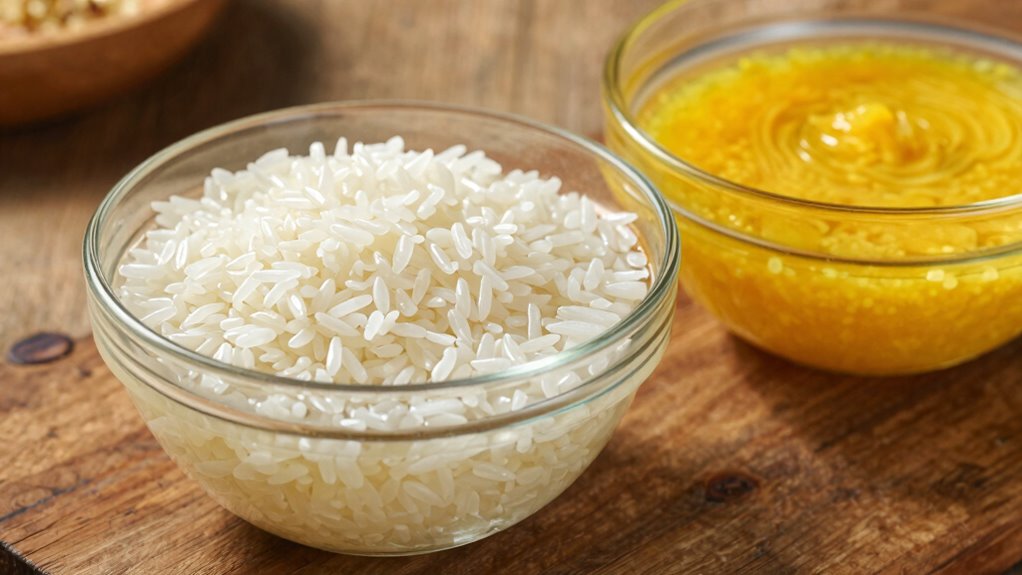

When soaking rice and dal, longer isn’t always better. Extending soaking times softens grains but can lead to mushiness, nutrient loss, or spoilage. For rice, 30 minutes to an hour is usually enough, while dal may need 1-2 hours. Over-soaking can also cause fermentation and sour flavors. To get perfect results, be mindful of the ideal soaking times and avoid overdoing it—more tips to help you succeed are just ahead.
Key Takeaways
- Soaking rice for 30 minutes to 1 hour softens grains and reduces cooking time without over-softening.
- Dal benefits from 1 to 2 hours of soaking to promote even cooking and better texture.
- Excessively long soaking can cause mushiness, fermentation, and nutrient loss.
- Use cold, clean water and rinse grains before soaking to ensure safety and optimal hydration.
- Adjust soaking duration based on desired firmness, grain type, and traditional cooking practices.
Why Soaking Rice and Dal Varies : Understanding When Longer Soaking Helps or Hinders

The effectiveness of soaking rice and dal depends on several factors, including the type of grain and your desired outcome. Longer soaking can soften the grain, improving its texture and making it easier to cook evenly. However, over-soaking may break down the grain’s structure, leading to a mushy texture that’s undesirable for certain dishes. Additionally, soaking influences nutrient preservation; extended soaking can cause some water-soluble nutrients to leach out, reducing their nutritional value. If you want a firmer grain with better nutrient retention, shorter soaking is preferable. Conversely, for dishes that require a softer, more delicate texture, longer soaking can be beneficial. Proper soaking also affects cooking time, often reducing it and saving energy during preparation. Understanding soaking duration and its effect on both texture and nutrition helps you tailor your cooking process for optimal results.
How Long Is Best to Soak Rice and Dal for Perfect Results
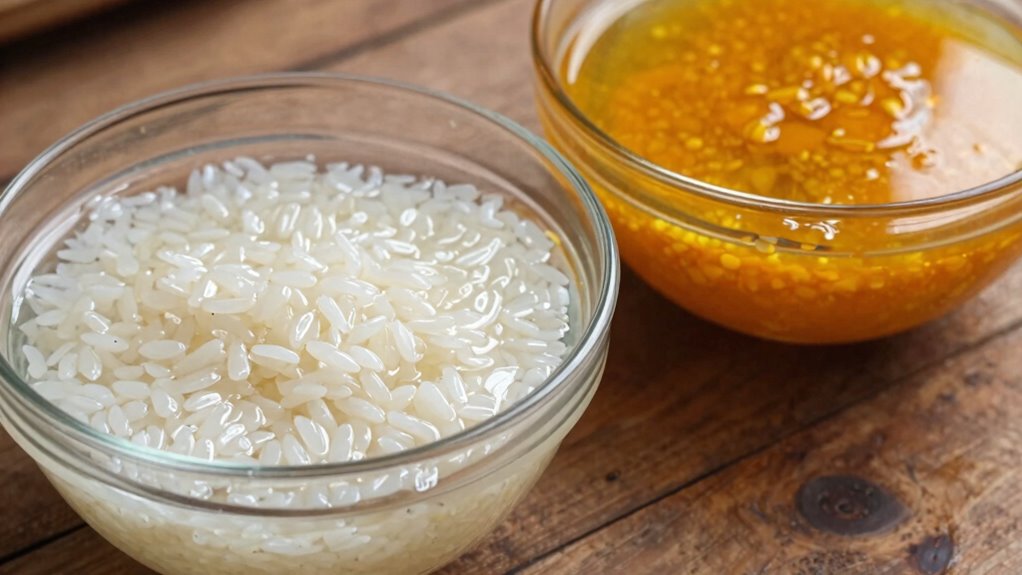
Determining the ideal soaking time for rice and dal depends on your cooking goals and the type of grain. For softer textures and quicker cooking, soak rice for 30 minutes to an hour, and dal for 1 to 2 hours. If you prefer firmer grains, shorter soaking times work best. Longer soaking can improve cooking methods by reducing overall cook time and promoting even softness. Additionally, soaking enhances nutritional benefits, as it can help break down anti-nutrients and improve mineral absorption. Proper sizing and load‑planning ensures you soak the right amount of grains without wastage. However, too long a soak may lead to over-softening or fermentation. Keep your goals in mind—whether for faster preparation or better nutrient retention—and adjust soaking times accordingly for perfectly cooked rice and dal.
Common Mistakes That Ruin Your Soaking Results : And How to Fix Them

Many common mistakes during soaking can ruin your rice and dal results, leading to over-softening, under-soaking, or uneven textures. One mistake is ignoring cooking acidity; acidic ingredients like lemon juice or vinegar can hinder proper soaking, so add them only after soaking. Another error is improper soaking temperature—soaking in too hot or too cold water affects how well the grains absorb moisture. Too hot, and you risk partial cooking or mushiness; too cold, and soaking takes longer or remains ineffective. Always soak at a consistent, moderate temperature to guarantee even hydration. Additionally, rushing the process or using contaminated water can compromise texture and safety. To fix these issues, monitor your soaking environment, avoid acids until later, and stick to recommended temperatures for ideal results.
Top Tips for Soaking Rice and Dal Like a Pro
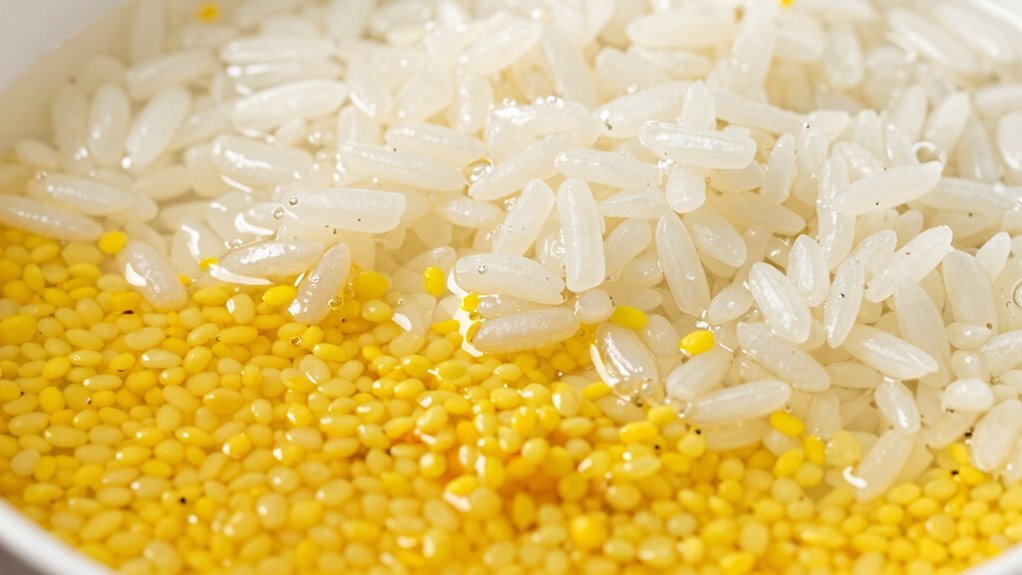
Mastering the art of soaking rice and dal starts with paying attention to simple but effective tips. First, consider cultural traditions and regional differences, which influence soaking times and methods. Use clean, cold water and soak at room temperature for consistent results. Rinsing before soaking helps remove surface starches and impurities. Soaking duration varies: some regions prefer a quick 30-minute soak, while others recommend several hours. To optimize your process, follow these guidelines:
| Tip | Explanation |
|---|---|
| Use cold water | Prevents starch breakdown and maintains texture |
| Adjust based on region | Respect local traditions for authentic results |
| Rinse thoroughly | Removes dirt and excess starch |
| Monitor soaking time | Avoid over-soaking or under-soaking |
Additionally, understanding the horsepower of electric dirt bikes can shed light on the energy and effort involved in processes like soaking, emphasizing the importance of proper technique for optimal results. Proper timing is crucial to achieving the desired texture and flavor, especially when considering regional practices. Recognizing the essential oils used in traditional practices can also enhance your overall approach to preparing rice and dal. These tips will help you soak rice and dal efficiently, respecting regional differences and traditional practices.
Over-Soaking Rice and Dal? Signs and Simple Fixes
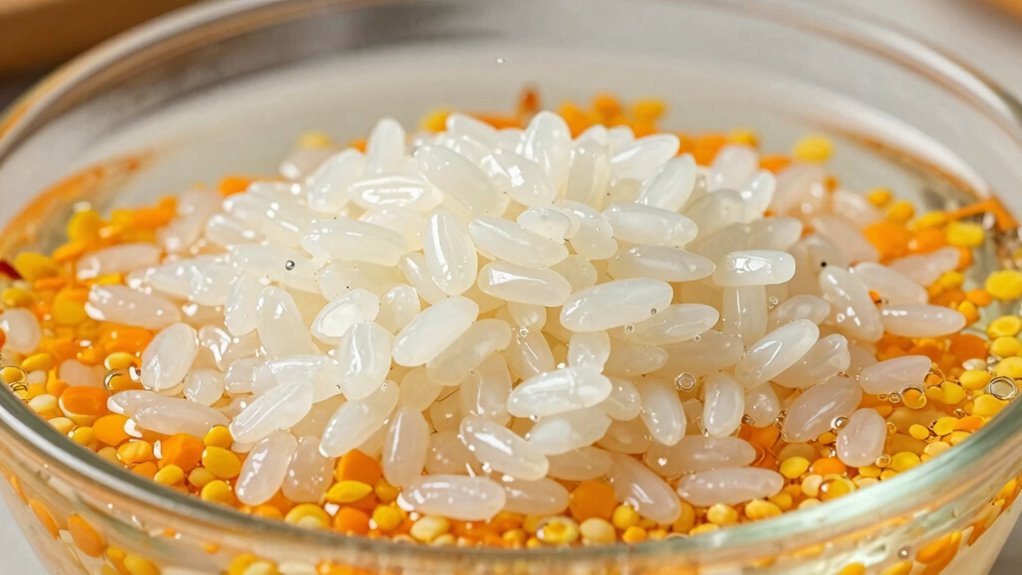
Over-soaking rice and dal can lead to undesirable results, such as mushy textures and loss of flavor. When you soak for too long, fermentation issues may arise, causing a sour smell or slight bubbling, which indicates spoilage. A longer soak increases the risk of fermentation problems and spoilage, making it important to monitor soaking times carefully. Texture degradation is also common, making the grains overly soft and breaking down their structure. To fix this, rinse the soaked rice and dal thoroughly to remove excess starch and stop fermentation. If you notice a sour smell or sliminess, discard the batch to avoid health risks. Keep soaking times short—around 30 minutes for rice and up to 2 hours for dal—to prevent these problems. Monitoring soaking duration ensures better control over texture and flavor, giving you perfectly prepared grains every time. Additionally, using proper soaking techniques can help maintain the integrity and nutritional value of your grains.
Frequently Asked Questions
Can Soaking Rice or Dal Reduce Cooking Time Significantly?
Yes, soaking rice or dal can reduce cooking time if you follow proper soaking techniques and ideal durations. Typically, soaking for 30 minutes to 2 hours softens the grains, making them cook faster and more evenly. However, avoid soaking longer than recommended, as it can lead to over-softening or fermentation. Stick to these durations to efficiently cut down your cooking time while preserving the texture and flavor.
Is It Necessary to Rinse Rice or Dal Before Soaking?
You don’t need to rinse rice or dal before soaking, but rinsing offers benefits like removing excess starch and impurities. Many soaking myths suggest rinsing isn’t necessary, but doing so can improve texture and reduce cooking time. An interesting fact is that rinsed grains cook faster and more evenly. So, rinse your rice or dal if you want cleaner, fluffier results, but it’s not an absolute must for soaking.
Does Soaking Affect the Nutrient Content of Rice or Dal?
Soaking rice or dal can cause some nutrient leaching, especially water-soluble vitamins, but it also activates enzymes that improve digestion and nutrient availability. While you might lose tiny amounts of nutrients, soaking generally enhances overall nutrition by reducing anti-nutrients and aiding mineral absorption. Keep soaking times moderate to balance nutrient retention and enzyme activation, ensuring you get the benefits without unnecessary nutrient loss.
Can Soaking Improve Digestibility of Rice and Dal?
Ever wonder if soaking makes rice and dal easier to digest? It definitely does! Soaking activates enzymes, boosting fermentation benefits that break down complex compounds. This process reduces antinutrients and enhances digestibility, helping your body absorb nutrients more efficiently. So, yes, soaking improves digestibility by promoting enzyme activation, making your meals gentler on your stomach and more nutritious overall. Why not give it a try before cooking?
How Does Soaking Impact the Texture of Cooked Rice and Dal?
Soaking rice and dal can positively impact their texture, offering better texture enhancement by making them tender and easier to cook evenly. It also promotes flavor absorption, allowing the grains to soak up spices and seasonings more effectively. However, over-soaking may lead to overly soft or mushy results, so it’s best to soak for the right amount of time to achieve the desired texture while maximizing flavor absorption.
Conclusion
Remember, moderation makes magic in your kitchen. Soaking rice and dal isn’t about simply stretching time but striking the right balance. Don’t drown ingredients in doubt—discover the delicate dance of duration and dryness. With mindful measures and measured patience, you’ll master the art of perfect results. So, soak smartly, save considerably, and savor success. Because when you strike the right soak, your meals become magnificent masterpieces.