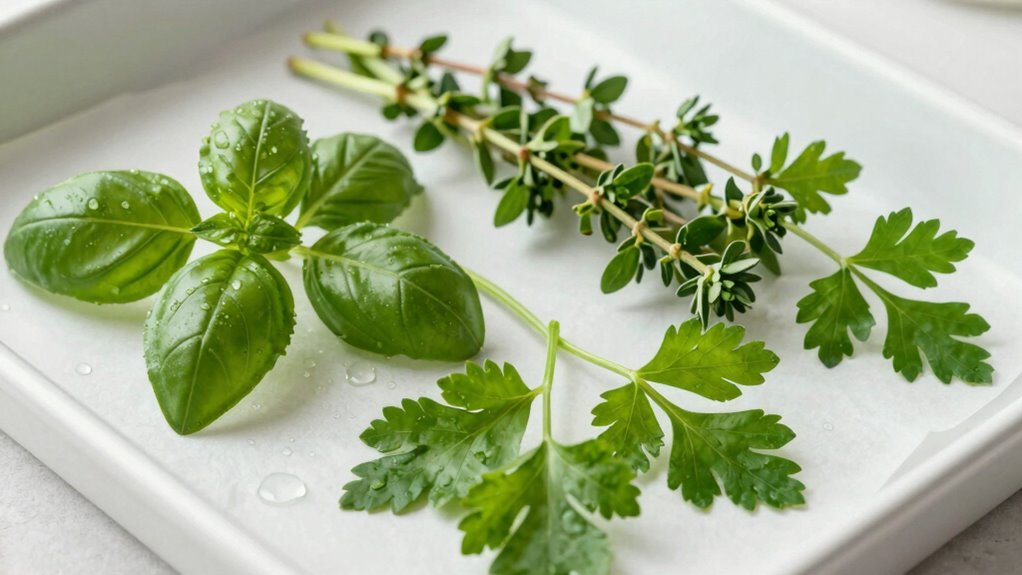

To freeze herbs properly and prevent blackening, start by thoroughly cleaning and drying them to remove excess moisture. Use airtight containers or ice cube trays to portion herbs, and consider freezing quickly to minimize ice crystal damage. Avoid washing herbs just before freezing unless they’re fully dry. Proper storage, like vacuum sealing or using freezer bags, helps maintain color, flavor, and aroma. Continue exploring for more tips to keep your herbs fresh and vibrant.

Get kitchen staples and gadgets delivered free — and shop member deals
- Fast, free delivery on millions of items
- Access to Prime Big Deal Days deals on October 6–7
- Prime Video, Amazon Music and more included
Key Takeaways
- Thoroughly dry herbs before freezing to prevent ice crystal formation and blackening.
- Use quick-freezing methods like spreading herbs on a baking sheet or in ice cube trays.
- Store herbs in airtight, sealed containers or freezer bags to minimize air exposure and freezer burn.
- Portion herbs into smaller containers or ice cubes for easy use and reduced tissue damage.
- Maintain consistent freezer temperature below 0°F (−18°C) and avoid prolonged exposure to air or light.
herb freezing storage containers
As an affiliate, we earn on qualifying purchases.
As an affiliate, we earn on qualifying purchases.
Why Do Herbs Turn Black When Frozen, and How Can You Prevent It?

Herbs often turn black when frozen because of cell damage caused by ice crystal formation. This herb discoloration happens when the cell walls break, releasing enzymes that cause browning or blackening. Poor freezing techniques, like freezing herbs too slowly or without proper preparation, increase the risk of ice crystals damaging the tissues. To prevent this, use quick-freezing methods, such as spreading herbs on a baking sheet before transferring them to airtight containers. Blanching briefly before freezing can also deactivate enzymes responsible for discoloration. Additionally, freezing herbs in ice cube trays with minimal water helps preserve their color and flavor. Proper freezing techniques are essential to maintain herb quality and avoid unsightly blackened herbs after thawing.
As an affiliate, we earn on qualifying purchases.
How to Prepare Herbs for Freezing: Cleaning and Drying Tips
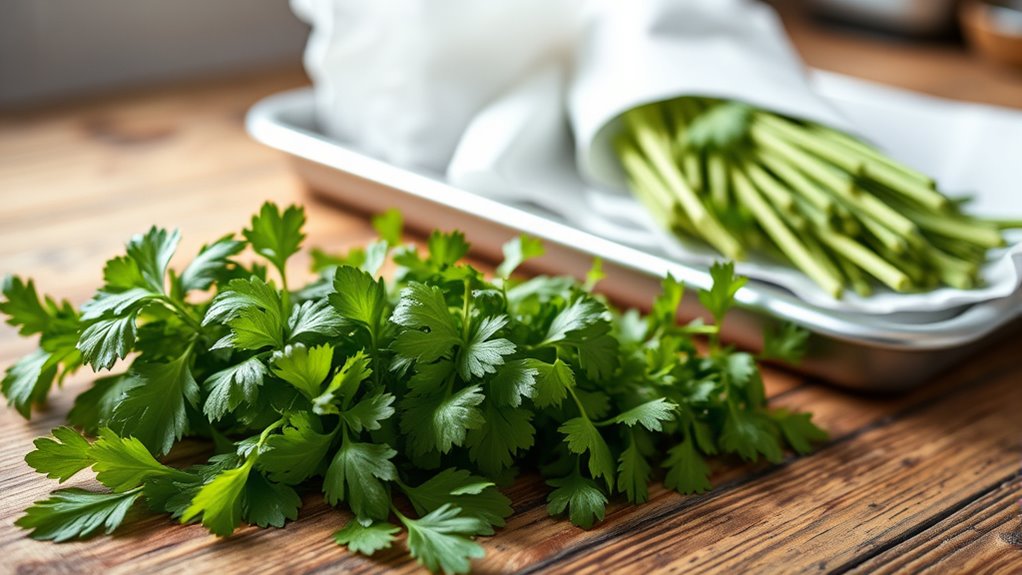
To guarantee your herbs freeze well and retain their flavor and color, start by thoroughly cleaning them to remove dirt, dust, and any insects. Herb cleaning is vital to prevent spoilage and ensure freshness. Gently rinse the herbs under cool water, and pat them dry with a clean towel or paper towels to remove excess moisture. Proper drying techniques are essential because excess water can cause ice crystals and lead to discoloration or blackening during freezing. For delicate herbs like parsley or cilantro, you might want to air dry them on a paper towel or use a salad spinner to remove moisture efficiently. Making certain your herbs are clean and dry before freezing helps preserve their vibrant color and aroma, setting the stage for successful preservation. Additionally, understanding the importance of color accuracy in preserving the visual appeal of your herbs can guide you in selecting proper drying and freezing methods. Ensuring optimal collagen preservation can also help maintain the herbs’ natural texture and appearance during storage. To further enhance preservation, consider using appropriate freezing techniques that minimize cell damage and preserve flavor integrity. Proper technique in freezing methods is crucial to prevent the herbs from turning black or developing ice burn, which can compromise both appearance and taste. Selecting the right freezing method can also help in maintaining the herbs’ essential oils and nutrients during storage.
As an affiliate, we earn on qualifying purchases.
What Are the Best Ways to Freeze Herbs Without Turning Them Black?

Freezing herbs properly is essential to prevent them from turning black and losing their vibrant appearance. The key is using the right herb packaging and freezing techniques. For best results, choose airtight containers or resealable freezer bags to reduce air exposure, which causes browning. Blanching herbs briefly before freezing can also preserve their color and flavor, especially for delicate varieties. When using freezing techniques, consider removing excess air from bags or vacuum-sealing herbs to prevent freezer burn. You can also freeze herbs in oil or water in small portions, then transfer them to containers. Proper packaging and technique help maintain the herbs’ freshness, color, and flavor. Additionally, employing proper blanching methods can significantly improve the preservation process and prevent discoloration. Incorporating airtight storage further minimizes oxidation and browning during freezing. Using freezer-safe containers designed specifically for herb storage can also enhance freshness and prevent freezer burn. Employing oxygen-absorbing techniques can further help keep herbs vibrant and prevent blackening during storage. To further improve preservation, consider the use of vacuum sealing which removes air more effectively than traditional methods. By following these methods, you’ll ensure your herbs stay vibrant and ready to use without turning black.
As an affiliate, we earn on qualifying purchases.
Ice Cube Trays or Freezer Bags: Which Is Better for Herb Storage?
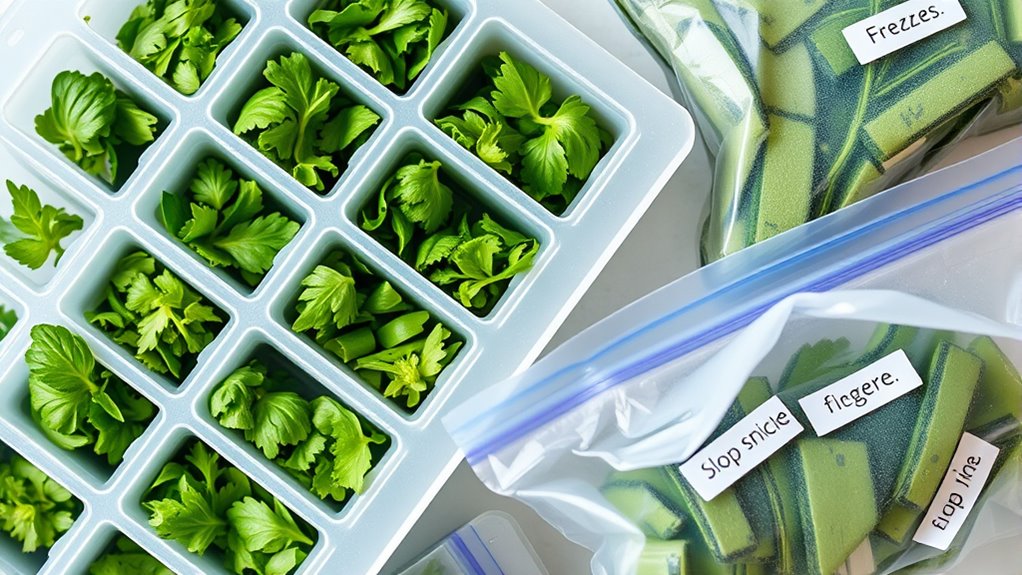
When choosing between ice cube trays and freezer bags for herb storage, consider how much space each method uses. Ice cube trays save space and let you portion herbs easily, while freezer bags offer more flexibility for larger quantities. Think about which method keeps your herbs freshest and fits best into your freezer routine. Additionally, using natural filtration systems in your natural pools can help maintain water quality without chemicals. Properly storing herbs in the right containers can also help preserve their flavor and aroma for longer periods. Ensuring your storage method minimizes exposure to air and light can further extend herb freshness, keeping your herbs vibrant and flavorful.
Space Efficiency
Choosing the right storage method can considerably impact how efficiently you use your freezer space. Ice cube trays and freezer bags each have pros and cons for herb packaging and freezer organization.
Consider these options:
- Ice cube trays save space and allow easy portioning but can be bulky in the freezer.
- Freezer bags maximize space, letting you flatten herbs for better stacking.
- Ice cubes prevent herbs from sticking together, making it easier to grab small portions.
- Freezer bags are more flexible for different quantities and are easier to label.
Ultimately, if space is limited, bags offer better freezer organization and herb packaging versatility. However, trays provide better portion control, reducing waste. Choose based on your storage needs.
Herb Freshness
Ever wondered which method preserves your herbs’ vibrant flavor and aroma best? When it comes to herb storage, your choice of freezing techniques makes all the difference in maintaining freshness. Ice cube trays allow you to portion herbs easily, locking in their original flavor and aroma without exposing them to air. This method helps prevent freezer burn and blackening, keeping herbs vibrant until use. Freezer bags can be convenient but may lead to crushed herbs and reduced freshness if not sealed properly. To maximize herb freshness, use ice cube trays for individual portions and store in airtight containers or bags. Proper freezing techniques ensure your herbs retain their bright flavor and aroma, making your culinary creations taste just as fresh as when you picked them. Additionally, understanding piercing care and hygiene can help maintain your body jewelry’s appearance and health, much like choosing the right storage method preserves herb quality.
How to Store Frozen Herbs for Maximum Freshness and Color
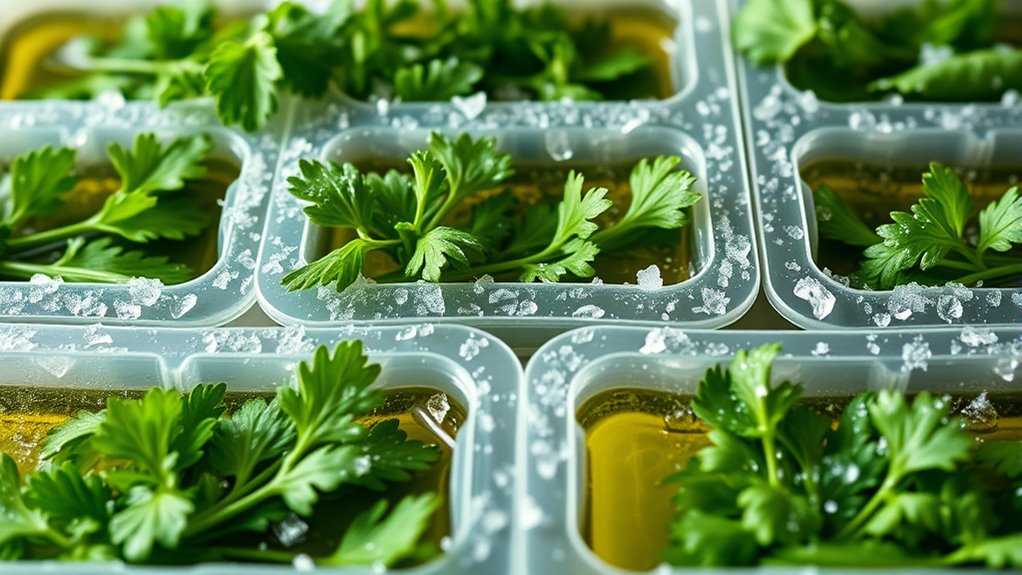
To keep your frozen herbs looking vibrant and tasting fresh, proper storage is essential. Good herb preservation depends on effective freezing techniques and airtight containers. Here’s how to maximize freshness and color:
- Use airtight containers or freezer bags to prevent freezer burn and preserve flavor.
- Remove excess air from bags to reduce oxidation and color loss.
- Label and date your herbs so you use the oldest first, ensuring freshness.
- Store herbs in the coldest part of your freezer, away from fluctuating temperatures.
- Consider using paralleling techniques to expand your storage options and maintain herb quality.
- Additionally, understanding freezer temperature guidelines helps prevent spoilage and ensure optimal preservation.
- Monitoring herb quality over time allows you to enjoy herbs at their best and reduces waste. Incorporating modern freezing methods can further enhance preservation and maintain vibrant color.
- Regularly checking freezer conditions ensures your herbs stay fresh and vibrant throughout storage.
Tips for Thawing and Using Frozen Herbs in Your Recipes
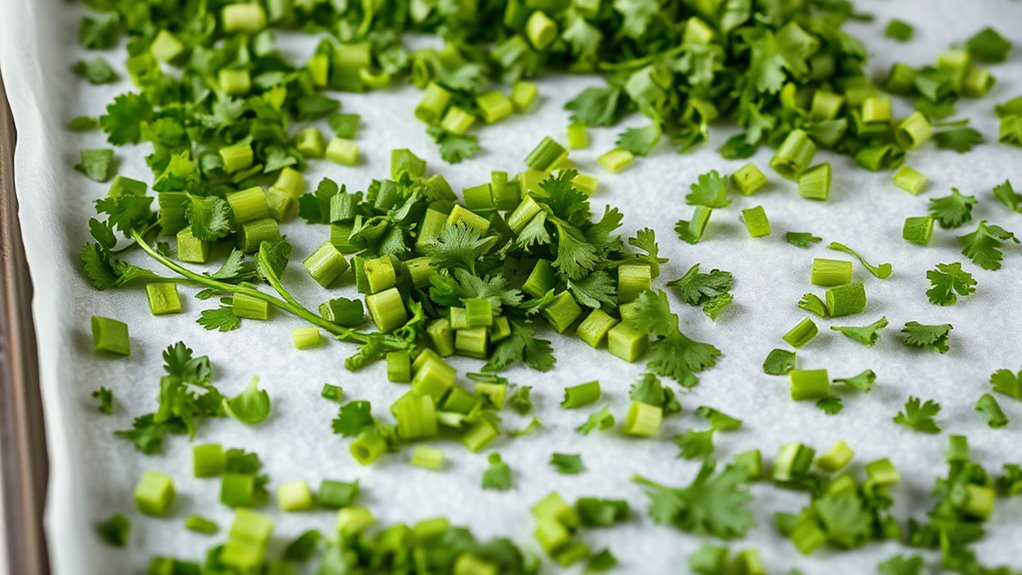
When you’re ready to incorporate frozen herbs into your dishes, proper thawing and usage can make a big difference in herb flavor and texture. For delicate herbs like basil or parsley, it’s best to add them directly from the freezer during cooking to preserve their flavor. If you need to thaw, do so quickly in cold water or add them straight to hot dishes. Use sturdy storage containers that prevent freezer burn and keep herbs fresh. Avoid thawing at room temperature, which can degrade herb flavor. When adding herbs to recipes, consider how their texture will hold up—crushed or chopped herbs blend better and release their flavor evenly. Proper handling guarantees your herbs retain their vibrant color and robust flavor, elevating your dishes. Additionally, understanding the freezing techniques ensures that herbs maintain their quality over time. Being aware of the best herb preservation methods can also help you optimize flavor and longevity. Incorporating traditional herbal practices can further enhance the health benefits of your preserved herbs, aligning with Indigenous wellness principles.
Common Mistakes That Cause Herbs to Turn Black When Freezing

One common mistake that causes herbs to turn black when freezing is exposing them to air for too long before they’re stored. This increases the risk of herb discoloration and freezer burn, leading to unsightly, blackened herbs. To avoid freezing mistakes, guarantee you:
- Don’t leave herbs unwrapped or exposed in the freezer for extended periods.
- Avoid washing herbs before freezing unless completely dry, as excess moisture promotes discoloration.
- Steer clear of using unsealed containers or flimsy plastic bags that allow air in.
- Don’t freeze herbs in large, unpartitioned bunches; instead, portion them into smaller, airtight containers or ice cube trays.
- Proper storage techniques help maintain the herbs’ vibrant color, flavor, and texture over time, including utilizing airtight containers to prevent exposure to air and moisture.
Easy Hacks to Keep Your Herbs Bright, Flavorful, and Fresh in the Freezer
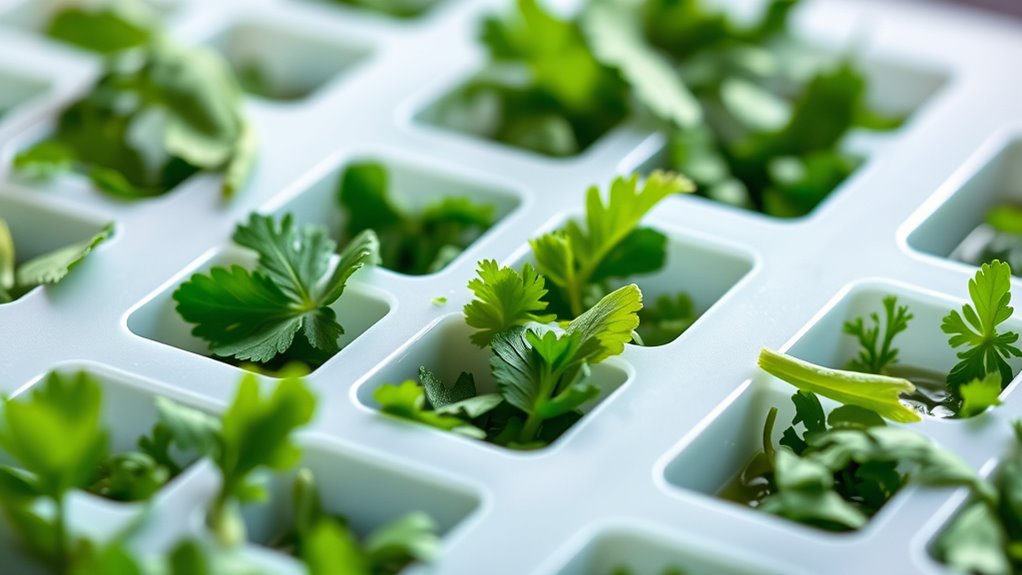
To keep your herbs bright and flavorful in the freezer, start with proper preparation by washing and chopping them carefully. Using the best freezing methods, like ice cube trays or flash freezing, helps conserve their color and taste. Applying these simple hacks ensures your herbs stay fresh and ready to use anytime.
Proper Preparation Techniques
Preparing your herbs properly is key to preserving their brightness and flavor in the freezer. To guarantee maximum flavor preservation, start with herb drying if needed, which prevents excess moisture that can cause blackening. Next, follow these easy hacks:
- Gently wash herbs and pat dry thoroughly to remove dirt and excess water.
- Chop herbs into uniform pieces to promote even freezing and easy use later.
- Use ice cube trays or small containers to portion herbs, minimizing air exposure.
- Avoid overpacking, which can crush delicate leaves and lead to discoloration.
Best Freezing Methods
Are you looking for the easiest way to keep your herbs vibrant and flavorful in the freezer? The best freezing methods focus on proper herb storage and effective freezing techniques. One simple hack is to freeze herbs in ice cube trays filled with water or oil, which preserves both flavor and color. Alternatively, you can spread chopped herbs on a baking sheet, freeze until firm, then transfer to airtight containers—this prevents clumping. Vacuum sealing is also a great option for minimizing air exposure, maintaining freshness longer. Whichever method you choose, make sure your herbs are thoroughly dried beforehand. These freezing techniques help lock in aroma and flavor, so your herbs stay bright and ready to use, just as fresh as when you picked them.
Frequently Asked Questions
Can I Freeze Herbs With Stems or Should I Remove Them?
You can freeze herbs with stems, but for best results, consider herb stem removal before freezing. Removing stems helps prevent excess moisture and makes storage more manageable. Focus on freezing herb tips if you want to keep the delicate leaves intact, while stems can be bundled or chopped depending on your use. By doing this, you maintain flavor and avoid blackening, ensuring your herbs stay fresh and vibrant for cooking later.
Is It Better to Freeze Herbs Whole or Chopped?
A stitch in time saves nine, so when herb preservation, you should freeze herbs chopped rather than whole. Chopped herbs make flavor retention easier and quicker, ensuring you get more vibrant taste in your dishes. Freezing herbs whole can lead to uneven freezing and loss of flavor. Chopping them first helps maintain their freshness and aroma, giving you better control and flavor for your culinary creations.
Do Different Herbs Require Different Freezing Methods?
Yes, different herbs require different freezing techniques to maintain their flavor. For delicate herbs like basil, you should freeze them in ice cubes with oil or water to prevent blackening and sustain herb flavor preservation. Hardy herbs like rosemary or thyme can be frozen whole or chopped in airtight containers. Adapting your freezing methods based on each herb’s texture ensures the best flavor and quality when stored.
How Long Can Frozen Herbs Be Stored Without Losing Quality?
Your frozen herbs can last up to 12 months without losing flavor retention or herb preservation quality. Keep in mind, the longer they stay in the freezer, the more their vibrant qualities fade—like a sunset fading into dusk. To maximize flavor, store them in airtight containers or ice cube trays. Properly frozen herbs stay fresh and flavorful, turning your dishes into culinary masterpieces for months on end.
Can Herbs Be Frozen Directly From the Garden Without Washing?
You shouldn’t freeze herbs directly from your garden without washing, as garden pests and dirt can cling to them. Washing removes pests, dirt, and bacteria, ensuring your herbs stay fresh and safe. After washing, dry herbs thoroughly—similar to herb drying—to prevent ice crystals that cause blackening. Proper cleaning and drying before freezing help preserve flavor and color, avoiding the blackening that often occurs when herbs aren’t prepped correctly.
Conclusion
To keep your herbs vibrant, flavorful, and fresh, start with proper cleaning and drying, choose the right freezing method, and store them carefully. Avoid common mistakes, use simple hacks, and remember to thaw gently. By following these steps, you’ll preserve their color, aroma, and taste, making every dish shine. Keep it simple, stay consistent, and enjoy the garden-fresh flavor in every bite. Your herbs will thank you, and your meals will too.
Fall Picks
fall essentials
As an affiliate, we earn on qualifying purchases.