To get fluffy dhokla, focus on properly aerating your batter. Whisk vigorously to trap air, ensuring the mixture is bubbly and light. Ferment the batter in a warm spot for 8-12 hours to develop gases, then gently fold without deflating. Use a steamer with even heat and avoid overfilling your pan. Small tweaks in aeration and steaming technique make all the difference—continue along to reveal more secrets for perfect dhokla.
Key Takeaways
- Whisk the batter vigorously to incorporate maximum air and create a bubbly, airy mixture for better fermentation.
- Use a wide bowl and gentle folding after fermentation to preserve air bubbles and maintain fluffiness.
- Add leavening agents last and fold gently to avoid deflating the batter.
- Allow the batter to ferment in a warm spot for 8-12 hours to develop gases for rise.
- Proper aeration results in soft, fluffy dhokla with a spongy texture and even rise.
How to Choose Ingredients and Prepare Batter for Fluffy Dhokla

To make fluffy dhokla, start by selecting fresh, high-quality ingredients. The ingredient quality considerably impacts the batter’s texture and the final fluffiness. Use fresh chickpea flour (besan) for the best flavor and consistency, and guarantee your yogurt is fresh for a tangy kick. You can experiment with flavor variations by adding curry leaves, green chilies, or ginger for a spicy twist, or incorporate lemon juice for extra tang. Avoid cheap or stale ingredients, as they can result in dense, flat dhokla instead of airy, light pieces. Use clean utensils and measure ingredients accurately to maintain consistency. Properly chosen ingredients set the foundation for a perfect batter, ensuring your dhokla turns out soft, flavorful, and full of the right texture. Fresh ingredient selection is crucial for achieving the desired fluffy texture in your dhokla. Incorporating batter aeration techniques can further enhance the lightness and volume of your dhokla. Additionally, employing proper mixing methods can help incorporate air more effectively into the batter, resulting in even fluffiness. Ensuring proper kitchen hygiene also contributes to better fermentation and rising, leading to more consistent results.
How to Properly Aerate Batter for Light and Soft Dhokla

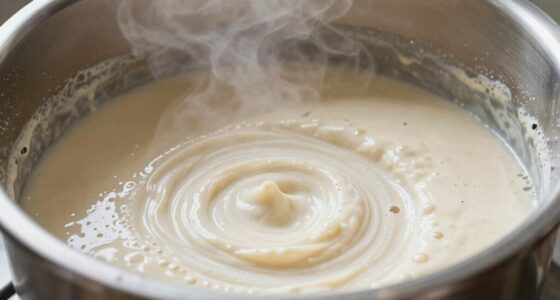
Aerating the batter is essential for achieving light and fluffy dhokla. To do this properly, start by whisking the batter vigorously, incorporating air to create a bubbly, airy mixture. Use fermentation tips, such as allowing the batter to sit in a warm spot for 8-12 hours, which helps develop the necessary gases for aeration. Gently fold the batter after fermentation to preserve the air bubbles. This step ensures a soft texture and good rise. For flavor variations, consider adding ingredients like lemon juice or spices during aeration, but avoid over-mixing, which can deflate the batter. Proper aeration results in a spongy dhokla that’s both tender and flavorful, making your steaming process more effective and your dish irresistibly light. Ensuring proper fermentation can significantly enhance the batter’s ability to aerate effectively, leading to better texture and taste. Recognizing passive voice in your writing can help you improve clarity and style.
Steaming Techniques for Perfectly Fluffy Dhokla

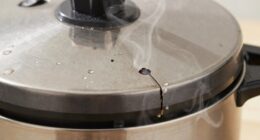
Achieving perfectly fluffy dhokla hinges on mastering the steaming process. To guarantee ideal texture, use a steamer with a tight-fitting lid to trap steam and prevent moisture loss. Place the batter in a greased, shallow pan, avoiding overfilling, which can disrupt even steaming. For Famous Dhokla Varieties like Khaman or Rava dhokla, steaming times typically range from 10 to 15 minutes. Check doneness by inserting a toothpick; it should come out clean. Proper steaming preserves the cultural significance of dhokla, maintaining its soft, airy quality. Keep the steamer at a steady, medium heat to prevent overcooking or undercooking. Additionally, steam quality can be improved by ensuring consistent heat and proper water levels in your steamer. Maintaining batter consistency ensures even cooking and fluffy results. Consistent temperature control also helps in achieving uniform cooking, which is essential for fluffy dhokla. Ensuring the steaming environment is optimal can make a significant difference in the final texture of your dhokla. Paying attention to steam distribution ensures that heat reaches all parts of the batter equally. With these techniques, you’ll produce consistently fluffy, authentic dhokla every time.
Essential Tools and Timing Tips for Consistent Batter Aeration
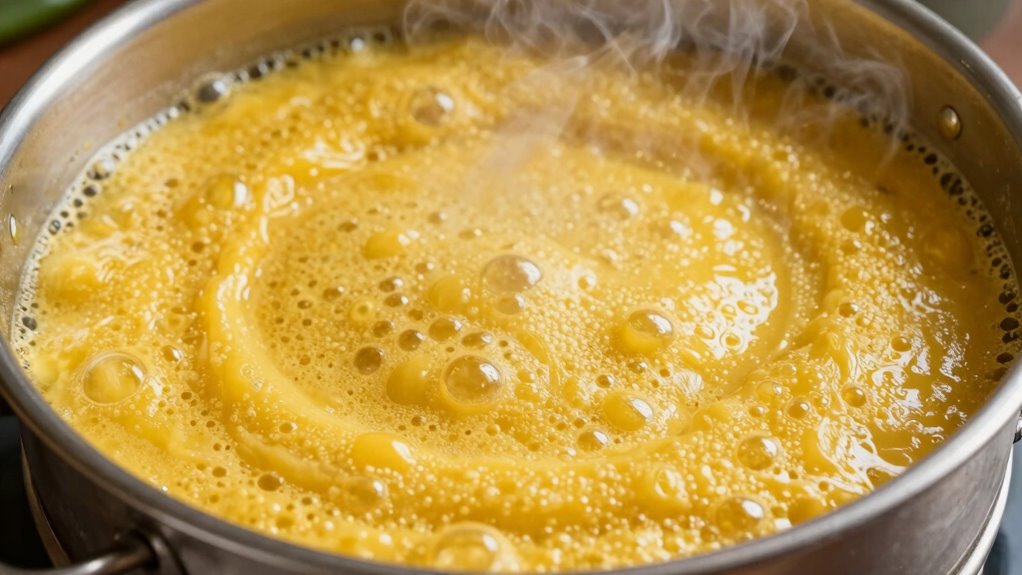
Using the right tools and timing your steps precisely are key to guaranteeing your dhkla batter is consistently well-aerated. First, use a wide mixing bowl to incorporate air easily and prevent batter overflow. Second, employ a whisk or hand blender for thorough mixing and better incorporation of air, especially when using ingredient substitutions like yogurt or baking soda. Third, timing is vital: add leavening agents last and fold gently, avoiding overmixing that deflates the batter. Pay attention to mixing techniques—light, swift motions help trap air effectively. If you’re substituting ingredients, adjust mixing duration accordingly to maintain aeration. Proper tools and precise timing ensure your batter remains fluffy, leading to perfectly steamed dhokla every time. Additionally, understanding the importance of batter aeration can help you achieve consistently light and fluffy results for your dhokla. Being mindful of the gassing process during mixing can also significantly influence the final texture. To optimize this process, it’s helpful to recognize how air entrapment directly impacts the batter’s rise and softness.
Common Dhokla Steaming Problems and How to Fix Them
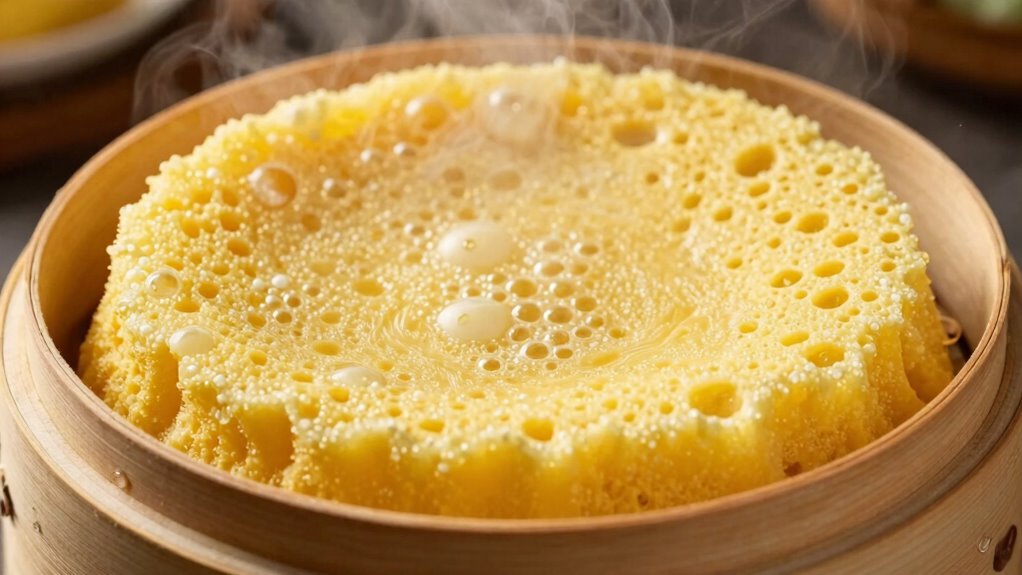
Even with careful preparation, steaming dhokla can sometimes lead to common problems like batter sticking to the steamer, uneven texture, or soggy edges. Oversteaming issues often cause sogginess or a rubbery feel, so keep an eye on steaming time and avoid excess. To prevent batter sticking, use a greased or parchment-lined tray and ensure your steamer is properly heated before adding the batter. Batter consistency tips are essential—aim for a smooth, pourable mixture that isn’t too thick or thin. If your dhokla turns out uneven, gently tap the tray to remove air bubbles before steaming. Adjust steaming time as needed, and always check doneness with a toothpick. Proper batter preparation and timing make all the difference in avoiding these common problems. Additionally, maintaining proper ventilation considerations can help prevent excess moisture that might contribute to sogginess or uneven steaming outcomes. Ensuring good airflow around the steamer also helps maintain consistent temperature and moisture levels for perfect results. Incorporating proper steaming techniques can further enhance the texture and appearance of your dhokla. Being mindful of steam distribution can help achieve uniform cooking and better overall results. Regularly inspecting your steamer setup and adjusting for moisture control can also lead to more consistent outcomes.
Frequently Asked Questions
Can I Use Alternative Fermentation Agents Instead of Baking Soda?
Yes, you can use alternative fermentation agents instead of baking soda. Natural leavening options like yogurt, lemon juice, or buttermilk work well to achieve the desired aeration. Chemical alternatives such as baking powder, which contains a mix of acids and bases, can also be effective. Just make certain you adjust quantities accordingly to maintain the right texture and rise in your dhokla batter.
How Does Humidity Affect Batter Aeration and Steaming Results?
Humidity impacts batter aeration and steaming results by affecting how well the batter rises and the final texture. High humidity can make the batter denser, leading to less fluffiness, while low humidity helps it aerate better, resulting in a softer, more consistent steam. You should adjust water content accordingly, ensuring the batter remains smooth and airy for ideal steaming consistency. Proper humidity control helps achieve perfect dhokla every time.
What Are the Signs of Over-Aerated or Under-Aerated Batter?
Around 75% of bakers struggle with batter texture issues, risking flavor changes. If your batter is over-aerated, it becomes overly bubbly, leading to a spongy, coarse texture and a bitter taste. Under-aeration results in a dense, heavy texture with less rise and dull flavor. Look for signs like excessive foam or flatness—these clues help you adjust aeration for perfect steaming results and consistent flavor.
How Does Batter Temperature Influence the Aeration Process?
Your batter temperature notably impacts aeration. When you control the temperature well, it helps incorporate air evenly, giving your dhokla a soft, fluffy texture. Too hot, and the batter may lose its ability to trap air; too cold, and it becomes stiff, making aeration difficult. Use proper aeration techniques, like gentle folding and resting the batter, to guarantee the right consistency. Temperature control is key for perfect results.
Can Pre-Soaking Ingredients Improve Batter Aeration?
A stitch in time saves nine, and pre-soaking ingredients definitely helps improve batter aeration. You should focus on proper ingredient preparation and soaking techniques, as they loosen the ingredients and release gases, making it easier to incorporate air. Soaking helps hydrate the ingredients evenly, resulting in a lighter, fluffier batter. This simple step enhances texture and guarantees consistent fermentation, giving you perfect dhokla every time.
Conclusion
Mastering the art of steaming dhokla balances precision with patience. While perfect batter aeration guarantees fluffy texture, your choice of ingredients and steaming techniques shape the final dish. It’s a delicate dance between science and intuition—where small adjustments can transform a dense mishap into a cloud-like marvel. Embrace the process, and let each steamed batch teach you that, sometimes, the simplest secrets yield the most extraordinary results.