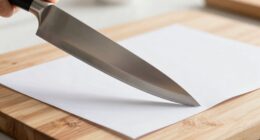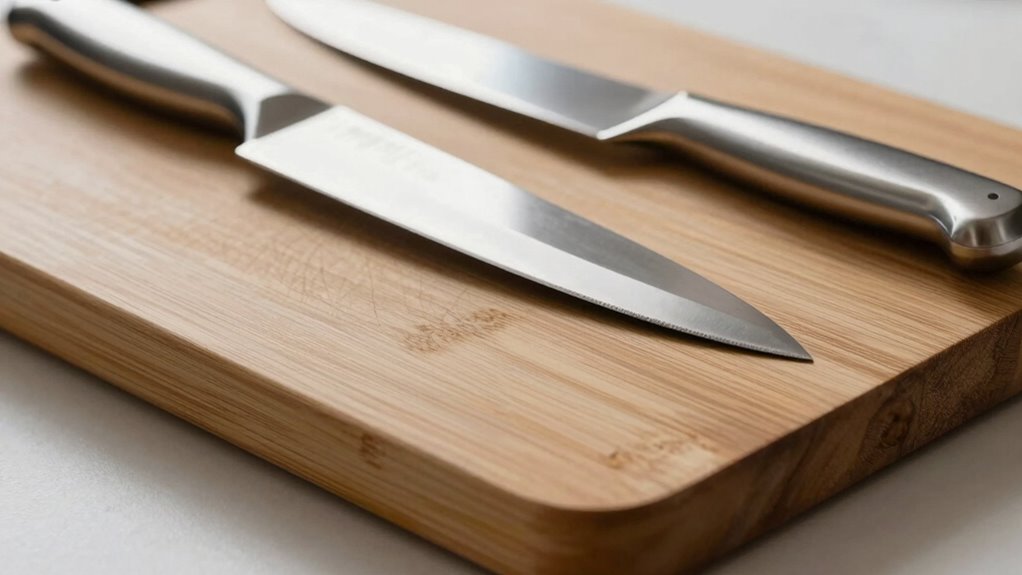
To keep your knives sharp longer, choose a cutting board made from wood, plastic, or bamboo, as these materials are softer and gentler on blades. Avoid glass or ceramic, which cause rapid dulling. Look for smooth, non-abrasive surfaces that reduce microscopic nicks and grooves. Proper maintenance and suitable materials markedly extend your knives’ sharpness and lifespan. Keep exploring to learn more about selecting and caring for the best cutting surfaces.
Key Takeaways
- Opt for wooden or plastic cutting boards, as they are softer and less abrasive, helping preserve knife sharpness.
- Choose smooth, non-abrasive surfaces to minimize microscopic nicks and reduce dulling of blades.
- Regularly clean and maintain the board to prevent debris buildup that can trap and damage knife edges.
- Avoid hard surfaces like glass or ceramic, which cause rapid dulling and blade damage.
- Use proper cutting techniques and avoid excessive force to extend both knife and board lifespan.

Kate Naturals Mineral Oil for Wood Cutting Board, Butcher Block, and Knife. Food Grade Mineral Oil for Wooden Cutting Board & Utensils (8oz, Food Safe)
FOOD SAFE MINERAL OIL FOR CUTTING BOARD: Our Food Grade Cutting Board White Mineral Oil is a smooth,…
As an affiliate, we earn on qualifying purchases.
As an affiliate, we earn on qualifying purchases.
Why Your Cutting Board Material Matters for Knife Sharpness

The material of your cutting board directly affects how sharp your knives stay over time. A durable cutting surface minimizes blade dulling and preserves your knife edge longer. Hard surfaces like glass or ceramic can quickly dull your blades because they’re too abrasive, causing chips and nicks. Conversely, softer materials such as plastic or certain composites provide a gentler cutting surface that reduces wear on your knives. The right material absorbs some of the impact during cutting, helping maintain a sharp edge longer. This means less frequent sharpening and better performance. Choosing a cutting board that balances durability with gentleness ensures your knives stay sharp, making your prep work easier and safer. The key is selecting a material that supports a healthy knife edge while offering a reliable cutting surface. Additionally, considering cutting surface properties can help you select the best material for your needs, especially since abrasiveness plays a significant role in blade wear over time. Using a high-quality material can further extend the lifespan of your knives by reducing unnecessary blade stress. Furthermore, the resilience of the surface can influence how well it withstands repeated use without degradation. Selecting materials with optimal shock absorption can further protect your blades from damage during heavy use.

AXIOM CREATIONS 2-Piece Reversible Cutting Board Set Made from Natural Food Grade Wheat Straw Material – Eco-Conscious Alternative to Plastic – Gluten Free & BPA Free Chopping Boards for Kitchen
The Eco-Conscious Choice – Ditch your ordinary cutting boards! Crafted mainly from wheat straw fiber – a sustainable…
As an affiliate, we earn on qualifying purchases.
As an affiliate, we earn on qualifying purchases.
Wooden, Plastic, or Bamboo: Which Cutting Board Protects Your Knives Best?
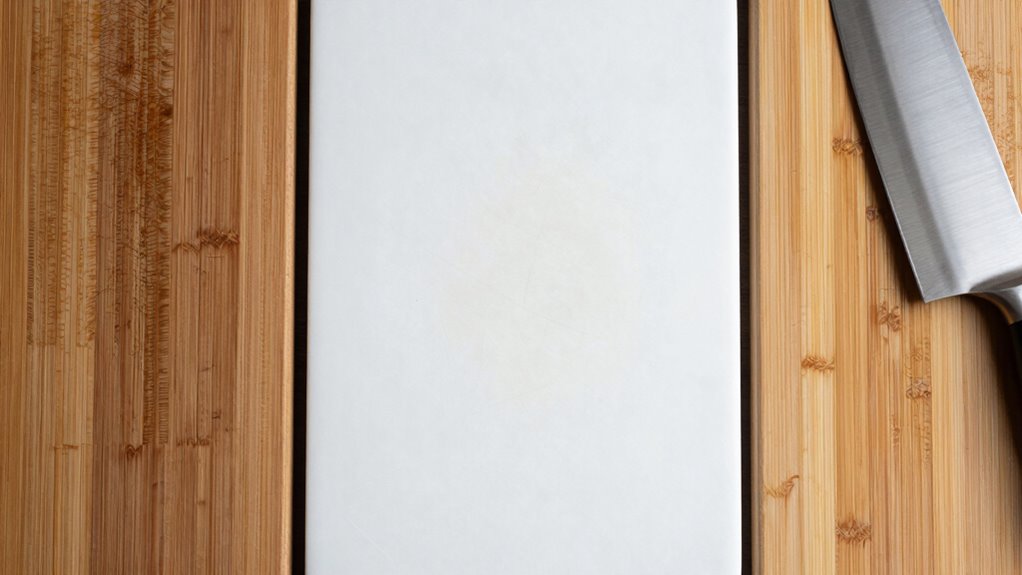
Choosing the right cutting board material can make a big difference in how well your knives stay sharp. Wooden boards typically offer the best knife edge preservation because their softer surface helps prevent dulling. They also add a warm, natural look to your kitchen, enhancing cutting board aesthetics. Additionally, wooden surfaces can be easier to maintain with proper care, extending their lifespan. Plastic boards are durable and easy to sanitize, but their harder surface can dull knives faster over time. Bamboo is a sustainable option that’s harder than wood but still gentler than plastic, offering decent knife edge preservation and a sleek appearance. Sustainable and eco-friendly options are increasingly popular among environmentally conscious consumers. Additionally, selecting appropriate cutting board maintenance can further extend the lifespan of both your knives and the board itself. Ultimately, if protecting your knives is your priority, opt for wood or bamboo. Both provide a gentler surface that minimizes wear on your blades while also contributing to an attractive and functional kitchen setup. Free floating
bamboo cutting board eco-friendly
As an affiliate, we earn on qualifying purchases.
As an affiliate, we earn on qualifying purchases.
How the Surface Texture of a Cutting Board Can Dull Your Knives
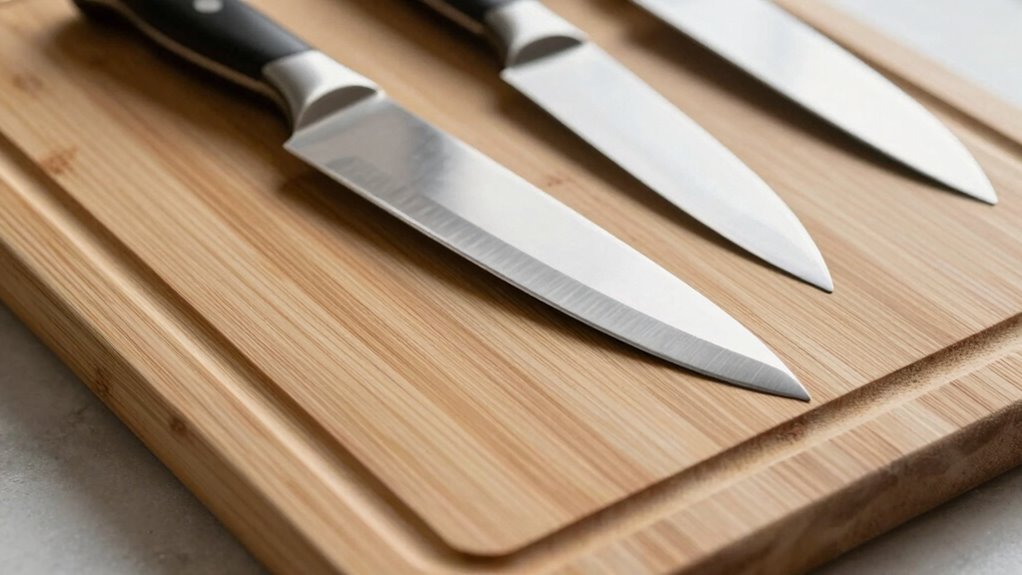
While a cutting board may seem smooth, its surface texture plays a crucial role in how quickly your knives dull. A rough or highly abrasive surface increases surface abrasiveness, causing more microscopic nicks on your blades with each cut. Over time, this damage leads to duller knives that require more effort. Additionally, groove buildup from frequent chopping creates tiny ridges and crevices, trapping food particles and debris. These grooves can catch and tear your knife edges as you cut, accelerating dulling. The more textured or grooved your board, the greater the risk of dulling your knives faster. Choosing a surface with minimal abrasiveness and easy-to-clean grooves helps preserve your blades’ sharpness longer, ensuring efficient and safe cutting every time.
What to Look for When Choosing a Knife-Friendly Cutting Board
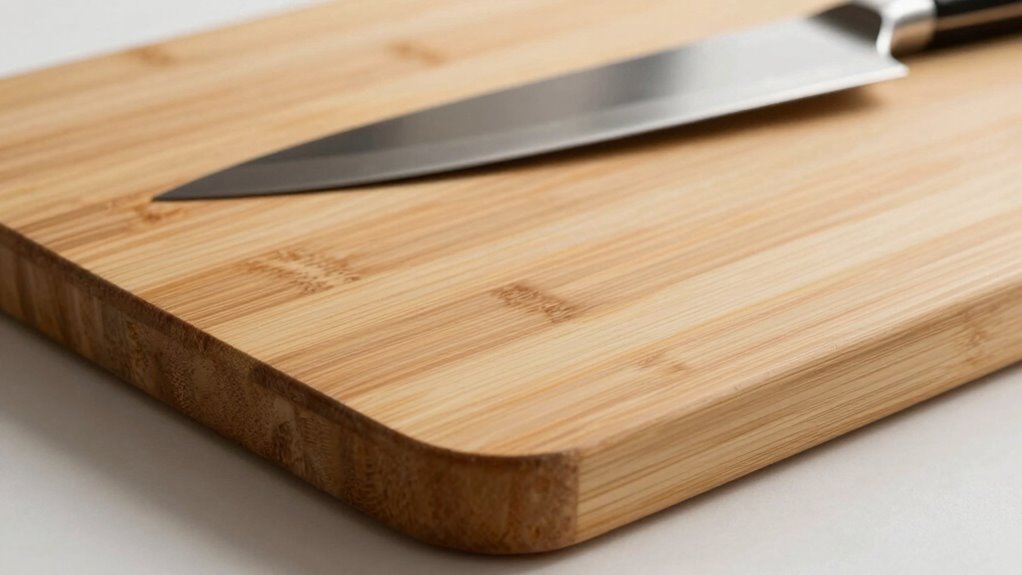
When selecting a cutting board that protects your knives, look for one with a smooth, non-abrasive surface that minimizes blade dulling. A good knife-friendly board reduces knife edge damage and enhances cutting safety. Consider these factors:
- Material type: wood or plastic, which are gentle on blades
- Thickness: sturdy enough to prevent warping
- Surface finish: smooth without grooves or deep cuts
- Non-slip base: ensures stability during use
- Maintenance ease: easy to clean and sanitize for safe food prep
Additionally, choose a surface that is easy to maintain, making regular cleaning simple and preventing bacterial buildup. Prioritizing these features helps preserve your knives’ sharpness and prevents accidents caused by unstable surfaces. A well-chosen cutting board not only extends your knives’ lifespan but also guarantees safer, more efficient food preparation. Incorporating proper maintenance practices can further enhance the longevity of your knives and ensure your cutting surface remains hygienic.
How to Properly Maintain Your Cutting Board and Keep Your Knives Sharp
To keep your cutting board in top shape and your knives sharp, choosing the right material is key. Regular cleaning and proper storage prevent bacteria buildup and damage, extending its lifespan. Pay attention to these maintenance steps to guarantee your tools stay effective and safe to use.
Selecting the Right Material
Choosing the right material for your cutting board is essential for maintaining your knives and ensuring safe, efficient food prep. The material impacts the knife edge’s longevity and the quality of the cutting surface. Hard surfaces like glass or stone can dull your knives quickly, while softer woods and plastics help preserve the edge. Consider these factors:
- Wood: gentle on knife edges, naturally antimicrobial, durable if properly maintained
- Plastic: easy to sanitize, lightweight, resistant to staining
- Bamboo: eco-friendly, harder than most woods but still gentle on blades
- Glass/Stone: attractive but can damage knife edges, not recommended for regular use
- Composite: combines durability with a gentle cutting surface, good for preserving knives
Select a material that balances durability with knife preservation to keep your knives sharp longer.
Proper Cleaning and Storage
Proper cleaning and storage are essential for maintaining your cutting board’s condition and keeping your knives sharp. Use effective cleaning techniques, such as scrubbing with hot, soapy water after each use, and disinfecting with vinegar or diluted bleach for deeper cleaning. Avoid soaking wooden boards for long periods, as this can cause warping. For storage solutions, keep your cutting board in a dry, well-ventilated area to prevent mold and bacteria growth. If you have a wooden board, store it upright or flat to promote airflow; for plastic boards, stacking them vertically minimizes surface contact. Regular cleaning and proper storage not only extend your cutting board’s lifespan but also preserve the sharpness of your knives, ensuring safe and efficient prep work. Additionally, choosing the right cutting board material can influence how well your knives stay sharp over time. Incorporating proper maintenance techniques can further enhance the longevity of both your cutting board and knives, making your kitchen tools more reliable and safe to use. Maintaining a clean cutting surface also reduces the risk of cross-contamination, contributing to overall kitchen safety. Using the correct cleaning tools can make this process more effective and help prevent damage to your cutting board. Furthermore, understanding the material properties of different boards can guide you in selecting the most durable option for your needs.
Common Mistakes That Dull Knives and How to Avoid Them
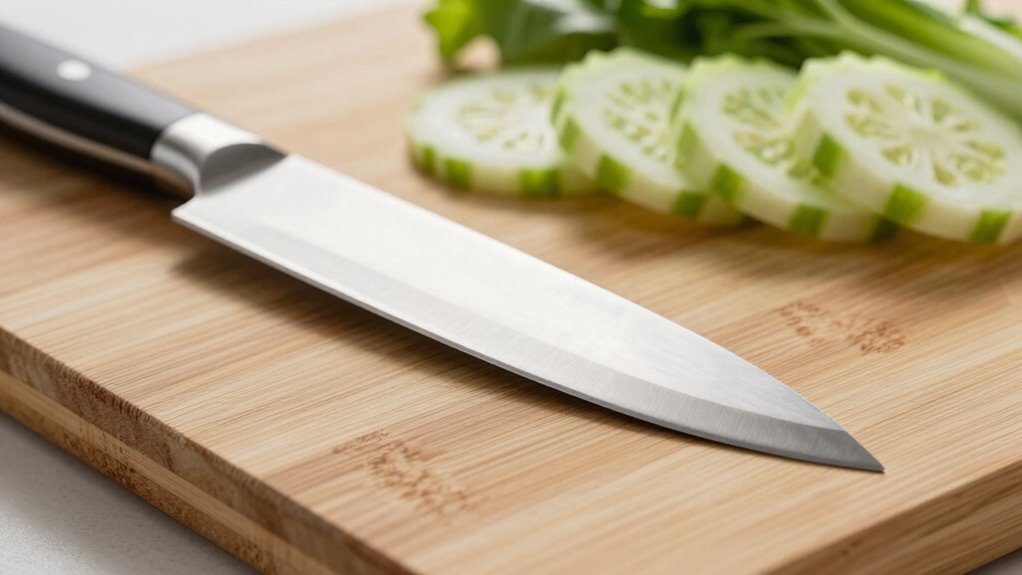
Many common mistakes can quickly dull your knives, making chopping more difficult and increasing the risk of accidents. One major error is neglecting proper knife edge care, which leads to dullness over time. Additionally, chopping on hard surfaces causes frequent cutting surface impact, damaging the blade’s edge. To avoid this, steer clear of these pitfalls:
- Using a glass or ceramic cutting surface instead of wood or plastic
- Applying excessive force while cutting
- Not honing or sharpening regularly
- Using knives for tasks outside their design, like opening cans
- Cutting on uneven or damaged boards that cause uneven wear
Proper Cutting Surface practices can significantly extend the sharpness and lifespan of your knives.
Frequently Asked Questions
Can the Size of the Cutting Board Affect Knife Sharpness?
Yes, the size of your cutting board can affect knife sharpness. Larger boards provide ample space, reducing the need for you to press too hard, which helps maintain your knives’ edge. Board size considerations are important because a smaller surface forces more contact and pressure, leading to quicker dulling. So, choosing a well-sized board not only offers convenience but also positively impacts your knives’ sharpness over time.
Are There Specific Brands Known for Knife-Friendly Cutting Boards?
You’ll love brands like Boos Block and John Boos, known for their knife-friendly reputation. Their cutting boards feature material innovation with dense hardwoods that gently caress your knives, reducing dulling. Imagine slicing through crisp vegetables on a smooth, durable surface that preserves your blades’ edge. These brands combine craftsmanship and science, ensuring your knives stay sharp longer while offering a beautiful, functional workspace that elevates your cooking experience.
How Do Temperature Changes Impact Cutting Board Durability?
Temperature changes can markedly impact your cutting board’s durability. As it undergoes thermal expansion and contraction, the material may weaken over time, leading to cracks or warping. Repeated exposure to extreme heat or cold accelerates material fatigue, reducing its lifespan. To keep your cutting board in top shape, avoid drastic temperature shifts and use it within recommended temperature ranges, ensuring it stays sturdy and knife-friendly longer.
Is It Better to Use a Single Cutting Board for All Foods?
Think of your kitchen as a symphony—using a single cutting board for all foods is like playing one instrument for every note. It’s convenient, but it risks cross contamination, turning harmony into chaos. Separate boards may seem like extra work, but they safeguard your health. Cross utilization benefits are clear: they help prevent bacteria spread, keeping your meals safe and your kitchen a well-orchestrated space.
Can Cleaning Agents Harm the Cutting Board’s Material and Knife Edge?
Cleaning agents can harm your cutting board’s material and knife edge if you don’t select the right ones. Harsh chemicals may cause the surface to crack or degrade, and they can dull your knives over time. Always opt for gentle, food-safe cleaning agents that are designed for your board’s material. Proper cleaning and maintenance ensure your cutting board remains safe, durable, and helps keep your knives sharp longer.
Conclusion
Choosing the right cutting board can considerably extend your knives’ sharpness. Did you know that using a wooden or bamboo board can reduce dulling by up to 50% compared to plastic? By selecting a knife-friendly surface and maintaining it properly, you’ll enjoy sharper knives and safer, more efficient cooking. Don’t forget to avoid common mistakes like using a worn or hard surface. Your knives will thank you, and your food prep will become smoother and more enjoyable.